
Road Trip With Kids Checklist: What to Pack, Plan, and Expect
Quick Answer
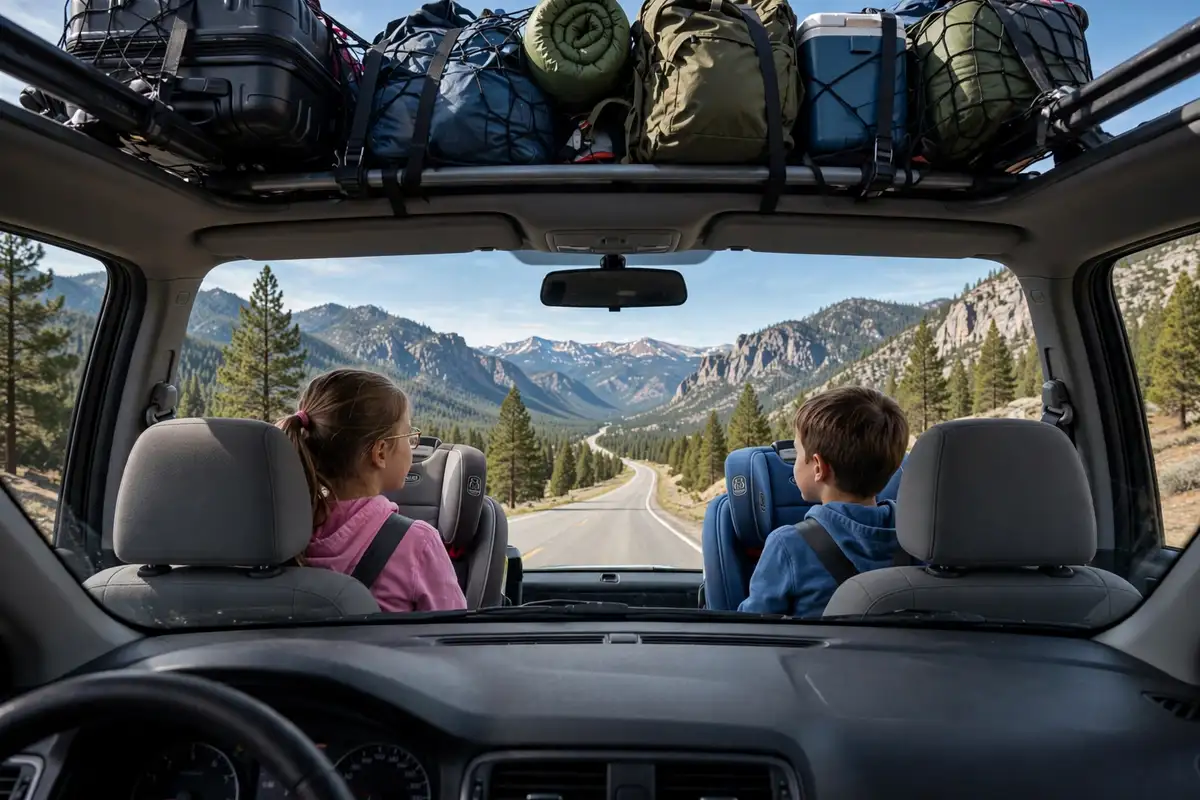
A road trip with kids works when you plan drive time by age, give each child a snack bag and entertainment tiers, and stop every 2 to 3 hours at playgrounds or splash pads. Pack the car in zones, keep bedtime rituals familiar, and run the pre-departure walkthrough the night before. Expect chaos, recover fast, and never leave kids alone in the car.
Start With Drive-Time Math, Not Packing
Before you pack a single bag, do the honest math on your route. Take the total drive time from a maps app, add about 25 percent for stops, gas, and kid slowdowns, then divide by the days you are willing to drive. That answer is your real itinerary, and it usually surprises people. A route that says 14 hours is really two full driving days once a toddler needs a park break and a gas stop takes twenty minutes. Plan by days instead of miles. If the math says three hard days but you only have a weekend, cut the destination, not the stops.
- Under 2 years: 4 to 5 driving hours per day, timed around naps and bedtime.
- Ages 2 to 5: 5 to 7 hours works if you split it around one big playground stop.
- Ages 6 to 12: 7 to 8 hours is realistic with entertainment and scheduled breaks.
Car Seats: What the Rules Actually Say
Infants and toddlers should ride rear-facing until they outgrow the rear-facing limits of their seat, usually around age 2 to 4, since pediatric guidance goes beyond state minimums. Next comes a forward-facing seat with a harness, then a booster until the adult belt fits correctly, typically around 8 to 12 years old and at least 4 feet 9 inches tall. Check your state's exact rules before you go, because cutoffs and fines vary. If you are renting a car at your destination, bring your own seats or confirm availability in advance, because rental desks regularly run out of boosters. Never use a seat that has been in a crash, and check expiration dates on borrowed seats; most last 6 to 10 years.
The Snack System That Actually Works
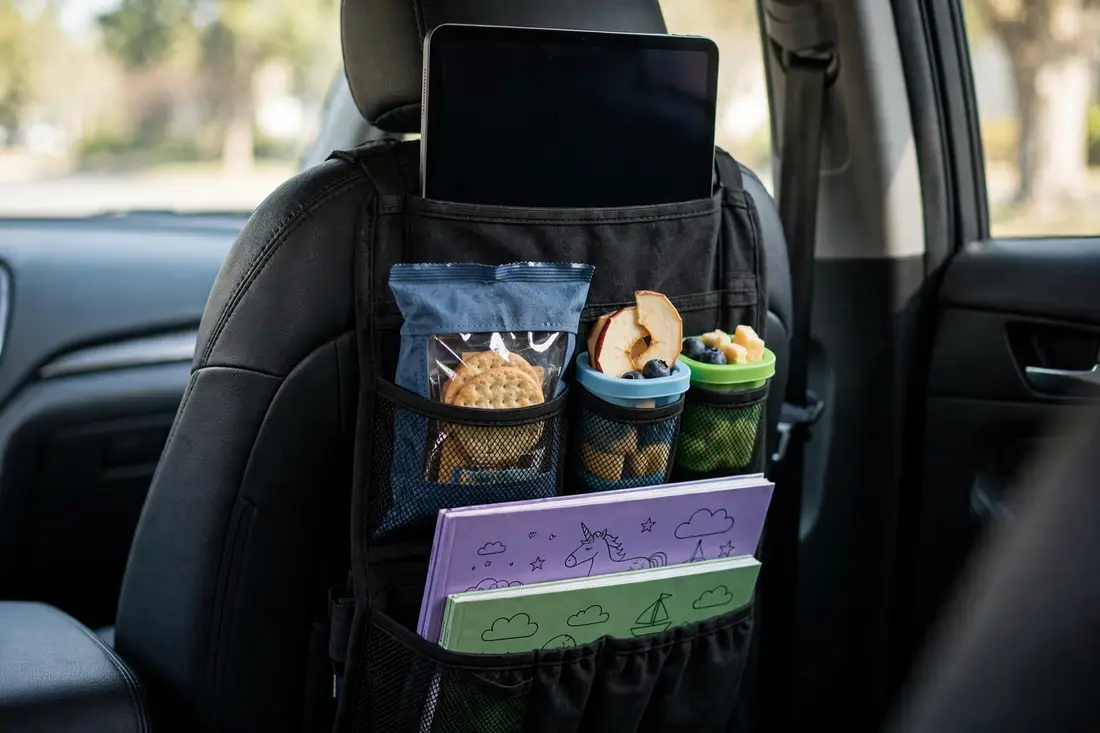
Snacks are the highest-leverage packing decision on a road trip. A real snack system, not a random grocery bag, keeps the back seat peaceful between stops. Give each child their own small snack bag and refill it every morning from a larger supply in the trunk. That one move ends the constant begging, because the bag is visibly finite and kids learn to pace themselves. Avoid anything that melts, crumbles, or stains; your car will wear the evidence for months. Keep one secret stash of high-value treats up front for emergencies: the last hour of a long day, a traffic jam, or a sibling meltdown.
- One snack bag per child, refilled each morning, so nobody argues over a shared bag.
- Rotate salty, sweet, and protein: crackers, fruit, cheese sticks, and pretzels.
- Sippy cups and straw bottles only. Open cups in a moving car always spill.
Entertainment Tiers: Plan It Like a Strategy
In-car entertainment works best in tiers, and you should plan the order like a game. Tier one is the novelty stuff you saved for the trip: a new coloring book, a toy revealed at mile 100, window clings for toddlers, and a fresh audiobook everyone listens to together. This carries the first two hours, the easiest part of the day. Tier two is the reliable rotation: tablets with downloaded movies, kid-picked music playlists, and games like I Spy. Download everything before you leave, because dead zones kill streaming at the worst moments. Tier three is the emergency reserve: a never-before-seen toy or a promised ice cream stop moved up. Spread the good stuff across the day.
Plan Your Stops Like Destinations
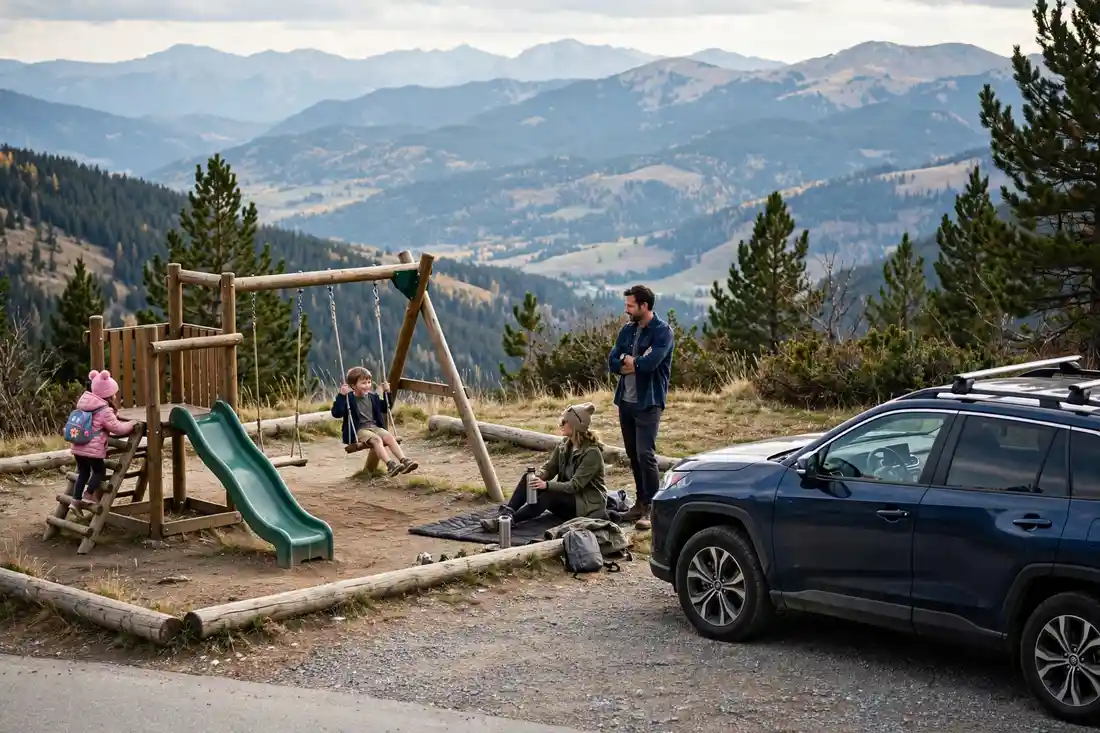
The difference between a good road trip and a miserable one is usually the stops, not the driving. Plan one real stop every 2 to 3 hours, and make at least one stop per day a genuine destination for the kids rather than a gas station. A quick search before you leave can find playgrounds within a mile of the interstate, and many rest areas have small play structures. Splash pads are the summer jackpot: fifteen minutes of water play resets a cranky kid faster than anything, so pack a change of clothes and a towel in a reachable bag. Pack a ball, bubbles, and chalk so a boring rest stop becomes a ten-minute playground. Let the kids run until they are actually tired, which takes twenty minutes, not five.
Packing the Car: Zones, Not Piles
A well-packed car runs on zones, and every zone has one job. The back seat holds kids, comfort items, and nothing else. A bin between car seats holds the day's snacks, wipes, water, and the motion-sickness kit. The trunk gets packed in reverse order of need: the hotel bag on top, deep luggage underneath, cooler accessible. The front is the adult command zone: the phone mount, charger, secret treat stash, and trip paperwork. Two rules prevent chaos. First, every bag has a fixed home for the whole trip, so repacking at each hotel takes five minutes instead of thirty. Second, soft bags beat hard suitcases, because soft bags wedge into gaps while hard cases waste space.
Hotels and Bedtime on the Road
Hotel choice shapes the evening half of every driving day. A pool is worth its weight in gold: twenty minutes of swimming after a long drive burns off the energy that would otherwise bounce around the room until 10 p.m. Free breakfast matters more than it sounds, because feeding kids quickly gets you back on the road on schedule. For trips longer than three days, on-site laundry lets you pack half the clothes and save trunk space. Scan the room on arrival like at home: cover outlets for toddlers and keep medication high. For sleep, keep the bedtime ritual identical to home even if timing slides 30 to 60 minutes. Same pajamas, same book, same song. The familiar sequence works even in a strange room.
- Pool with a shallow area, open late enough for an evening swim after driving.
- Free breakfast starting early, because hungry kids at 6 a.m. get loud fast.
- Washer and dryer on site or nearby for trips longer than three days.
- Room away from the elevator and ice machine, plus white noise for light sleepers.
The Uncomfortable Truths (Read This Twice)
A road trip with kids will include at least one moment you want to turn the car around, and knowing that in advance is oddly freeing. Siblings will fight in the back seat no matter how good your planning is; set up a system before you leave, like taking turns choosing music or a fifteen-minute quiet-time rule. Someone will spill something, forget a toy at a gas station, or feel sick at the worst moment. The parents who enjoy road trips are not the ones who avoid these moments; they are the ones who recover fast because they packed for them. Two safety rules are non-negotiable. Never leave children alone in a car, not even briefly: the interior reaches dangerous temperatures in minutes even on mild days. Keep doors locked and the child lock on.
Your Pre-Departure Walkthrough
Run this walkthrough the night before you leave and the morning goes far smoother. Check that the car is road-ready, because a breakdown with kids in back turns a delay into an ordeal. Install and tighten the car seats, then have the other parent check them too, since a fresh pair of eyes catches a loose strap. Stock the cooler, fill the snack bags, and place the sick kit and first-aid kit where you can grab them without unbuckling. Download the movies, pack the chargers, and put each kid's comfort item in their seat so nothing gets forgotten. Confirm the hotel reservations and screenshot the addresses for dead zones. Then take a breath. You did the important work.
- Car serviced: oil, tires, wiper fluid, and a working spare confirmed.
- Car seats installed tight, with an inch of movement or less at the belt path.
- Cooler stocked, snack bags filled, sick kit and first aid within reach.
- Tablets downloaded, chargers packed, comfort items in the back seat.
- Hotels confirmed; first two stops picked with a playground on the map.
✅ Guide4U Checklist
- Plan drive time by age: 4-8 hours per day
- Give each child their own refillable snack bag
- Download all movies before leaving home
- Stop every 2-3 hours at playgrounds or splash pads
- Pack one comfort item per child, no exceptions
- Run the pre-departure walkthrough the night before
Key Takeaways
- Drive-time math by age beats wishful thinking every time.
- A snack system and entertainment tiers buy more peace than toys.
- Stops, zones, and a night-before walkthrough make the trip run itself.
Frequently Asked Questions
How many hours a day can you realistically drive with kids?
Six to eight hours of actual driving per day is the sweet spot for most families, split into two or three chunks with a real stop every 2 to 3 hours. Toddlers and preschoolers do better at 5 to 6 hours because they need more movement and their nap windows matter more. Ten-hour days are possible, but they usually trade one long day for a cranky second day.
What helps kids who get car sick on road trips?
Seat the child in the middle with a forward view of the horizon, crack a window, and skip screens and books during curvy stretches, since looking down in a moving car is the fastest trigger. If your pediatrician approves medication for your child's age, give it before symptoms start. Pack a sick kit within arm's reach: a zip bag, wipes, water, and a change of clothes.
Should we bring the kids' pillows and stuffed animals?
Yes, especially for young kids. A familiar blanket, pillow, and one stuffed animal are the highest-value comfort items you can pack, and they weigh almost nothing. For older kids, headphones and a downloaded movie matter more than toys. One comfort item is non-negotiable; everything else competes for space. When in doubt, pack the lovey and leave the bulky toy home.
Is it better to pack a cooler or buy food along the way?
A small cooler with drinks, fruit, and cheese sticks is cheaper and fresher than drive-thru stops, and it doubles as your snack system on the road. Plan one real restaurant stop per long driving day anyway, so everyone gets out for 45 minutes and the driver gets a genuine break. The mix keeps costs down without making the trip feel punishing.