
How to Get Rid of Fruit Flies in Your Kitchen Fast (Traps That Actually Work)
Quick Answer
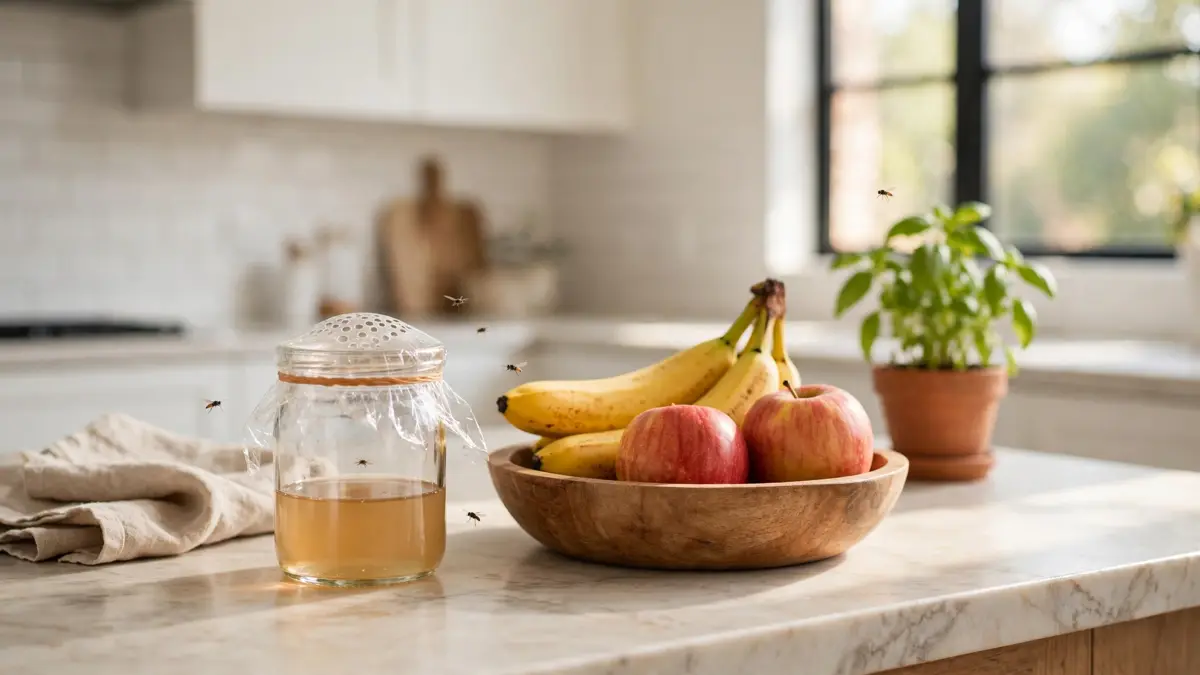
Set a small jar of apple cider vinegar with a drop of dish soap near the worst spot — the soap breaks the surface tension so flies sink instead of escaping. Then find and remove the breeding source: overripe fruit, the bin, the drain, or damp cloths. Expect the cloud to thin within a day or two and clear within a week.
First, Make Sure They're Actually Fruit Flies
Before you start, spend ten seconds on identification, because three different tiny pests get lumped together and they don't all respond to the same treatment. Fruit flies are small, about the size of a sesame seed, with a tan body and red eyes you can see if you look close. They hover in little clouds around fruit bowls, bins, recycling, and sweet spills. Drain flies look like tiny fuzzy moths and sit near sinks and drains. Fungus gnats come out of damp houseplant soil when you water it. If yours are hovering over your bananas, you have fruit flies and the vinegar trap below is exactly the right tool. If they're coming from your plants, traps will barely help until you fix the soil.
The Trap That Actually Works: Vinegar and Dish Soap
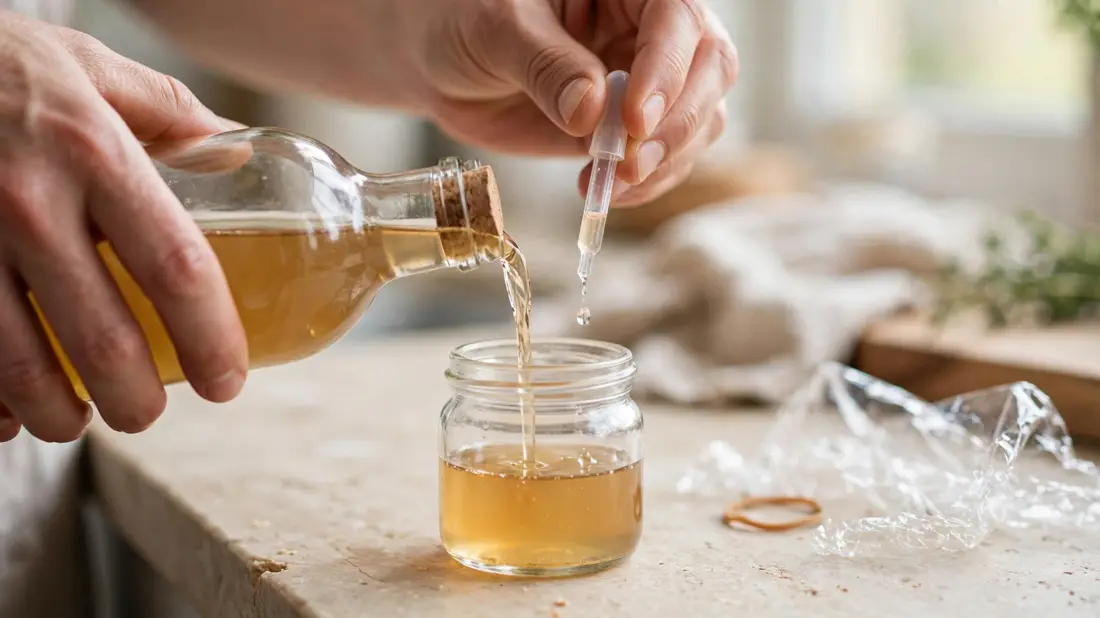
This is the one everyone swears by because it genuinely works, and it costs basically nothing. Grab a small jar or an old mug and pour in about an inch of apple cider vinegar. Add a drop or two of dish soap and stir it gently without making foam. Stretch a piece of plastic wrap over the top, secure it with a rubber band, and poke four or five holes in it with a toothpick. The wrap isn't strictly required, but it stops flies that are slow to drown from crawling back out. Put the trap right where the flies are worst — next to the fruit bowl or the bin. Then leave it alone and let it do its job.
- Pour about an inch of apple cider vinegar into a small jar or mug
- Add one or two drops of dish soap and give it a gentle swirl — no bubbles
- Cover the top with plastic wrap and poke a few holes with a toothpick
- Set it near the fruit bowl or wherever the flies hover
- Empty and refresh it every two or three days
Why the Soap Drop Matters More Than You'd Think
Here's the piece of science that makes the trap work. Plain vinegar attracts fruit flies fine, but the liquid's surface tension lets them land, stand on top, take a sip, and fly off again — half your visitors escape. One drop of dish soap breaks that surface tension, so the moment a fly lands, it sinks and drowns. That's it. That's the whole trick. This is also why the trap keeps working even when it looks grim and full of floaters: the soap is still doing its job. Just refresh the mixture every couple of days because the vinegar's smell fades and the trap gets crowded enough that new flies find clean places to land.
The Leftover Wine Trick
If you have half a glass of red wine that went flat, don't pour it out — you have a trap. Fruit flies are drawn to the fermented smell of wine almost as strongly as vinegar. Leave the last inch or two in the bottle, add that same drop of dish soap, and set the open bottle on the counter. The narrow neck does the work of the plastic wrap: flies crawl in easily and most never find their way back out. This one looks nicer than a jar of vinegar on your counter, which matters if the flies are in a part of the kitchen guests see. It catches more slowly than the vinegar jar, in my experience, so think of it as a backup rather than your main weapon.
The Funnel Trap for a Bad Infestation
When the kitchen looks like a snow globe of tiny wings, you need something that catches in bulk. Roll a sheet of paper into a cone with a tiny hole at the tip and a wide opening at the top — tape it so it holds its shape. Pour a little vinegar and a drop of soap into a jar, set the cone in the mouth with the tip pointing down, and leave a small gap where the cone meets the glass. Flies funnel down toward the smell and can't navigate back up through the narrow tip. I've seen this pull dozens in a single afternoon when a forgotten potato was the source. It's ugly, so hide it under the sink if it bothers you, but it catches more than any other homemade option.
Find the Source, or Nothing You Do Will Work
Traps only kill adults. The eggs and larvae are somewhere in your kitchen, and until you find that spot, new flies keep hatching to replace the ones you caught. Play detective for ten minutes. Check the fruit bowl first, then move outward: forgotten potatoes, the onion bag, the bottom of the bin where juice collects under the liner, recycling you never rinsed, and damp dishcloths left bunched up. The most overlooked source is the sink drain — the slime inside a garbage disposal or drain is a perfect nursery. Find the source, throw out or clean what's feeding them, and the traps finish off the adults. Under the fridge and behind appliances are worth a look too, since drips and food bits collect back there. Don't skip the dishwasher either — the filter and door gasket can harbor enough gunk to feed a small army.
- Overripe or forgotten fruit and vegetables — check onions, potatoes, and bags too
- The bin: scraps, sticky bin lids, and the liner seam where juice collects
- The sink drain and garbage disposal, where gunk builds up
- Recycling: unrinsed cans and bottles
- Damp sponges, dishcloths, and mops
- Any sweet spill you half-cleaned: syrup, juice, soda
Clean the Drain (Fruit Flies Love It There)
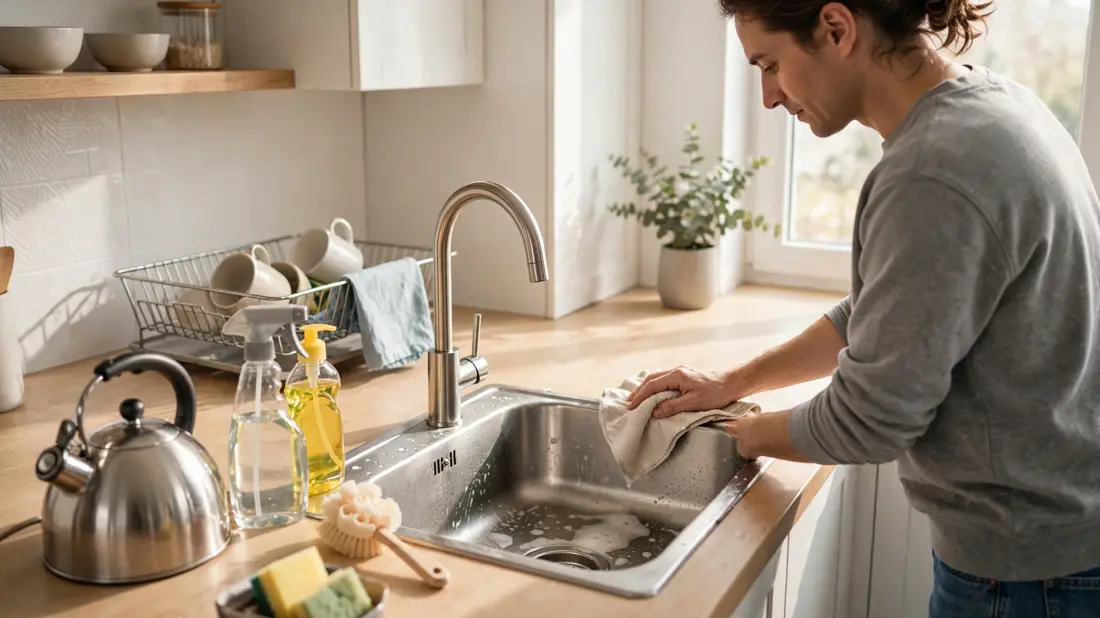
If the flies seem to hover around the sink itself, the drain is almost certainly the nursery. The fix is boringly simple. Boil a full kettle and pour it down the drain slowly, then do it again. The heat melts the greasy slime the larvae live in. Follow with half a cup of baking soda and half a cup of white vinegar, let it fizz for about fifteen minutes, then flush with more hot water. If you have a garbage disposal, scrub the underside of its rubber splash guard with an old toothbrush — it collects a horrifying amount of gunk. Run the disposal with ice and citrus while you are at it. Do this in the evening so nothing new washes in overnight.
- Boil a full kettle and pour it slowly down the drain, twice
- Follow with half a cup of baking soda, then half a cup of white vinegar
- Let it fizz for 15 minutes, then flush with hot water
- Scrub the rubber splash guard of the disposal with an old toothbrush
Kitchen Habits That Starve Them Out
Once the current batch is gone, keeping them gone is just maintenance. Fruit flies can smell a fermenting banana from farther away than you'd believe, so fruit you won't eat within a day or two lives in the fridge. Rinse anything sticky before it goes into recycling — a soda can is a fruit fly apartment block. Empty the bin before it gets juicy, and wipe the rim and lid where spills collect. Get into the habit of wiping the counter after cooking and wringing out the sponge. None of this is dramatic. It's just removing the food and moisture that attract the next generation, and after a week or two it becomes automatic.
- Store fruit in the fridge, or eat it before it turns
- Rinse cans and bottles before they go in recycling
- Empty the bin regularly and wipe the lid and liner rim
- Wipe up spills and crumbs the same day
- Launder dishcloths often and wring out sponges
How Fast Does This Actually Work?
Let's be honest about the timeline, because nobody likes vague promises. Put the trap out today and you'll usually see dead flies in it within hours. The visible cloud thins noticeably in a day or two once you've also cleaned the source. But don't panic if a few stragglers keep showing up for up to a week — fruit fly eggs hatch fast, so a new wave of adults can appear from eggs that were already laid before you cleaned. Give the whole plan a full seven days. If numbers are still the same after a week of traps plus a clean source, you're missing a breeding spot — check under appliances, behind the fridge, and any bag of produce you forgot about. Take the bin out the night before collection day instead of the morning, and keep any compost caddy sealed and emptied daily — an open compost bin is a fruit fly hotel.
When Homemade Traps Aren't Enough
DIY handles the vast majority of kitchen fruit fly problems, but there are honest exceptions. If you've done everything above for two weeks and the numbers haven't dropped, the source is probably somewhere you can't reach — inside a wall void from a plumbing leak, under floorboards, or in a rarely used drain in a basement. Persistent moisture problems like a leaking pipe need a plumber, not a vinegar jar. At that point, calling a pest professional makes sense — they'll find the source and handle the cleanup, and you should pick one that starts with an inspection rather than a spray. That's rare, though. For nine out of ten kitchens, a jar of vinegar and ten minutes of detective work is the whole solution.
Your Weekend Plan to End Them for Good
If you want this wrapped up by Sunday, here is the order that wastes the least time. Saturday morning, build the vinegar trap and set it next to the worst spot. Then do the ten-minute detective sweep: fruit bowl, onions and potatoes, the bin and its liner, recycling, and the sink drain. Clean the drain with boiling water, baking soda, and vinegar while you are at it. Toss anything that smells off, wipe the counters, and run the disposal with ice and citrus if you have one. Sunday, empty the trap, check how many dead flies are in it, and refresh the vinegar — that count tells you the truth about how things are going. By Sunday night most kitchens are dramatically quieter, and by the end of the week they are usually done. The whole effort costs about an hour of actual work. After that, the prevention habits keep the kitchen clear without you thinking about it.
✅ Guide4U Checklist
- Build the vinegar-and-soap jar trap today
- Put it next to the fruit bowl or bin
- Flush the drain with boiling water
- Scrub the disposal splash guard
- Toss overripe fruit and forgotten produce
- Rinse recycling cans before binning
- Empty the bin and wipe the lid
Key Takeaways
- Traps only kill adults — finding the breeding source is the real fix.
- One drop of dish soap is what turns vinegar from bait into a trap.
- Expect results in days, not minutes; eggs already laid hatch for up to a week.
Frequently Asked Questions
How long does it take to get rid of fruit flies?
Most people notice a real drop within 24 to 48 hours once the trap is out and the source is cleaned. A few stragglers can linger for a week because new adults keep hatching from eggs already laid. Give it a full week before deciding the traps are not working.
Do I really need dish soap in the vinegar trap?
The soap is doing real work, not just smelling nice. Vinegar attracts the flies; the drop of dish soap breaks the liquid's surface tension so they sink the moment they land instead of standing on top and flying away. Plain vinegar catches far fewer.
What if they are not fruit flies but drain flies?
Possibly. Drain flies look like tiny moths and hang around sinks, and fungus gnats rise from houseplant soil. Fruit flies are smaller, reddish-eyed, and hover around fruit, bins, and sweet spills. If your flies are coming from the drain itself, a drain cleaning helps both kinds.
Are bug sprays a better option than homemade traps?
Not really, not indoors at this scale. Sprays kill the ones you can see but do nothing about the eggs and larvae in the source. You will spend more money and still have flies in a week. Traps plus source removal cost almost nothing and solve the actual problem.