
How to Stop Procrastinating on Housework (Without the Guilt Spiral)

Quick Answer
Start with just 10 minutes on a timer — starting is the whole battle, and you will rarely stop once you begin. Pair chores with a podcast or playlist, do a 12-minute nightly reset, and lower the bar to done instead of perfect.
Your Brain Isn't Lazy — It's Negotiating
The gap between thinking "I should clean" and actually standing up is not a character flaw. It is your brain doing cost-benefit math and deciding housework is a terrible deal. Chores give delayed, invisible rewards — nobody walks in and gasps at clean baseboards the way they notice a finished work project. Your brain also hates open-ended tasks. "Clean the house" has no finish line, so the whole thing gets filed under "too big" and you go back to scrolling. That is why you can answer work emails on a Sunday but leave a cereal bowl on the counter for three days. Once you see the resistance as wiring instead of weakness, you stop lecturing yourself and start working around it.
The 10-Minute Start Rule
Tell yourself you are only doing ten minutes. Not "cleaning the house" — just ten minutes of it, with full permission to stop when the timer rings. Set a visible timer on the stove or your phone so the time feels real. Here is the part almost everyone reports back: you rarely stop. Starting is the whole battle. Motion creates its own energy, and by minute eight you are usually past the part that felt impossible at minute zero. And on the days you do stop at ten? That is still ten minutes of progress you would otherwise have zero of, and tomorrow's ten minutes stacks on top of it. The rule works because it shrinks the commitment to something your brain cannot argue with.
Pair Chores With Things You Already Enjoy
Chore-pain drops sharply when your brain gets something interesting to chew on at the same time. The deal is simple: your favorite audio only plays while your hands are busy. Suddenly the podcast backlog becomes a reason to fold laundry instead of another thing you feel guilty about ignoring. Keep earbuds near the dish soap so there is no friction. And make the pairing a strict rule — the fun thing does not get to play during couch time. It becomes the treat tied to the task, not the excuse that replaces it.
- Folding laundry plus the true-crime podcast episode you have been saving
- Doing dishes with a 20-minute playlist you only allow during kitchen time
- Vacuuming while you listen to a sports show or one audiobook chapter
- Wiping bathroom surfaces during a long phone call with a friend
- Sorting the junk drawer while a cooking video plays on the counter
The Nightly 12-Minute Reset
Every night before bed, set a timer and do a fast pass through the main living area. Cushions straightened, dishes into the dishwasher, shoes lined up by the door, backpacks and mail piles corralled into one spot. You will not deep-clean anything, and that is the point. Waking up to a calm room changes the whole morning. Instead of stepping over yesterday's mess while hunting for your keys, you start the day with the feeling that the house is handled. Twelve minutes is short enough that even an exhausted parent will do it, and it stops the slow pile-up that makes weekends feel like a recovery project. Your future self will genuinely thank you.
Done Beats Perfect — Lower the Bar on Purpose
Nobody is handing out trophies for how thoroughly you cleaned behind the microwave. Perfectionism is one of procrastination's best disguises: if the job has to be done flawlessly, there is always a reason to delay it. Give yourself permission to do the rough version. Wipe the stove with one paper towel instead of pulling the whole thing apart. Fold the laundry but do not iron a single thing. Make the bed badly — a lumpy made bed still feels ten times better at midnight than an unmade one. You will finish in a third of the time, the house still looks cared for, and a 15-minute habit is one you will actually repeat. The marathon sessions you dread are the ones that never happen.
Touch It Once
Most mess is a decision you postponed. The mail hits the counter, the jacket lands on the chair, the shoes fall exactly where you kicked them off — each one is a micro-decision you said "later" to, and later never arrives. Try the touch-it-once rule: when something lands in your hand, finish its journey right then. Sort the mail over the recycle bin — junk goes straight in, bills go to one tray. Keys go on the hook the second you walk in. The jacket goes on the actual hanger. It costs about five extra seconds each time, and it erases the slow drift of clutter that later looks overwhelming. The counter stays clear because nothing is allowed to pause there.
Batch the Boring Jobs Together
Scattered chores are exhausting because you keep re-deciding when to do them. Batching turns them into a routine your body can run on autopilot. Anchor each batch to something you already do: trash goes out the night before pickup day, the fridge gets a five-minute clear-out right before the grocery run, bills get handled with your morning coffee. You never stand in the kitchen wondering what to tackle first — Tuesday is laundry, Thursday is bills, and the decision is already made. Start with two batches and add more once the rhythm feels easy.
- Laundry: sort and start a load Sunday morning; fold during Sunday night TV
- Trash and recycling: one 10-minute sweep every Tuesday and Friday
- Bills and paperwork: one 20-minute session on Thursday after dinner
- Floors: vacuum upstairs Saturday and downstairs Sunday — never both at once
- Fridge cleanout: five minutes right before the weekly grocery run
Make the First Step Stupidly Easy
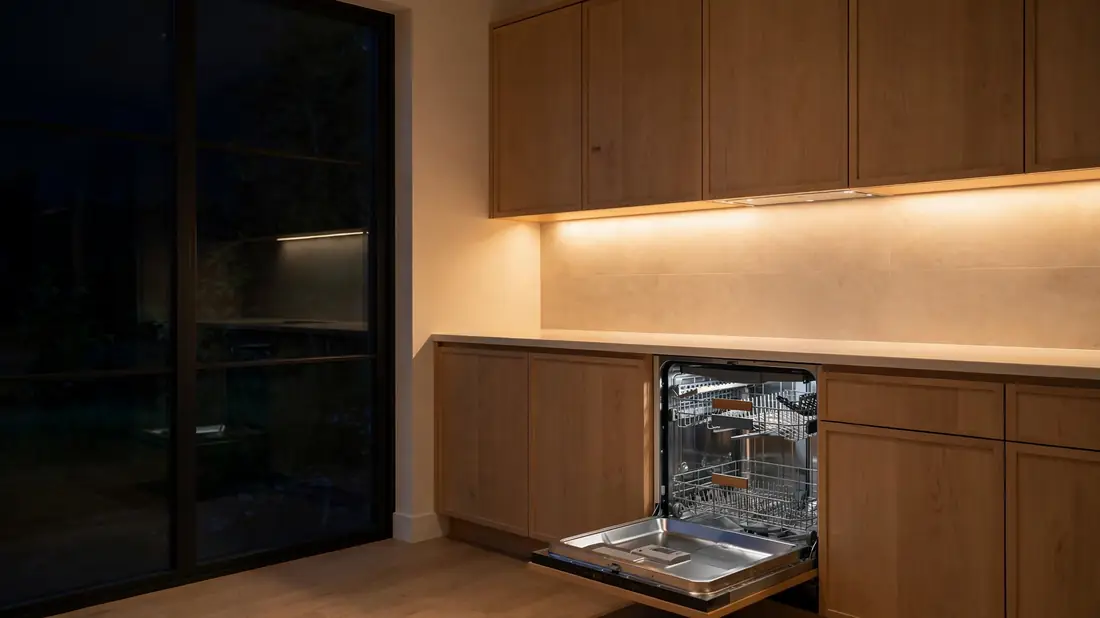
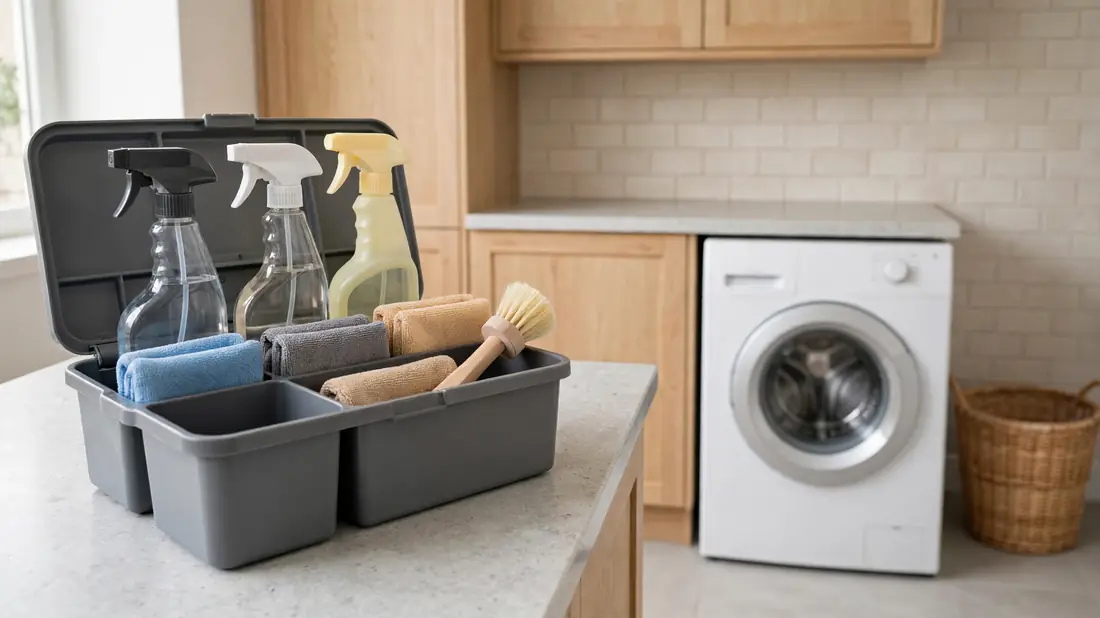
The hardest part of a chore is almost never the chore itself. It is finding the supplies, clearing a workspace, and getting set up. So remove the setup. Keep cleaner and a cloth under every sink so wiping the mirror is a 40-second job, not a scavenger hunt. Leave the dishwasher's bottom rack pulled out at night so unloading takes two minutes. Put the detergent on top of the washer instead of inside a cabinet. Lay out tomorrow's cleaning caddy tonight before bed. When the only step between you and "started" is picking up the spray bottle, you will start. Convenience beats motivation every single time, so rig the environment in your favor.
Quit the Guilt Spiral
Here is the thing guilt never admits: feeling bad about the mess has never cleaned a single dish. Guilt feels like responsibility, but most of the time it is just another way to sit still. Swap it for the honest version: "The house is messy because I have been busy living my life, and that is allowed." You are not lazy, and a dusty shelf does not cancel your worth as a person. The people who keep reasonably tidy homes are not morally superior — they just found systems that fit their energy. Be kind to the version of you who left the dishes, and helpful to the version of you who is reading this article looking for a better way.
A Weekly Rhythm That Runs Itself
You do not need a color-coded planner. You need each day to own exactly one main job, so nothing gets debated. The sample below is a starting point — steal it, cross out what does not fit your house, and move days around. The magic is not in the specific schedule. It is in never standing around deciding what to do, because the day already decided for you. After two or three weeks it stops feeling like a plan and starts feeling like just how your house works.
- Monday: 10-minute bathroom touch-up — mirror, sink, trash out
- Tuesday: trash and recycling sweep, plus one load of laundry
- Wednesday: kitchen detail — stove, microwave, countertops
- Thursday: bills and paperwork session, 20 minutes maximum
- Friday: 12-minute whole-house reset before the weekend starts
- Weekend: floors in two short rounds; bed linens every other Sunday
Start With One Load, Not the Whole House
Forget the whole house. Tonight, do one small thing: put one load in the washer, clear just the kitchen counter, or empty one trash can. Not because the house will be done — it will not be — but because you will have proof that you can start. Procrastination survives on the story that the job is too big to begin. One finished task quietly deletes that story. And tomorrow, do one more. That is genuinely all there is to it. Small starts, repeated, are how people who "have it together" actually got there. So pick your one thing right now and go do it. I will wait.
✅ Guide4U Checklist
- Set a 10-minute timer and start one chore
- Pair boring tasks with a saved podcast episode
- Do a 12-minute nightly room reset
- Touch it once — no pause on the counter
- Batch chores: laundry Tuesday, bills Thursday
- Make supplies easy to reach everywhere
- Drop the guilt; small progress still counts
Key Takeaways
- Shrink the commitment to 10 minutes and starting gets easy.
- Systems beat motivation: reset nightly, batch weekly, touch it once.
- Done beats perfect — a lumpy made bed beats an unmade one.
Frequently Asked Questions
Why do I procrastinate on housework even when I know it needs doing?
Because your brain weighs effort against reward, and housework looks like a bad trade: effort now, invisible payoff later. The task is also open-ended — "clean the house" has no finish line, so it feels endless before you begin. That is not laziness and it is not a character flaw. It is normal psychology, and that is actually good news, because psychology has workarounds: shrink the task, set a timer, and give the work a clear ending point.
How do I keep up with cleaning when I only have 15 minutes a day?
Spend it all on one high-impact job: the nightly 12-minute reset. Do a fast pass through the living room and kitchen — dishes into the dishwasher, counters wiped, shoes lined up, clutter swept into one basket. Then one day a week, add 20 extra minutes for a bathroom. Consistent short sessions keep a house livable. The once-in-a-while marathon clean is what drains you, so stop planning marathons.
How do I get my partner or kids to help instead of doing it all myself?
Assign zones, not tasks. "You own the bathroom" beats a list of ten small jobs, because ownership creates accountability. Make the assignments specific and visible — a written list on the fridge beats verbal reminders everyone forgets by noon. Keep the standard realistic; a kid's rough wipe of the table still counts as done. And thank people for what they do instead of criticizing how they did it. Appreciation builds a helper. Criticism builds an avoider.
Is it normal to feel overwhelmed by simple chores sometimes?
Completely. A messy house after a long day can feel crushing even when every individual task is small, because you are reacting to the whole pile at once. The fix is to shrink your view: pick the single smallest task and start there. One emptied dishwasher will not finish the house, but it breaks the frozen feeling — and the momentum usually carries you further than you expected.