
How to Clean an Oven Without Harsh Chemicals
Quick Answer
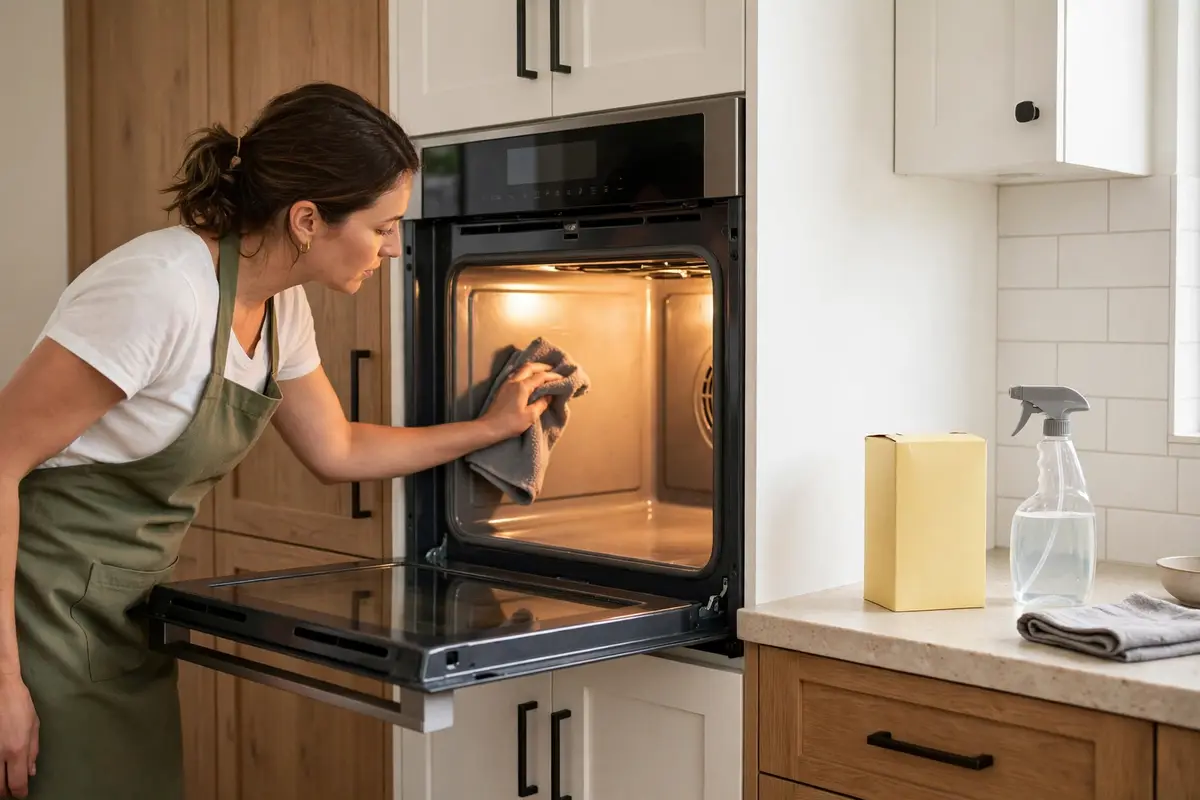
Spread a baking soda paste inside a cool, empty oven, leave it overnight, then wipe it out and finish with a light vinegar spray. Soak the racks in the tub while you wait, and clean the glass door with the same paste for a streak-free finish.
Why Baking Soda Beats Spray Oven Cleaner
Most spray oven cleaners work by coating the inside of your oven with strong chemicals that burn through grease, and they warn you to ventilate the room and wear gloves for good reason. The fumes sting your eyes, the smell lingers for hours, and you end up heating a box that just held those chemicals before you cook dinner in it. Baking soda takes a slower route to the same result. It is a mild alkali, so it loosens baked-on grease and food without giving off fumes, and it costs a fraction of a spray can. The trade is time, not effort: you spread a paste, walk away overnight, and wipe it off in the morning. For a regular home oven, that trade is well worth it.
What You Need Before You Start
You do not need special equipment for this job, and you probably own most of it already. Grab a box of baking soda, a bottle of plain white vinegar, a spray bottle, an old sponge or rag, a plastic scraper or an old credit card, and a pair of rubber gloves. A bowl for mixing the paste and a second bowl of warm water for rinsing will keep things tidy. Skip steel wool and harsh scouring pads for the inside walls, since they can scratch enamel and leave marks that grab grease next time. If your oven has a self-cleaning cycle, ignore it for this job: the paste method is gentler, uses no extra electricity, and will not bake the smell of burnt grease through the house.
Start Cold, Empty, and Unplugged from Heat
Never clean an oven that is still warm from cooking, and never spread paste on a hot surface. Let the oven cool fully, ideally for a few hours after its last use, so the paste stays put instead of drying out in patches. Pull out the racks, the thermometer if you keep one inside, and any loose trays or pizza stones. Wipe out loose crumbs and ash with a dry cloth or a quick pass of the vacuum cleaner hose, since loose debris just turns to mud once the paste goes on. If your oven has a removable bottom panel or a loose crumb tray, take those out too. A few minutes of prep here saves a lot of wiping later.
Mix and Spread the Baking Soda Paste
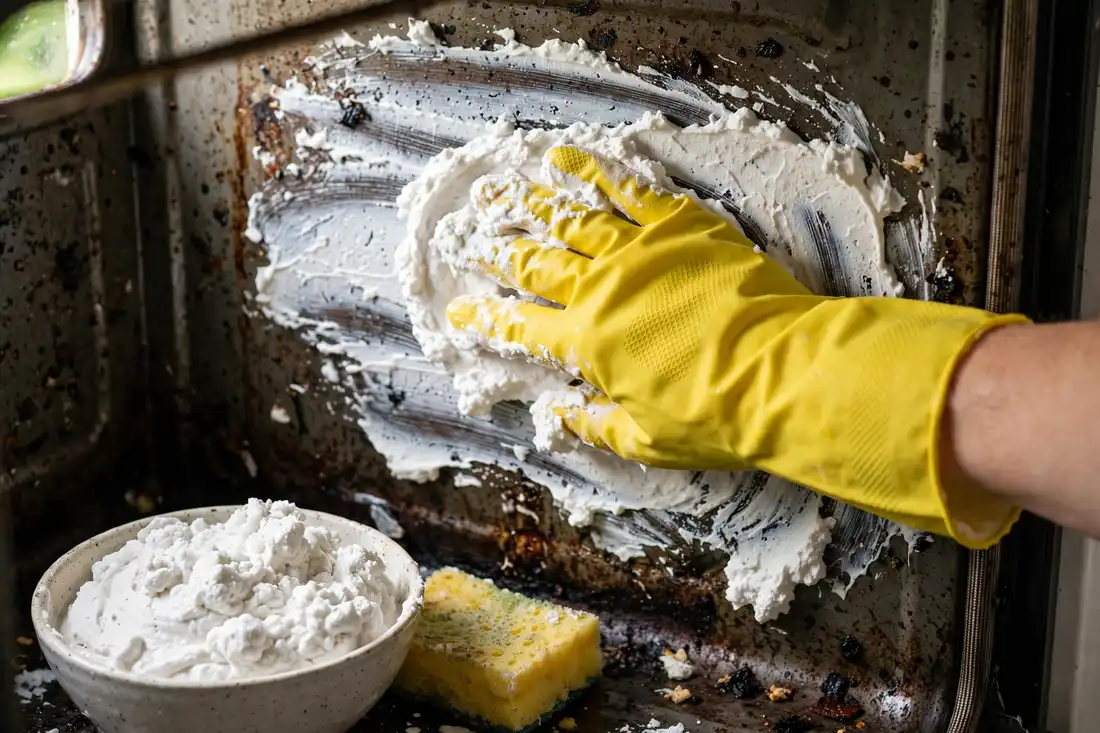
Mix about half a cup of baking soda with three tablespoons of water in a bowl, adding water a spoonful at a time until you get a thick paste that spreads like frosting. Too runny and it slides off the walls; too dry and it will not grip the grease. Put on your gloves, then spread the paste over the inside walls, floor, and ceiling of the oven with your fingers or a sponge, skipping the heating elements and any fan vents. Coat the worst spots a little thicker, especially the floor where spills bake on. Close the door and leave it alone. Twelve hours, or overnight, is the sweet spot for a normally dirty oven.
Let It Sit Overnight and Do the Work
The waiting is the whole method, so resist the urge to check on it every hour. While the paste sits, the baking soda slowly breaks down grease and softens carbonized food, turning dark brown patches into a crust you can lift off. A very greasy oven may need the full twelve hours, and a truly neglected one can sit for a full day without any harm. Do not turn the oven on to speed things up, since heat dries the paste into a hard shell that is harder to remove. If you clean in the evening, you can spread the paste after dinner and wipe it off with your morning coffee, which makes the job feel like two ten-minute tasks instead of one long chore.
Wipe It Out, Then Use the Vinegar Finish
In the morning, take a damp sponge and wipe out as much of the paste as you can, rinsing the sponge often in your bowl of warm water. Most of the grease will come away with the paste in soft, dark clumps. Once the bulk is gone, spray the inside lightly with white vinegar and watch it fizz where paste remains, then wipe again with a clean damp cloth. The vinegar step is not about extra cleaning power so much as balance: it dissolves the chalky baking soda residue that plain water leaves behind. Repeat the wipe with fresh water until the cloth comes away clean, then leave the door open for half an hour so the oven dries fully.
Clean the Racks in the Bathtub
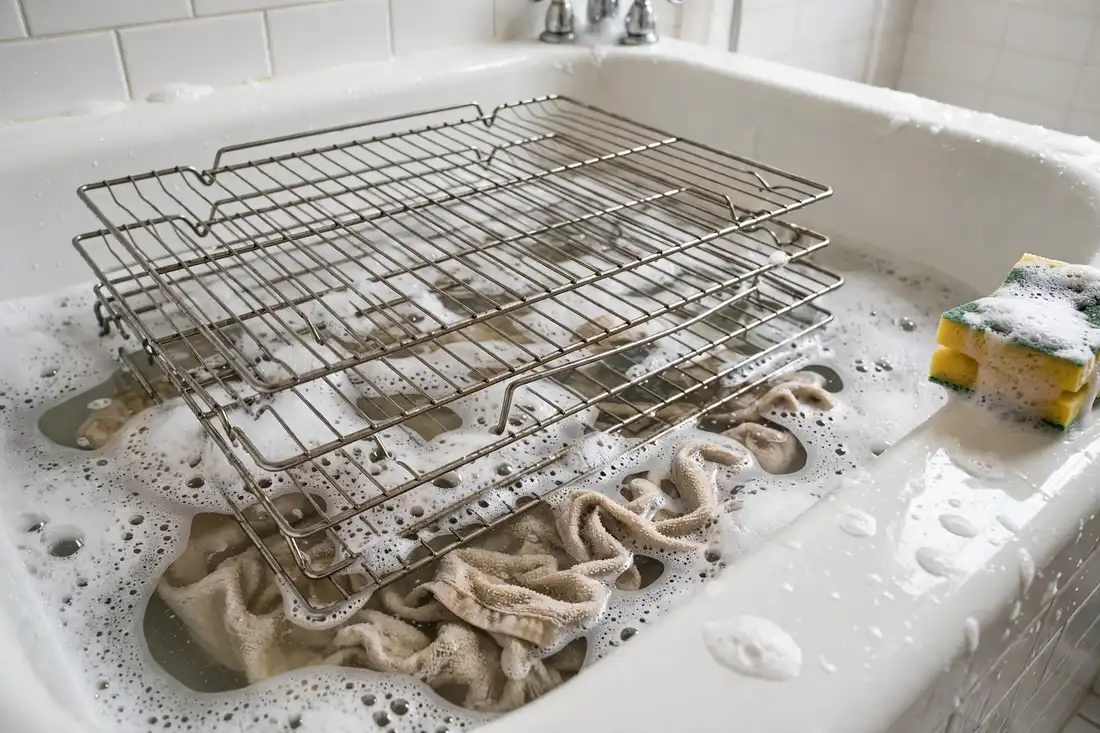
Oven racks do not fit well in a kitchen sink, so the bathtub is the better spot. Lay an old towel in the tub to protect the surface, set the racks in, and cover them with hot water plus half a cup of baking soda, or a squirt of dish soap if the grease is heavy. Let them soak for at least four hours, or overnight if you are already waiting on the oven paste. After soaking, most grease wipes off with a sponge, and a plastic scraper handles the corners where the bars cross. Rinse the racks well, dry them with a towel to stop rust spots, and slide them back only when the oven interior is fully dry.
Get the Glass Door Clear Without Scratching It
The glass door collects a brown film that looks worse than it is, and it cleans up with the same paste. Spread a thin layer of baking soda paste on the inside of the glass, let it sit for at least thirty minutes, then wipe it off with a damp cloth. For a film that has survived a few rounds of this, make a paste with baking soda and a little vinegar, rub it gently with a non-scratch sponge, and rinse well. Never use a razor scraper on tempered oven glass, since a scratch can weaken the glass over time and, in rare cases, lead to it shattering later. A second pass with plain water and a dry cloth removes the haze.
Tackling Spots That Refuse to Budge
Some spots will still be there after the first wipe, usually where a sugary spill or a roast splatter baked on for months. Do not reach for a stronger chemical at this point. Instead, put a fresh, thick layer of paste right on the spot, cover it with a damp cloth to keep it moist, and leave it for another few hours. Then scrape gently with a plastic scraper held at a low angle, working from the edge of the spot inward. If a stain is dark but smooth to the touch, it is likely just discoloration of the enamel, not dirt, and it will not hurt your cooking. Chasing a perfect white interior can do more damage than the stain ever would.
How Often You Actually Need to Do This
A home oven that gets used a few times a week needs a deep clean like this about every three to six months, and a light wipe every month keeps the deep cleans easy. Wipe up spills while the oven is still slightly warm, not hot, since a spill left to bake on twice becomes the next deep-clean project. If you roast meat often or cook at high heat, lean toward the shorter end of that range. A clean oven also cooks better: heavy grease on the walls can smoke at high heat and give food an off taste, and a dirty window means you open the door to check food, losing heat each time. Put a reminder in your phone and the job never gets bad enough to dread.
Keep It Cleaner Between Deep Cleans
A few small habits stretch the time between deep cleans a lot. Put a sheet of foil on the rack below a dish that might bubble over, but never line the oven floor itself, since foil on the floor can block heat and damage the enamel. Wipe the door glass once a month with a damp cloth so the film never builds up. Keep a baking sheet under roasts and casseroles that tend to splatter. None of this takes more than a minute, and it is the difference between a ten-minute wipe and a full weekend project. The oven stays ready to use, and the next deep clean is a quick refresh rather than a rescue job.
- Line the bottom rack with foil, never the oven floor
- Wipe spills while the oven is warm, not hot
- Use a roasting pan with high sides for fatty meat
- Run a quick vinegar wipe on the door monthly
- Check the door seal for crumbs and grease
✅ Guide4U Checklist
- Let the oven cool fully first
- Spread paste, skip heating elements
- Leave the paste overnight
- Wipe out, then vinegar-rinse
- Soak racks in the tub
- Never mix bleach with vinegar
Key Takeaways
- Time does the work, not harsh fumes
- The vinegar wipe removes chalky residue
- A monthly wipe keeps deep cleans easy
Frequently Asked Questions
Can I use baking soda on a self-cleaning oven?
Yes. The paste method is safe for the enamel in most self-cleaning ovens, and it avoids the very high heat of a self-clean cycle, which can stress older ovens and fill the house with smoke. Just keep the paste off the heating elements and check your manual first if your oven has a special coating.
Is it safe to mix baking soda and vinegar for cleaning?
Yes, for cleaning an oven it is safe. The fizzing you see is the two neutralizing each other, which is why the vinegar wipe works well as a final rinse to remove baking soda residue. The one rule that matters is never to mix bleach with vinegar or with any other cleaner, since that combination gives off harmful fumes.
How long should the baking soda paste sit in the oven?
Twelve hours, or overnight, works for most ovens. A lightly used oven may only need four to six hours, while a very greasy one benefits from a full day. The paste does no harm sitting longer, so when in doubt, give it the extra time rather than scrubbing harder.
Can I clean the oven while it is still warm?
No. Wait until the oven is fully cool before spreading the paste, since heat dries the paste out before it can loosen grease. Wiping up a fresh spill is different: once the oven is warm but safe to touch, a damp cloth can lift a new spill before it bakes on.
What did you think of this article? Share your opinion in the comments below — we would love to hear from you.