
How to Get Rid of Ants in Your Kitchen Naturally (Without Harsh Sprays)
Quick Answer
Find the trail, seal the entry point, and set borax bait stations along the trail so worker ants carry the bait back to the colony. Wipe old trails with vinegar water and keep food in sealed containers. Most kitchen invasions fade within one to two weeks.
Start by Watching, Not Spraying
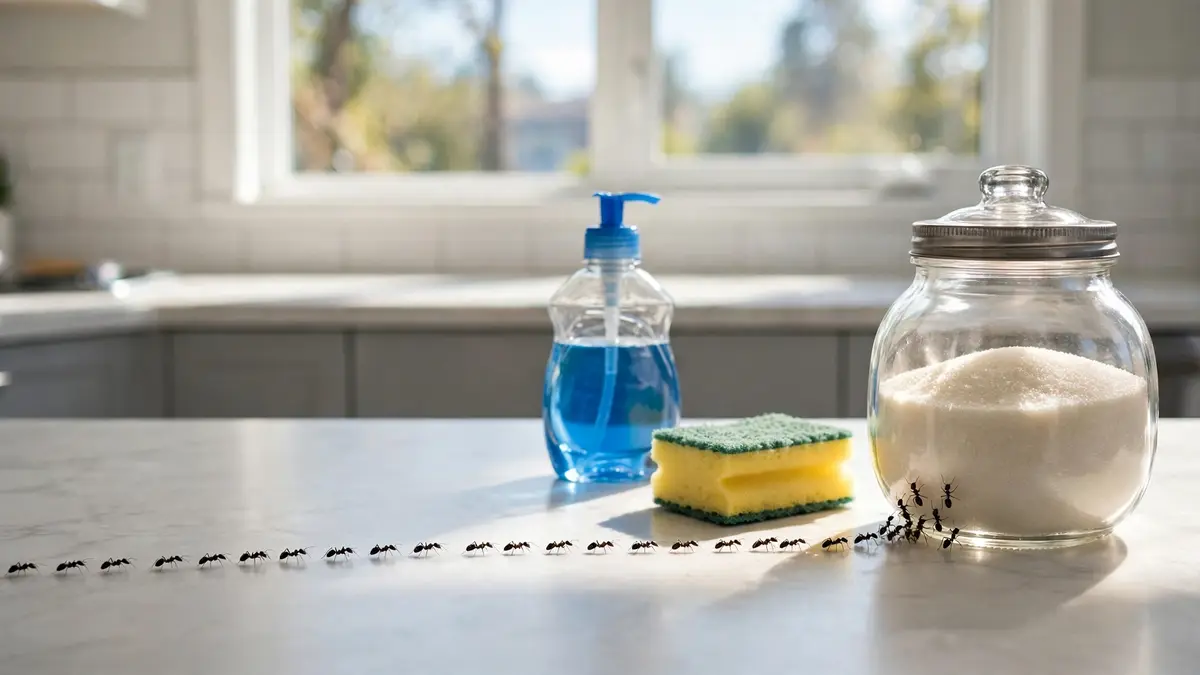
When you spot ants in the kitchen, the urge is to grab a spray and wipe out the line on the spot. Hold off for ten minutes and watch instead. That line is a trail, and it leads somewhere useful: the crack under the baseboard, the gap around a pipe, or the thin space where the countertop meets the wall. Ants follow scent trails laid down by scout ants, so the line you see is basically a map back to their entry point and, sometimes, to the food that drew them in. If you spray the trail first, you scatter the ants and lose the map. Note where the line starts and ends, and snap a quick phone photo so you remember the exact spot later, and then you can deal with the entry point and the food source instead of fighting the same ants again tomorrow.
Clean Up the Food Trail First
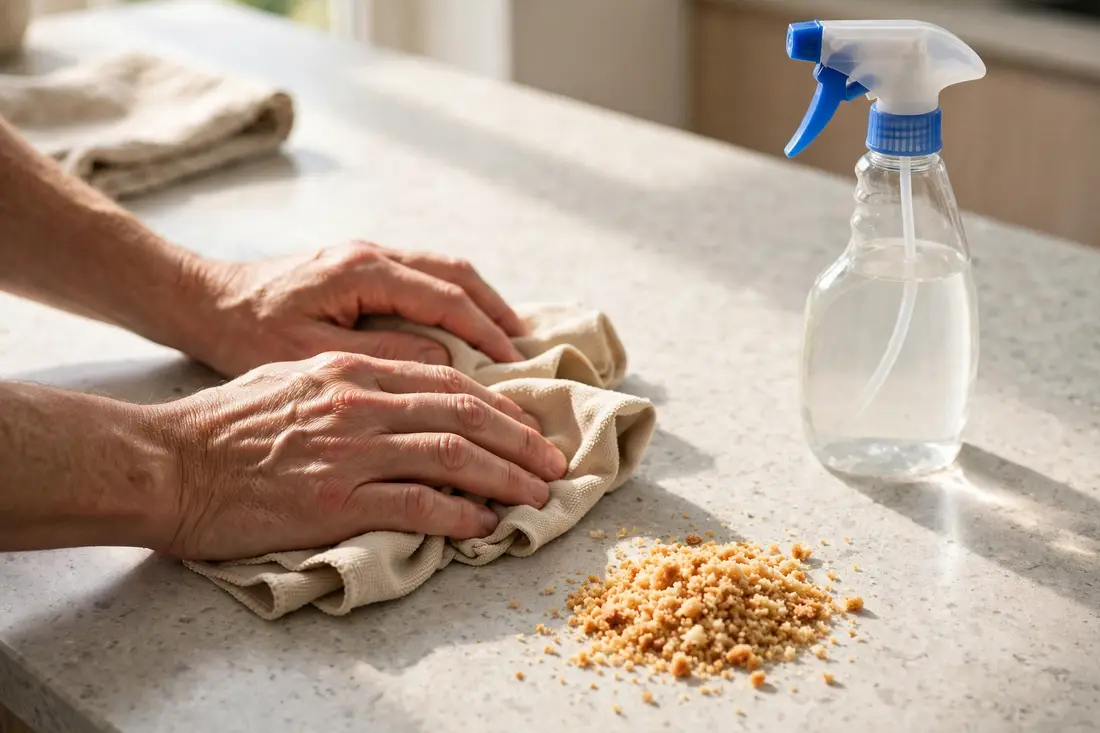
Ants show up because something edible is within reach, and the fix starts with taking it away. Wipe counters with soapy water, which also breaks up the scent trail they follow. Sweep up crumbs under the toaster and around the trash can, and rinse sticky jars before you put them back in the pantry. Store sugar, cereal, flour, and pet food in sealed hard containers, since ants chew through thin plastic bags and cardboard boxes with ease. Do not forget the trash: a bin with a loose lid and a sticky rim is a nightly invitation. Check the fruit bowl too, since one overripe banana can feed a trail for days, and wipe the outside of honey jars and syrup bottles, which often carry a thin sticky film. This step alone will not end an invasion, but without it every other step works half as well.
Seal the Entry Points You Found
Once you know where ants get in, close those gaps. A tube of caulk handles most cracks along baseboards, window frames, and where pipes pass through walls. For larger gaps under a door, a door sweep or a strip of weatherstripping does the job. Check the seal around your kitchen window too, since a warped frame can leave a gap wide enough for a whole trail. You do not need to seal your whole house in one weekend. Start with the kitchen, since that is where the food is, and work outward only if ants keep finding new routes in. A quick check once a season keeps the seals working, since caulk shrinks and cracks over time, especially near a sunny window or a hot pipe. Sealing turns a daily battle into a one-time repair.
Wipe the Trail With Vinegar Water
A mix of equal parts white vinegar and water wipes out the scent trail ants use to find their way back. Spray it along the path you watched them walk, leave it for a few minutes, and wipe clean. This does not kill the colony, and it is honest to say so: it just erases the road map, so fewer new ants show up while you work on the real fix. Use it on counters and floors, but skip it on natural stone like marble or granite, since vinegar can dull those surfaces. Plain soapy water works as a gentler backup on stone. Reapply after you mop, because mopping alone often leaves enough scent behind for scouts to pick the trail up again.
Use a Borax Bait to Reach the Colony
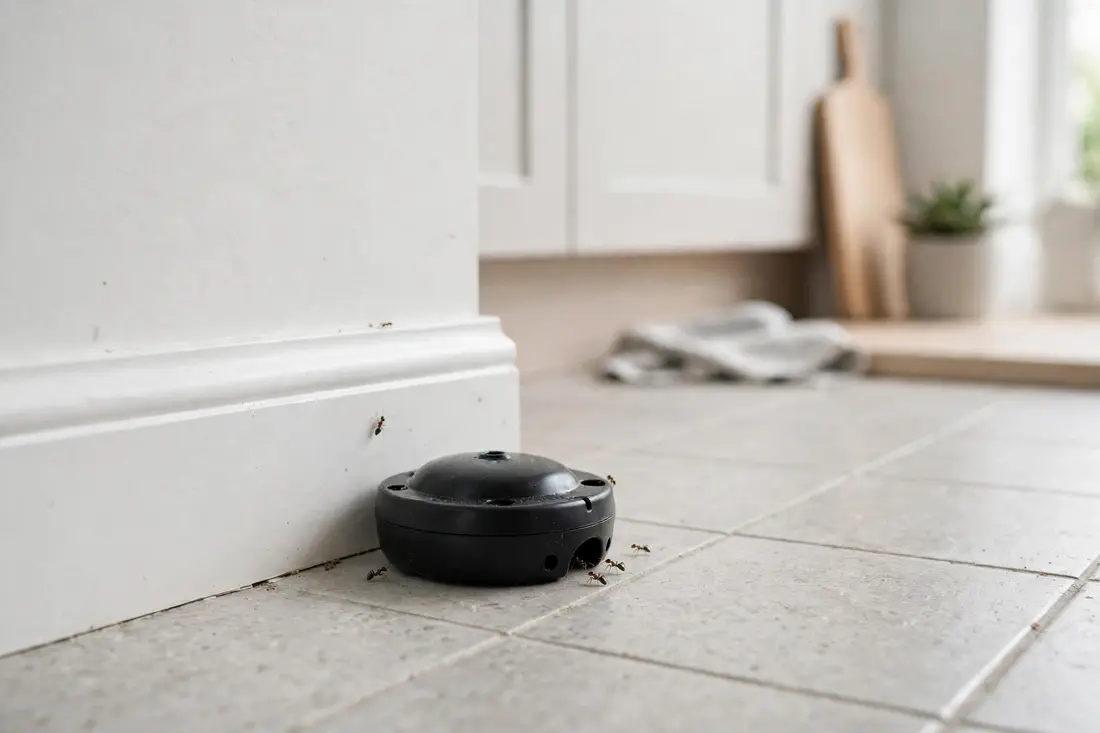
Sprays kill the ants you see. Baits reach the ones you do not, because worker ants carry the bait back and share it with the colony. A common home bait mixes borax with something sweet, and you can buy ready-made borax ant baits at most grocery stores if you would rather not mix your own. Place small bait stations right along the trail, not on top of it, and leave them alone for several days. You may see more ants at first, which feels wrong but is actually the bait working: more workers finding it means more of it gets carried home. Do not spray near the bait, or you will kill the carriers before they deliver it.
- Put bait stations along the trail, never across it
- Leave baits untouched for at least three days
- Keep baits away from kids and pets at all times
- Replace dried-out bait with a fresh station
- Do not spray insecticide near a working bait
Keep Borax Baits Away From Kids and Pets
Borax is a natural mineral, but natural does not mean harmless to swallow, so treat every bait station with respect. Place baits behind the fridge, inside a cabinet corner, or in any spot a child or a pet cannot reach. Never put loose bait powder on an open surface, and never use bait in a pet food bowl area. If you have a curious dog or a toddler in the house, ready-made enclosed bait stations are the safer choice, since the bait stays inside the plastic case. Wash your hands after handling baits, and store any leftover borax powder up high with your other cleaning products. If a child or pet eats bait, call your local poison control line right away.
Deterrents That Help a Little, Honestly
You will read that cinnamon, lemon juice, peppermint oil, and coffee grounds keep ants away, and there is a grain of truth in each one. Strong smells can confuse a trail for a short while, and a line of cinnamon across an entry point may turn a few scouts around. But these are speed bumps, not walls: the smell fades, the ants find a new route, and the colony stays put. Use them as a short-term helper while your bait works, not as the whole plan. A cotton ball with a few drops of peppermint oil near an entry point is fine as a stopgap. You will need to refresh oils and powders often, since their scent fades within a day or two, and a deterrent placed a foot from the trail does nothing at all. Just do not expect a spice jar to solve an invasion on its own.
Fix the Moisture That Draws Them In
Food gets the blame, but water matters just as much. Many kitchen ants, especially the small dark ones that show up near sinks, are drawn to damp spots. Fix a dripping faucet, wipe up water under the sink, and do not leave a wet sponge sitting in a puddle overnight. Pet water bowls are another draw, so rinse the bowl daily and wipe the floor around it. In summer, condensation on cold pipes can be enough to keep ants interested, and a bit of pipe insulation or a dry rag routine helps there. A leaking dishwasher hose and a garbage disposal that holds standing water can do the same quiet damage, so run the disposal with cold water and check under the sink once a month. A dry kitchen is a less interesting kitchen, and that alone cuts down repeat visits.
What Not to Do With Kitchen Ants
A few common moves make the problem worse. Spraying the trail with insecticide often splits the colony, and some ant species respond by forming new colonies in new spots, which leaves you with ants in two rooms instead of one. Never mix cleaning products, and never use outdoor pesticides indoors, since the label rules exist for a reason and kitchen surfaces touch your food. Pouring boiling water into a wall crack can damage pipes and wiring and rarely reaches the nest anyway. And do not seal an entry point while ants are still trailing through it with food inside the wall, or you may push them out through a new gap closer to your pantry.
A Simple Seven-Day Plan That Works
Day one, watch the trail, clean the kitchen, and seal the clearest entry points. Day two, set out borax bait stations along the trail and stop spraying near them. Days three and four, expect more ants at the bait and leave it alone, even though it looks worse. Day five, wipe old trails with vinegar water and check whether new trails have appeared somewhere else. Day six, reseal any new gaps you found and refresh dried bait. By day seven, most kitchen invasions have faded sharply, since the bait has had time to reach the colony. If ants are still heavy after two full weeks, the nest may sit inside a wall void, and that is the point to call a local pest professional.
- Day 1: watch, clean, and seal entry points
- Day 2: set bait stations along the trail
- Days 3-4: leave bait alone, expect more ants
- Day 5: wipe trails and check for new routes
- Day 7: judge results, refresh or call a pro
✅ Guide4U Checklist
- Watch the trail before spraying anything
- Store food in sealed hard containers
- Caulk gaps along baseboards and pipes
- Place borax bait along the trail
- Keep baits away from kids and pets
- Wipe trails with vinegar water
- Fix drips and dry wet spots
Key Takeaways
- The trail is a map: follow it to the entry point before you spray.
- Baits beat sprays because workers carry the bait back to the colony.
- Sealed food, sealed gaps, and dry counters keep ants from coming back.
Frequently Asked Questions
Are borax baits safe to use around pets?
Enclosed, ready-made bait stations are the safer option in homes with pets, since the bait stays inside the case. Keep every station where pets cannot chew or paw at it, never put loose bait powder on open surfaces, and call your vet or poison control if a pet eats any bait.
How long does it take for ants to disappear?
Most kitchen invasions fade within a week or two once a bait reaches the colony. You may see more ants for the first few days as workers find the bait, and that is normal. If numbers are still high after two weeks, the nest may be inside a wall, and a pest professional can help.
Why do ants come back every spring?
Warm weather wakes colonies up and sends scouts looking for food and water, so kitchens get scouted first. Sealing entry points in early spring and keeping food sealed through the season cuts down the yearly return, even if a few scouts still wander in.
Do natural methods kill the queen ant?
Vinegar sprays and scent deterrents do not reach the queen. Borax baits can, because worker ants carry the bait back and share it inside the nest. That shared feeding is what makes baits the most useful home method for actually ending an invasion.
What did you think of this article? Share your opinion in the comments below — we would love to hear from you.