
How to Get Rid of Drain Flies in Your Bathroom Sink for Good
Quick Answer
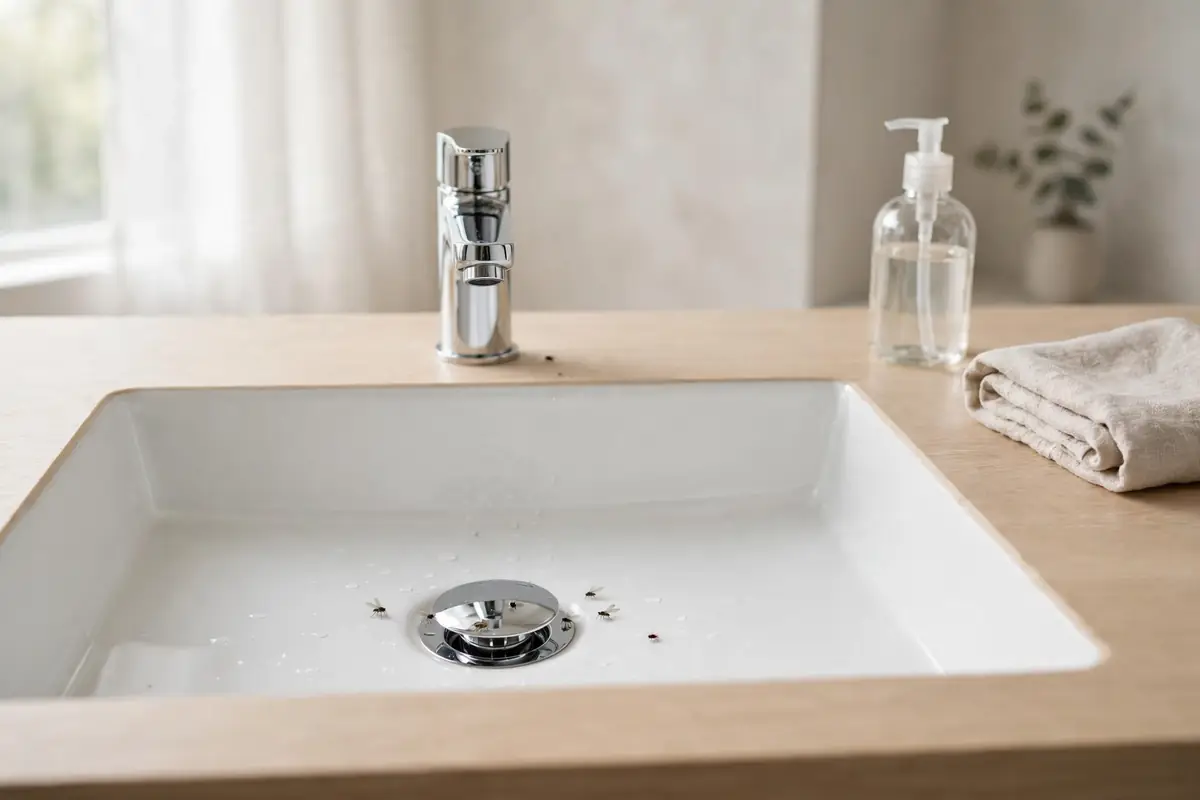
Drain flies breed in the slimy biofilm inside your drain, so the fix is to scrub that film out with a drain brush, flush with baking soda and vinegar, and follow with an enzyme cleaner for several nights. Expect the flies to fade over one to two weeks as the adults die off.
What Drain Flies Actually Are
Drain flies, also called moth flies, are tiny, fuzzy, moth-like insects that hover around sinks and showers. They do not bite, they do not sting, and they do not damage your home, which is why many people ignore the first few. The trouble is where they breed: in the thin, slimy layer of bacteria, soap scum, and hair that coats the inside of drains. That layer is called biofilm, and a single female can lay hundreds of eggs in it. Adults live only a week or two, but new ones keep hatching, so a small problem can look permanent if you only swat the flies you see.
Make Sure They Are Drain Flies
Before you start cleaning, confirm what you are dealing with, because fruit flies need a very different fix. Drain flies are small, dark, and fuzzy, and they sit on walls near the drain with their wings folded like a tiny moth. They are weak fliers and tend to hop or make short, jerky flights. Fruit flies, by contrast, are smoother, reddish-eyed, and hang around fruit bowls, trash cans, and recycling. If you are unsure, tape a piece of clear tape loosely over the drain overnight with a few small holes poked in it. Flies stuck to the underside by morning confirm the drain is the source.
Find the Real Breeding Spot
Drain flies do not always breed in the drain closest to where you see them. Adults wander, so the source can be the shower drain while the flies gather around the sink. Work through every drain in the bathroom, and any floor drain or laundry drain close by, before you declare victory. The tape test from the last section works on each one: cover it overnight and check in the morning. Pay special attention to drains that get little use, because standing water and undisturbed biofilm are perfect nurseries. A drain you forgot about can undo a week of careful cleaning.
- Check the bathroom sink drain and its overflow hole
- Check the shower or bathtub drain in the same room
- Check any guest bathroom sink that rarely gets used
- Check floor drains and the laundry drain if flies appear nearby
Scrub the Biofilm Out
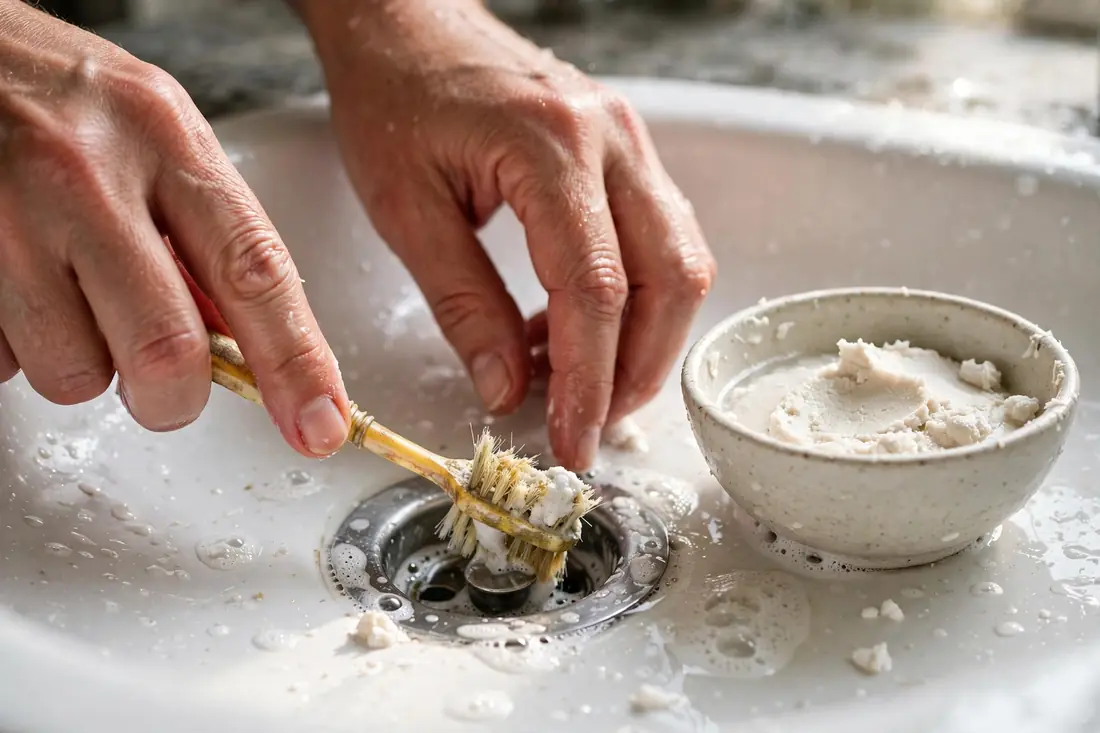
This is the step that actually ends the problem, and it is the one most people skip. Pull out the sink stopper and clean it separately in hot, soapy water. Then push a drain brush down into the drain and scrub the walls in a twisting motion, rinsing the brush often. An old toothbrush reaches the rim and the threads where the stopper sits. Do not forget the overflow hole: biofilm grows inside that little channel too, so run the brush into it and flush it with hot water. What comes out will look gross, and that is the point. You are removing the food and shelter the larvae live in.
- A long, flexible drain brush or an old toothbrush
- Hot water and plain dish soap
- Rubber gloves and a small bucket
- A flashlight to check your work
Flush With Baking Soda and Vinegar
After scrubbing, a baking soda and vinegar flush helps clear what is left. Pour half a cup of baking soda down the drain, follow it with a cup of white vinegar, and let it fizz for about 15 minutes before flushing with hot water. Be honest about what this step does: the fizz looks dramatic, but it is a mild cleaner, not a cure. Its real value is rinsing loose debris out of a drain you have already scrubbed, and freshening the smell. If you pour it down a drain you never scrubbed, the biofilm stays put and the flies come right back. Think of it as the rinse after the real work, not a replacement for it.
Use an Enzyme Drain Cleaner for Stubborn Cases
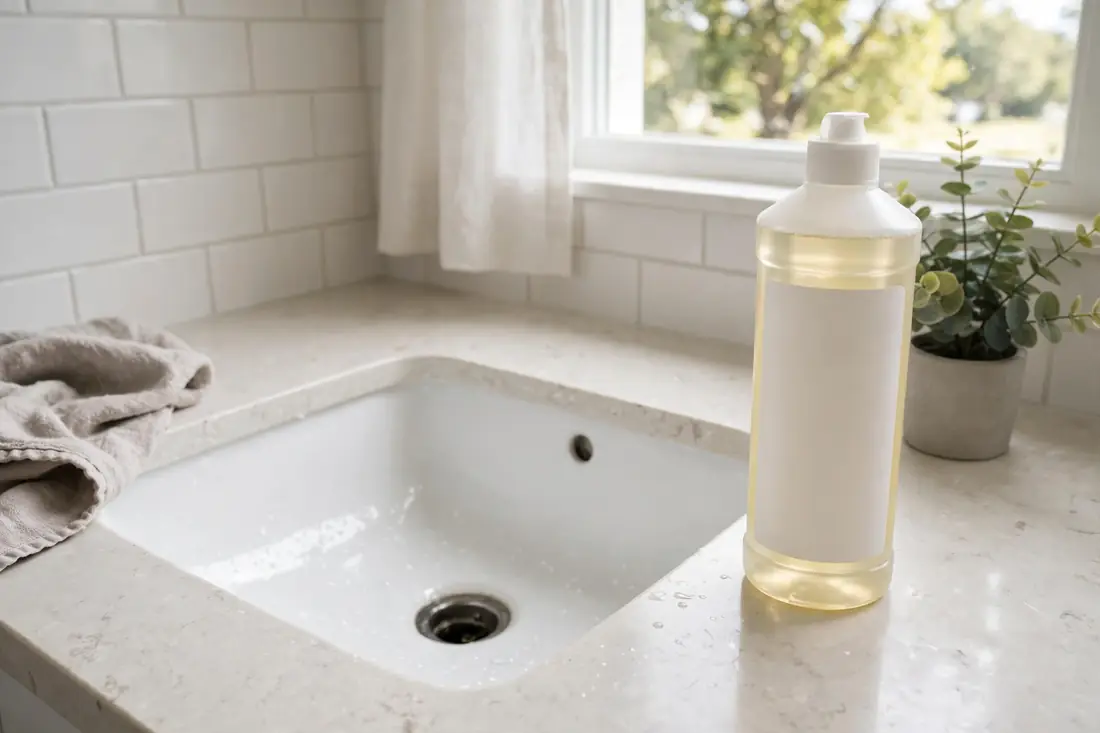
If flies return after a good scrub, an enzyme drain cleaner is your next move. These products contain bacteria or enzymes that eat the organic matter lining the drain, reaching film your brush cannot. Pour it in at night, when the drain will sit unused for hours, and repeat for several nights in a row as the label directs. Enzyme cleaners are not the same as caustic drain openers, which burn through clogs with harsh chemicals and can damage pipes and septic systems. Enzymes work slower, but they treat the cause rather than just clearing a path. Give them a few days before you judge the result.
What Not to Pour Down the Drain
A few common fixes do more harm than good. Bleach kills adult flies on contact, but it does not dissolve biofilm, and in a small, poorly ventilated bathroom the fumes are unpleasant and can irritate your lungs. Boiling water sounds logical, yet a sudden blast of it can crack porcelain and stress PVC pipe joints, especially in older plumbing. Never mix cleaners, either: bleach mixed with vinegar or with ammonia-based products creates toxic gases. If one product did not work, rinse the drain well with plain water and wait before trying another. The safest heavy lifters here are a brush, hot soapy water, and time.
Dry Out the Habits That Feed Them
Once the flies are gone, a few small habits keep them from returning. Slow drains are the biggest culprit: standing water lets biofilm thicken fast, so clear a slow drain early instead of living with it. Wipe around the faucet base and the sink rim, where splashes leave a damp film that feeds the same bacteria. If you have a guest bathroom nobody uses, run its taps and flush its toilet once a week so the water in the trap does not go stale. A hair catcher in the shower drain is worth its few dollars, because trapped hair is one of the main ingredients of drain biofilm.
- Fix slow drains so water never stands in the trap
- Wipe the sink and faucet base dry after use
- Run rarely used taps for a minute each week
- Fit a hair catcher and empty it often
How Long Until They Are Gone
Set your expectations before you start, because drain flies do not vanish overnight. Adults already in the air will keep appearing for several days even after you have scrubbed perfectly, since they live for a week or two. What you should see is a steady decline: fewer flies each day, and none clustering on the walls by the end of the second week. If fresh flies are still showing up after two weeks of cleaning, you have missed a breeding spot, so repeat the tape test on every nearby drain. Patience plus a second check beats pouring stronger chemicals down a drain you already cleaned.
When to Call a Plumber
Most drain fly problems end with a brush and an enzyme cleaner, but a few signs point to something bigger. Call a plumber if flies come from several drains at once, if there is a persistent sewer smell, or if water backs up when you run a tap. Those symptoms can mean a cracked pipe, a broken seal, or a blocked main line, none of which a homeowner can fix with a drain brush. The same goes for flies that return within days of a thorough cleaning, every time, for a month or more. At that point you are likely dealing with a hidden leak or a damaged pipe that keeps the biofilm wet and fed.
✅ Guide4U Checklist
- Tape-test each drain overnight first
- Pull the stopper and scrub it separately
- Brush the drain walls and overflow hole
- Flush with baking soda and vinegar
- Run enzyme cleaner at night, several nights
- Fix slow drains and wipe the sink dry
Key Takeaways
- The drain film is the problem: sprays aimed at flying adults never end it.
- Scrub the drain walls, stopper, and overflow hole before any chemical step.
- One missed drain can restart the whole infestation, so tape-test them all.
Frequently Asked Questions
Are drain flies harmful to people or pets?
No, drain flies do not bite people or pets. They are still worth removing quickly, though, because they breed in drain slime and can carry bacteria from the drain onto nearby surfaces like toothbrushes and towels.
Will pouring vinegar down the drain kill drain flies?
Vinegar kills some adult flies on contact, but it does not reach the eggs and larvae living in the biofilm on the drain walls. A vinegar flush can help after you scrub, but on its own it rarely ends an infestation.
Why do drain flies keep coming back after I clean?
Usually you missed a second breeding spot. Check the overflow hole, the shower drain, and any rarely used sink or floor drain in the same bathroom. One uncleaned drain can keep supplying new adults for weeks.
Can I just pour bleach down the drain?
Bleach kills adult flies and some surface germs, but it does not dissolve the biofilm where the eggs live, and its fumes are rough in a small bathroom. An enzyme drain cleaner is a better pick because it breaks down the film itself.
What did you think of this article? Share your opinion in the comments below — we would love to hear from you.