
How to Get Rid of Mice in Your House Naturally (and Keep Them Out)
Quick Answer
Mice leave when food, shelter, and entry points disappear. Store food in sealed containers, seal gaps with steel wool and caulk, set snap traps along walls, and clean droppings safely. Scent tricks alone will not fix the problem.
How to Tell Mice Have Moved In
Mice are shy, so you will usually find their signs before you see one. Look for small, dark droppings about the size of a grain of rice along baseboards, inside pantry corners, and under the sink. You may also find shredded paper or fabric in a quiet drawer, gnaw marks on food packaging, and a faint musky smell in a closed cupboard. At night, listen for light scratching or scurrying inside walls or above the ceiling. One or two droppings could be an old visit, but fresh, soft droppings and new gnaw marks mean mice are active right now, and that is when you should act.
Why Mice Pick Your House
A mouse needs only three things: food, water, and a warm hiding place. Kitchens supply all three, which is why pantry shelves, pet bowls, and the gap behind the stove are the first places they settle. They can squeeze through a hole as wide as a pencil, so a gap around a pipe or a worn door sweep is an open door to them. Cluttered basements, garages, and attics give them nesting material and cover. Cold weather pushes them indoors in fall, but a house with open pet food and cardboard boxes is attractive all year. Once you see it from the mouse's side, the fix becomes clear: remove what draws them in.
Cut Off the Food First
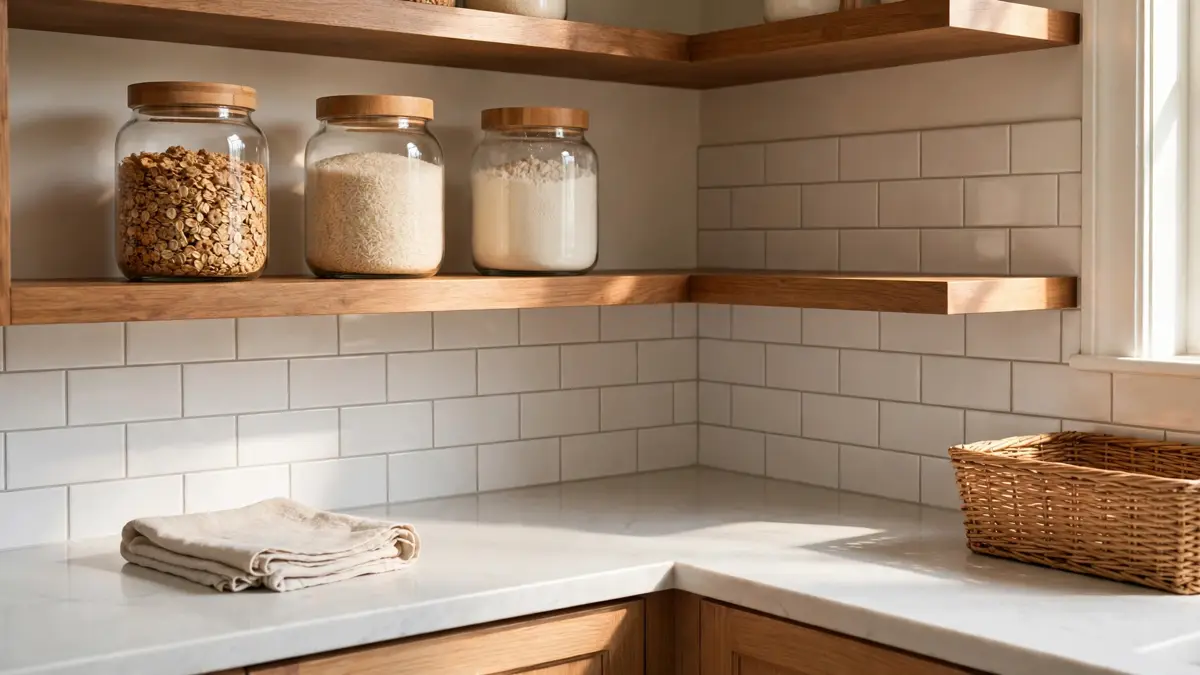
Start in the kitchen, because every trap works worse while free food is on offer. Move cereal, rice, flour, crackers, and pet food into glass jars or hard plastic containers with tight lids, since mice chew straight through bags and thin cardboard. Wipe counters each night, sweep up crumbs under the toaster and stove, and never leave pet food out overnight. Take trash out often and use a bin with a snug lid. Check the pantry for torn packaging and throw away anything with gnaw marks or droppings in it. This step alone will not remove mice, but it forces them toward your traps instead of your dinner.
Find How They Get In
Mice follow walls and pipes, so trace the routes they use. Walk around the outside of your house and look for gaps where pipes and cables enter, cracks in the foundation, vents without covers, and daylight showing under garage or basement doors. Inside, check under sinks, behind the stove and fridge, and around radiators and dryer vents. Dust a little flour near a suspected gap at night and check for tiny footprints in the morning. Finding the entry points matters more than any repellent, because new mice will keep arriving through the same holes no matter how many you catch inside.
Seal Entry Points the Right Way
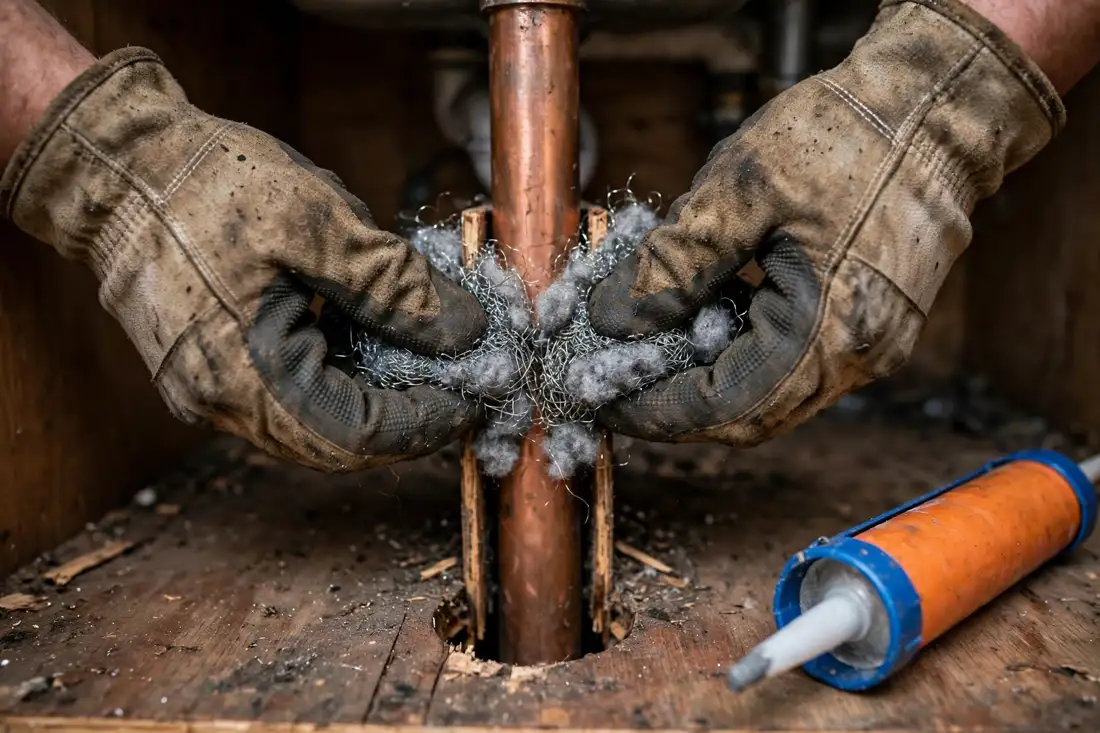
Seal with materials mice cannot chew through. Caulk alone is not enough for a gap a mouse already uses, because they can gnaw through soft sealant. Push steel wool or copper mesh into the hole first, then cover it with caulk, cement, or metal flashing. Use door sweeps on outside doors and fix torn screens. Cover attic and crawl-space vents with fine metal mesh. Work through the house room by room, and do not seal a large hidden opening while mice are still active inside it, or you may trap them in the walls. Seal the obvious routes first, trap the mice inside, then finish the smaller gaps.
- Stuff larger gaps with steel wool or copper mesh, then seal over it with caulk or cement
- Fit door sweeps on exterior doors and repair torn window screens
- Cover vents and larger openings with fine metal mesh, not plastic
- Check the garage door seal and the gaps around the dryer vent
Trap the Mice Already Inside
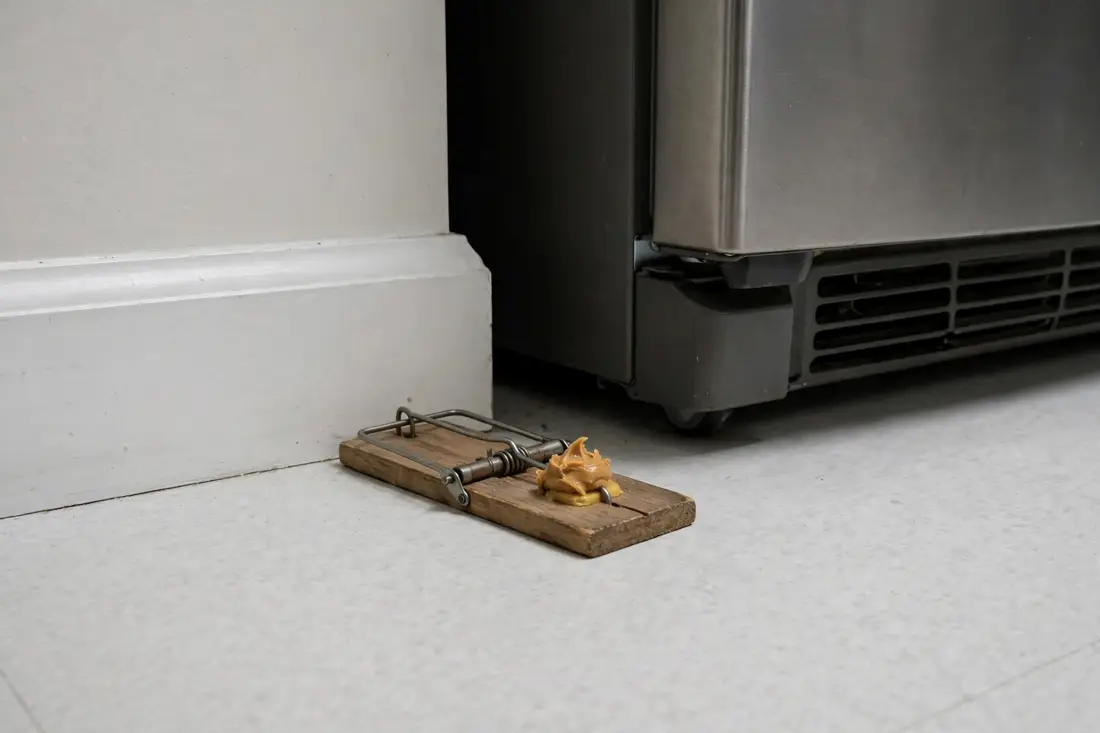
Snap traps are still the most reliable option for a small home problem, and they work fast when placed well. Set them along walls, behind appliances, and near droppings, with the trigger end facing the wall, since mice run along edges rather than across open floors. Peanut butter, chocolate, or a small piece of bacon makes good bait, tied on so the mouse has to tug. Use several traps at once, not one, and check them every morning. Wear gloves when handling traps and dead mice, and keep traps where children and pets cannot reach them. Live-catch traps work too, but check local rules before releasing a mouse elsewhere, since some areas restrict it.
What About Peppermint Oil and Sound Gadgets
Peppermint oil, cloves, and ultrasonic devices are popular because they promise a mouse-free house without traps, but the honest truth is less exciting. Strong scents may bother mice for a day or two, yet hungry mice get used to them fast, and no scent seals a hole or removes a nest. Ultrasonic gadgets have the same problem: tests show mixed results, and mice often return to rooms where a device runs nonstop. If you enjoy the smell of peppermint, use it as a freshener, not a solution. Spend your effort on food storage, sealing, and trapping, and treat scent tricks as a side note rather than the plan.
Clean Up Droppings Without Spreading Germs
Mouse droppings can carry germs, so cleanup needs care, not speed. Open a window and let the room air out for about 30 minutes before you start. Never sweep or vacuum dry droppings, because that can stir dust into the air. Spray the area with a household disinfectant until damp, wipe it up with paper towels, and seal the waste in a bag before binning it. Wash your hands well, and clean any food-contact surfaces again with soap and water. If you find a nest in bedding or soft fabric, wash those items in hot water. Gloves and a mask make the job safer, and they cost almost nothing.
- Open windows and air the room out for 30 minutes first
- Spray droppings with disinfectant until damp, never sweep them dry
- Wipe up with paper towels, bag them, and wash your hands well
- Wash bedding or soft items from nesting spots in hot water
Keep the Yard From Feeding the Problem
Mice often live outside first and move in when the weather turns, so the yard matters too. Clear brush, wood piles, and junk from the walls of your house, and keep firewood stacked off the ground and away from the building. Pick up fallen fruit, secure trash bins with tight lids, and sweep up spilled birdseed, since a feeder next to the house is a mouse restaurant. Cut back shrubs that touch the walls, because branches give mice a bridge to the roof. These steps will not mouse-proof a house on their own, but they make your home a harder target than the neighbors' and cut the number of mice pressing at your doors.
When to Call a Professional
Most small mouse problems respond to the steps above, but some need a pro. Call one if you count more than 50 droppings in one area, hear mice in several rooms at once, or keep catching mice after two weeks of steady work. A professional can find entry points you missed, such as roof gaps or crawl-space openings, and can treat a large infestation safely. The same goes if droppings show up near a baby's room, a food business, or anywhere a vulnerable person sleeps. Get a clear quote first, ask what methods they use around pets and children, and keep sealing and food storage going after they leave.
Stop Them Coming Back
Getting rid of mice is only half the job; keeping them out is the part people skip. Check your seals once a season, especially after winter, when caulk cracks and door sweeps wear down. Keep pantry food in sealed containers as a habit, not a one-week fix, and keep pet food off the floor overnight. Put a reminder in your phone to check traps and droppings once a month for a few months after the problem clears. Fresh droppings are your early warning system, and catching a new mouse in week one is far easier than clearing a nest in month three. A house that stays sealed, clean, and checked stays mouse-free.
✅ Guide4U Checklist
- Seal pantry food in glass or hard plastic
- Seal gaps with steel wool plus caulk
- Set snap traps along walls nightly
- Clean droppings wet, never sweep dry
- Clear brush and clutter from walls
- Check for fresh droppings monthly
Key Takeaways
- Food control and sealing matter more than repellents
- Traps along walls catch mice faster than traps in open floors
- Fresh droppings are the early warning to act on
Frequently Asked Questions
Are mice in the house dangerous?
They can be. Mice leave droppings and urine in food areas, chew wires and insulation, and carry germs on their feet and fur. The risk in a normal home is low if you clean droppings safely and keep food sealed, but an active mouse problem is not something to live with. Treat it as a hygiene job, not just a nuisance.
Do ultrasonic repellers really work?
The evidence is thin. Lab tests and pest experts report mixed results, and mice often return to rooms where a device is running. Treat ultrasonic gadgets as a bonus at best, never as the plan. Sanitation, sealing, and trapping do the real work.
How long does it take to get rid of mice?
Most small problems improve within one to two weeks of steady trapping, sealing, and food control. If fresh droppings keep appearing after two weeks, you have missed an entry point or a food source, so re-check gaps around pipes, garage doors, and pantry shelves before buying more traps.
Should I use poison bait?
Poison works, but it carries real downsides: a mouse can die inside a wall and smell for days, and pets or children can reach loose bait. Snap traps placed along walls, out of reach of kids and pets, are usually the safer first choice. If you do use poison, use sealed, tamper-resistant bait stations and follow the label exactly.
What did you think of this article? Share your opinion in the comments below — we would love to hear from you.