
How to Get Rid of Bed Bugs for Good (Without Throwing Everything Away)
Quick Answer
Confirm the signs first, then work room by room: launder bedding on high heat, vacuum seams and baseboards often, steam cracks, and seal the mattress in a zippered encasement for a year. Skip bug bombs, keep sleeping in the bed, and call a licensed pro for heavy or multi-room infestations.
First, Make Sure It Is Really Bed Bugs
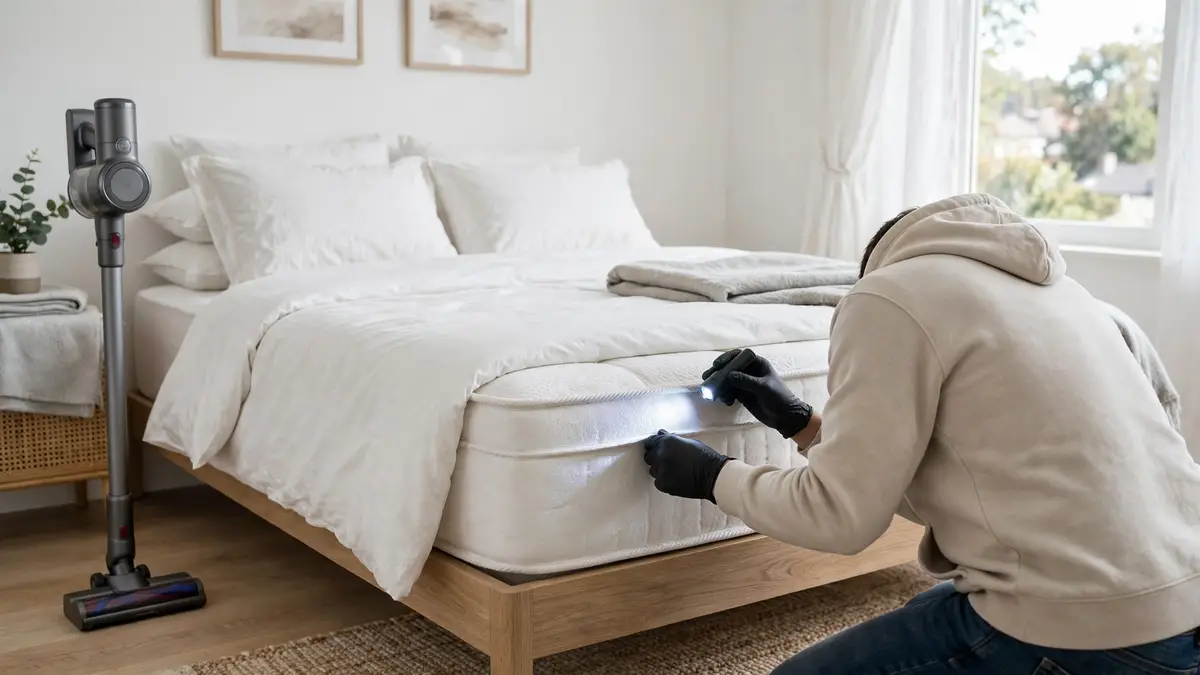
Before you treat anything, confirm what you are dealing with, because treating the wrong pest wastes weeks. Bed bugs leave small rust-colored spots on sheets and mattress seams, tiny pale shed skins tucked into folds, and bites that often show up in lines or clusters and itch for days. Fleas, by contrast, jump and tend to bite around ankles, and mosquitoes leave single scattered bites. Grab a flashlight and check mattress seams, the box spring, the bed frame joints and the nightstand drawer. If you find a bug, trap it in a sealed bag or take a clear photo and show your local cooperative extension office. A correct ID at the start saves you from spraying the wrong thing all over your bedroom.
Do Not Panic, and Do Not Throw Everything Out
The first instinct is usually to drag the mattress to the curb, but the US EPA lists that as one of the worst moves you can make. Bed bugs hide in bed frames, baseboards, outlets and picture frames, so a new mattress just gives them a fresh place to settle. Throwing furniture out also costs real money and can spread bugs to neighbors or to anyone who picks the items up. Most of what you own can be treated and saved. A calm plan beats a panicked purge, and this problem is fixable with steady work.
Make a Room-by-Room Plan
Bed bug control works best as a plan, not a single afternoon of spraying. Start in the bedroom, since that is where they feed, and inspect it piece by piece with a flashlight: mattress seams and tufts, the box spring, the headboard and frame joints, nightstand drawers, baseboards and anything hanging on the wall near the bed. Bag up clutter, because every pile of clothes or papers is another hiding spot, and seal small cracks and crevices with caulk so bugs have fewer places to run. Write down what you find in each spot. That note becomes your baseline, and when you re-check each week you will know whether the numbers are falling or whether one corner still needs work.
- Start in the bedroom, then move outward to nearby rooms
- Inspect mattress seams, box spring, headboard, nightstands and baseboards
- Bag up clutter to cut hiding spots, and seal cracks with caulk
- Write down what you find so you can track progress week to week
Launder and Heat-Treat What You Can
Heat is your most reliable weapon, and it costs nothing beyond a laundry cycle. Wash bedding, curtains and clothes in hot water, then dry them on high heat for at least 30 minutes, since sustained heat above 120 degrees Fahrenheit kills bed bugs at every life stage, including eggs. Bag items straight out of the dryer so clean laundry never touches an infested surface. For things that cannot take the dryer, a freezer set to 0 degrees Fahrenheit for three days can work, but check with a thermometer first, because many home freezers are not cold enough. Keep the treated bags sealed until the room itself is treated, or you will just reinfest clean laundry.

Vacuum Like It Matters, Because It Does
A vacuum will not end an infestation on its own, but it removes a big share of the bugs right away and tells you where they are hiding. Run the crevice tool slowly along mattress seams, bed frame joints, baseboards, carpet edges and upholstered furniture, and use a vacuum with a HEPA filter if you have one. Empty the bag or canister into a sealed bag and take it straight to an outdoor trash can, because bugs can crawl back out of a vacuum left sitting in the closet. Eggs are glued into seams and often survive vacuuming, which is why you repeat this every few days at first.
Steam the Seams and Seal the Mattress
A steam cleaner reaches into the seams and cracks where sprays and vacuums fall short, and the heat kills bugs on contact. Move the steamer slowly along mattress seams, tufts, bed frame joints and baseboard gaps, and let the surface dry fully before you put bedding back. After steaming, put zippered encasements on the mattress and the box spring. Encasements trap any bugs left inside so they die, and they seal off the seams where new bugs love to hide. Leave them on for at least a year, and do not unzip them early to peek, because one open seam gives trapped bugs a way out and restarts the whole problem.

Sprays, Powders, and What to Skip
If you use insecticides, the label is the law: use exactly the amount and method it directs, and never mix products or spray more hoping for a faster result. Keep kids and pets away from treated areas until everything is fully dry, and never spray a mattress surface you will sleep on unless the label clearly allows it. Food-grade diatomaceous earth can help in thin layers inside cracks and wall voids, but it is a lung irritant in dusty piles, so never spread it across beds or floors. Skip foggers and bug bombs entirely. They rarely reach hiding spots, they leave residue across open surfaces, and the US EPA warns that they can push bed bugs deeper into walls and into neighboring rooms.
- Use any product exactly as its label directs, and never use more than directed
- Keep kids and pets out of treated areas until surfaces are fully dry
- Skip foggers and bug bombs, which scatter bugs deeper into hiding spots
- Use food-grade diatomaceous earth only in thin layers inside cracks, never piled on beds
Sleep Safer While You Treat
It feels wrong to keep sleeping in an infested bed, but moving to the couch is one of the worst moves you can make, because the bugs will simply follow you and infest a second room. Stay in the bed and make it harder for them to reach you: pull the bed a few inches away from the wall, tuck bedding in so nothing touches the floor, and put interceptor cups under each leg to trap bugs climbing up or down. You will still get some bites while treatment works, but the cups also act as monitors that show whether the numbers are dropping. Launder your bedding on high heat twice a week during treatment, and keep the bedroom as uncluttered as you can so nightly checks stay quick.
When to Call a Professional
DIY works for many cases, but some need a licensed professional, and calling one sooner saves money in the long run. Heavy infestations across several rooms, bugs that keep returning after careful DIY work, and apartment buildings where neighbors must treat at the same time are all pro territory. Professionals also have access to whole-house heat treatment and stronger targeted products that homeowners cannot buy or use safely. When you call, ask for a written plan, a clear price, and follow-up visits. A good pro inspects first and explains the plan before spraying anything, and that inspection alone often finds hiding spots you missed.
- The infestation is heavy or spread across several rooms
- You live in an apartment and neighbors are not treating at the same time
- Bugs keep coming back after thorough DIY work
- You need whole-house heat treatment, which needs pro equipment
Keep Them From Coming Back
Getting rid of bed bugs is only half the job, because they usually arrive the same way they left: in luggage or secondhand furniture. In hotels, spend two minutes checking mattress seams and the headboard, and keep your suitcase closed and off the bed and floor, ideally in the bathtub or on a luggage rack away from the wall. When you get home, wash travel clothes on high heat right away instead of dropping them on the bedroom floor. Inspect any used mattress, couch or wooden furniture seam by seam before it crosses your door. Then keep checking for a full year after the last sign, because a single missed egg can restart everything, and early catches are always easier than second infestations.
- In hotels, inspect mattress seams and keep luggage off the bed and floor
- Wash travel clothes on high heat as soon as you get home
- Inspect secondhand furniture seams closely before bringing it inside
- Keep checking beds and baseboards for a full year after the last sign
✅ Guide4U Checklist
- Confirm the signs before you treat anything
- Bag clutter and seal cracks first
- Wash and dry bedding on high heat
- Vacuum seams and baseboards every few days
- Steam seams, then encase mattress for a year
- Keep sleeping in the bed, not the couch
Key Takeaways
- Heat, vacuuming and steam beat bug bombs every time
- Throwing out furniture spreads bugs instead of solving them
- Keep checking for a year after the last sign
Frequently Asked Questions
Can bed bugs live in your hair?
No. Bed bugs do not live on people the way lice do. They hide in mattress seams, bed frames and cracks near the bed, come out to feed for a few minutes, then go back to hiding. You might find one crawling on you, but it will not set up home in your hair.
Do bed bugs spread disease?
Bed bugs are not known to spread disease to people. Their bites usually itch and fade within a week or two. The real risk is scratching bites until the skin breaks and gets infected, so try not to scratch, keep bites clean, and see a doctor if redness, swelling or pain gets worse.
How long does it take to get rid of bed bugs?
Plan on weeks to months, not days. Bed bug eggs hatch over days and weeks, so one treatment never ends the job. You need repeated vacuuming, laundering and checks, and you should keep inspecting for at least a year after the last sign to be sure they are really gone.
Will a bug bomb get rid of bed bugs?
No, and foggers can make things worse. Bug bombs rarely reach the cracks and seams where bed bugs hide, and the spray can push them deeper into walls or into other rooms. The US EPA advises against relying on foggers for bed bugs. Heat, vacuuming, steam and targeted products work far better.
What did you think of this article? Share your opinion in the comments below — we would love to hear from you.