
How to Clean Suede Shoes at Home
Quick Answer
Brush dry suede first, erase scuffs with a suede eraser, then spot-treat stains with white vinegar or cornstarch. Never soak suede or machine wash it, test every liquid on a hidden spot, and finish with a suede protector spray.
Suede Is Not Leather, and That Changes Everything
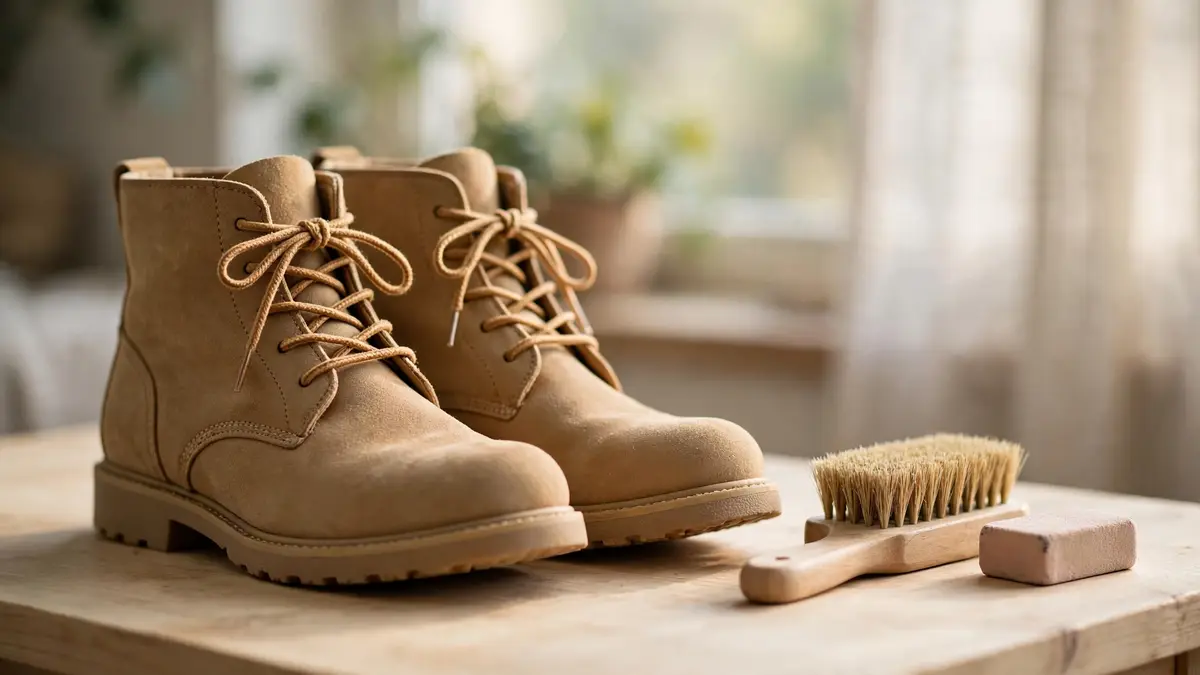
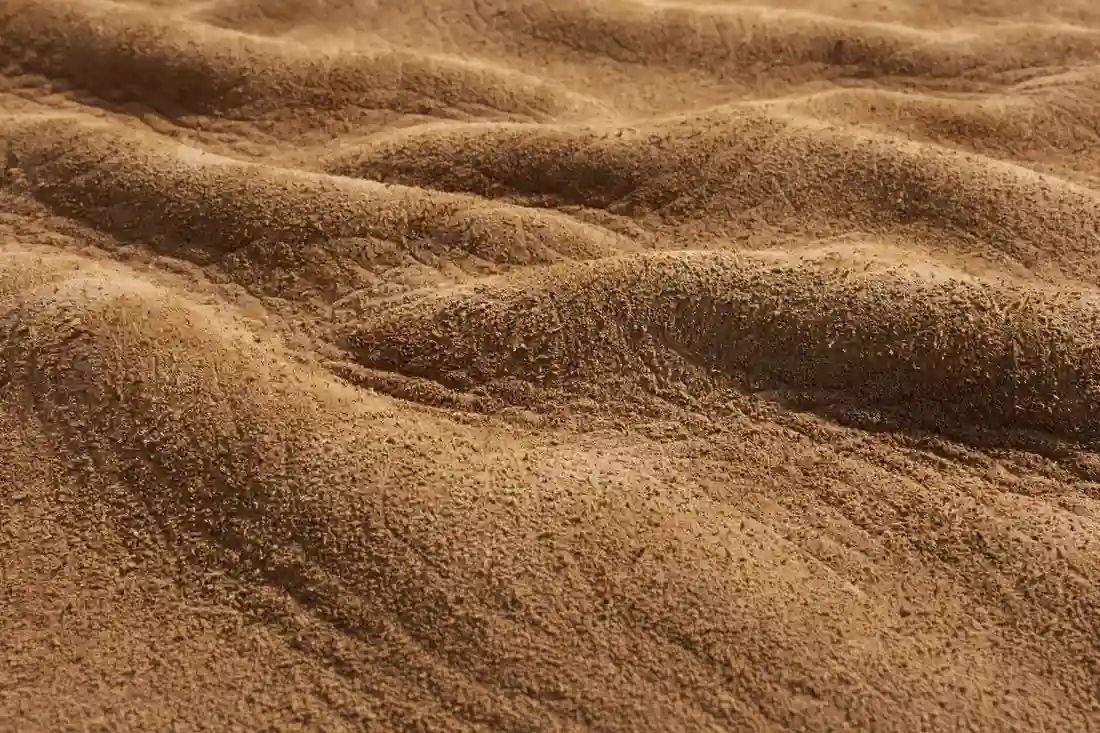
Suede looks soft and casual, but it is the underside of animal hide, sanded into a fine nap. That nap is what gives suede its look, and it is also what makes it a magnet for dust, water spots, and stains. Water does not bead off suede the way it does off smooth leather. It soaks in, flattens the fibers, and leaves a ring when it dries. Scrubbing with soap and water, the move that works on canvas sneakers, can wreck a suede shoe in one afternoon. The good news is that most suede messes come off with dry tools and a little patience. A brush, an eraser, and a couple of household items handle nearly everything you will run into. I have kept the same pair of tan suede boots going through three winters now, and the dry-first routine below is the one that kept them looking decent.
What You Will Need
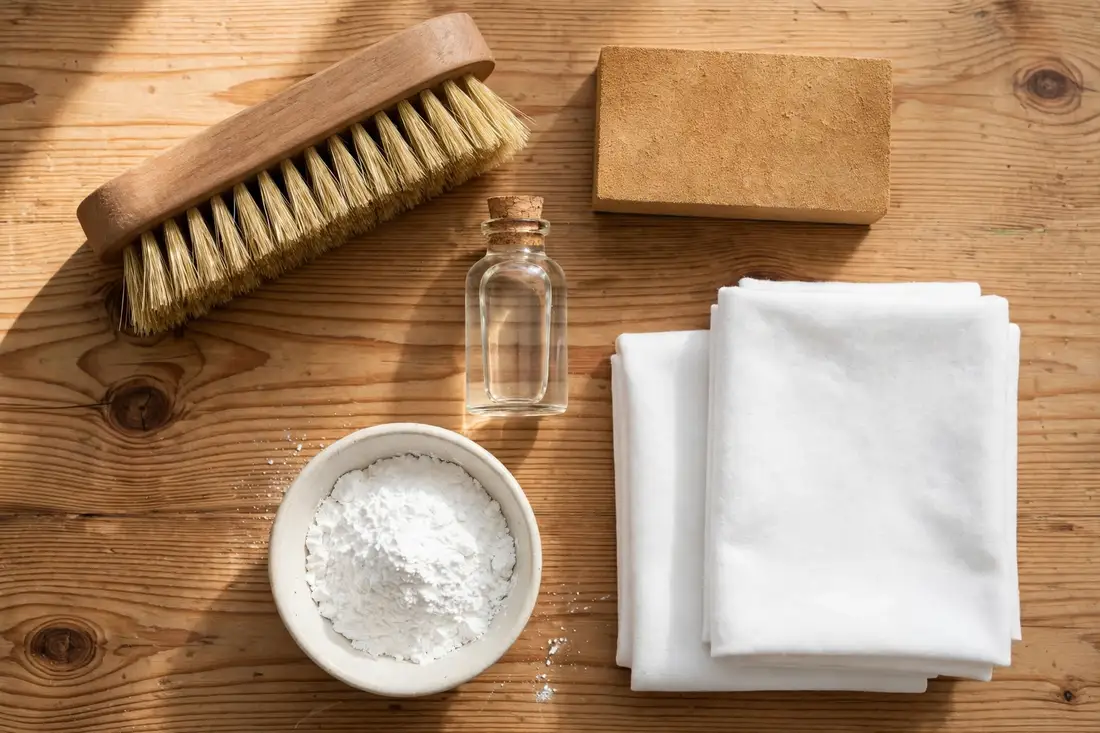
You do not need a fancy kit. A basic suede brush costs about $8 to $12 at a shoe store or online, and a suede eraser runs a few dollars more. If you do not want to buy tools yet, a clean pencil eraser and an old toothbrush can cover a first pass. The rest comes from the kitchen: white vinegar, cornstarch, and a couple of clean white cloths. White cloths matter because a colored towel can transfer dye onto damp suede. Stuff the shoes with newspaper or plain paper towels while you work so they hold their shape. That is the whole kit, and most of it is probably already in your house.
- Suede brush (or a clean, stiff toothbrush)
- Suede eraser (a plain pencil eraser works)
- White vinegar
- Cornstarch
- Clean white cloths
- Newspaper or paper towels for stuffing
Step One: Let Them Dry Completely
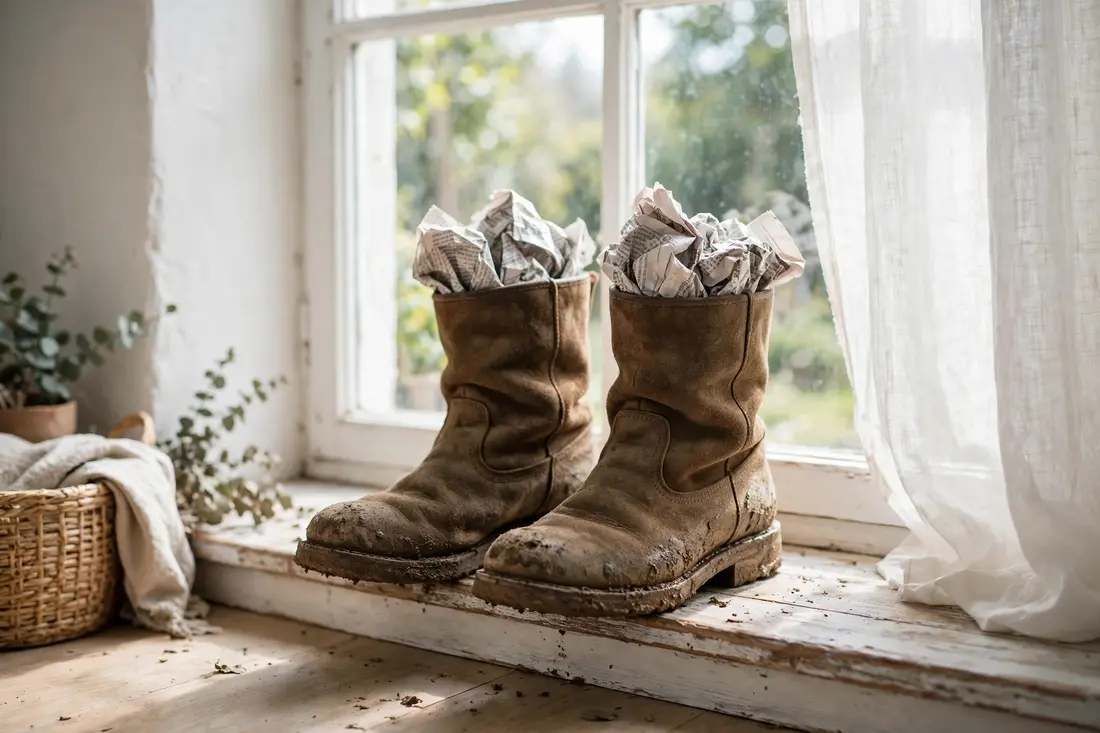
This is the rule that saves more suede shoes than any product. Never clean suede while it is wet. Mud, rain, and snow all need to dry first, because wet suede fibers clump together and smear when you touch them. Set the shoes in a room with decent airflow, stuff them with newspaper, and give them a full day. Twenty-four hours is a safe bet after a real soaking. Keep them away from a radiator, a hair dryer, or direct sun. Heat dries suede too fast, stiffens the fibers, and can leave the leather underneath brittle. Once the shoes feel dry all the way through, the mud that looked like a disaster will often flake off with a few brush strokes.
Brush the Nap Back to Life
Start with the suede brush and work in short, light strokes in one direction. You are lifting dust and dried dirt out of the nap, not scrubbing a stain in. Go over the whole shoe first, then look at what is left. For stubborn patches, brush back and forth with a little more pressure, then finish by brushing in one direction again so the nap lies the same way. A brass-bristle suede brush handles dried mud well. A rubber crepe brush is gentler and good for a final pass. If you only have a toothbrush, use short strokes and keep the pressure light. Brushing alone fixes a surprising number of suede problems, so do this before you reach for anything wet.
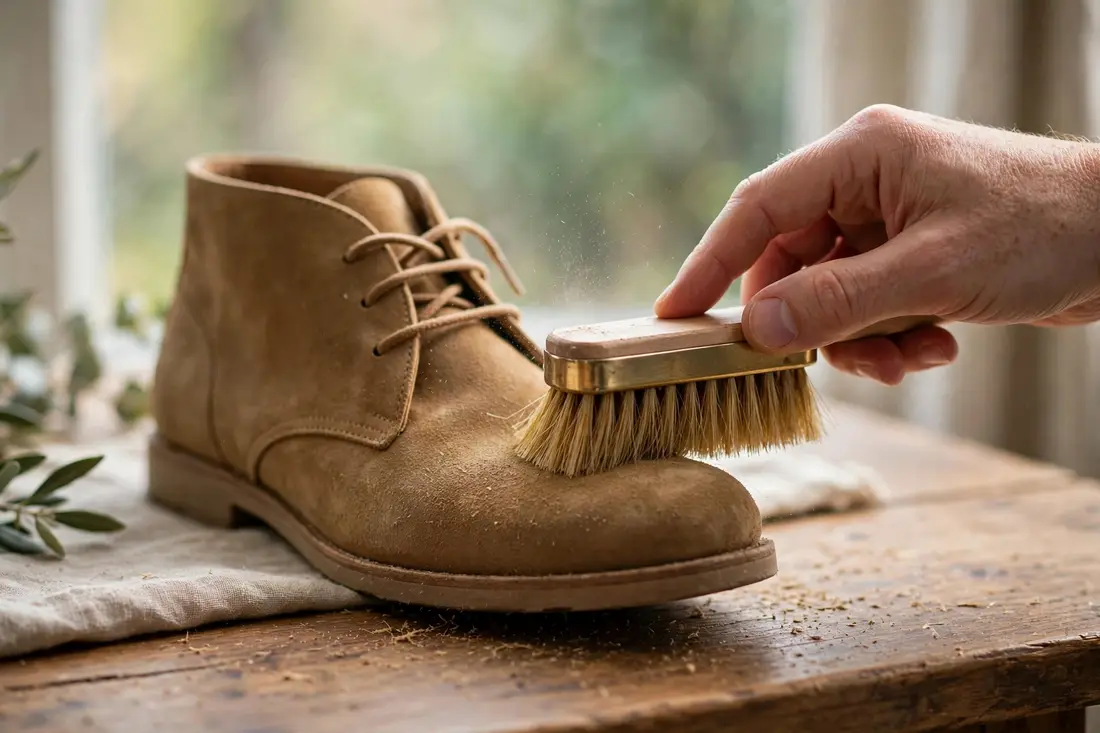
Erase Scuffs and Dry Marks
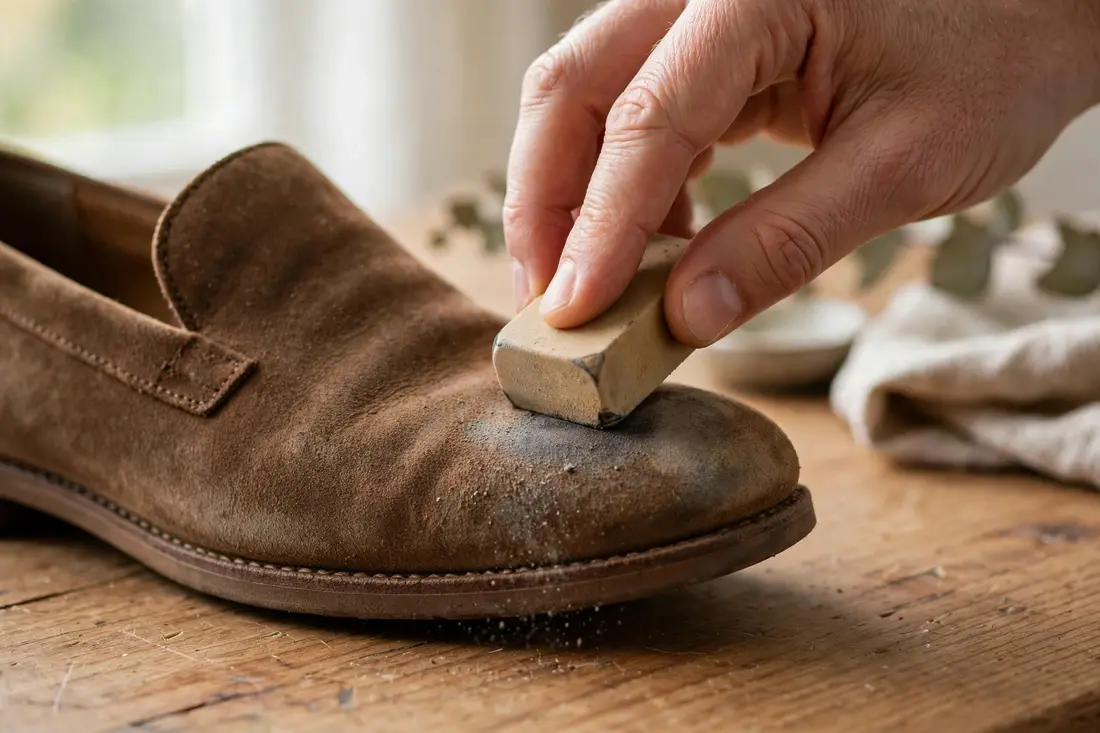
Scuffs are where the suede eraser earns its keep. Rub the eraser over the mark with short, firm strokes, the way you would erase a pencil line, and watch the scuff fade. A standard pink pencil eraser works on light marks in a pinch, but a dedicated suede eraser is firmer and does not leave pink crumbs behind. After erasing, brush the area to lift the crumbs and reset the nap. Erasers handle the gray scuffs that show up on the toe and heel of light suede especially well. If the mark does not budge after a minute of erasing, stop and move on to a spot treatment instead of grinding the same patch raw.
White Vinegar for Water Spots and Light Stains
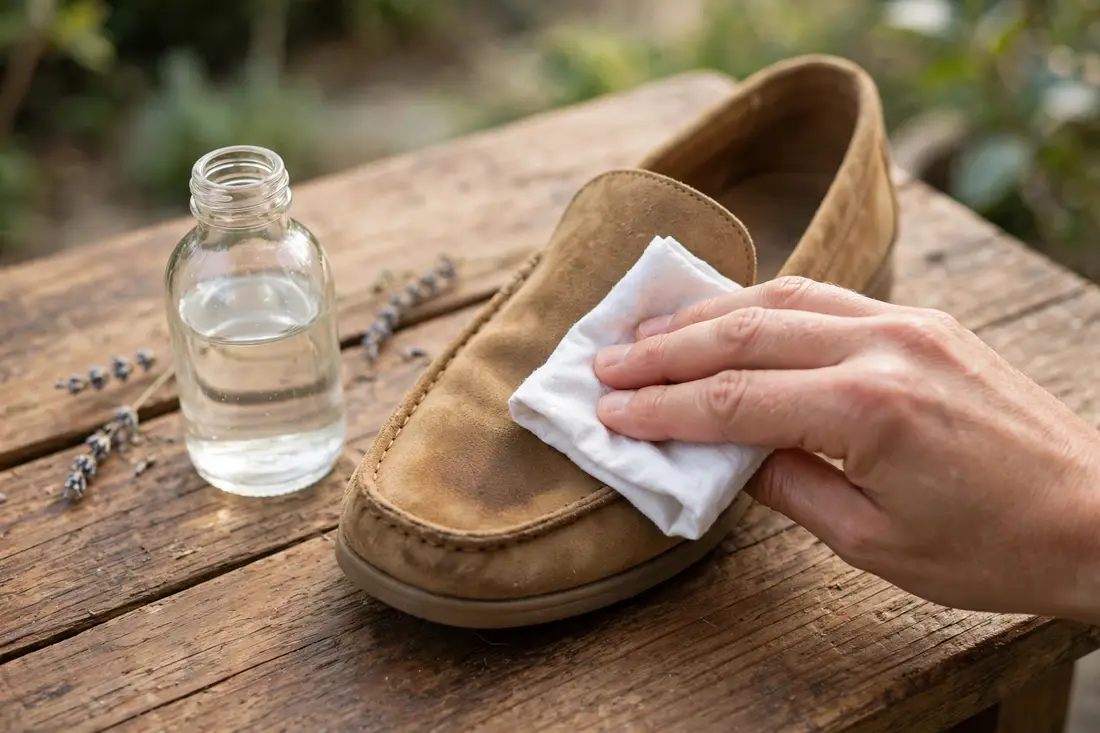
White vinegar is the classic suede spot treatment because it evaporates clean and does not leave a mark of its own. Dampen a clean white cloth with a little vinegar, never pour it straight onto the shoe, and dab the stain gently. Work from the outside of the stain inward so you do not spread it, and keep the cloth barely damp. Let the area air-dry, then brush the nap back up. The vinegar smell fades as it dries, usually within an hour or two. Test on a hidden spot first, like the inside of the tongue or the heel, and wait for it to dry before you trust it on the front of the shoe.
Cornstarch for Oil and Grease
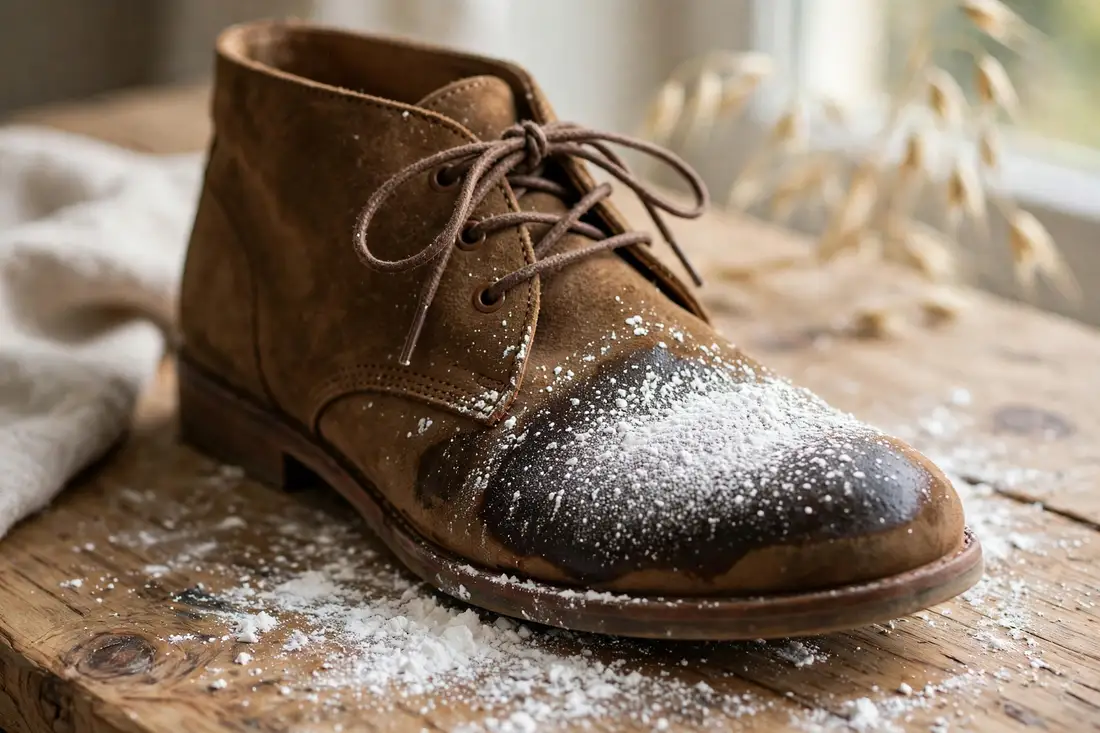
Oil stains need a different trick because liquid cleaners just push grease deeper into suede. Sprinkle plain cornstarch over the spot until it is fully covered, then leave it alone for several hours. Overnight is better. The powder soaks up the oil while it sits. Brush the cornstarch off, then brush the nap. If a faint shadow remains, repeat the treatment once more before you try anything else. This works on cooking oil splashes, lotion, and the greasy marks that show up on the toe of a shoe that brushed against something. Talcum powder can stand in for cornstarch if that is what you have, but skip anything scented or colored.
Water Spots and the Whole-Panel Rule
Water spots are the most common suede headache, and the fix sounds backward: wet the whole panel. A spot appears because one area got wet and dried while the rest stayed dry, so the ring marks the boundary. Lightly mist the entire panel of suede, the whole side of the shoe, with clean water from a spray bottle, then let it dry evenly. When the whole panel dries at the same rate, the ring fades or disappears. Do not soak the shoe, and do not use this trick on a stain that is not water-based. After drying, brush the nap. This is also why you should never spot-clean suede with a wet cloth in one small area and call it done.
Restore the Nap and Protect Your Work
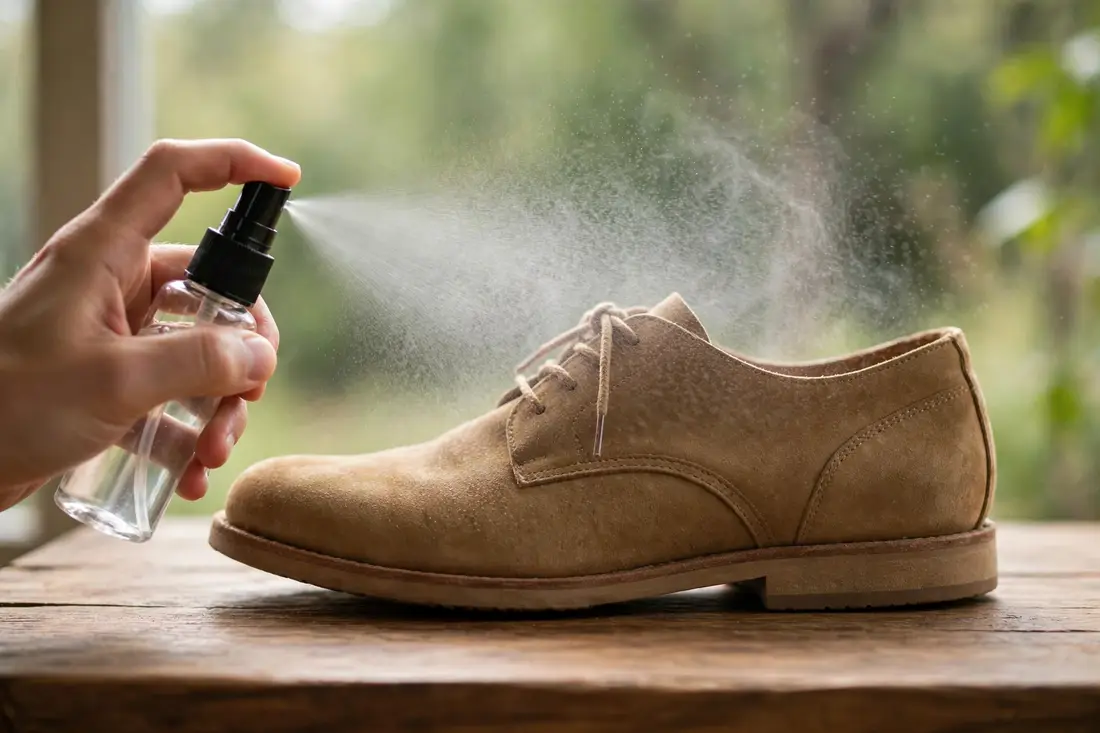
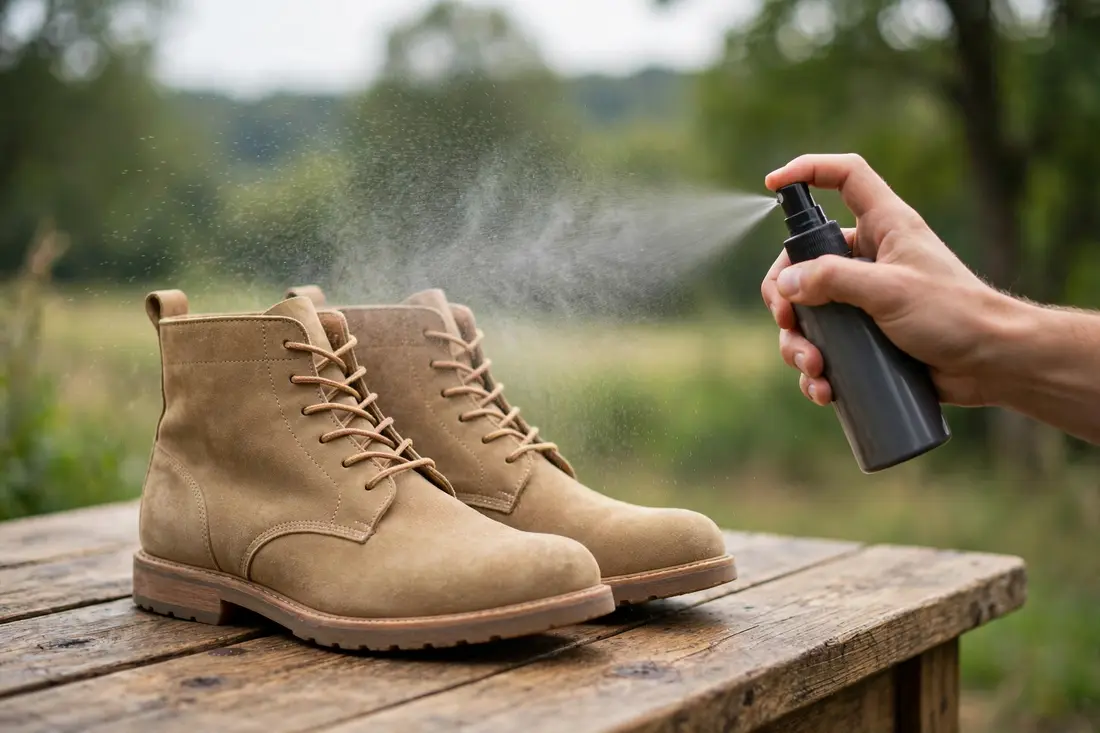
Once the shoes are clean and dry, brush the nap one more time so it stands up evenly. If the nap looks flat or shiny in spots, a short pass with the brush usually brings it back. Then spray the shoes with a suede protector, holding the can about six inches away and coating the whole shoe in a light, even mist. Let it dry for at least 30 minutes before you wear them. Protector does not make suede waterproof, but it buys you time when rain or a spill hits, and it makes the next cleaning easier. Reapply every few weeks in wet weather, or after every deep clean.
When to Take Them to a Professional
Some suede problems are beyond a home fix. Deep dye transfer, a stain that has set for months, salt damage that has dried into the leather, or a pair of expensive boots you cannot risk, those belong with a cobbler or a leather cleaner who works with suede. A professional cleaning usually costs $25 to $50, which stings less than replacing a $150 pair of boots. Bring the shoes in dry and tell the cleaner what caused the stain, because the treatment depends on it. And if a shoe has a hole, a torn seam, or a sole coming loose, a cobbler can fix that at the same visit. Knowing when to stop is part of cleaning suede well.
✅ Guide4U Checklist
- Let shoes dry fully before cleaning
- Brush in one direction, light strokes
- Erase scuffs before wet treatments
- Test vinegar on a hidden spot
- Cover oil stains with cornstarch overnight
- Mist the whole panel for water spots
- Spray protector after every deep clean
Key Takeaways
- Dry first: never clean suede while it is wet.
- A brush and an eraser fix most suede messes.
- Vinegar for water spots, cornstarch for oil.
Frequently Asked Questions
Can you machine wash suede shoes?
No. Machine washing soaks suede all the way through, flattens the nap, and can shrink or stiffen the leather underneath. The heat and tumbling make it worse. Stick to dry brushing, an eraser, and the spot treatments in this guide, and take badly soaked shoes to a cobbler.
Does white vinegar damage suede?
Used the right way, no. Dab it on with a barely damp white cloth, never pour it on, and test a hidden spot first. It evaporates clean and is one of the safest spot treatments for suede. Skip it on brightly dyed suede until you have tested, since any liquid can shift dye.
How do you clean suede shoes without a suede brush?
A clean, stiff toothbrush covers most of the job, and a plain pencil eraser handles scuffs. An old towel can lift surface dust. The brush is worth the $8 to $12 if you own more than one suede pair, but you can get a first clean done with what is already in your bathroom.
How often should you clean suede shoes?
Brush them after every few wears to keep dust from settling in, and do a deeper clean with spot treatments whenever a mark shows up. Spray on protector every few weeks in wet weather. A quick brush takes two minutes and does more for suede than a rare deep clean.
What did you think of this article? Share your opinion in the comments below — we would love to hear from you.