
How to Clean Tile Grout Without Scrubbing
Quick Answer
Grout is porous, so soaks beat scrubbing. Spread a baking soda paste for dull grout, or soak deeper stains with oxygen bleach for thirty minutes to an hour, then rinse. Never mix cleaners, test a hidden spot first, and seal the grout once it is fully dry so it stays clean.
Why grout gets dirty in the first place
Grout looks like a solid line, but most cement grout is full of tiny pores, and those pores soak up whatever runs across the floor. In a bathroom, that means soap scum, body oils, and hard-water minerals. In a kitchen, it means cooking grease and tracked-in dirt. On floors, every shoe grinds a little more grime into the pores. Mopping only washes the surface, so the lines slowly darken even in a house that gets cleaned every week. Sealed grout resists this for a while, but sealers wear down under foot traffic and hot water, and once the seal is gone the pores open up again, which is why lines that looked fine for a year can darken all at once. Once you see grout as a sponge instead of a stripe, the fix makes sense: you need a cleaner that soaks in and lifts the dirt out, not a brush that grinds away at the top.
First, know what kind of grout you have
Most homes have cement grout, which is porous and responds well to soaks. Epoxy grout, common in newer showers, is plastic-like and resists stains, so it usually needs only a wipe with a mild cleaner. Sealed grout also behaves differently: water beads on it instead of soaking in. Check by dripping water on a grout line. If it darkens within a minute, the grout is unsealed and thirsty. If it beads, a seal is still in place. Natural stone tiles need extra care, since acids can etch marble and limestone. Always test any cleaner on one hidden line first, and wait a day to check for color change before doing the whole room.
The baking soda paste soak
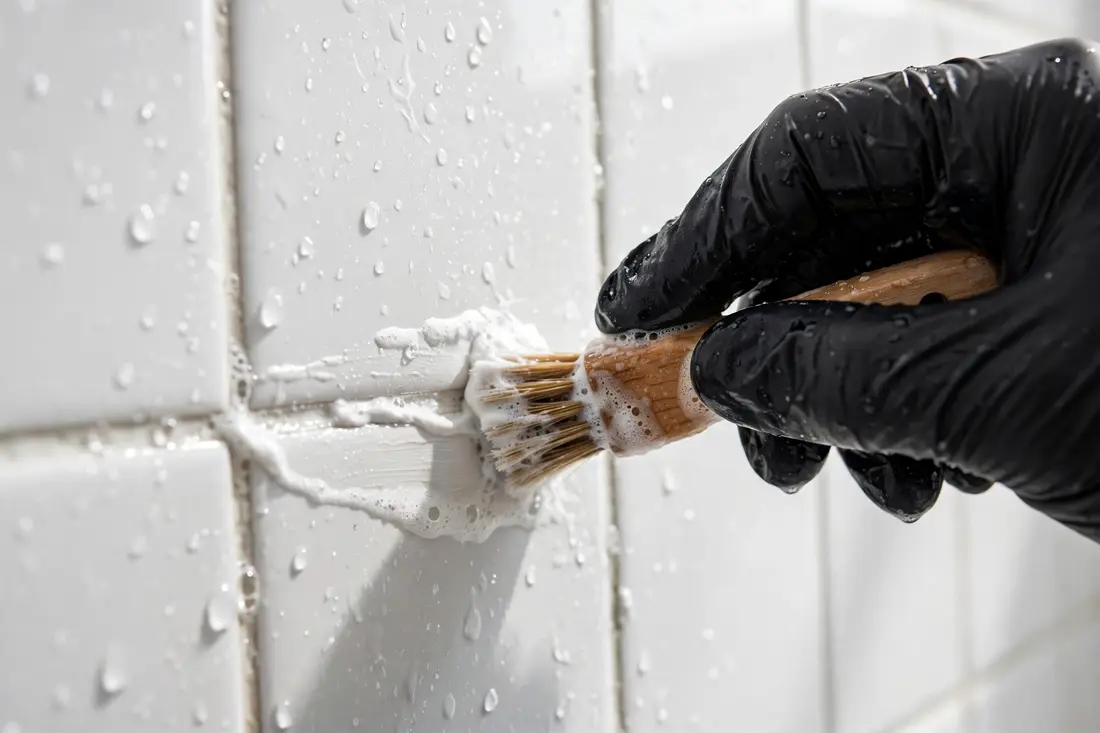
For everyday gray grout, a baking soda paste is the gentlest place to start. Mix about three parts baking soda with one part water until it looks like thick toothpaste, then spread it along the grout lines with an old toothbrush or a grout brush, using the brush only to spread, not to scrub. Let the paste sit for ten to fifteen minutes so it can loosen surface dirt and soap scum. Then wipe it away with a damp cloth, rinsing the cloth often, and mop the floor with clean water. This will not rescue deeply stained grout, but for lines that are just dull, it often brings back a surprising amount of the original color.
- Mix three parts baking soda, one part water
- Spread along grout lines, do not scrub hard
- Let it sit ten to fifteen minutes
- Wipe with a damp cloth, then mop clean
The oxygen bleach soak for deeper stains
When paste is not enough, oxygen bleach, sold as sodium percarbonate, is the workhorse for no-scrub grout cleaning. Dissolve it in warm water following the package directions, pour it along the grout lines or soak a cloth in it and lay the cloth on the lines, then leave it for thirty minutes to an hour. The solution releases oxygen bubbles that lift dirt out of the pores while you do something else. Rinse well with clean water afterward. Oxygen bleach is color-safe for most grout, but test a hidden spot first, and never mix it with vinegar, chlorine bleach, or any other cleaner. Mixed cleaners can release harmful fumes or cancel each other out.
Steam for the stubborn lines
A steam cleaner is the closest thing to a shortcut for grout that has resisted soaks. The hot steam softens soap scum and loosens embedded dirt, and a wipe afterward picks it up without hard scrubbing. Work in short sections, keep the nozzle moving so heat does not sit in one spot, and wipe each section right after steaming while the dirt is loose. Steam works best on ceramic and porcelain tile. Skip it on cracked grout, loose tiles, or grout that is already crumbling, since steam and pressure can make damage worse. If the grout crumbles under a fingertip, it needs repair, not cleaning.
Seal the grout while it is clean
Cleaning is only half the job. Freshly cleaned grout is just as porous as before, so it will darken again unless you seal it. Wait until the grout is fully dry, usually a full day after cleaning, then brush or roll on a penetrating grout sealer following the product directions. Wipe excess sealer off the tile faces before it dries, since dried sealer leaves a haze that is a chore to remove. Let the sealer cure for the time the label states before mopping. In showers, plan to reseal about once a year; on floors, every one to two years is usually enough, and the water-bead test tells you when it is time.
What not to do to your grout
A few common shortcuts do real damage. Chlorine bleach can whiten grout at first, but it gives off strong fumes, can yellow some grouts over time, and breaks down sealers. Vinegar is fine on ceramic and porcelain grout, but it etches marble, limestone, and other natural stone, and it should never be mixed with bleach: that mix releases chlorine gas, which is dangerous. Wire brushes and harsh scouring pads gouge grout and leave rough spots that trap more dirt. Abrasive powders wear the surface down a little every time. Gentle soaks take longer, but they leave you with grout that stays clean longer.
Showers need a different rhythm than floors
Shower grout and floor grout get dirty in different ways, so they need different routines. Shower grout collects soap scum and mildew in warm, damp air, and the fix is mostly prevention: run the fan during and after showers, squeegee the walls, and leave the door or curtain open so the room dries. Floor grout collects tracked-in dirt, so a doormat and a weekly damp mop matter more than any deep clean. Kitchen grout near the stove picks up grease, and a degreasing dish-soap mop handles it. Matching the routine to the room keeps each kind of grout clean with less deep cleaning overall.
Keep it clean with less work
The secret to grout that stays light is a small weekly habit, not a big annual battle. Mop tile floors weekly with warm water and a pH-neutral floor cleaner, and wipe shower walls after the last shower of the day a few times a week. Catch spills on kitchen floors before they dry into the pores. Keep the bathroom fan running until the room feels dry, since damp grout grows mildew fast. Recheck the water-bead test every few months, and reseal when water stops beading. Ten minutes a week beats a full Saturday of scrubbing, and it keeps the sealer doing its job.
- Mop floors weekly with a pH-neutral cleaner
- Squeegee shower walls a few times a week
- Run the fan until the bathroom feels dry
- Recheck the water-bead test every few months
When to call a pro or regrout
Some grout is past cleaning. If lines are cracked, crumbling, or missing chunks, water is getting behind the tile, and cleaning will not fix that. If dark stains survive an oxygen bleach soak and a steam pass, the stain may run through the full depth of the grout, or the problem may be mold behind the tile rather than dirt on top. A tile pro can regrout lines, replace damaged sections, and check for leaks behind shower walls. Ask whether the tile itself is sound before you agree to regrouting, since loose tiles need resetting first, and a regrout over a leak just hides the problem for a few months. Regrouting a bathroom is a real project, but it is cheaper than replacing water-damaged walls later, and fresh grout with a good sealer starts the clock over.
✅ Guide4U Checklist
- Test any cleaner on a hidden grout line
- Spread baking soda paste, wait fifteen minutes
- Soak deep stains with oxygen bleach
- Never mix vinegar with bleach
- Rinse well with clean water
- Let grout dry fully before sealing
- Reseal showers yearly, floors less often
Key Takeaways
- Grout darkens because it is porous, not because you clean badly.
- Soaks and steam lift dirt out; hard scrubbing only wears grout down.
- Sealing clean grout is what keeps it clean.
Frequently Asked Questions
Can I use vinegar to clean grout?
On ceramic and porcelain tile, yes: a vinegar solution can cut soap scum, though it is weaker than an oxygen bleach soak on deep stains. On marble, limestone, or other natural stone, no: vinegar etches the stone surface. Never mix vinegar with bleach or with any chlorine cleaner, since that mix releases dangerous chlorine gas. When in doubt, test a hidden spot first.
How long should a grout cleaner sit before I wipe it?
A baking soda paste needs ten to fifteen minutes. An oxygen bleach soak needs thirty minutes to an hour, following the package directions. Longer is not always better: pastes that dry on the grout leave residue that is hard to rinse, and cleaners left for hours can dry into the pores. Set a timer, keep the lines damp, and rinse well.
Will oxygen bleach damage colored grout?
Usually not, but test first. Oxygen bleach is color-safe for most cement grout, unlike chlorine bleach, which can yellow or lighten color over time. Spread a little of the mixed solution on one hidden grout line, wait the full soak time, rinse, and check the color the next day. If the color holds, go ahead with the room.
How often should I seal grout?
In showers, about once a year, since daily water and steam wear sealer down fastest. On floors, every one to two years is usually enough. The water-bead test is the real guide: drip water on a grout line, and if it soaks in and darkens within a minute, the seal has worn off and it is time to reseal.
What did you think of this article? Share your opinion in the comments below — we would love to hear from you.