
How to Remove Permanent Marker From Clothes (Without Ruining the Fabric)
Quick Answer
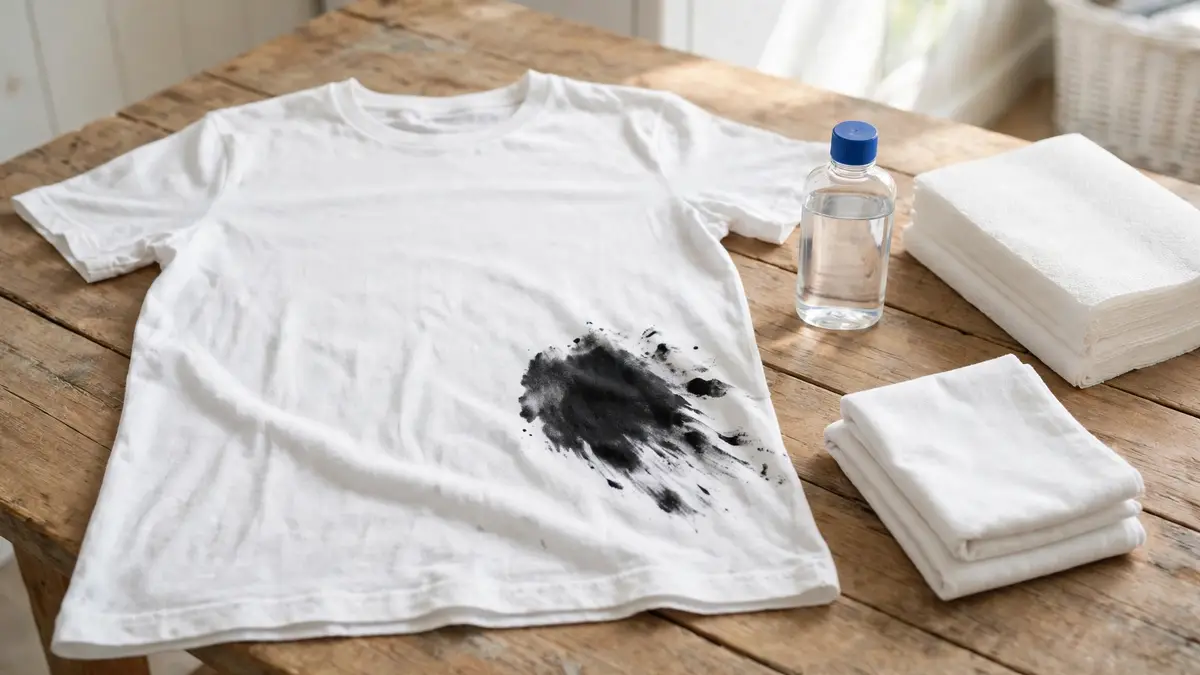
Rubbing alcohol dissolves permanent marker ink because the ink itself is alcohol-based. Dab the back of the stain with an alcohol-soaked cloth over fresh paper towels, keep moving to clean cloth as the ink transfers, and wash only after the stain is gone. Never put the garment in the dryer first, since heat sets the ink for good.
Why Permanent Marker Is So Hard to Wash Out
A regular pen mark sits on the surface of the fabric, but permanent marker ink works differently. It is an alcohol-based dye that soaks down into the fibers as soon as it touches cloth, and once the alcohol evaporates, the dye stays locked inside. That is why a normal wash cycle barely fades it: detergent is made to lift dirt off surfaces, not to pull dye out of fibers. Heat makes the problem worse, because a hot wash or a tumble dryer bonds the dye even tighter. The fix is to dissolve the ink with the same kind of solvent it came in, which is why rubbing alcohol beats every detergent on the shelf.
The First Rule: Do Not Wash or Dry It Yet
The single most common mistake is tossing a marked shirt straight into the wash and hoping for the best. A hot dryer cycle can set the ink for good, turning a fixable stain into a permanent one. So before anything else, keep the garment out of the laundry. Check the care label too: if it says dry clean only, skip the home methods and take it to a cleaner, since solvents can damage delicate fabrics. For everything else, lay the stained area face down on a stack of clean paper towels, so the ink has somewhere to transfer as you work.
- Check the care label before you try any solvent
- Keep the garment out of the dryer until the stain is gone
- Test your solvent on a hidden spot like an inside seam
- Work on a clean surface with fresh paper towels underneath
Rubbing Alcohol: The Method That Works Most Often
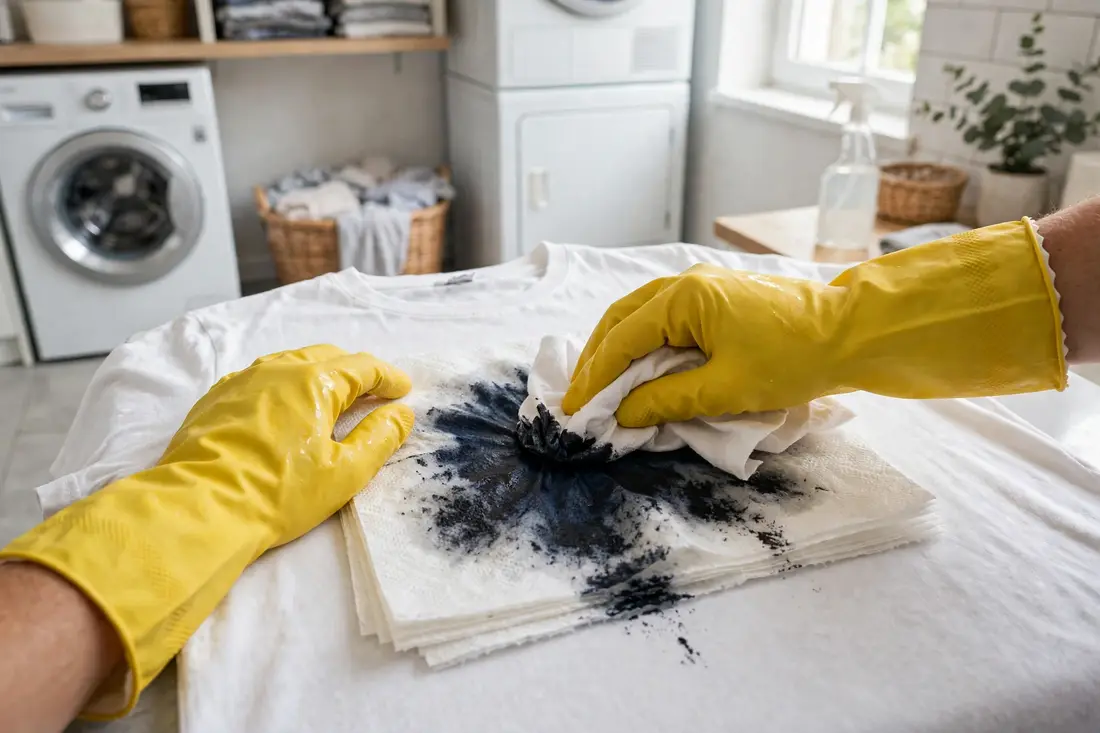
Rubbing alcohol, the kind sold in any drugstore, is the closest thing to a sure bet for marker stains on cotton and most washable fabrics. Dampen a clean white cloth with it, then dab at the back of the stain, not the front. Dabbing pushes the ink out of the fibers and into the paper towels underneath, while rubbing grinds it deeper and spreads it wider. Keep moving to a clean part of the cloth and fresh paper towels as the ink transfers, and re-dampen the cloth as needed. It may take ten minutes of patient dabbing for a large mark. When no more ink comes off, rinse the area with cool water and wash the garment as usual.
Hand Sanitizer Works in a Pinch
Hand sanitizer is mostly alcohol in gel form, so it works on the same principle and is handy when you catch a stain at school or at work. Squeeze a small amount directly onto the mark, work it in gently with your fingers or a soft cloth, and let it sit for five minutes. Then blot with a damp cloth and repeat if the stain is still dark. One caution: pick a clear, fragrance-free sanitizer if you can. Colored or heavily scented gels can leave their own tint or residue on light fabrics. For a fresh, small mark, sanitizer often clears it before you even get home.
The Hairspray Trick Is Mostly a Myth Now
You may have heard that hairspray removes permanent marker, and years ago it often did, because old hairspray formulas were loaded with alcohol. Modern hairsprays are a different product: most are alcohol-free or low in alcohol, and they contain resins and conditioners that can leave a sticky film on fabric. If you check the label and alcohol is one of the first few ingredients, it might help in a pinch. But if it is not, you are just adding a new stain on top of the old one. Rubbing alcohol costs less and works better, so reach for that first.
A Milk Soak for Gentle Fabrics
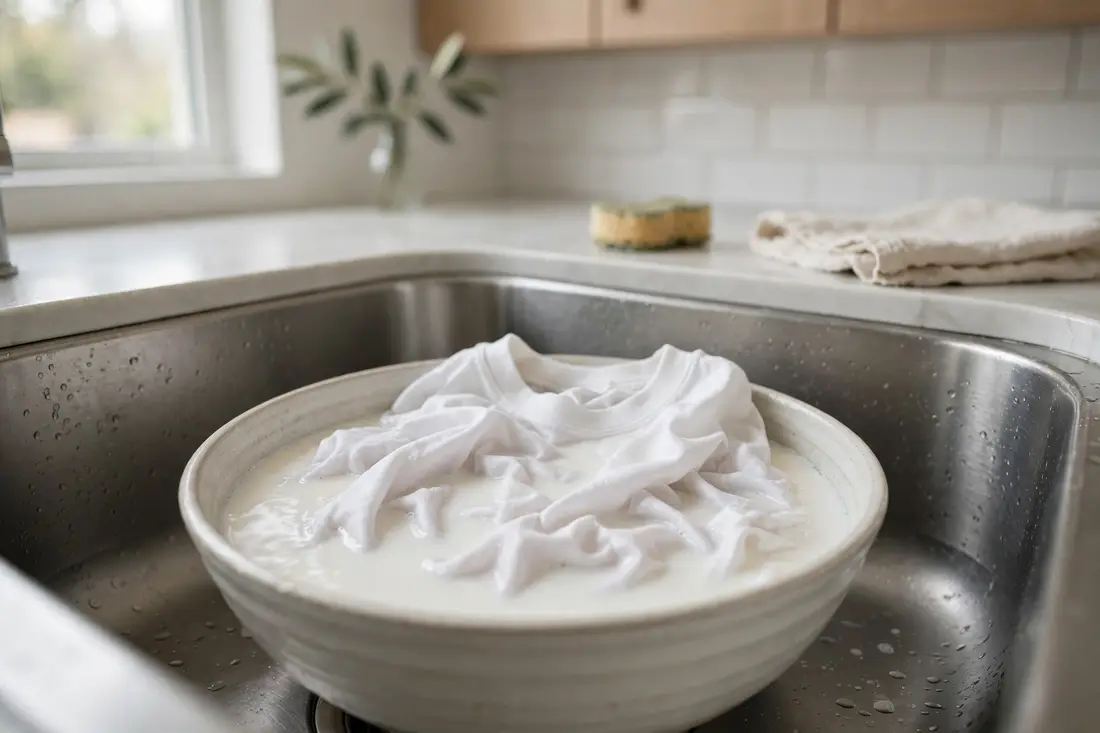
For a mark on a fabric you do not want to scrub, a milk soak is a surprisingly gentle option. Pour enough whole milk into a bowl to cover the stained area, and let the garment soak overnight. The fats and proteins in milk slowly loosen the ink, and by morning you will often see the milk has taken on a grey or black tint. Rinse the garment in cool water, then wash it normally. This method works best on fresh marks and on lighter fabrics where you want to avoid any harsh solvent. It is slow, but it asks nothing of you except patience.
Baking Soda and White Toothpaste for Sturdy Cotton
White cotton t-shirts and sturdy items like canvas tote bags can handle a mild abrasive, which opens up one more option. Mix baking soda with a little water into a thick paste, or use a dab of plain white toothpaste, the non-gel kind. Work it into the stain with an old toothbrush using small circles, then let it sit for fifteen minutes before rinsing. This method is best for white or light fabrics, because the scrubbing action can fade dyes on dark clothes. It also helps with the faint shadow that sometimes remains after the alcohol treatment.
Different Fabrics, Different Rules
Cotton and linen are the most forgiving: alcohol, sanitizer, and the paste method are all fair game. Polyester and other synthetics are trickier, because marker dye can bond with the synthetic fibers themselves, so alcohol may only lighten the stain instead of removing it. Wool, silk, and rayon should never meet rubbing alcohol, which can damage the fibers or strip the dye. For those, blot up what you can with a damp cloth and take the piece to a dry cleaner, telling them exactly what caused the stain. Leather and suede need their own cleaners too, so do not try fabric methods on them.
What Not to Do
A few popular shortcuts do more harm than good. Chlorine bleach will remove the mark on white cotton, but on anything colored it strips the dye and leaves a pale blotch. Acetone, sold as nail polish remover, can melt synthetic fibers and should stay away from clothes entirely. Scrubbing hard feels productive, but it pushes ink deeper and frays the fabric, and once the fibers are damaged the stain is locked in. And the dryer rule bears repeating: never machine-dry a garment until you have checked, in good light, that the stain is fully gone.
- Never use chlorine bleach on colored clothes
- Never use acetone on synthetic fabrics
- Never put the garment in the dryer before checking
- Never scrub hard, which spreads the stain and frays fibers
After the Stain Lifts: Wash and Check Before Drying
Once the ink has lifted, wash the garment in cool or warm water with your regular detergent, then inspect it while it is still wet. A faint shadow that is invisible when wet can reappear as the fabric dries, so check carefully in bright light before the garment goes anywhere near the dryer. If a shadow remains, repeat the alcohol treatment once more and wash again. Only when the stain is completely gone should you machine-dry the item. That final check takes thirty seconds, and it is the difference between a saved shirt and a stain that is set for good.
✅ Guide4U Checklist
- Keep the garment out of the dryer
- Test solvent on an inside seam first
- Dab the stain, never scrub it
- Place fresh paper towels underneath
- Check in bright light before drying
Key Takeaways
- Rubbing alcohol is the most reliable home treatment for marker stains on cotton.
- Heat from a dryer sets marker ink, so always check before drying.
- Wool, silk, and rayon belong at the dry cleaner, not in home treatments.
Frequently Asked Questions
Will rubbing alcohol damage colored clothes?
Usually yes, if the fabric is colorfast cotton. Rubbing alcohol can lift some dyes, so test it first on a hidden spot like an inside seam and wait five minutes. If no color transfers to your cloth, you are safe to go ahead. Skip alcohol on silk, wool, and rayon, and take those pieces to a dry cleaner instead.
Can I use nail polish remover on a marker stain?
No, not on clothes. Acetone is strong enough to melt acetate fibers and can dull or damage synthetic fabrics, and it often leaves a stiff, discolored patch that looks worse than the stain. It works fine on hard surfaces like countertops, but for fabric, rubbing alcohol or hand sanitizer is the safer choice every time.
Does permanent marker come out of white shirts completely?
On white cotton, very often yes, as long as you treat it before the shirt goes through the dryer. The alcohol method lifts most of the ink, and a second round usually gets the faint shadow that remains. On polyester and other synthetics, the ink bonds with the fibers themselves, so you may only lighten it rather than remove it fully.
What if the stain already went through the dryer?
Heat sets ink, so a stain that has been through the dryer is much harder to remove, but not always hopeless. Try the rubbing alcohol method two or three times, letting the stain sit for ten minutes each round, and blot with fresh paper towels so the ink has somewhere to go. If a shadow still shows after that, a dry cleaner is your last realistic option.
What did you think of this article? Share your opinion in the comments below — we would love to hear from you.