
How to Clean a Smelly Washing Machine (and Keep It Fresh)
Quick Answer
Clean the filter, scrub inside the door seal, then run one empty hot cycle with two cups of vinegar. After that, leave the door ajar between washes and use less detergent, and the smell should stay away.
Why a Machine That Washes Things Smells Bad
It feels unfair: the machine that cleans your clothes smells worse than the clothes do. The reason is simple, and it hides in the parts you never see. Every wash leaves a little behind: detergent that never fully rinsed away, fabric softener coating the drum, lint and skin cells caught in the filter, and a thin film of warm, damp residue inside the door seal. That mix sits in a dark, wet, sealed box between washes, which is exactly where mold and bacteria thrive. Front-loaders suffer most, because their airtight doors trap moisture, but top-loaders can smell too. The good news is that the smell is almost always residue, not damage, and residue can be cleaned.
Safety First: Two Rules Before You Start
Cleaning a washer is low-risk work, but two rules matter. First, never mix bleach with vinegar, or with any other acid cleaner. Together they make chlorine gas, which is dangerous in a small laundry room. Pick one cleaner for the job and stick with it. Second, unplug the machine before you open the filter housing or reach near the pump, since a stray button press can start a spin while your hand is inside. Gloves are worth wearing too, especially if you find black mold in the seal. With those rules covered, the rest of the job is just wiping, rinsing, and running one empty cycle.
- Never mix bleach with vinegar or any acid cleaner
- Unplug the machine before you reach into the filter or pump area
- Wear rubber gloves if you have sensitive skin or visible mold
- Keep the room ventilated while you run a cleaning cycle
Clean the Filter First, Because It Holds the Worst of It
The drain filter catches coins, hair, lint, and the soggy bits that wash off your clothes, and when it clogs, dirty water sits in the machine and stinks. On most front-loaders it hides behind a small flap at the bottom front of the machine; on many top-loaders it sits inside the drum or near the agitator. Put a towel and a shallow tray under it before you open it, because trapped water will spill out. Twist it free, pull out everything caught in it, and rinse it under hot water until it runs clear. A soft brush helps with the stubborn film. This one step alone fixes a surprising share of washer smells, and it is the step most people skip.
Scrub the Door Seal, Fold by Fold
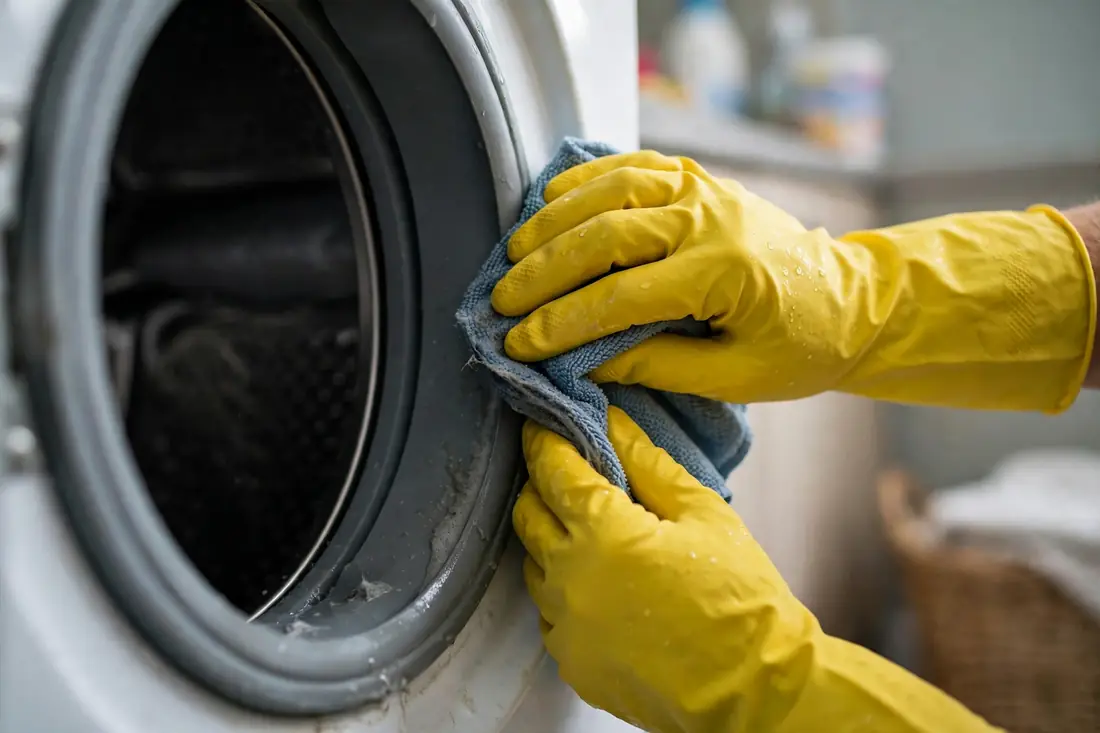
If you own a front-loader, the grey rubber seal around the door is the smell's favorite hiding place. Water pools in its folds after every wash, and a grey or black film grows there quietly for months. Pull each fold open gently and wipe inside with a cloth dampened with hot water and a little dish soap, or with undiluted white vinegar if the film is heavy. Rinse the cloth often, because you are lifting mold and residue out, not pushing it deeper. Dry the seal with a clean towel when you finish, and leave the door ajar for an hour so the rubber dries fully. A seal that stays dry between washes stays clean far longer.
Run the Empty Hot Wash That Does the Deep Work
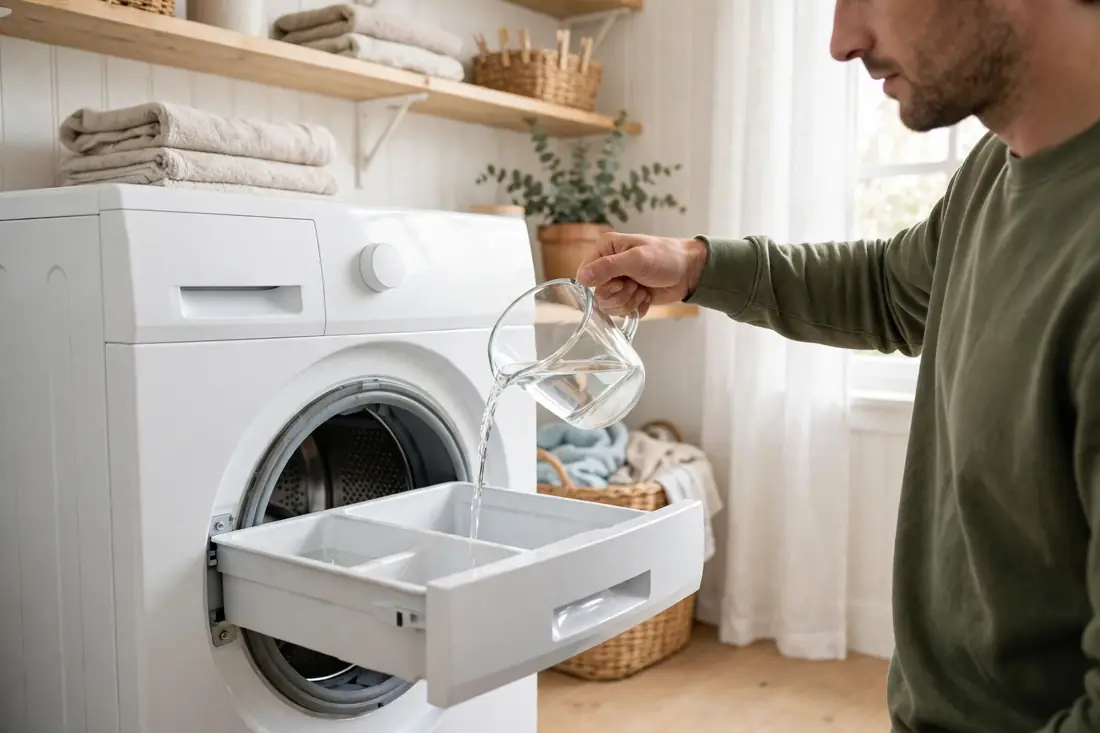
With the filter and seal clean, the drum itself still holds a film of detergent and mineral scale, and only heat and time shift it. Run the machine empty on its hottest, longest cycle, with two cups of white vinegar in the detergent drawer, or a washer cleaner tablet if your manual recommends one. The hot water loosens residue the cold washes never touch, and the vinegar cuts through soap scum and light scale. When the cycle ends, wipe the drum and the drawer with a clean cloth, and leave the door open until everything inside is dry. If the smell lingers after this, repeat the cycle once more before you assume anything is broken.
Top-Loaders Need a Slightly Different Routine
Top-loaders smell less often, because their lids do not seal as tightly, but they are not immune. Detergent and softener build up under the rim, around the agitator, and in the fabric softener dispenser, and a machine that only ever runs cold washes can grow a film on its drum too. Fill a top-loader on its largest, hottest setting, add two cups of vinegar once it fills, and let it soak for an hour before letting the cycle finish. While it soaks, wipe the rim, the lid underside, and the dispenser with a damp cloth. The same rule applies here: leave the lid open between washes so the drum dries out instead of staying damp all week.
Dry It Out Between Washes: The Habit That Prevents the Smell
Cleaning fixes the smell once; drying prevents it from coming back. Mold needs moisture, and a washer that stays sealed shut between loads stays wet for days. Leave the door or lid ajar after every wash, even just an inch, so air can move through the drum. Pull wet clothes out promptly instead of leaving them overnight, since a damp load left sitting re-soaks the drum in warm moisture. If your laundry room has no window, a small fan or an open door helps. This single habit, more than any cleaning product, is what separates washers that always smell fresh from ones that need deep cleaning every month.
Detergent: Less Is Often More
Most washer smells trace back, at least in part, to too much detergent. Modern machines, especially high-efficiency models, need far less soap than the cap suggests, and the extra never rinses away fully. It coats the drum, feeds residue, and leaves clothes feeling stiff or dull. If you use a high-efficiency machine, use a detergent marked HE, and start with half the recommended dose for a normal load. Skip fabric softener most of the time, since it leaves a waxy film that traps odor. Your clothes will still come out clean, often cleaner, and the machine will stay fresher between deep cleans. Hard water areas are the exception: there, a full dose may be needed to get clothes clean.
When the Smell Means a Real Problem
A smell that survives a full clean, or comes with slow draining, standing water, or a leak, is telling you something else is wrong. A clogged or kinked drain hose can hold dirty water against the machine, and a failing pump can leave water sitting in the drum after every cycle. A sewer-like smell that appears even when the machine is dry may come from the drain plumbing rather than the washer itself, especially if the drain hose sits too deep in the standpipe. Check the hose for kinks and make sure it loops up before entering the drain. If the machine still drains slowly or leaks after that, call a technician rather than running more cleaning cycles over a fault.
A Monthly Routine That Takes Fifteen Minutes
The easiest way to keep a washer fresh is a short monthly routine, done on the same day you change your sheets or pay a regular bill. Wipe the seal, rinse the filter, run one empty hot cycle with vinegar, and wipe the detergent drawer before you put it back. That is the whole job, and it takes about fifteen minutes of actual effort, most of it waiting for the cycle. Between those monthly cleans, leave the door ajar and use less detergent, and the smell should never return. If it does, work through the full clean in this guide again, then check the drain hose, because a recurring smell usually has a cause worth finding.
- Wipe the door seal and leave the door ajar
- Rinse the filter under hot water
- Run one empty hot cycle with vinegar
- Wipe the detergent drawer and let it dry
✅ Guide4U Checklist
- Never mix bleach with vinegar
- Unplug before opening the filter housing
- Rinse the filter under hot water
- Wipe inside every fold of the seal
- Run one empty hot cycle with vinegar
- Leave the door ajar after every wash
Key Takeaways
- Most washer smells are residue in the filter, seal, and drum.
- Never mix bleach with vinegar when cleaning.
- Leaving the door ajar prevents the smell from returning.
Frequently Asked Questions
Can I mix bleach and vinegar to clean my washer?
No. Bleach and vinegar mixed together create chlorine gas, which can burn your eyes and lungs. Use one or the other, never both in the same wash. If you run a vinegar cycle, run a plain rinse after it before you use any bleach product, and keep the laundry room door open for fresh air while you clean.
How often should I clean my washing machine?
Once a month is a good rhythm for most households, and every two weeks if you wash gym clothes, cloth diapers, or loads in cold water most of the time. The filter and the door seal deserve a quick wipe at the same time, so the smell never gets a chance to build back up.
Is a smelly washer a sign it is broken?
Usually yes, if the smell fades after a proper clean. A smell that stays after cleaning the filter, seal, and drum, or a machine that drains slowly or leaks, points to a drain or pump problem that needs a technician. Do not keep running scented cycles to cover it; find the cause first.
Vinegar or bleach: which is better for cleaning a washer?
Vinegar is the safer default for most machines, because it dissolves mineral buildup and soap residue without harming seals. Bleach disinfects more strongly and suits a machine that has visible mold, but it can damage rubber seals over time if used too often. Check your manual: some makers warn against one or the other.
What did you think of this article? Share your opinion in the comments below — we would love to hear from you.