
How to Stop Clothes Smelling Musty in the Wardrobe: 9 Fixes That Actually Work

Quick Answer
The fastest fix is a refresh wash with a cup of white vinegar in the rinse cycle, followed by drying clothes completely, seams and all. Then deep-clean the wardrobe with a vinegar-water wipe, leave the doors open daily for airflow, and keep a moisture absorber on a low shelf. That combination removes the mildew and stops it coming back.
Why Your Wardrobe Smells Musty (and Your Laundry Doesn't)
That musty smell is almost always mildew, the early stage of mold, and it only needs three things to grow: moisture, warmth, and something organic to feed on. Your everyday cotton shirts, wool sweaters, and gym clothes provide the food. A closed wardrobe makes everything worse because it's a dark, still, enclosed space where humid air sits pressed against fabric for weeks at a time. Clothes hung up while still faintly damp are the usual culprit, but even fully dry laundry can absorb moisture from humid air in a stuffy closet, especially in humid summers. Understand this and you have the whole game plan: get rid of the moisture, and the smell can't come back for good. Every fix below works on one of those two jobs.
Wash Smarter Before Clothes Go Back In
Rewashing musty clothes the exact same way often fails, because standard detergent can't always reach mildew buried deep in the fibers. For a refresh wash, add half a cup of baking soda to the drum with your regular detergent and run a warm cycle, since baking soda neutralizes the acids mildew leaves behind. For heavier smells, pour a cup of distilled white vinegar into the rinse dispenser instead, because its acidity breaks down the residue detergent misses. Don't use vinegar and baking soda in the same load, since they cancel each other out, so pick one per wash. Use the warmest water the care label allows, add a second rinse if your machine offers it, and never leave wet laundry sitting in the washer for hours, because that's where the smell usually starts.
Dry Everything Completely, Not Just Mostly
Clothes that feel dry can still hold moisture in seams, waistbands, and pockets, and that's exactly where the musty smell restarts. I learned this with jeans that smelled fine out of the dryer and stank two days later, all because the thick seams were still damp. If you machine-dry, add an extra ten minutes on medium heat for thick items like jeans, towels, and hoodies, then press the seams with your fingers before you fold anything. Better still, give clothes a final airing near an open window or outside in the sun for an hour or two, because sunlight naturally kills odor-causing microbes. If your dryer leaves everything slightly damp every time, check for a clogged vent or lint buildup before blaming the wardrobe. Wipe the lint filter after every load too.
- Shake clothes before hanging
- Space hangers apart
- Press thick seams

Empty the Wardrobe and Clean It Properly
You can do everything right with laundry and still end up with musty clothes if the wardrobe itself is the source. Once a season, take everything out so you can actually see and smell the interior. Wipe the shelves, drawers, and back panel with one part distilled white vinegar to four parts water, which kills surface mildew without harsh chemicals, then leave the doors open for several hours until fully dry. Work in a ventilated room, since vinegar fumes get strong in enclosed spaces. Check the back corners and shelf undersides for dark spots, which can mean mold on the wood or wall behind. If black or green patches return after cleaning, the dampness may be inside the wall itself, so fix it at the source rather than just covering up.
Get Air Moving Through the Wardrobe
Stagnant air is half the problem, so anything that gets air moving through your wardrobe helps more than you'd expect. If the doors are the solid wooden kind, make a habit of leaving them open for an hour or two each morning while you get dressed, since that alone makes a noticeable difference within a week. For built-in closets, see whether the room has a vent you can open or a door you can leave cracked. Some people drill a few discreet ventilation holes in the back panel of a freestanding wardrobe, which works well as long as it isn't pushed tight against an exterior wall. A small battery fan on a timer keeps air moving when you can't leave doors open. Give it a week or two, because better airflow pays off fast.
- Leave doors open an hour daily
- Crack a window in dry weather
- Gap behind the wardrobe
Pull Moisture Out of the Air
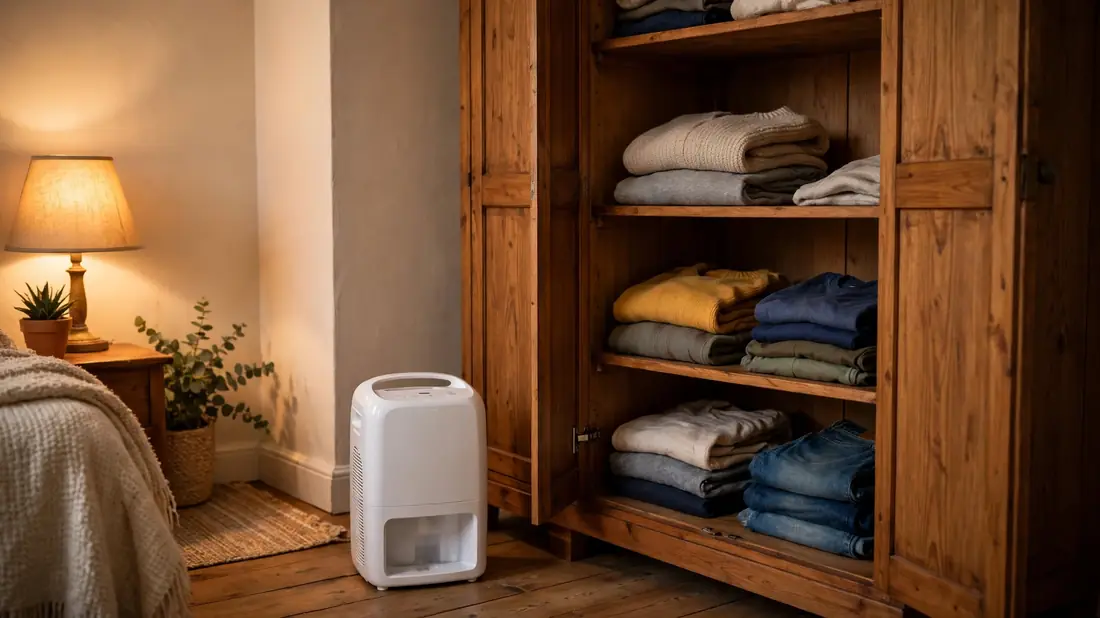
In humid climates, ventilation alone isn't enough, because the air coming in is already damp. That's where moisture absorbers earn their keep. Small tubs of calcium chloride or silica gel, sold as closet dehumidifiers for a few dollars at Target or Walmart, can pull a surprising amount of water out of the air in a single week. Set one on the wardrobe floor or a low shelf and check it monthly, replacing it once the crystals have dissolved into liquid. For a chronically damp room, a small electric dehumidifier set to keep humidity under 50 percent changes everything. A compact room model costs around forty to sixty dollars, and a few hours a day is usually enough. I've done this in my own closet, and my clothes smelled dramatically fresher after two weeks.
Odor Absorbers That Actually Work
Once moisture is under control, a few old-school tricks keep clothes smelling genuinely fresh instead of just covered up. Baking soda is the cheapest option: put a cup of it in an open jar or a fabric pouch on a shelf, and replace it every couple of months. Cedar rings or blocks are a classic: the scent is pleasant without being perfume-y, and they work best when you lightly sand the surface once a year to refresh them. Activated charcoal bags are odorless and reusable, and you recharge them with an hour of sunlight a month. Skip heavily scented sachets and plug-in fresheners inside a closed wardrobe, because they coat fabric with fragrance instead of removing anything. They smell nice for a week, then mustiness creeps back. What I keep in mine:
- Baking soda jar on a shelf
- Cedar blocks among sweaters
- Charcoal bag per section
Store Seasonal Clothes the Right Way
The mustiest clothes are usually the ones you forgot about, so seasonal storage deserves real attention. Never seal clothes into plastic bins or vacuum bags unless they are bone dry, because trapped moisture in an airtight bag is a mildew farm. Breathable cotton garment bags and storage boxes are safer for long-term storage, and they keep dust out too. Wash or dry-clean everything before you store it, since body oils and food stains give mildew a head start over the months. Toss a silica gel packet or cedar block into each container, and keep containers in a closet rather than a garage or attic, where temperature swings and humidity run worse. When you pull the clothes out next season, give them a quick wash anyway, since fabric picks up a stale smell just from sitting.
When the Smell Won't Go Away: Check for Mold
If your clothes smell musty right after a proper wash and dry, the problem may not be the clothes at all. Check carefully behind and underneath the wardrobe, along the baseboards, and on the wall it stands against. Mold often hides where furniture traps condensation against a cool exterior wall, and a damp, earthy smell from the wall is a strong clue. Small surface patches on the wardrobe itself can be handled with the vinegar solution from earlier. But mold inside a wall or spreading across drywall needs professional remediation, not a DIY scrub. This matters because living with active mold is more than a laundry problem, and no amount of baking soda fixes what keeps growing back. Call a professional if the patch is larger than a dinner plate or keeps returning after cleaning.
A Simple Monthly Routine That Keeps It Fresh
None of this works as a one-time blitz, so here is the low-effort routine I actually follow. Once a month, I leave the wardrobe doors open while I clean the room, wipe down one shelf with the vinegar solution, and check the moisture absorber to see if it needs refilling. Every three months, I rotate which clothes sit at the back, since forgotten items go musty first, and I refresh the baking soda and sand the cedar blocks. It takes maybe fifteen minutes a month, and it means I never get that stale blast of air when I open the doors in the morning. The point is making freshness automatic. Set a monthly reminder, and the habit sticks within two cycles. Fresh closets are a habit, not a project.
- Monthly: air wardrobe, check absorber
- Quarterly: rotate clothes, refresh soda
- Never hang anything slightly damp
✅ Guide4U Checklist
- Wash musty clothes with vinegar or baking soda
- Dry fully, checking seams and pockets
- Wipe wardrobe interior with vinegar solution
- Leave doors open an hour daily
- Place a moisture absorber on a low shelf
- Add baking soda jar and cedar blocks
- Never store or hang damp clothes
Key Takeaways
- Musty smell is mildew feeding on moisture, so every fix targets dampness.
- Vinegar refresh washes plus complete drying beat any scented cover-up.
- Daily airflow and a moisture absorber keep the wardrobe fresh long-term.
Frequently Asked Questions
Can I use bleach to remove musty smell from clothes?
Only on whites like sheets and towels, since bleach ruins colors, wool, silk, and elastic. Add half a cup to a hot wash for musty whites. Work in a ventilated room, never mix bleach with vinegar or other cleaners, and rinse well. For clothes, oxygen bleach or a vinegar rinse is safer and works on the mildew behind the smell.
Why do my clothes smell musty even after washing?
Usually the wash didn't fully remove the mildew, or the clothes went back in while damp. Try a refresh wash with a cup of white vinegar in the rinse, then dry everything and check seams. If the smell survives, check the wardrobe for hidden mold or damp spots, because clothes pick up musty odors from a damp closet within days.
Do fabric softeners or scented sachets fix musty clothes?
No, they mask the smell instead of removing it. Scented sachets add fragrance on top of mildew, and softener coats fibers in a layer that traps odor, making it harder to wash out. Fix the moisture first, then use odorless absorbers like baking soda or charcoal bags. Cedar or lavender is fine as a finishing touch, never as the solution.
How long does it take to get rid of musty smell?
A vinegar refresh wash plus drying fixes mild smells fast. Deep mustiness from months in damp storage can take several wash cycles and a wardrobe cleaning, so plan on a weekend. Add an absorber and air the wardrobe daily, and most closets smell fresher within two weeks. Smells that survive all of that point to hidden mold needing professional attention.