
How to Clean a Coffee Maker With Vinegar
Quick Answer
Mix one part white vinegar with two parts water (or one-to-one for OXO machines), pour it into the reservoir, and brew halfway. Switch the machine off and let it sit for 30 to 60 minutes, then finish the cycle and rinse twice with fresh water. Skip vinegar entirely if your manual says so, as Moccamaster and Breville do.
Why Vinegar Works So Well
Your coffee maker slowly fills with mineral scale. Tap water carries calcium and lime, and every brew leaves a little behind on the heating element and inside the tubes. Over weeks that crust narrows the water flow, so the machine brews slower, runs louder, and makes coffee that tastes flat or bitter. Vinegar fixes that because it is a mild acid, and acid dissolves mineral deposits. White distilled vinegar is cheap, food safe, and strong enough for the job without harming the plastic and glass parts of most drip machines. It will not fix a broken pump or a dead heating element, but for the slow, stale-tasting machine most people have, it is the right tool. You will taste the difference in the very next pot.
What You Will Need
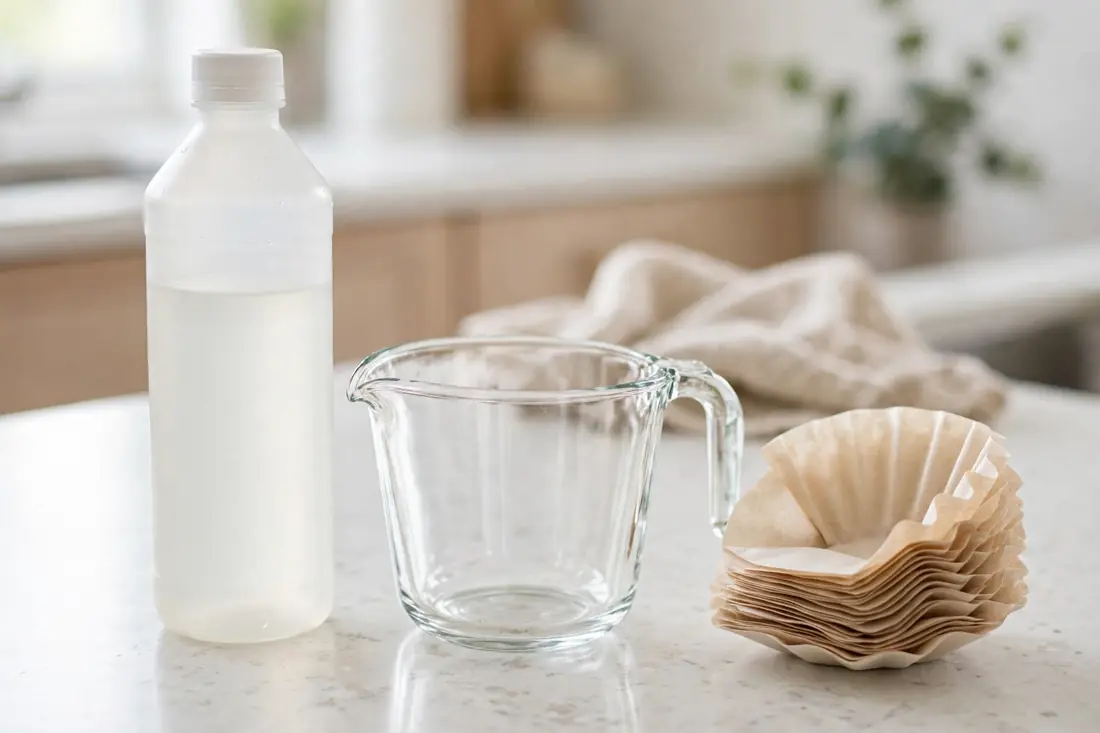
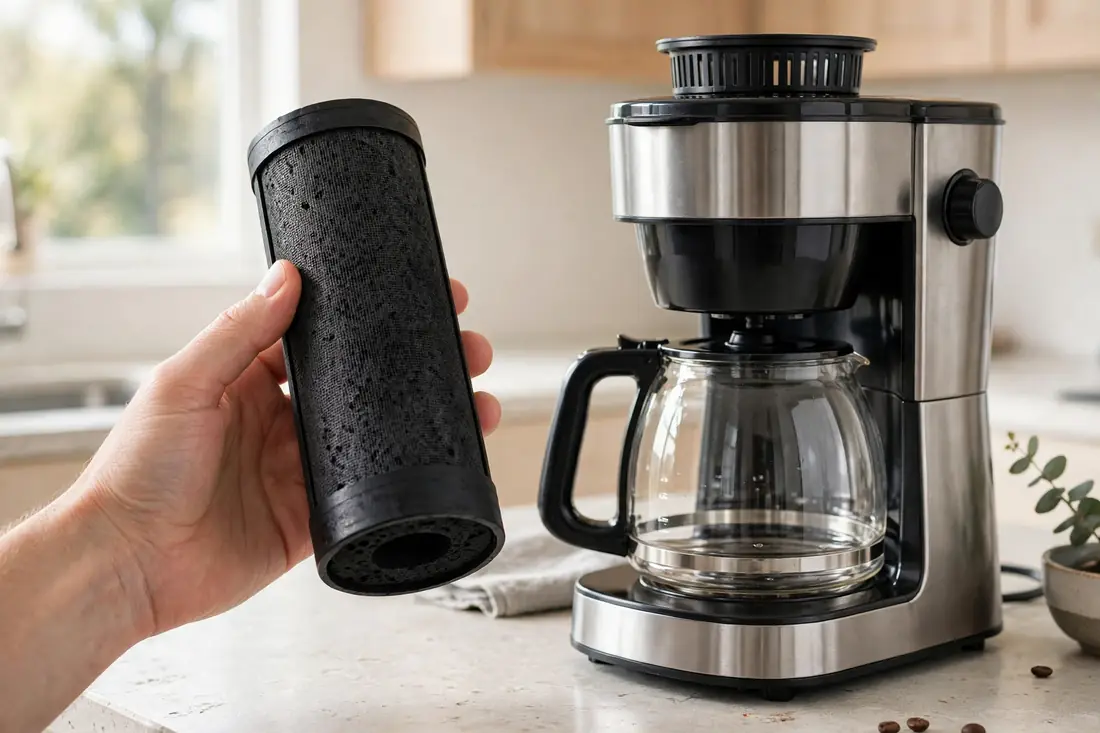
Gather everything before you start, because the process has a waiting step and you do not want to hunt for supplies halfway through. You need plain white distilled vinegar, fresh water, a paper coffee filter, and a clean cloth. A measuring cup helps you get the ratio right, and a mug or small bowl is handy for catching drips when you move the carafe. Skip apple cider vinegar and cleaning vinegar for this job. Apple cider vinegar leaves sticky residue and costs more for no gain, and cleaning vinegar is stronger than your machine needs. Plain white distilled vinegar, the gallon jug from the grocery store, is the one to use. If your machine has a charcoal water filter, take it out first so the vinegar does not soak into it.
- White distilled vinegar
- Fresh water
- A paper coffee filter
- A measuring cup
- A clean cloth
The Right Vinegar Mix for Your Machine
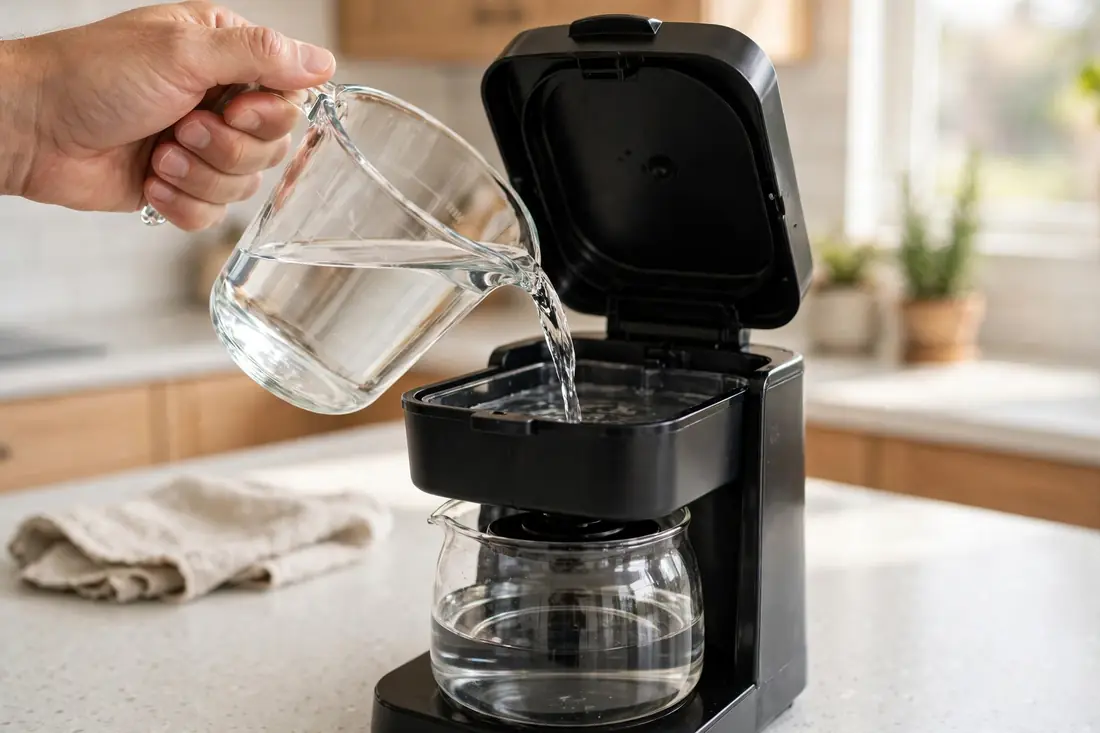
The ratio depends on your machine, and the manual is the final word. For most standard drip makers, Mr. Coffee recommends one part vinegar to two parts water. OXO suggests a stronger one-to-one mix of vinegar and water. Hamilton Beach tells owners to pour in two cups of vinegar, then fill the rest of the reservoir with water. For a single-serve brewer, fill the reservoir halfway with vinegar and halfway with water. When in doubt, use the weaker mix first. A mild solution run twice beats one harsh run that leaves a vinegar taste in your next pot. Never pour undiluted vinegar into a machine that calls for a mix, and never add bleach or any other cleaner to the reservoir. Vinegar and bleach together make toxic fumes, so keep them far apart.
Run Half a Brew, Then Pause
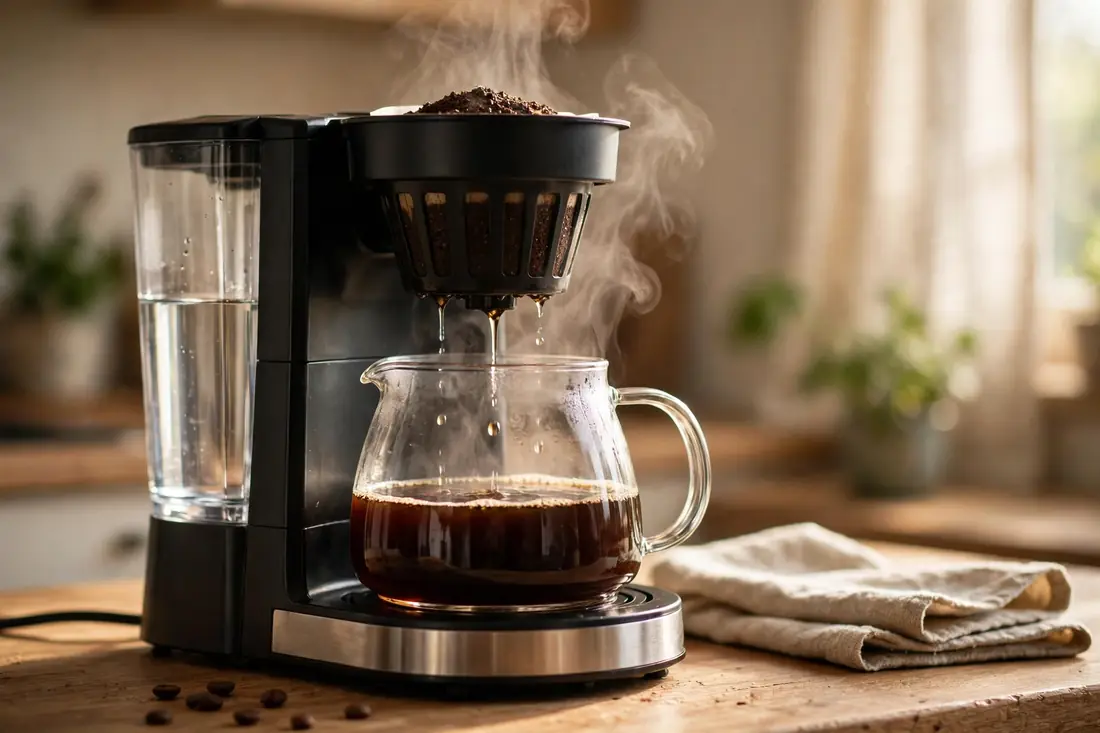
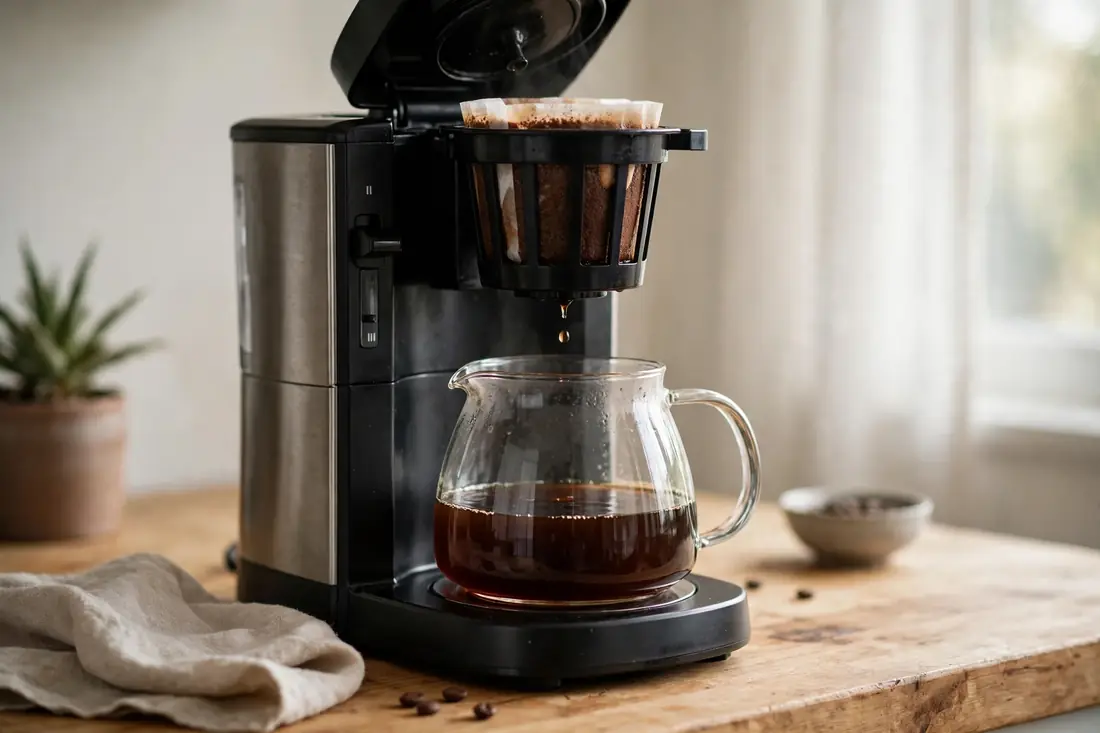
Pour the vinegar mix into the reservoir, put the empty carafe in place, and start a brew cycle with no coffee in the basket. Let it run until about half the liquid has dripped through, then switch the machine off. This is the step most people skip, and it is the one that does the real work. While the machine sits, the warm vinegar solution soaks the heating element and the tubes, loosening scale that a quick pass would leave behind. Leave it for thirty to sixty minutes. If your machine has not been cleaned in a year or more, give it the full hour. Set a timer so you do not forget and leave it sitting all day, which can leave a vinegar smell that takes extra rinsing to clear.
Finish the Cycle and Dump It
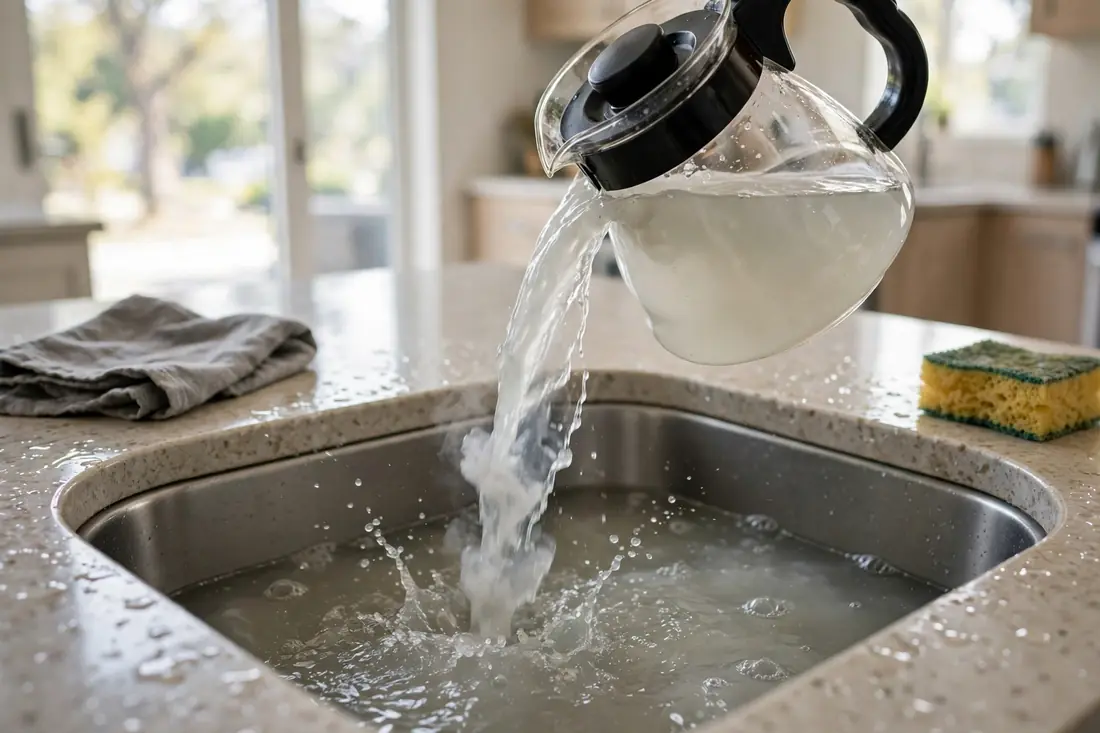
After the soak, switch the machine back on and let the rest of the vinegar solution brew through. Watch the carafe as it fills. The liquid coming out may look cloudy or carry small white flakes, and that is a good sign. Those flakes are pieces of mineral scale that broke loose during the soak. When the cycle ends, pour the whole carafe down the sink. Do not save it, and do not try to reuse the vinegar mix for a second pass. It has done its job and it is full of the deposits you just removed. Wipe any drips off the hot plate right away, because dried vinegar water leaves its own faint marks on the plate.
Rinse Twice With Fresh Water
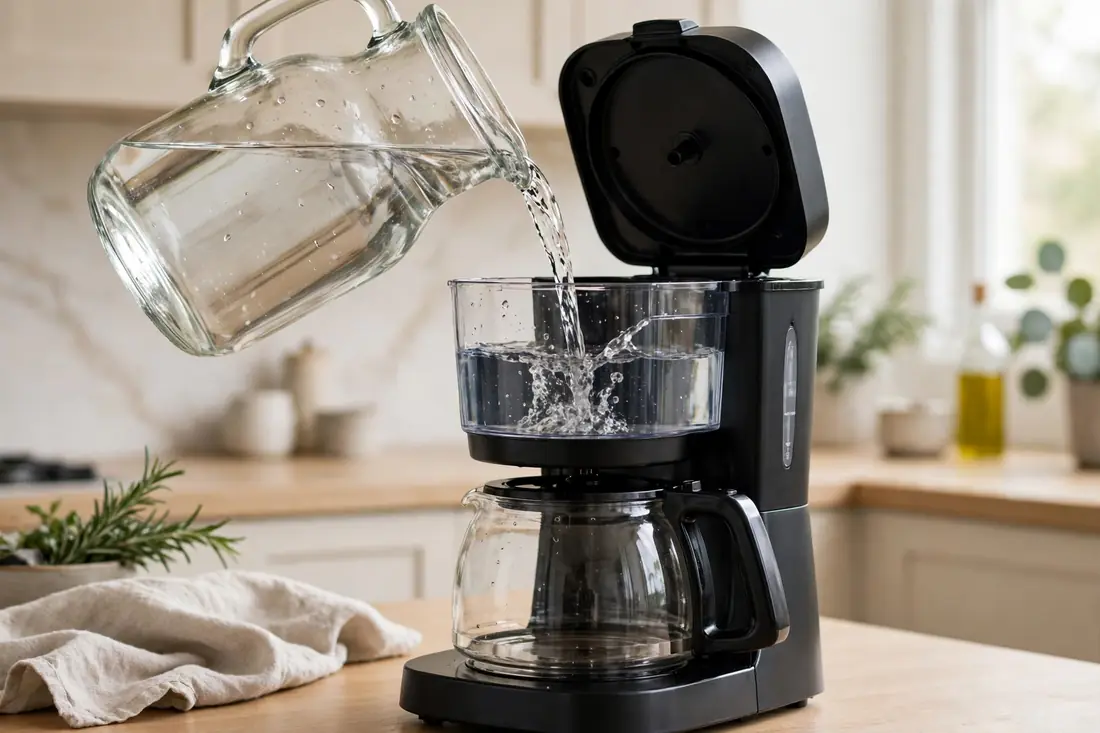
Fill the reservoir with plain fresh water and run a full brew cycle with no coffee. Then do it again. Two rinse cycles are the minimum, and most machines need both before the vinegar taste is fully gone. After the second rinse, pour a little of the hot water into a mug and smell it. If you catch any vinegar at all, run a third cycle. It is better to spend ten extra minutes rinsing than to brew your morning coffee into a pot that still tastes like salad dressing. Once the water smells clean, your machine is ready. Brew a test pot with a small amount of coffee first if you want to be sure, and toss it if the taste is still off.
Clean the Carafe, Lid, and Filter Basket Too
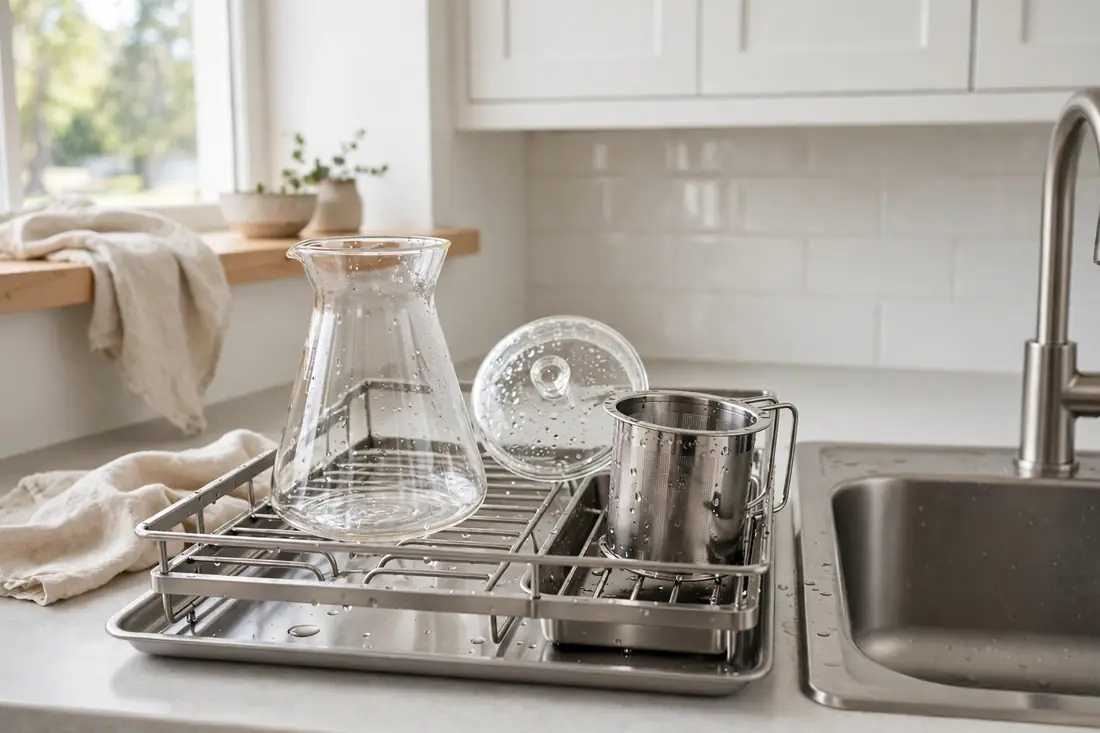
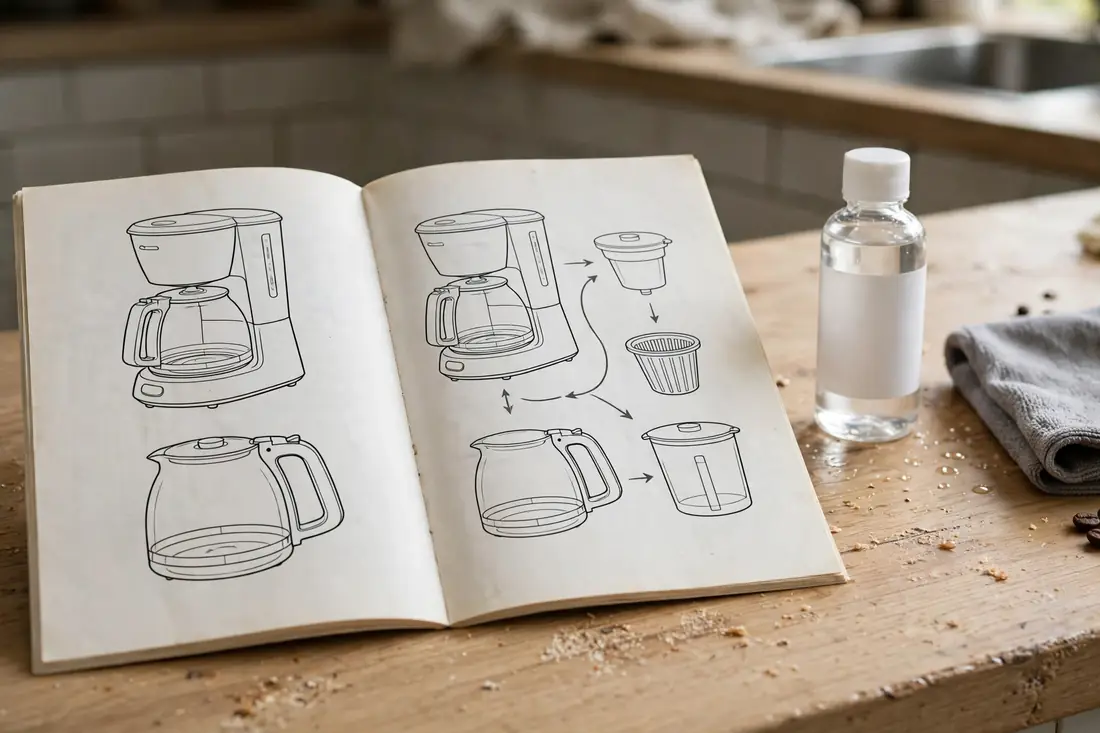
Descaling the inside does nothing for the parts you touch every day, so clean those while the machine rinses. Wash the carafe, lid, and filter basket in warm soapy water, and scrub the spout where coffee oils collect. Brown stains inside a glass carafe come off with a paste of baking soda and a little water, rubbed gently with a soft cloth. Rinse everything well and let it dry before putting it back. Wipe the outside of the machine with a damp cloth, and run a cloth around the hot plate once it has cooled. Coffee grounds stuck in the basket area can sour and add a stale note to fresh coffee, so check the corners.
Machines That Should Skip Vinegar
Vinegar is right for most drip coffee makers, but not all of them. Moccamaster and Breville both tell owners not to use vinegar and to use their own descaling products instead. Their machines use parts and seals that vinegar can wear down over time, so follow what the maker says. Keurig is different: Keurig's own guidance allows a vinegar descale for single-serve brewers, though its descaling solution works too. Check your manual before you start, and if the manual says no vinegar, believe it. A descaling solution costs a few dollars and is the safe choice for any machine that warns against vinegar. The same rule applies to espresso machines, which almost always need a maker-approved descaler.
How Often to Descale
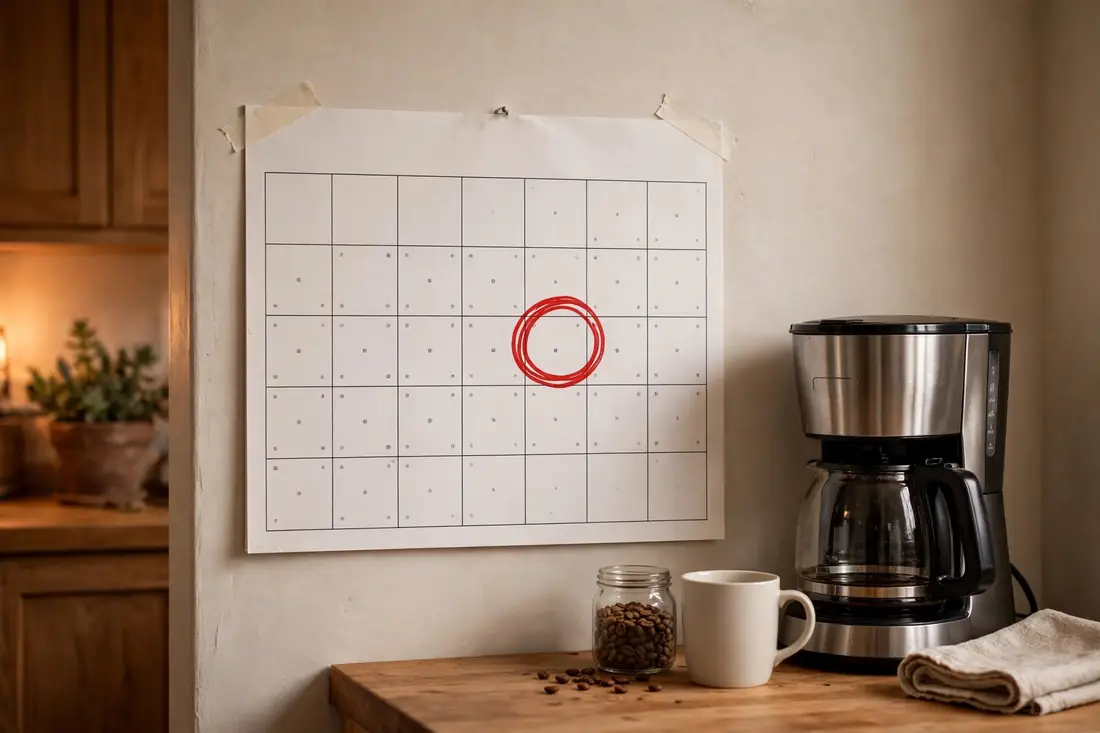
How often you descale depends on your water. If you have hard water, descale every month, because scale builds fast. With soft or filtered water, every two to three months is enough. Watch for the signs either way: the brew slows down, the machine gets louder, the coffee comes out lukewarm, or the taste turns flat and bitter. Those are all scale talking. A regular schedule is easier than waiting for the symptoms. Pick a day, like the first Sunday of the month, and stick to it. Your coffee will taste better and the machine will last longer, since scale makes the heating element work harder and wear out sooner.
When Vinegar Is Not Enough
Sometimes a vinegar descale does not fix the problem, and that tells you something. If the machine still brews slowly after a full descale, run the process a second time. Two passes handle heavy buildup that one pass leaves behind. If the coffee still tastes stale, check the charcoal filter and swap it for a fresh one, since an old filter can add its own off taste. A cracked carafe, a leaking reservoir, or a pump that barely moves water means the machine itself is worn out, and no cleaner will fix that. At that point, a maker-approved descaler is worth one try, and if it still fails, it is time to shop for a replacement.
✅ Guide4U Checklist
- Use white distilled vinegar only
- Mix one part vinegar, two parts water
- Brew halfway, then pause 30 to 60 minutes
- Finish the cycle and dump it
- Rinse twice with fresh water
- Clean carafe, lid, and basket too
- Check manual before using vinegar
Key Takeaways
- Vinegar dissolves the scale that slows your brew
- The halfway pause does the real work
- Two plain-water rinses clear the taste
Frequently Asked Questions
Can I use apple cider vinegar instead of white vinegar?
Stick with plain white distilled vinegar. Apple cider vinegar costs more, leaves a sticky residue, and can tint light-colored parts. White vinegar is cheaper and does the job cleanly. If you only have apple cider vinegar on hand, it will work in a pinch, but white is the better pick for this job.
Will vinegar damage my coffee maker?
Not in most drip machines, as long as you dilute it and rinse well after. The risk comes with machines whose makers warn against vinegar, like Moccamaster and Breville, so check your manual first. Never use vinegar undiluted when the manual calls for a mix, and never mix it with bleach.
How do I get the vinegar smell out after cleaning?
Run at least two full rinse cycles with plain water. If you still smell vinegar, run a third. The smell fades fast once fresh water has flushed the tubes. Brewing one small test pot of coffee and tossing it also helps, since the coffee oils cover any faint trace that is left.
Can I clean a Keurig with vinegar?
Yes. Fill the water reservoir halfway with white vinegar and halfway with water, then run brew cycles without a pod until the reservoir is empty. Throw away the vinegar water, then run two or three cycles with plain water to rinse. If your Keurig has a descale light, it should turn off once the rinse is done.
What did you think of this article? Share your opinion in the comments below — we would love to hear from you.