
How to Remove Hard Water Stains From a Toilet Bowl
Quick Answer
Lower the bowl water, soak the ring with white vinegar for four hours or overnight, then scrub it off. For a stubborn ring, use a borax and vinegar paste, or rub it gently with a wet pumice stone. Never mix bleach with vinegar or any acid cleaner.
What Hard Water Stains Actually Are
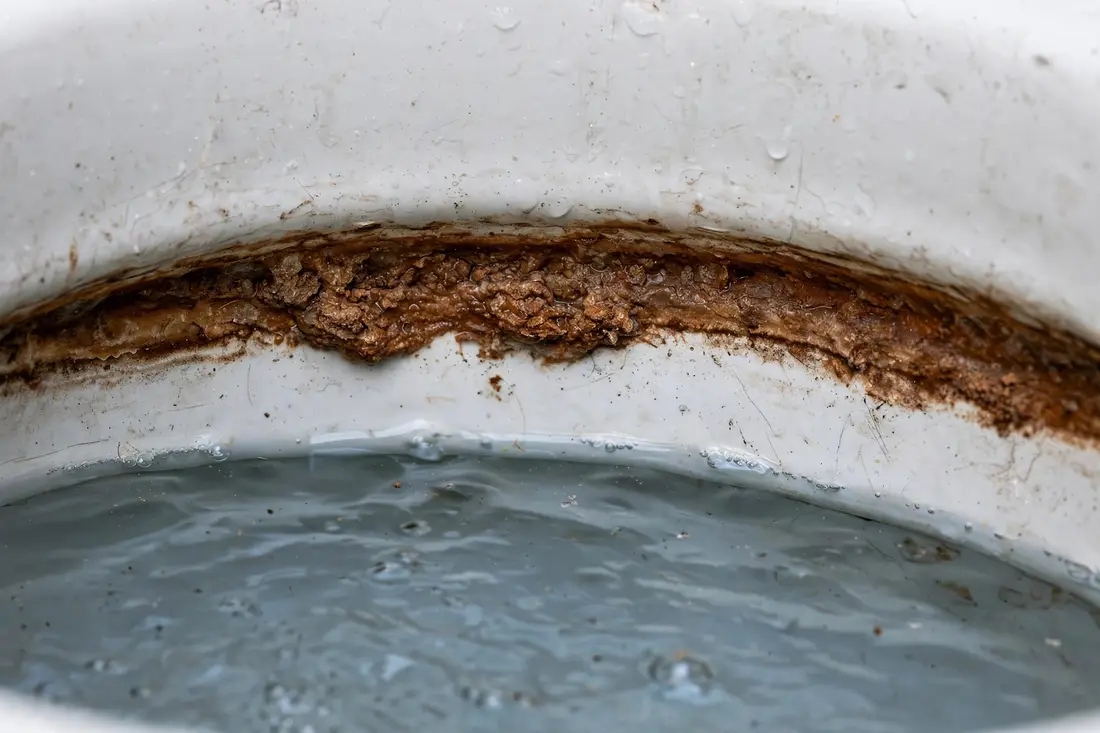
That brown or gray ring at the waterline is not dirt, and that is why your usual toilet cleaner barely touches it. Hard water carries dissolved calcium and magnesium, and every time the water sits and evaporates, it leaves a thin layer of minerals behind. Layer after layer builds into a crust that grips the porcelain. The US Geological Survey notes that about 85 percent of homes in the United States have hard water, so this is a common problem, not a sign of a dirty house. The ring usually forms right at the waterline and under the rim, where water splashes and dries. Once you know the stain is mineral, the fix makes sense: you need something that dissolves minerals, not something that just kills germs.
What You Need Before You Start
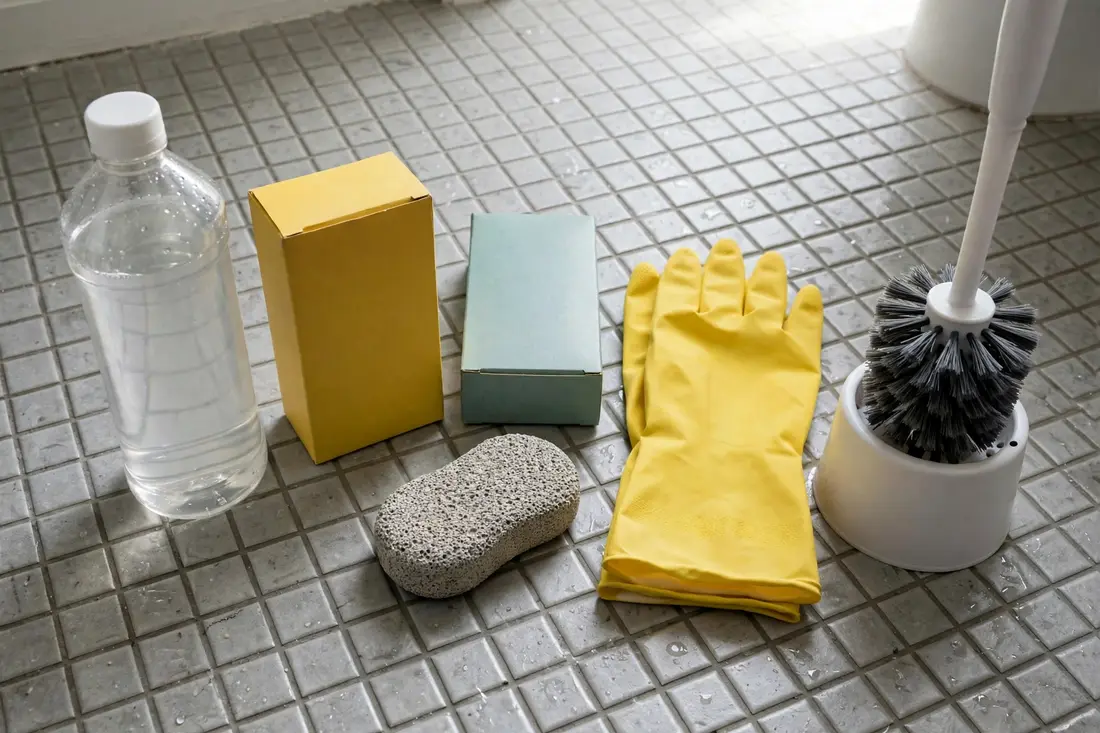
You need less than ten dollars of supplies, and you probably have most of them already. Grab rubber gloves, two cups of white vinegar, baking soda, a box of borax, a pumice stone made for toilets, a stiff toilet brush, an old towel, and eye protection if you plan to scrub hard. A cup or small container helps you pour vinegar under the rim. A sponge is useful for soaking up water from the bowl. Do not buy a harsh acid toilet cleaner as a first step — vinegar and borax handle most rings, and the stronger products are only worth it for stains that have been building for years. Work with the bathroom fan on or a window cracked open, and keep kids and pets out of the room while you clean.
Safety First: Never Mix Cleaners
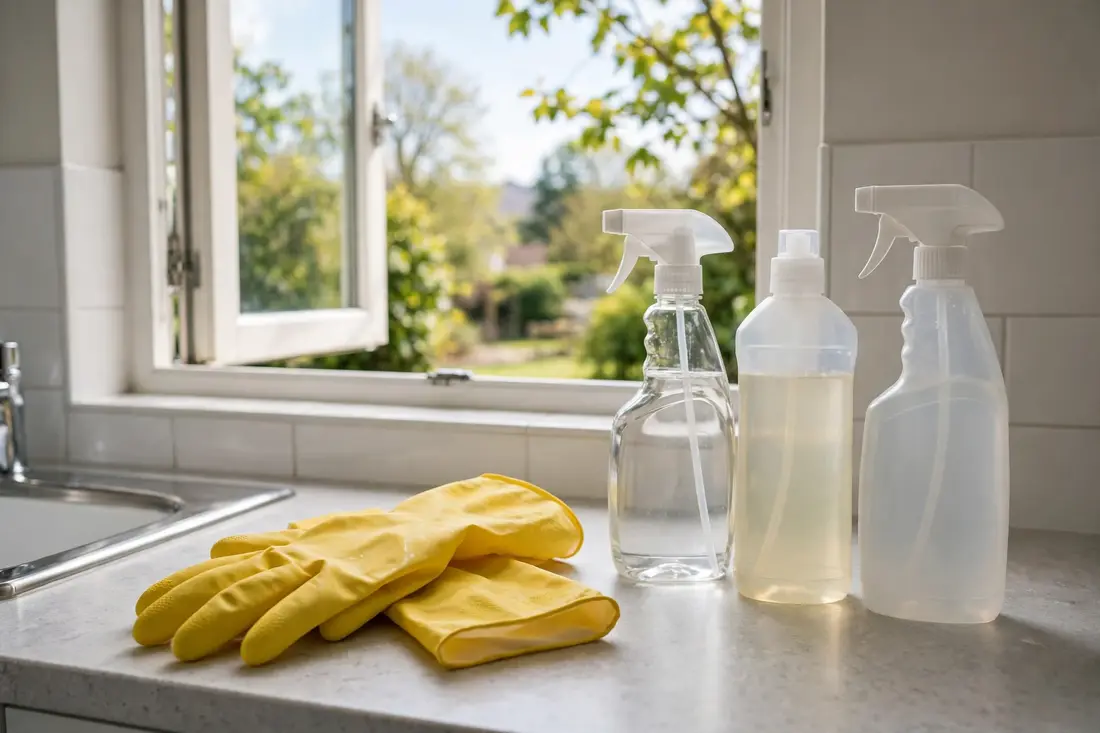
This is the one rule that matters more than any cleaning tip in this guide. Never mix bleach with vinegar, or with any acid-based cleaner, including toilet bowl cleaners that list hydrochloric or citric acid. The mix creates chlorine gas, which burns the eyes, nose, and lungs and can send you to urgent care. The same goes for mixing two different toilet cleaners — you do not know what is in each bottle. Pick one cleaner, use it alone, and rinse well before switching to another. Wear rubber gloves the whole time, and put on eye protection when you scrub under the rim, since splashes happen. If you ever feel dizzy or your eyes sting, leave the room at once and get fresh air.
Lower the Water Level First
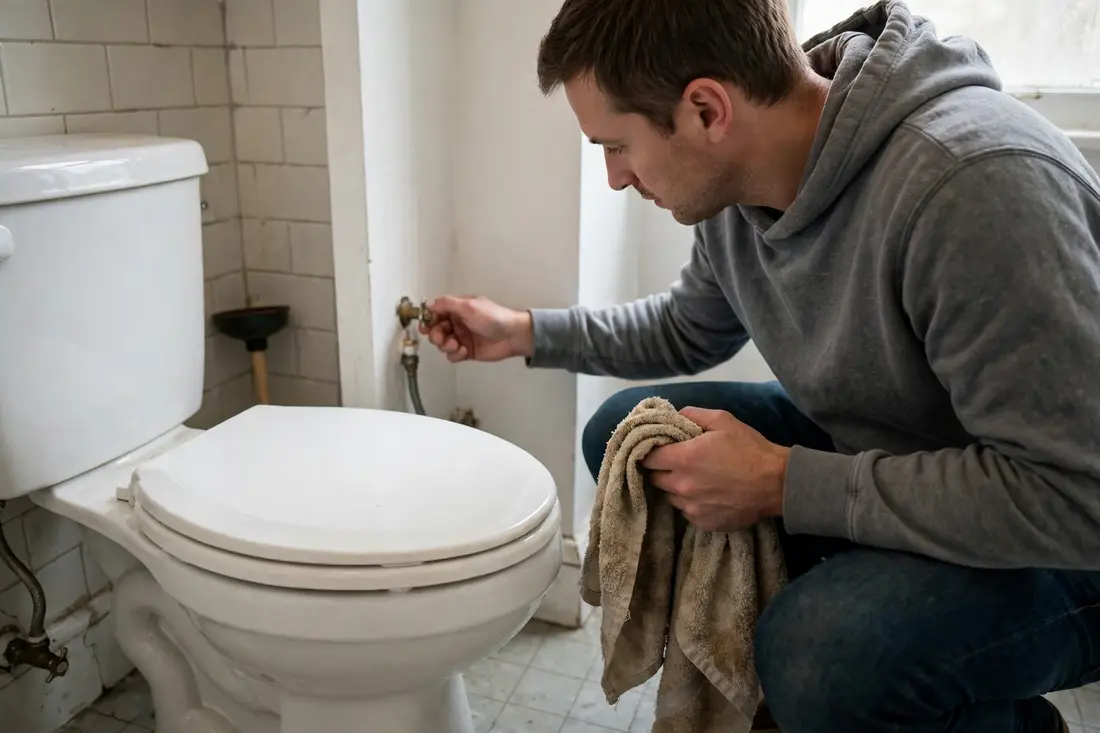
Cleaners work best when they sit on the stain, not diluted in a full bowl of water. Start by turning off the water supply valve behind the toilet, then flush once to drop the level. A few inches of water will stay in the bowl; soak it out with an old towel, or push it down the drain by plunging gently a few times with the toilet brush held over the drain hole. You want the ring fully exposed to air. If your toilet has no shutoff valve, you can still lower the water by bailing it out with a cup, though it takes longer. Do not skip this step: pouring vinegar into a full bowl just weakens it, and the stain will still be there in the morning.
The Vinegar Soak
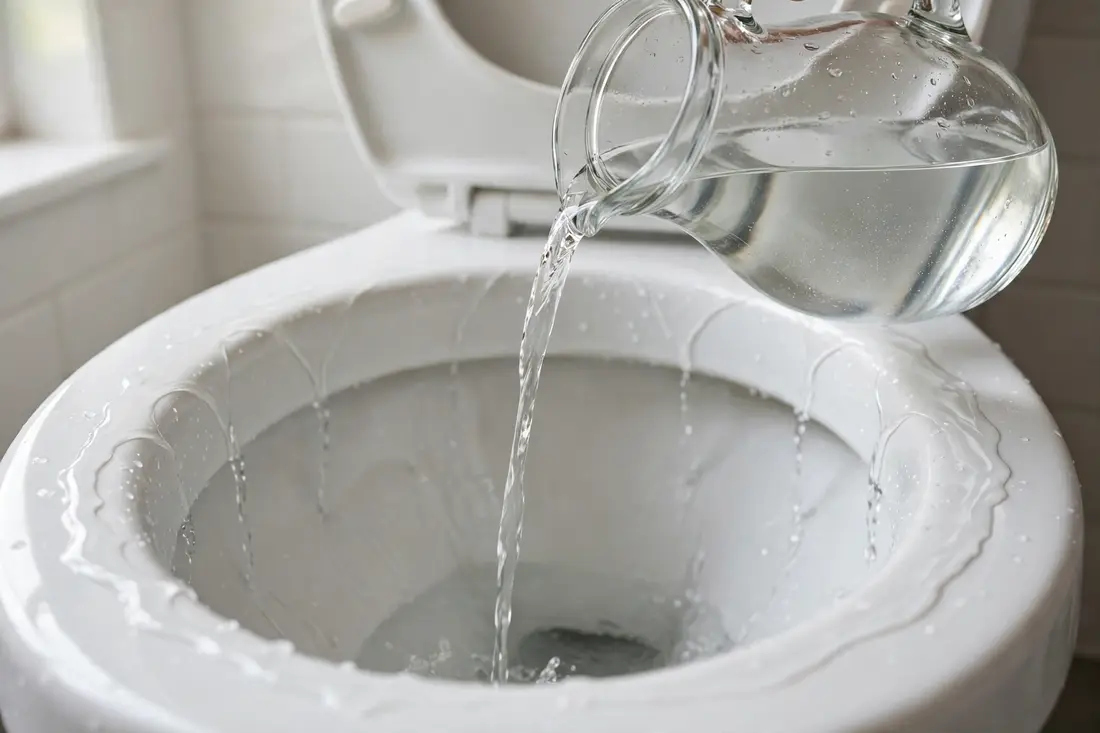
For a light or medium ring, plain white vinegar often does the whole job. With the water level lowered, pour two cups of vinegar around the inside of the bowl, aiming the stream at the ring so it coats the stain. Let it sit for at least four hours, or overnight for a thick ring. The acid slowly dissolves the calcium and lime. After the soak, scrub the ring with a stiff toilet brush using firm, even strokes, then turn the water back on and flush. If a faint shadow of the ring is left, repeat the soak once more before moving on to stronger methods. Vinegar is cheap, safe for porcelain and septic systems, and it will not damage the rubber seals inside the tank.
Baking Soda and Borax Paste for Stubborn Rings
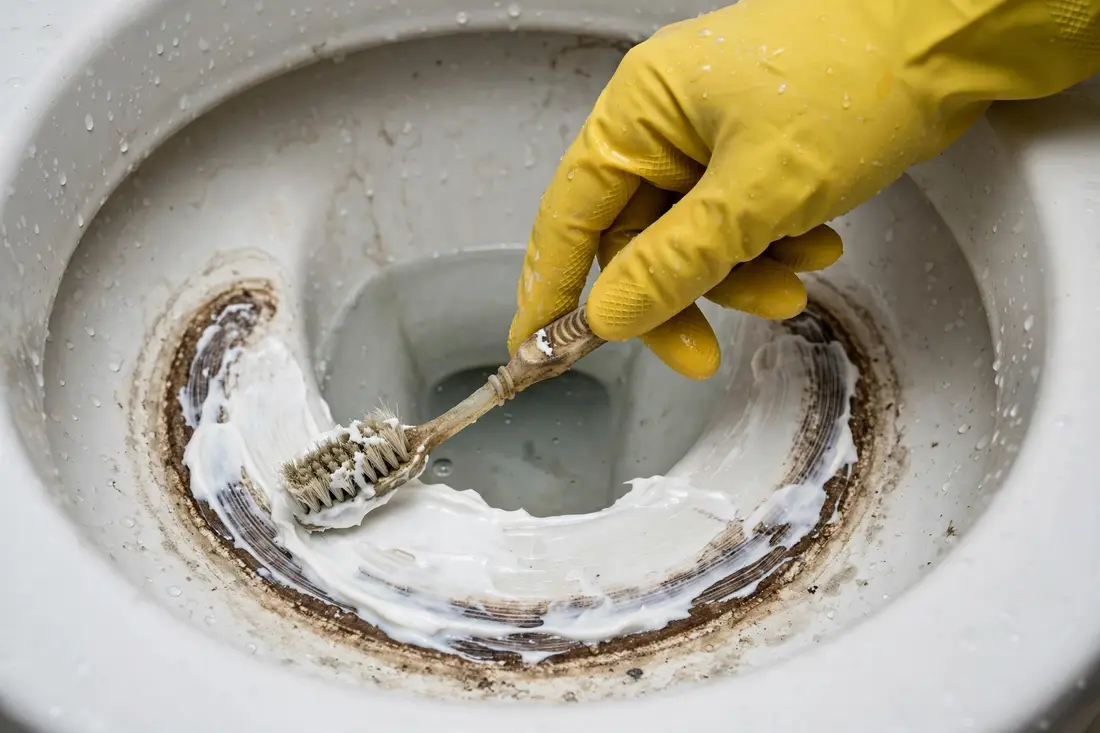
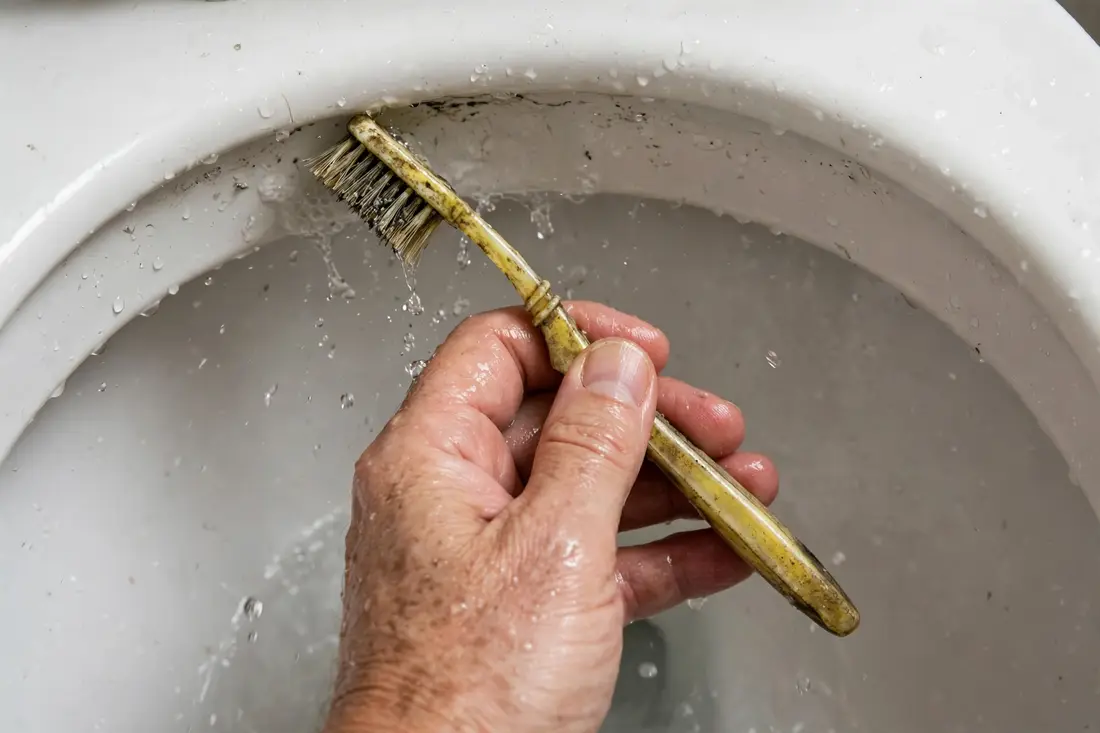
When vinegar alone leaves a shadow behind, a paste gives the acid something to cling to. Mix half a cup of borax with enough white vinegar to make a thick paste, about the texture of peanut butter. Spread it over the ring with an old toothbrush or a gloved hand, and let it sit for thirty minutes. Borax is a mild mineral cleaner that adds scrubbing power without scratching porcelain. Scrub the paste into the stain in small circles, then flush. For a ring that has been there for months, leave the paste on for an hour and scrub twice. A baking soda and vinegar paste works as a backup, but borax holds its shape better on a vertical surface. Rinse the brush well when you finish.
The Pumice Stone Method
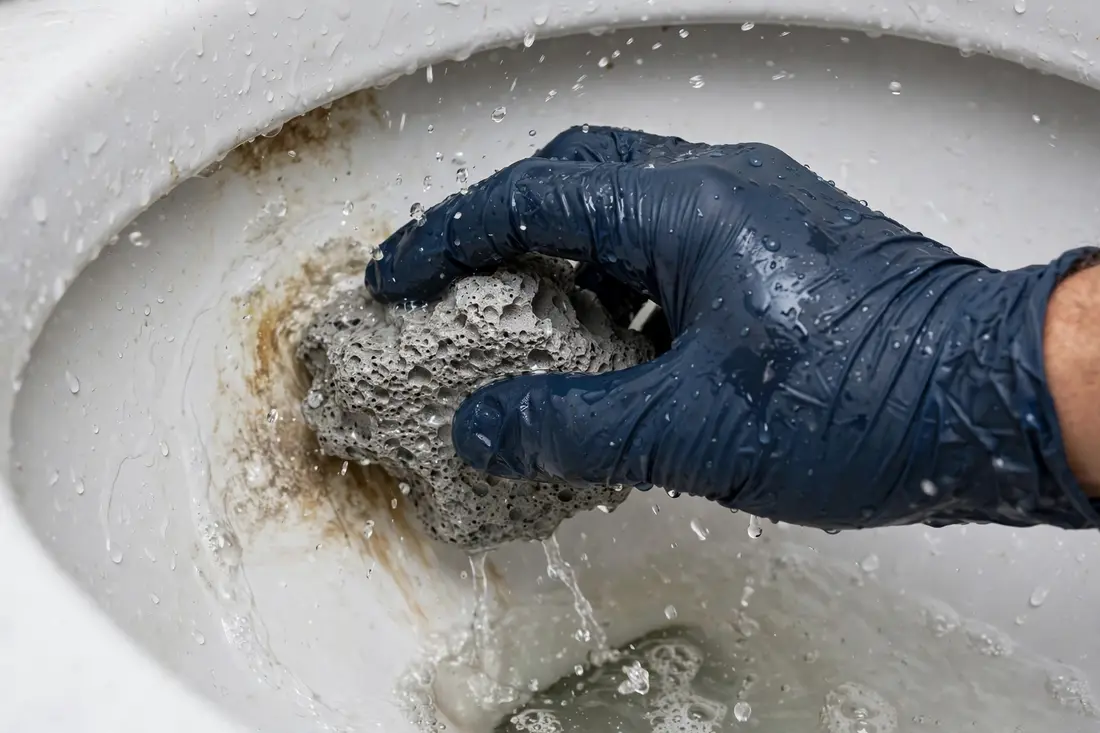
A pumice stone is the fastest fix for a ring that has survived vinegar and paste. Soak the stone in water for five minutes first — a dry stone can scratch porcelain, while a wet one is softer than the glaze and only grinds away mineral scale. With the bowl water lowered, rub the stone over the ring in small, even circles, keeping both the stone and the porcelain wet the whole time. You will feel the rough mineral layer give way to smooth porcelain. Work patiently and let the stone do the job; hard pressure is what causes scratches. Rinse the area often to check your progress. When the ring is gone, flush and run your hand over the spot — it should feel as smooth as the rest of the bowl.
Stains Under the Rim and in the Jets
The ring is not the only place minerals settle. Under the rim, where the water flows in, stains build up in a band you cannot see without looking up, and the small rinse jets around the rim can clog with scale until the flush gets weak. Soak a few strips of paper towel in white vinegar and press them under the rim so they cling to the stain, then leave them for an hour before scrubbing with an old toothbrush. For the jets, poke each hole gently with a piece of wire or a wooden skewer to clear the scale, then scrub around them. If the flush is still weak after cleaning the jets, the problem may be mineral buildup deeper in the passages, and that is a job for a plumber.
Keep the Ring From Coming Back
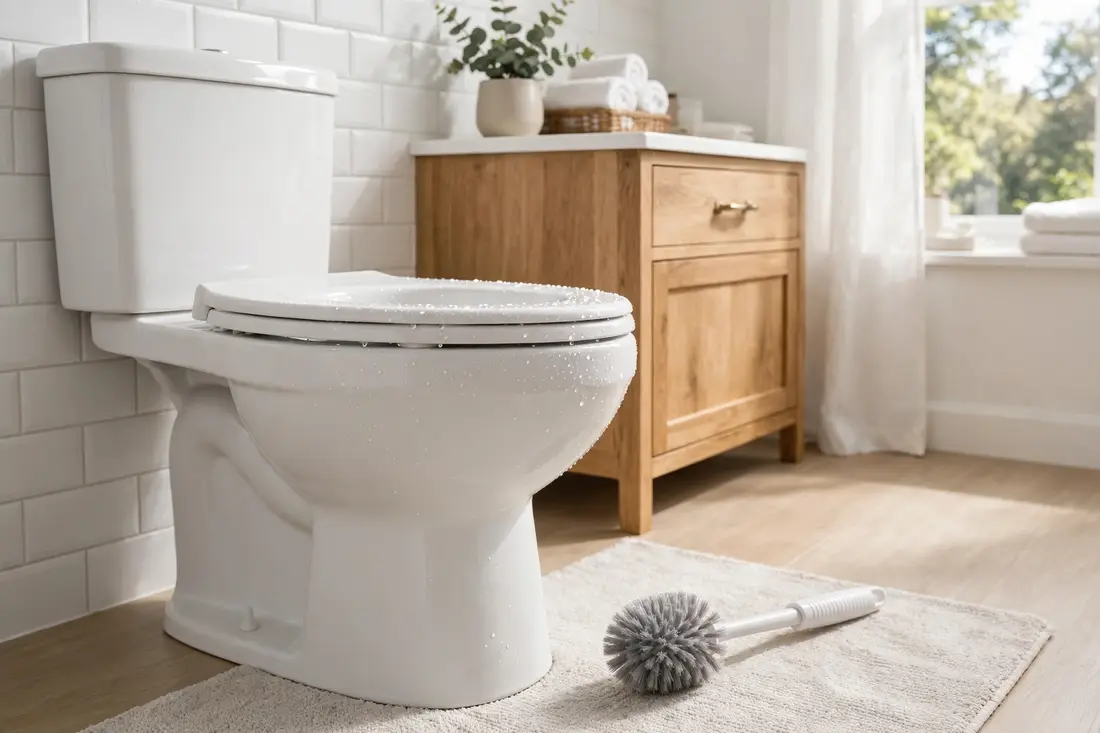
Minerals start building again the day you clean, so prevention is a weekly habit, not a one-time fix. Once a week, pour a cup of white vinegar around the bowl, let it sit for thirty minutes, and give it a quick scrub with the brush. A two-minute brush scrub twice a week stops the film from hardening into a ring. If your water is very hard, a water softener is the only lasting fix, though it is a bigger purchase — test strips from a hardware store, usually under ten dollars, will tell you how hard your water is. Skip in-tank bleach tablets unless your toilet manual says they are safe; they can wear out the rubber flapper and cause a slow leak that wastes water.
When to Call a Plumber
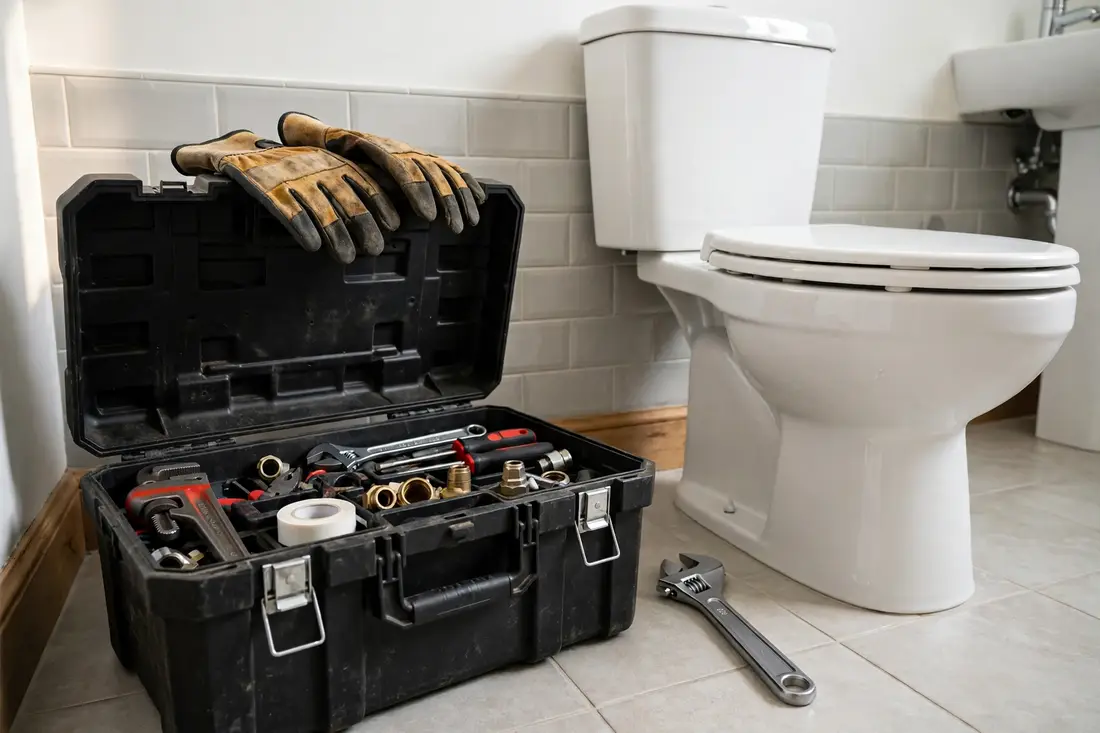
Most hard water rings are a cleaning job, but a few signs mean something else is going on. Call a plumber if the ring comes back within a few days of a full cleaning, since that can point to a constant slow leak refilling the bowl with mineral-rich water. A cracked bowl or a stain that will not move even after pumice work is another reason to get a professional look — scrubbing a cracked toilet can make the damage worse. Weak flushing that does not improve after you clean the rim jets may mean scale inside the internal passages. A plumber can also test your water hardness and talk through softener options. Do not keep buying stronger chemicals for a problem that needs a person with tools.
✅ Guide4U Checklist
- Wear gloves and ventilate the bathroom
- Turn off the valve and lower bowl water
- Soak the ring with white vinegar overnight
- Scrub with a stiff brush after soaking
- Try borax paste on stubborn rings
- Rub a wet pumice stone gently, never dry
- Scrub weekly to stop the ring returning
Key Takeaways
- The ring is mineral buildup, so acids dissolve it and bleach will not.
- Lowering the water level makes every cleaner work better.
- A weekly vinegar soak keeps the ring from coming back.
Frequently Asked Questions
Will vinegar damage my toilet?
No. White vinegar is safe for porcelain, the rubber seals, and septic systems, and it is the standard first step for mineral stains. The only caution is the floor around the toilet: keep vinegar off natural stone tiles, which it can etch. Never mix vinegar with bleach or any cleaner that contains bleach.
Can I use bleach on hard water stains?
Bleach whitens the stain, which makes it look better for a day, but it does not dissolve the minerals that caused it. The ring is calcium and lime, and only an acid — vinegar, or a paste of borax and vinegar — breaks that down. Use bleach only after the minerals are gone, if you want to brighten the bowl, and never mix it with an acid cleaner.
How often should I clean to prevent hard water rings?
A quick scrub with the toilet brush twice a week, plus one cup of white vinegar poured around the bowl once a week and left for thirty minutes, stops most rings from forming. The whole routine takes about five minutes. In very hard water areas, you may need the weekly vinegar soak twice a week, or a water softener for a lasting fix.
Is a pumice stone safe on porcelain?
Yes, when it is kept wet and used gently. A wet pumice stone is softer than porcelain, so it grinds away mineral scale without scratching the glaze. Always soak the stone first, keep the bowl surface wet while you work, and use light, even pressure. A dry stone, or hard scrubbing on a dry bowl, can leave marks, so test on a hidden spot under the rim first.
What did you think of this article? Share your opinion in the comments below — we would love to hear from you.