
How to Clean a Humidifier
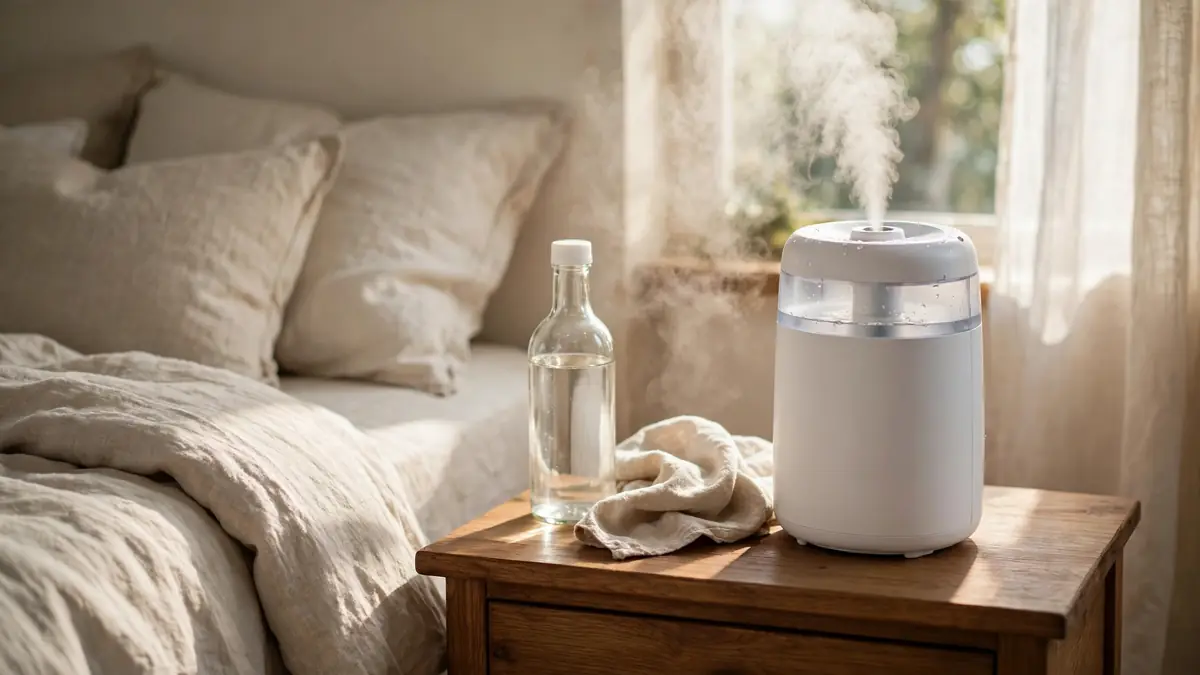
Quick Answer
Rinse the tank and refill it with fresh water every day, descale it with white vinegar every three days, and disinfect it with 3% hydrogen peroxide once a week. Never use bleach, never submerge the base, and always let every part dry fully before you put it back together.
Why a Dirty Humidifier Can Make You Feel Worse
A humidifier puts tiny drops of water into the air you breathe, so whatever grows in the tank ends up in your lungs. Water left sitting for days turns into a warm home for mold and bacteria, and the mist can carry them straight into the room. That is why the EPA tells owners to clean a humidifier every three days, not once a season. A dirty machine can also throw off a fine white dust from minerals in tap water, which settles on furniture and can bother sensitive noses. The fix is not complicated. A short routine, done on schedule, keeps the air moist and clean instead of moist and stale. Your humidifier should help you sleep better, not give you a stuffy nose by morning.
Gather What You Need First
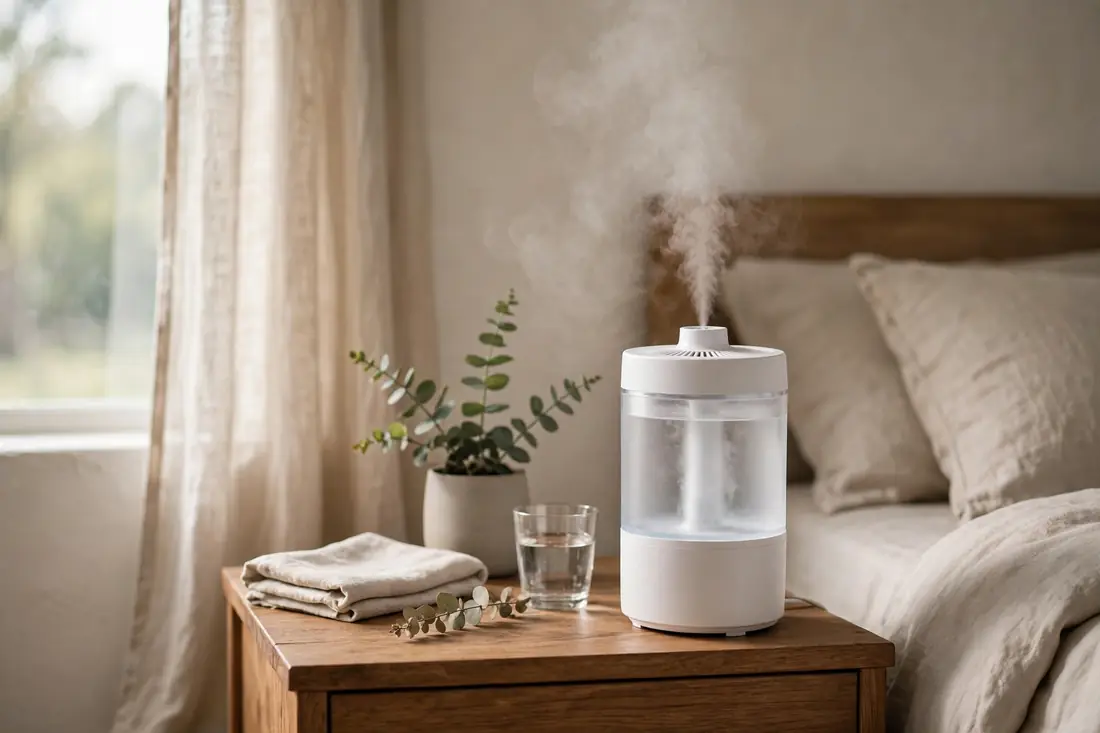
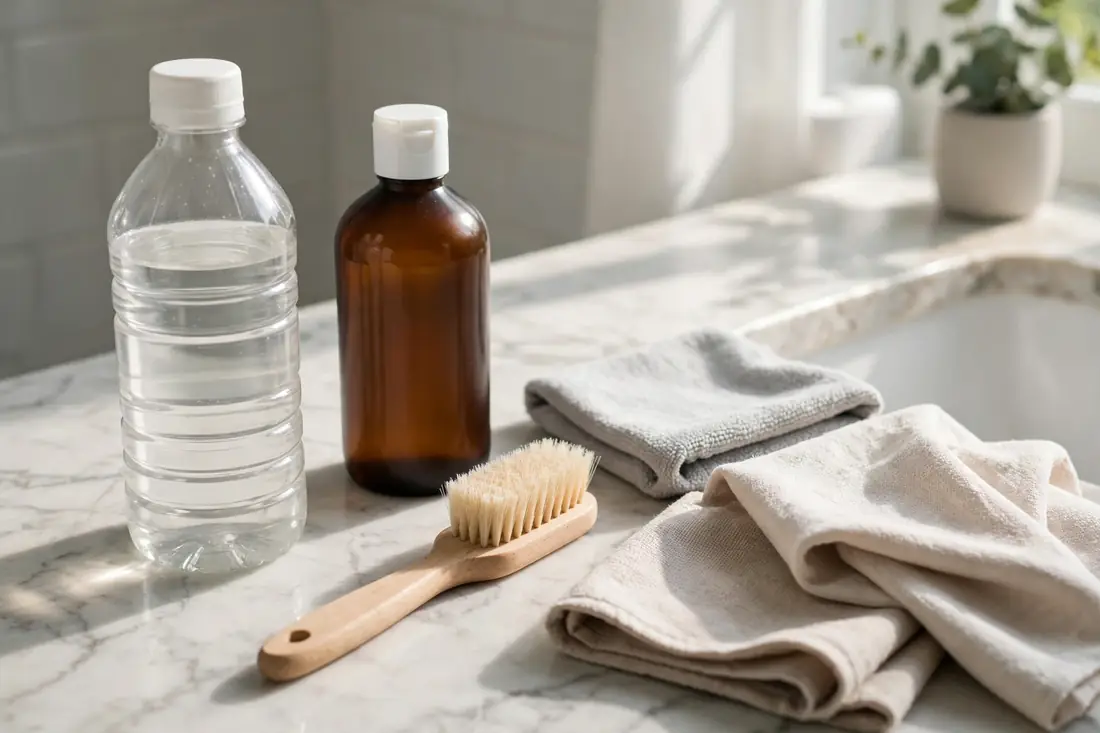
You do not need special cleaners for this job. White vinegar dissolves the chalky mineral scale, 3% hydrogen peroxide kills the germs, and a soft brush reaches the corners where a cloth cannot. Grab a couple of clean cloths, a bowl for soaking small parts, and a bottle of distilled water if your tap water is hard. Check the manual before you start, because every model is a little different: some tanks come apart, some filters rinse out, and some parts should never get wet. Having everything on the counter before you begin turns a chore into a ten-minute job instead of a hunt through the cupboards.
- White vinegar for descaling
- 3% hydrogen peroxide for disinfecting
- Soft brush or old toothbrush
- Clean cloths and fresh water
Empty and Rinse the Tank Every Day
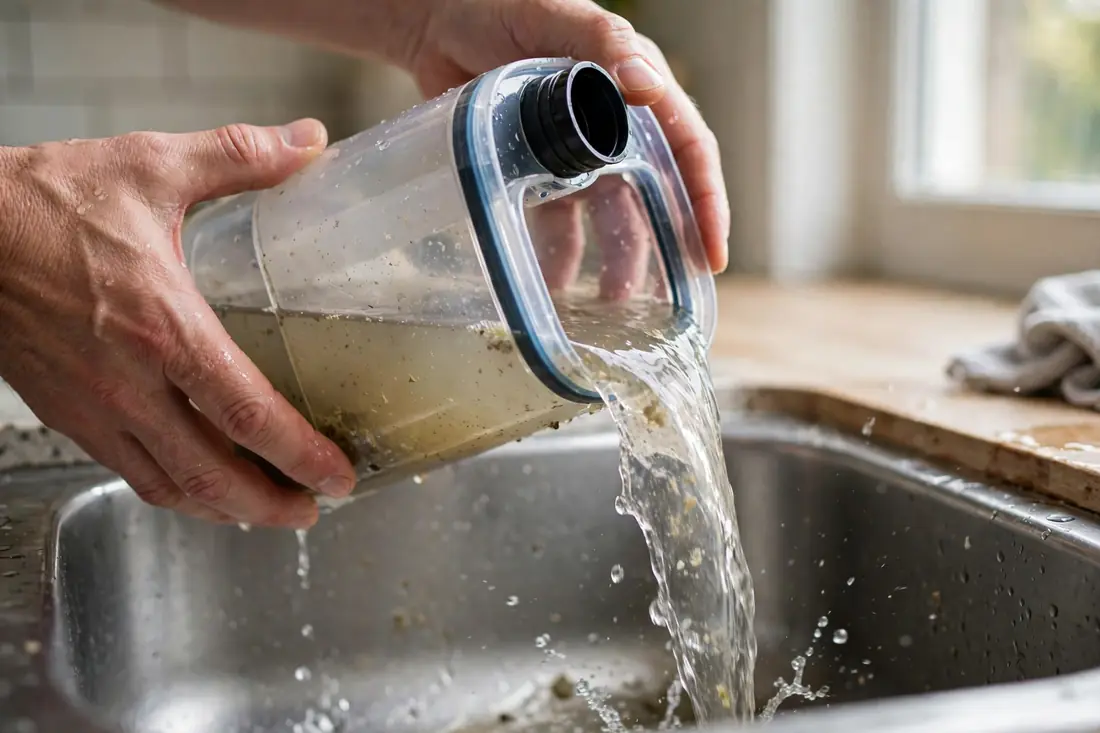
The easiest habit is also the most useful one: empty the tank every day and refill it with fresh water. Never top up yesterday's water, and never let the same water sit for days. Lift the tank off the base, pour the old water down the sink, and give the inside a quick rinse with clean water. If you use the humidifier every night, make this part of your morning routine, like making the bed. Fresh water each day means mold and bacteria never get the still, warm pool they need to grow. It takes less than a minute, and it does more for the machine than any deep clean ever will.
Descale With Vinegar Every Three Days
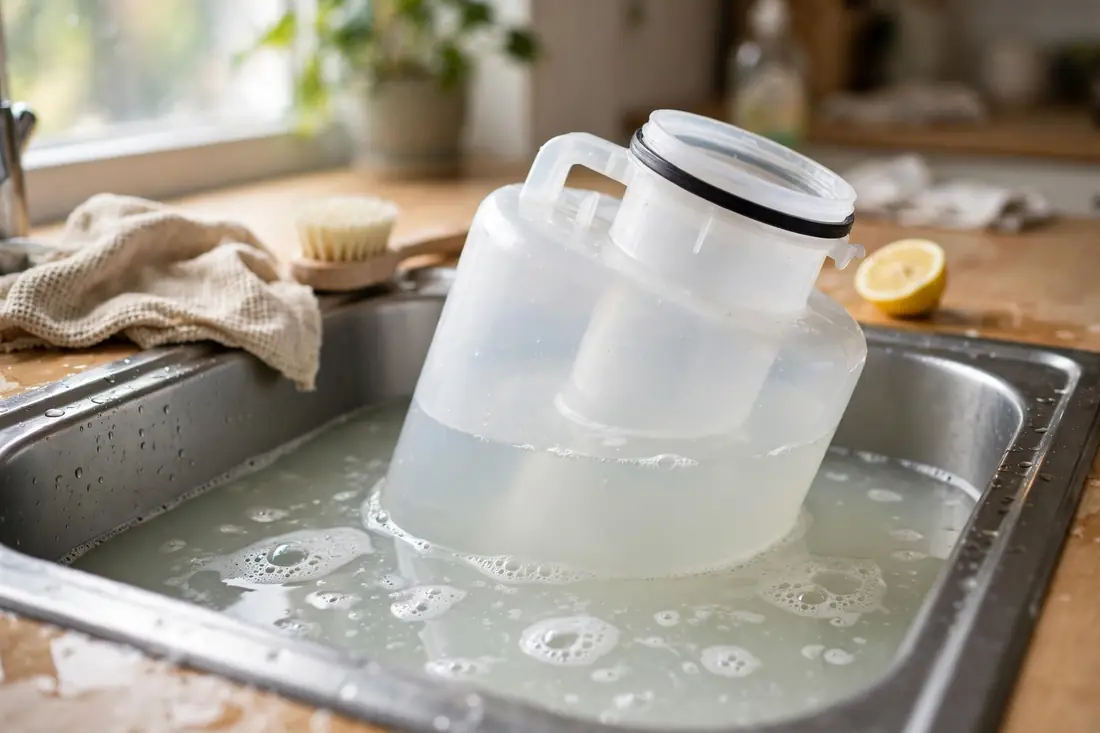
Minerals from tap water leave a crusty white scale inside the tank and on the parts that make the mist. Every three days, fill the tank with undiluted white vinegar, or a half-and-half mix of vinegar and water if the scale is light, and let it sit for 20 to 30 minutes. The acid dissolves the scale without scrubbing. Then pour it out and scrub any spots that are left with a soft brush or an old toothbrush. Rinse the tank two or three times with clean water so no vinegar smell is left. If your water is very hard, you may need to do this more often, or switch to distilled water to slow the buildup down.
Disinfect With Hydrogen Peroxide Once a Week
Vinegar handles the scale, but it does not kill everything that grows in a damp tank. Once a week, disinfect with plain 3% hydrogen peroxide, the kind from the drugstore. Fill the tank with it, let it sit for 20 to 30 minutes, then pour it out and rinse twice with clean water. Use vinegar and peroxide on different days, and always rinse between them, because the two cleaners should never mix in the tank. Wipe the base with a cloth dampened with peroxide too, since the base holds water and grows the same film. This weekly step is what keeps the mist smelling like nothing at all, which is exactly how it should smell.
- Fill the tank with 3% hydrogen peroxide
- Let it sit 20 to 30 minutes
- Rinse twice with clean water
- Never mix peroxide with vinegar in the tank
Scrub the Base and the Small Parts
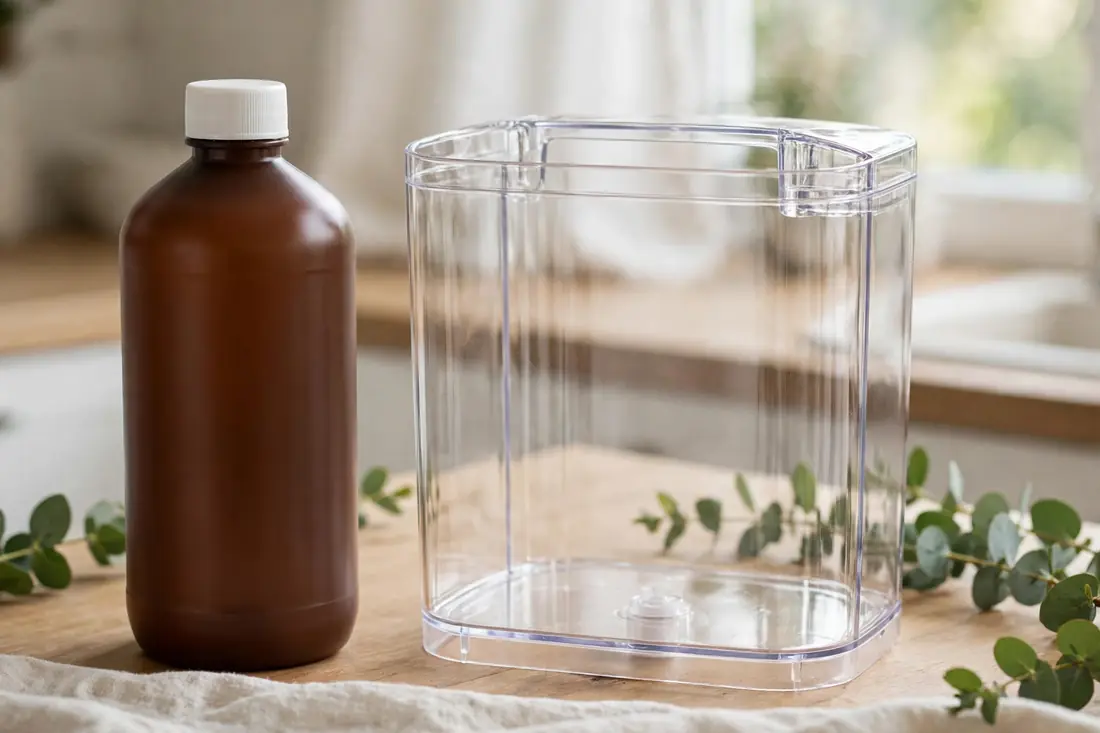
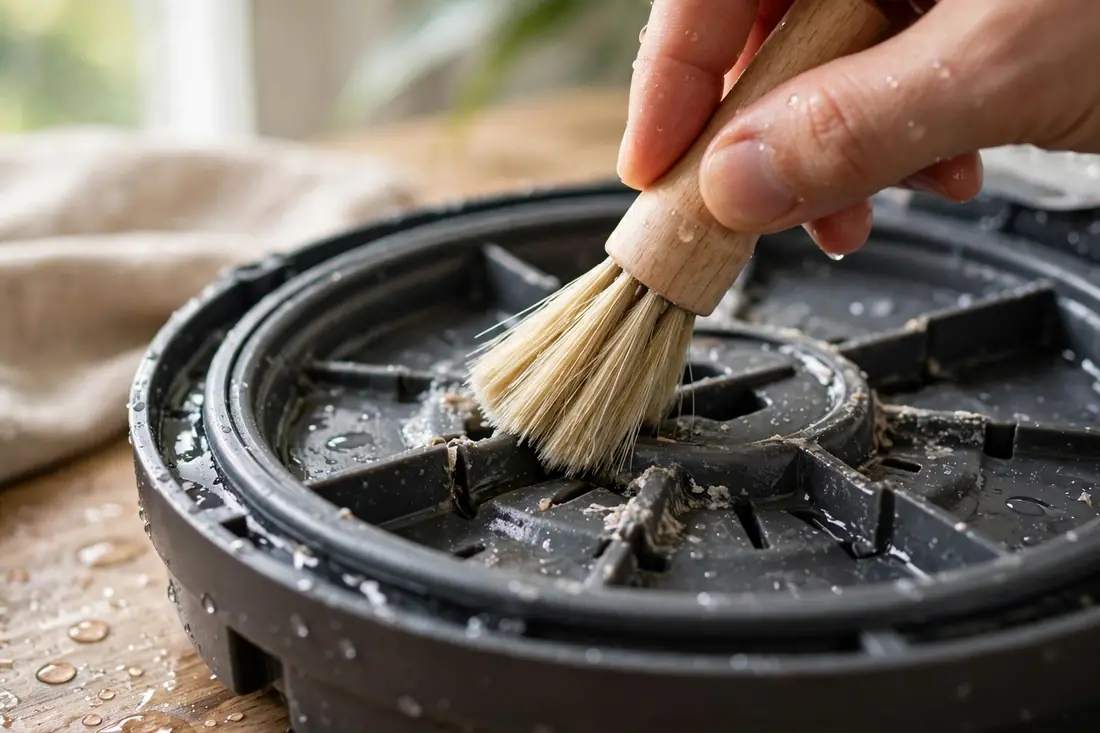
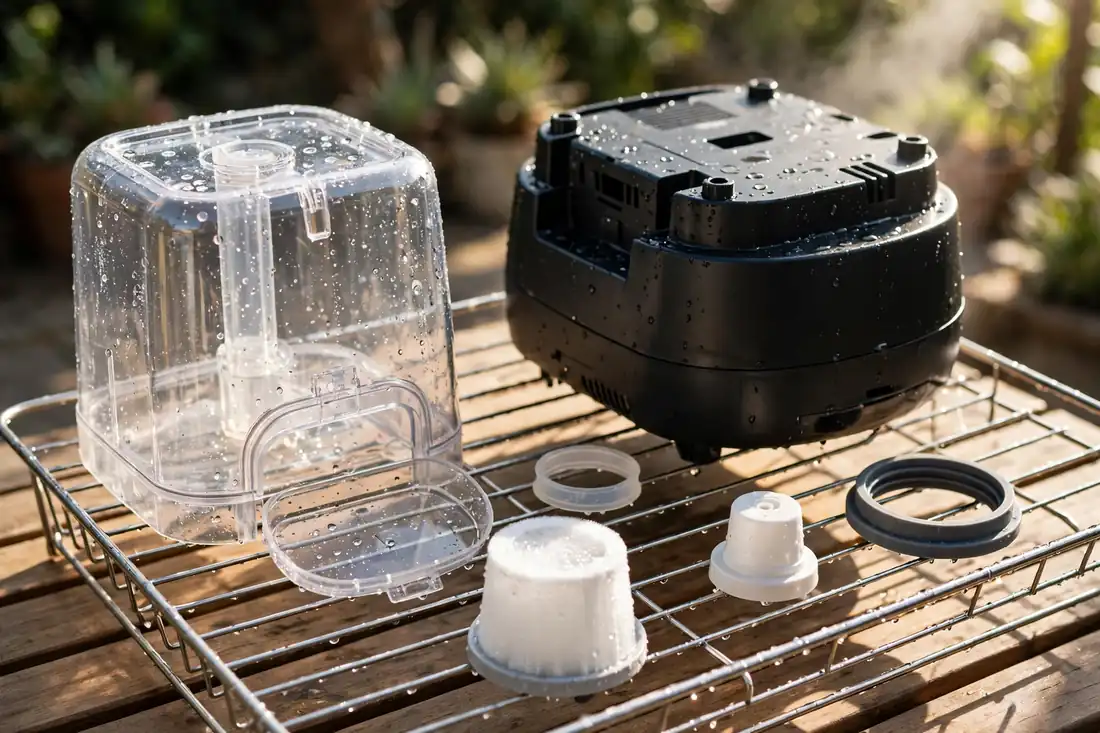
The base is where the water sits and where the mist is made, so it gets dirty even when the tank looks clean. Unplug the machine first, then wipe the base with a damp cloth. Use a soft brush or a cotton swab for the small channels, the mist outlet, and the corners around the water sensor. Never submerge the base in water, because it holds the motor and the electronics, and water inside will kill it. If the manual shows a part that comes off, like a nozzle or a mist cap, soak it in vinegar for a few minutes and rinse it clean. Dry the base with a cloth before you put the tank back on, so no puddle is left sitting under it.
Clean the Filter or Wick the Right Way
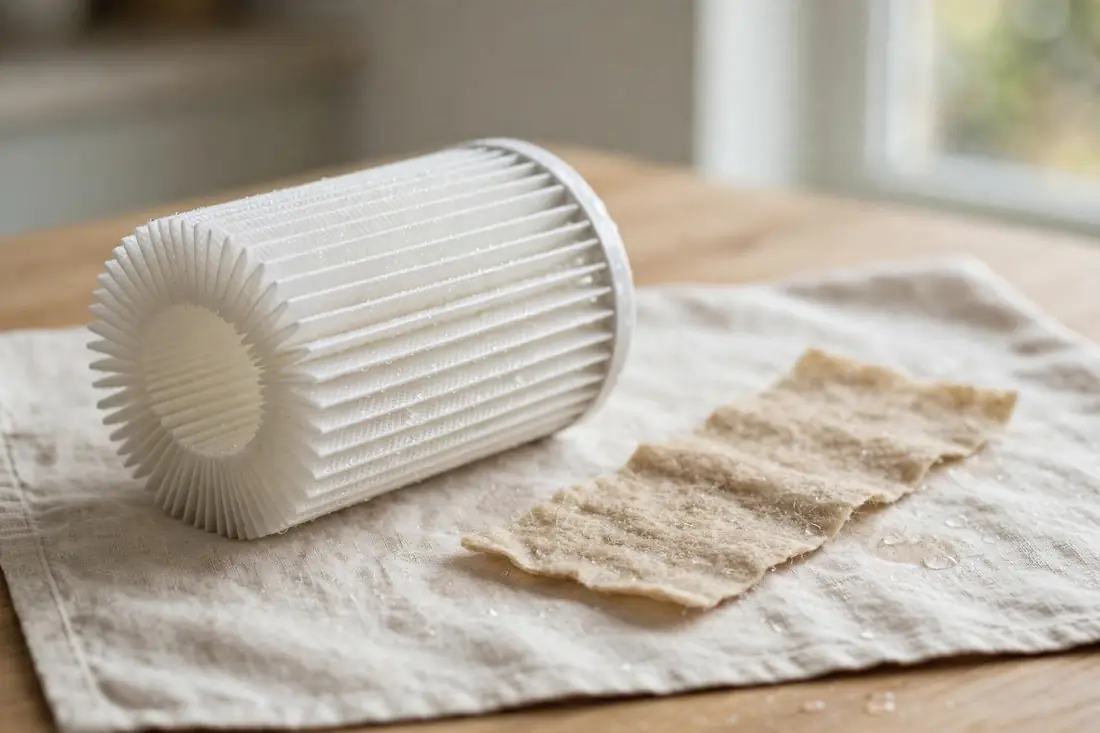
Many cool-mist humidifiers have a filter or a wick that pulls water up into the air. These parts trap minerals and grow mold fast, so they need their own care. Check the manual first, because the rule changes by model: some wicks rinse clean under running water, some soak in a vinegar mix, and some must be replaced on a schedule and never washed at all. A filter that stays brown or crusty after cleaning, or one that smells musty when it dries, is done. Replace it. Running a humidifier with a worn-out filter spreads the very stuff you are trying to clean out, so treat the filter as a consumable, not a lifetime part.
Dry Every Part Fully Before You Put It Back
Mold loves a damp, closed space, and a humidifier put away wet is exactly that. After every cleaning, let the tank, the base, and the small parts air-dry completely before you reassemble the machine. Stand the tank upside down on a clean towel, leave the lid off, and give it at least an hour in open air. If you will not use the humidifier for a while, dry it the same way and store it with the tank open so air can move through it. A machine that dries between uses stays fresh far longer than one that is always damp inside. Dry is the simplest mold prevention there is.
Mistakes That Ruin a Humidifier
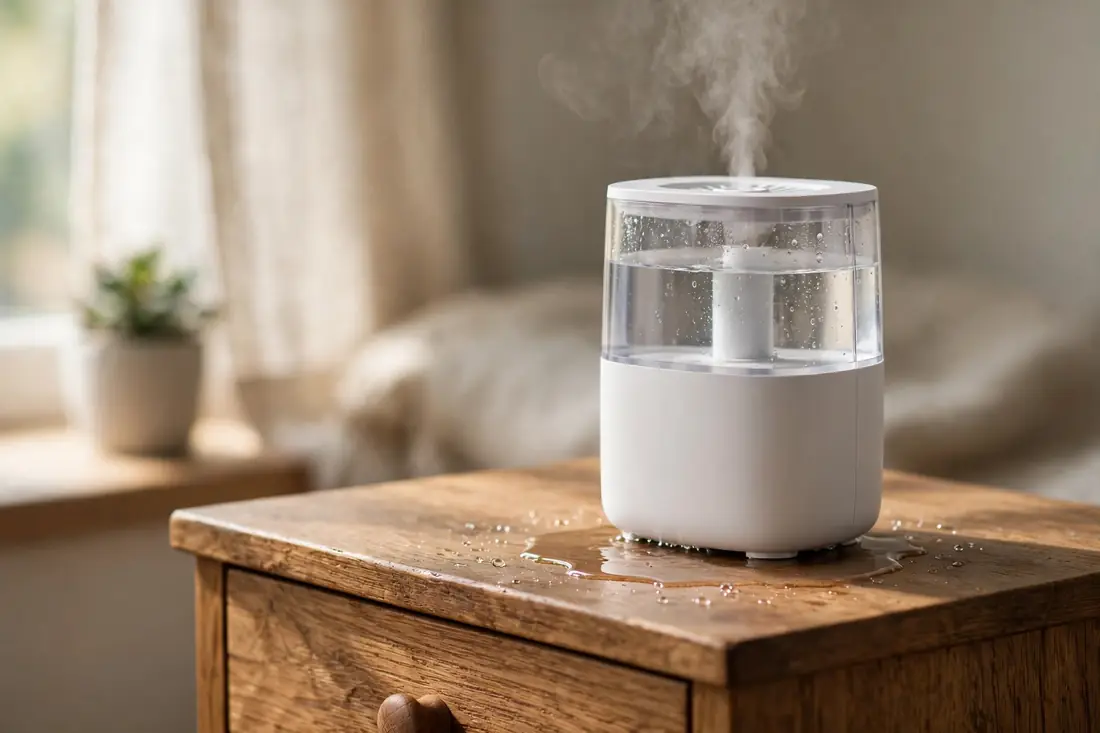
A few common mistakes shorten a humidifier's life fast. Bleach is the big one: it can damage seals and leave fumes in the mist, so most makers ban it outright. Essential oils are another, because the oil coats the inside of the tank and can break down plastic over time. In a hard-water home, plain tap water leaves scale so fast that the machine clogs, which is why distilled water is worth it. Running the machine for weeks without cleaning is the slowest mistake, and putting it away damp and sealed is the fastest way to grow mold. Skip these four, and the machine will last years instead of one season.
- Bleach and harsh chemicals in the tank
- Essential oils in a model not made for them
- Tap water in a very hard-water home
- Putting it away damp and sealed
When to Replace Parts, or the Whole Unit
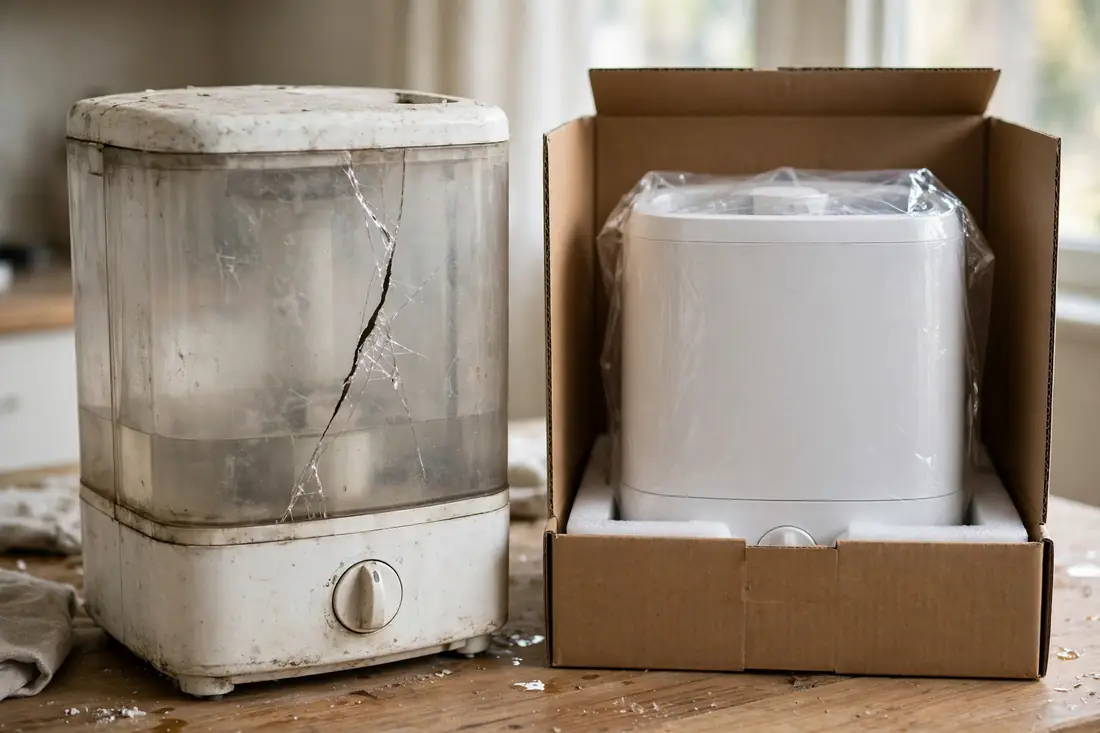
Some parts wear out no matter how well you clean them. Filters and wicks usually last one to three months, depending on how often the machine runs and how hard your water is. Replace them on the schedule in the manual, not when they fall apart. A cracked tank should be replaced right away, because it can leak water onto the base and into the electronics. If the mist stays weak after a full cleaning, or a musty smell survives vinegar and peroxide, the inside is likely coated with scale or mold you cannot reach. At that point a new machine costs less than the hassle, and you start fresh with the routine from day one.
✅ Guide4U Checklist
- Empty and rinse the tank every day
- Descale with vinegar every three days
- Disinfect with peroxide once a week
- Never mix vinegar and peroxide together
- Wipe the base, never submerge it
- Dry every part fully before reassembly
- Replace filters on the manual schedule
Key Takeaways
- Fresh water daily, vinegar every three days
- Peroxide weekly, never mixed with vinegar
- Dry fully every time, or mold comes back
Frequently Asked Questions
How often should I clean my humidifier?
The EPA says to clean a humidifier every three days. Rinse the tank and refill it with fresh water every day, descale it with vinegar every three days, and disinfect it with hydrogen peroxide once a week. If the water starts to smell or look cloudy before that, clean it right away instead of waiting.
Can I use bleach to clean my humidifier?
No. Most makers warn against bleach, and any residue left behind can end up in the mist you breathe. White vinegar and 3% hydrogen peroxide do the job safely when you use them separately and rinse well between them. Always check your manual first, because some models have parts that should never touch cleaners at all.
Why does my humidifier smell musty?
The smell usually comes from water sitting in the tank, or from mold growing in the base or on the filter. Empty the tank every day, descale with vinegar, disinfect once a week, and let every part dry fully before you put it back. If the smell stays after a full cleaning, replace the filter or wick.
Can I put essential oils in my humidifier?
Not unless the manual says your model is made for it. Oils can damage the tank, leave a film inside, and change how the machine mists. If you want scent in the room, use a separate diffuser and keep the humidifier for plain water only. Your lungs and your machine will both be happier.
What did you think of this article? Share your opinion in the comments below — we would love to hear from you.