
How to Keep a Christmas Tree Fresh Longer

Quick Answer
Cut a half inch off the trunk base, set the tree in a stand of plain water, and keep the water level above the cut at all times. Give it about one quart of water per inch of trunk diameter each day, and keep it away from heat vents, fireplaces and sunny windows. With that care, a fresh Fraser fir can stay green for four to six weeks.
Why Real Trees Dry Out So Fast
A cut Christmas tree is still a living thing, but it can no longer feed itself. The moment it leaves the farm, it starts losing water through its needles, and it can only replace that water if the cut end of the trunk stays underwater. Let the stand run dry for even a few hours and the trunk seals itself off with sap, the same way a scab forms on a cut. After that, no amount of water in the stand will help, because the tree simply cannot drink it anymore. The fix is simple: a fresh cut, steady water, and a cool spot, done right from day one.

Pick the Freshest Tree You Can Find
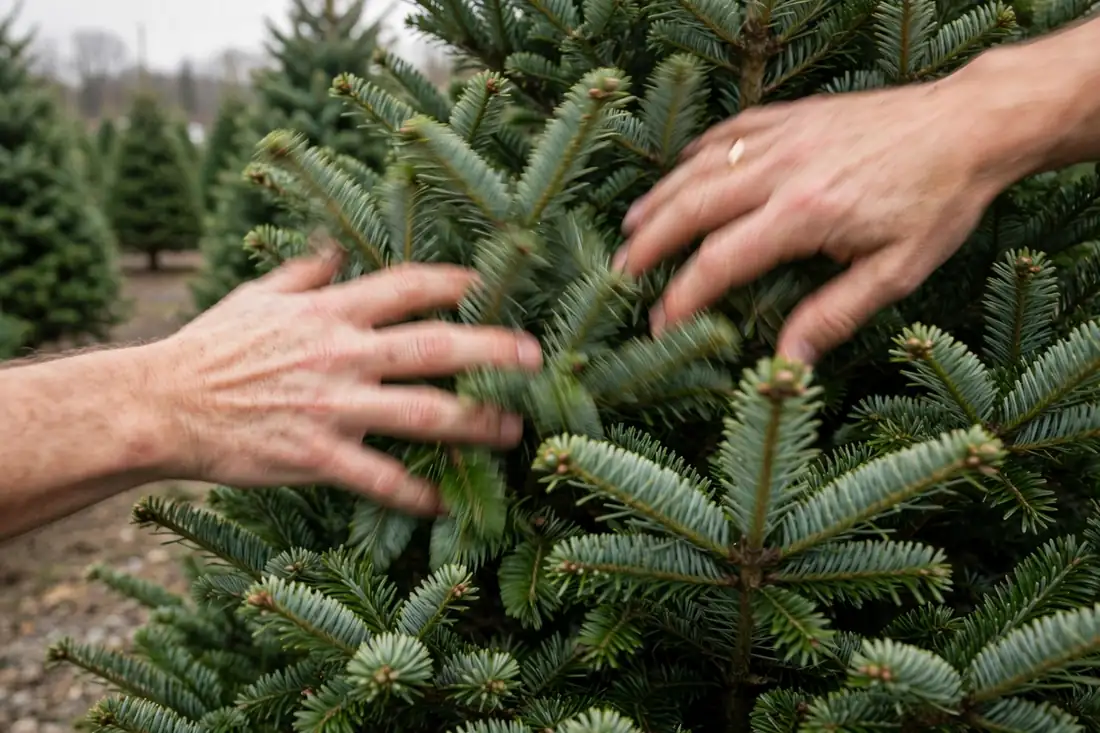
Freshness starts at the lot, not at home. Run your hand along a branch and let the needles slide through your fingers. On a fresh tree they feel soft and a little springy, and very few come off in your hand. Give the tree a gentle shake or bounce it on the ground once; a few green needles falling is normal, but a shower of them means the tree has been sitting around too long. Bend a branch tip: fresh branches flex and spring back, dry ones snap. Look at the cut end of the trunk too. A pale, damp-looking cut means the tree was cut recently, while a dark, dry-looking one has been sitting cut for a while. Paying attention here saves you weeks of fighting a tree that was already drying out.
- Needles should feel soft, not dry or brittle
- Shake the tree: only a few green needles should fall
- Branches should spring back when you bend them
- The trunk cut should look pale and damp, not dark
Make a Fresh Cut Before You Bring It Inside
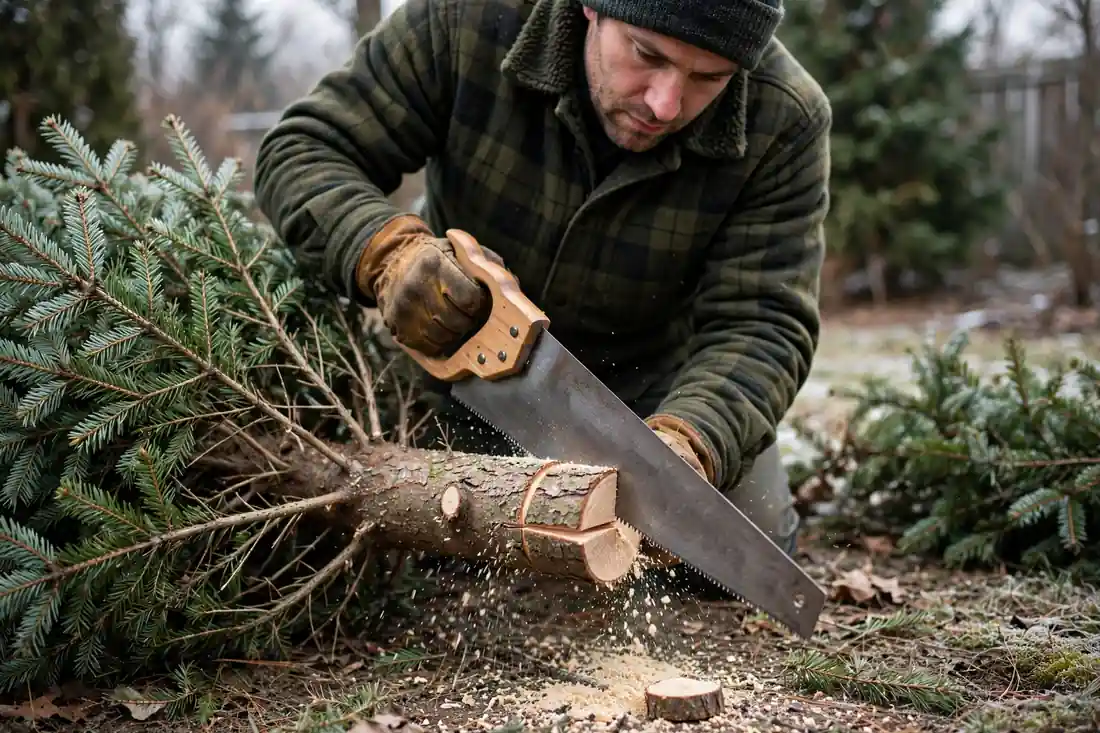
Even a fresh tree benefits from a new cut, because the old cut end starts sealing within hours of being cut. Once you get home, saw off at least a half inch from the base of the trunk, straight across, before you put the tree in its stand. A straight cut matters more than a pretty one, since the tree needs to sit flat in the stand with the whole cut end touching water. Do not carve the sides of the trunk to make it fit a small stand, and do not drill a hole up the middle; both tricks cut down the surface that can take in water. Most lots will make the cut for you on the spot for free or for a couple of dollars, so ask before they tie the tree to your car. Get the tree into water within a few hours of that cut.
Water: How Much and How Often
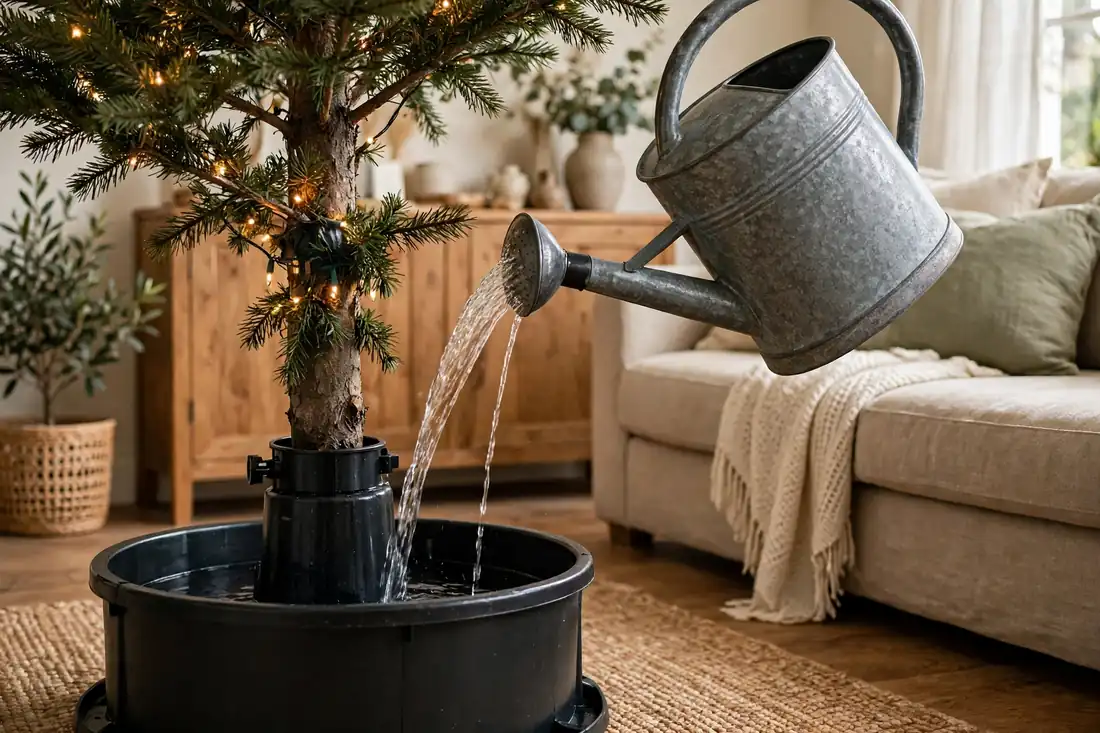
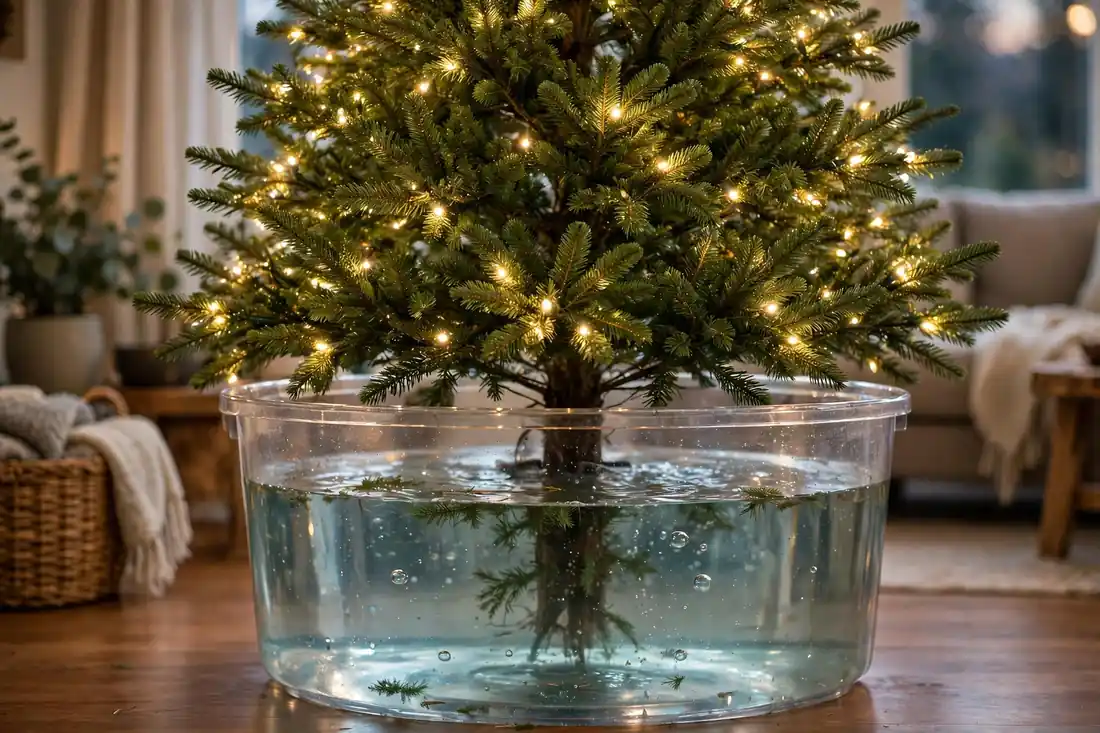
This is the part that matters most, and it is also the part people skip. A fresh tree can drink a surprising amount of water in its first few days, especially in a warm room. The rule growers agree on is one quart of water for every inch of trunk diameter, so a tree with a four-inch trunk can take in around a gallon a day when it is first settling in. After the first week the pace slows a bit, but the stand should never run low. Check the water level every morning and top it up so the cut end stays covered. If the level drops below the cut even once, the trunk can seal over and the tree stops drinking for good, so this daily check adds the most life to your tree.
- One quart of water per inch of trunk diameter
- A four-inch trunk needs about a gallon a day
- Check the stand every morning without fail
- Top up before the water drops below the cut
Keep It Away From Heat
Heat is the fastest way to kill a fresh tree. A tree next to a fireplace, radiator, or heat vent can dry out in days, and one in front of a big sunny window is not much better. Warm air pulls moisture out of the needles faster than the stand can replace it. Pick the coolest corner of the room you can, a few feet from any heat source, and close the vent nearest the tree if you can. The same rule applies to your lights. Old-style bulbs run hot, so LED strings are the better choice, and they use less power too. Keep the tree away from candles as well, and never set it where it blocks a doorway or a heater. A cool tree is a green tree, and a safer one too.

Pick a Variety That Holds Its Needles
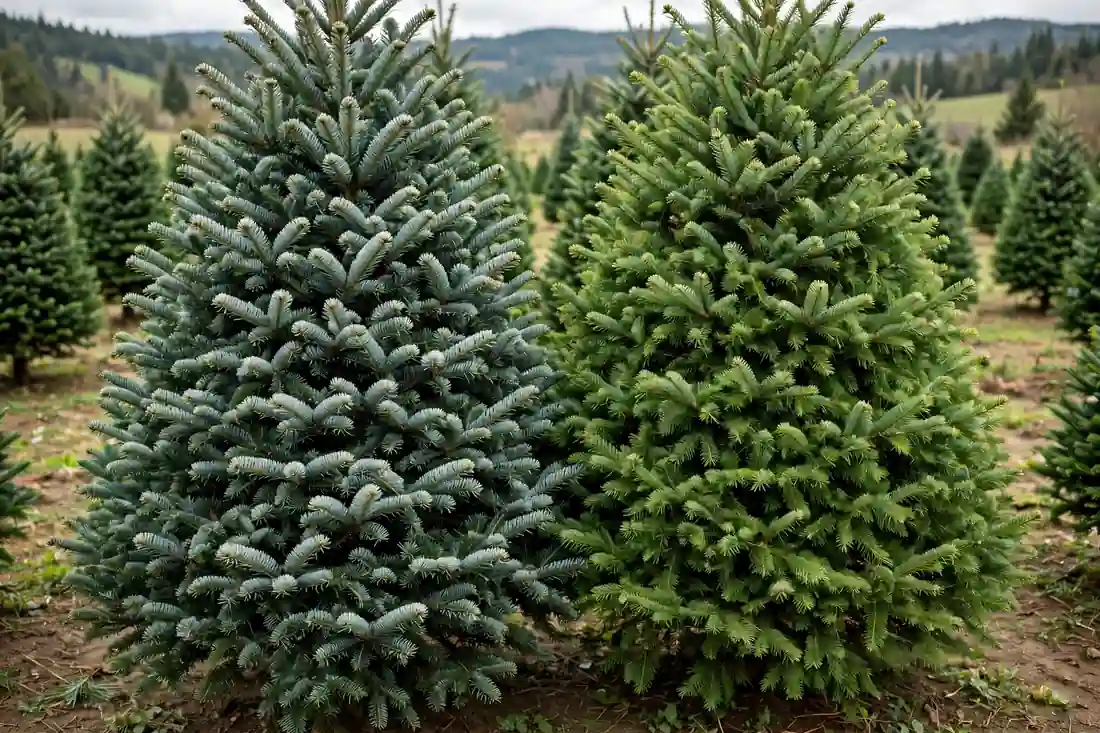
Not every Christmas tree holds up the same way indoors. If you want the longest-lasting tree, Fraser fir is the one most growers point to first: its soft needles and strong branches hold up longer than most other types. Douglas fir smells wonderful and costs less, but it sheds sooner, so it suits a shorter season. Blue spruce looks beautiful, yet it drops needles fast once it starts drying, and its stiff branches can poke. Noble fir and Nordmann fir sit in the middle, holding up well for three to four weeks. Whichever type you pick, freshness matters more than the variety name. A freshly cut Douglas fir will outlast a tired Fraser fir every time, so judge the tree in front of you, not the label on the tag.
Set It Up Right: Stand, Placement, Lights
A good setup gives the tree its best chance. Choose a stand big enough to hold at least a gallon of water, with a wide base so the tree stands steady and cannot tip. Fill the stand with plain tap water right away; skip the sugar, aspirin, soda, and bleach that old advice columns swear by, because none of them has been shown to help. Room-temperature water is fine. Once the tree is upright, step back and check the room: is there a vent blowing at it, a sunny window behind it, or a fireplace nearby? Move the tree now, not later, because a decorated tree is hard to move. Hang your lights next, checking each cord for cracks, exposed wires, or loose sockets before you plug anything in. Turn the lights off whenever you leave the house and before bed, every night.
- Use a stand that holds at least a gallon of water
- Keep the tree upright and away from doorways
- Hang LED lights, not hot old-style bulbs
- Check every light cord for cracks or fraying
Daily Habits That Add a Week or Two
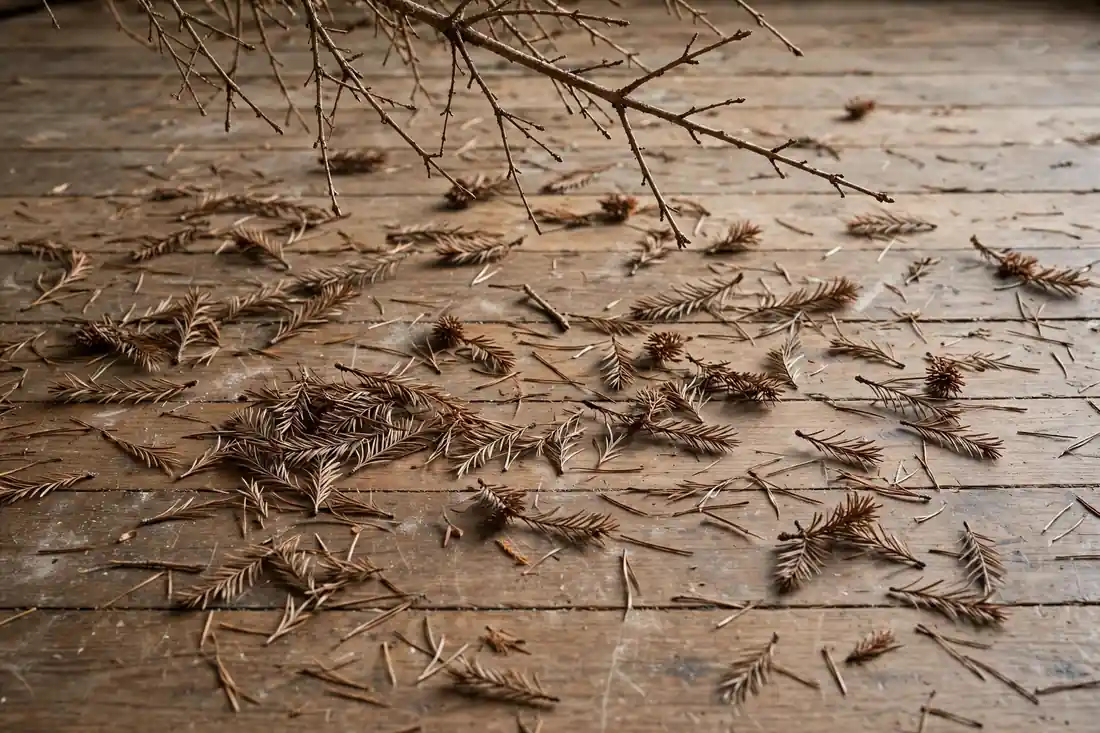
The trees that make it to New Year's Day are not lucky, they are tended. Water the stand every morning, the same way you would feed a pet, and make it part of your coffee routine so you never forget. Keep the room a little cooler than usual if you can; a few degrees makes a real difference to how fast the needles dry out. Run a humidifier in the room if your winter air is very dry, since moist air slows the water loss from the needles. Vacuum up the fallen needles every couple of days so you can see whether the shedding is normal or speeding up, which is your early warning that something is wrong. And resist the urge to spray the branches with water, since wet needles and warm lights are not a good mix.

What to Do When Needles Start Dropping
A few needles falling is normal, and every tree sheds a little. What matters is the pace. If the needles are still green and soft, and only a handful falls when you brush a branch, your tree is doing fine. If the needles turn brown at the tips, feel dry and brittle, and fall in bunches when you touch the branch, the tree is drying out. First check the stand: is the water level still above the cut? If it dropped below the cut, the trunk may have sealed, and watering will not bring it back. Also check the heat, and move the tree away from any vent or sunny window. If the tree is very dry and brittle, take it down rather than risking it. A dry tree is a fire risk, and no ornament is worth that.
After Christmas: Recycle It, Don't Trash It
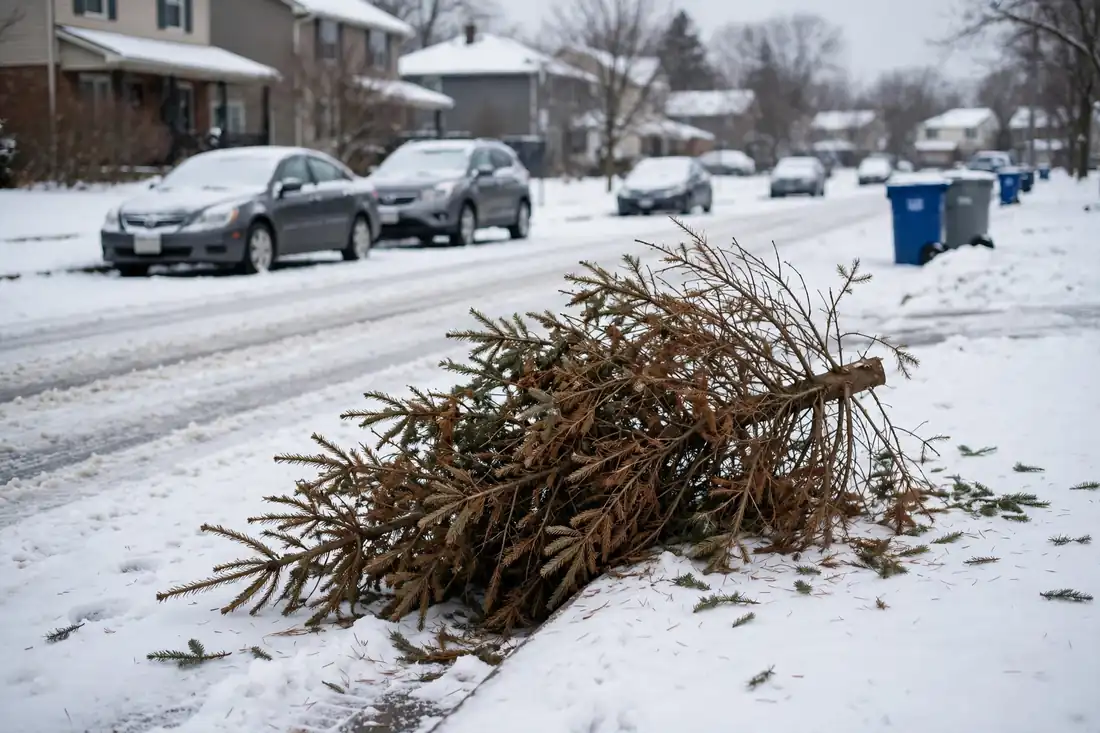
When the season is over, your tree still has one more job to do. Most towns run a curbside tree pickup in the first two weeks of January, and many turn the collected trees into mulch for parks and trails. Check your town or county website for the pickup date and the rules, and strip off every ornament, hook, tinsel strand, and light string before you put it out. Some garden centers and farms take trees for chipping too, and a few zoos accept them as animal enrichment, though you should call first. If you have a yard, you can cut the branches off and lay them over garden beds as winter mulch, and the trunk makes good firewood once it has dried for a season.
✅ Guide4U Checklist
- Cut a half inch off the trunk base
- Water one quart per inch of trunk daily
- Never let the stand run below the cut
- Keep the tree away from heat and sun
- Use cool LED lights, check cords first
- Turn lights off when you leave or sleep
- Recycle the tree after the holidays
Key Takeaways
- Fresh cut, full stand, cool spot: that is the whole secret
- One quart of water per inch of trunk, every day
- A dry tree is a fire risk, take it down when needles turn brittle
Frequently Asked Questions
How long does a real Christmas tree last indoors?
With steady care, four to six weeks is realistic. A Fraser fir given a fresh trunk cut and plenty of water every day usually stays green from late November through New Year's Day. A tree that sat dry at the lot, or one parked next to a heat vent, may start shedding in two weeks.
How much water does a Christmas tree need each day?
One quart of water for every inch of trunk diameter, so a four-inch trunk needs about a gallon a day at first. Check the stand every morning and top it up before the water drops below the cut. Once the cut end is exposed to air, it seals over and the tree stops drinking.
Where is the worst place to put a Christmas tree?
Keep the tree away from fireplaces, radiators, heat vents, and sunny windows. Heat dries the needles fast and raises the fire risk. A cool corner a few feet from any heat source is the best spot. Use cool LED bulbs and check the cords for damage before you hang them.
Is it safe to leave Christmas tree lights on overnight?
It is not worth the risk. A dry tree can catch fire fast, and old or damaged light strings are a common cause. Water the tree daily, keep it clear of heat, turn the lights off when you leave or go to bed, and if the needles are brown and falling in sheets, take the tree down.
What did you think of this article? Share your opinion in the comments below — we would love to hear from you.