
How to Organize a Pantry
Quick Answer
Empty the pantry, toss what is expired, and group what stays by the meal it belongs to, with everyday items at eye level. Clear labeled containers for staples, new stock behind old, and a ten-minute reset every week keep it working.
Empty It All Out First
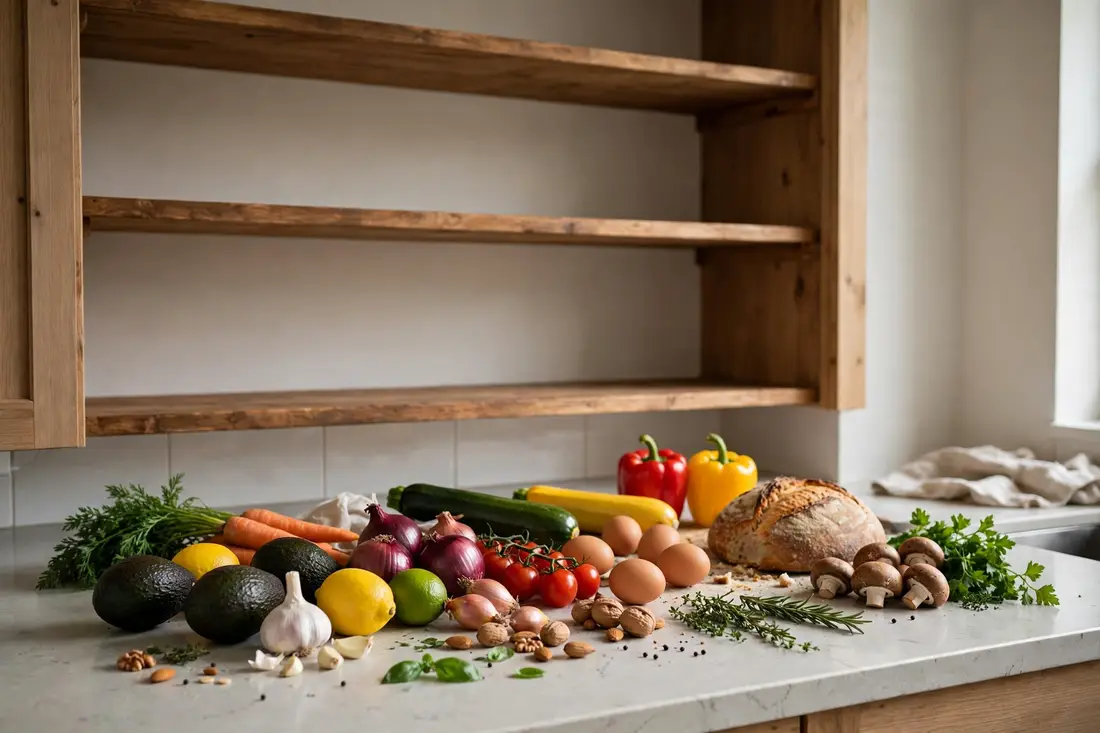
You cannot organize a pantry you cannot see, so take everything out before you change a single shelf. Set it on the kitchen counter and the dining table, and keep the groups rough: cans together, dry goods together, snacks together. The mess looks worse for about twenty minutes, and that is normal. An empty pantry shows you the real space you have, including the dead corners and the too-tall gaps where things get lost. It also forces you to touch every item once, which is the only way to spot the three half-used bags of the same pasta. Work in one session if you can, so the kitchen does not stay torn apart overnight.
Toss, Donate, Keep
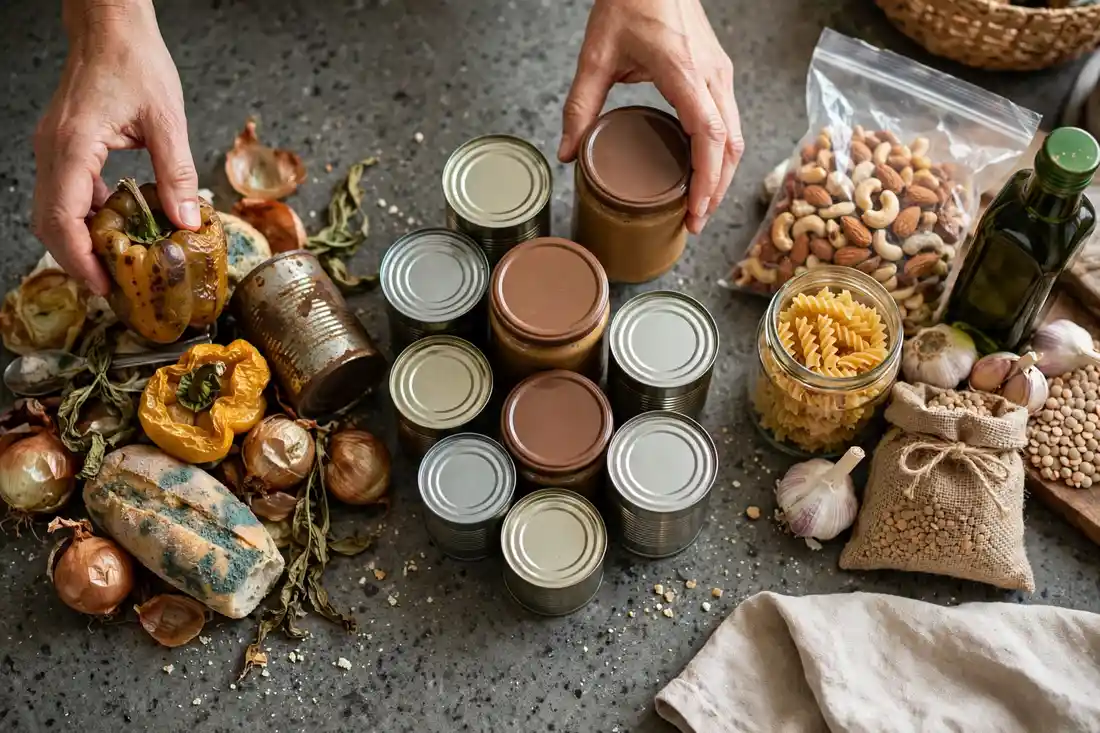
With everything out, sort fast and be honest. Check dates first, and toss anything expired or stale, since keeping it only eats shelf space. Canned goods that are dented along the seam or swollen go straight in the trash, because those can be unsafe. Unopened food that is still good but that your family will never eat belongs in a donation bag for the local food bank. Be ruthless with duplicates: three open bags of rice mean two of them need to go. If you have not used something in six months and it is not a holiday ingredient, you will not miss it.
- Expired food and anything with no date you trust
- Stale crackers, chips, and cereal that went soft
- Duplicates you will never use before they expire
- Canned goods past their best-by date by a year or more
- Mystery items no one in the house can name
Clean the Shelves Before Anything Goes Back
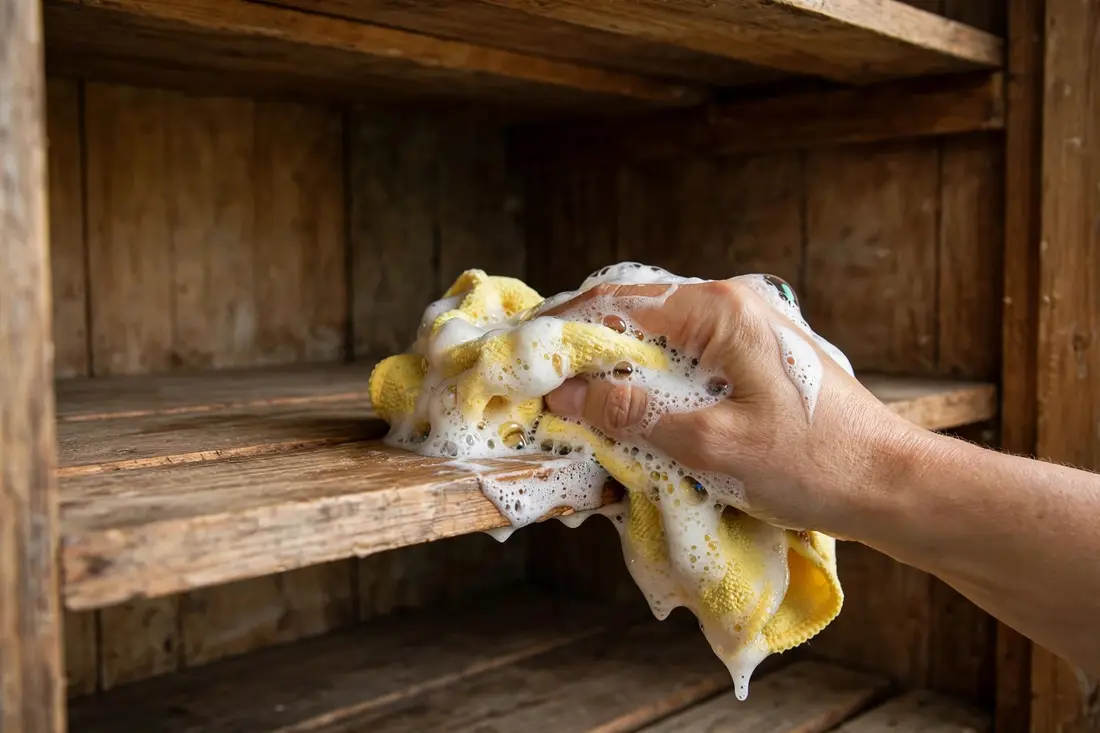
An empty pantry is the only chance you get to clean it properly, so take it. Vacuum the crumbs out of the corners and along the shelf edges, then wipe every shelf with warm soapy water and dry it fully. If you find sticky spots, a little baking soda on a damp cloth lifts them without harsh chemicals. Check for signs of pantry moths while you clean: tiny webbing in corners, small worms in flour bags, or little moths near the ceiling. If you find any, toss the infested food in a sealed bag and wipe the shelves with vinegar water before restocking. Line the shelves with washable liner if you like, but plain clean wood works fine.
Group by Use, Not by Type
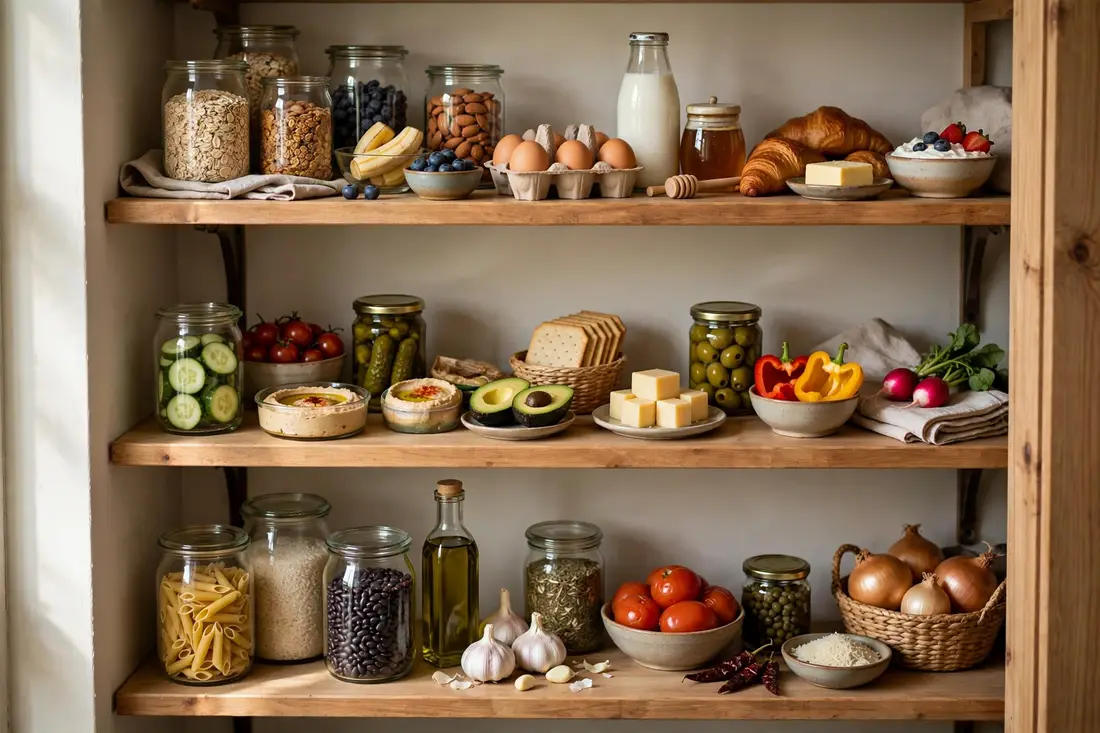
Most pantries fail because they are sorted by what things are instead of how they get used. Group by the meal or the job, and the pantry starts to make sense. Put breakfast together: cereal, oats, pancake mix, and jam on one shelf. Put dinner together: pasta, rice, canned tomatoes, and broth on another. Baking supplies get their own zone: flour, sugar, baking powder, and chocolate chips. Snacks go in one spot so nobody hunts through the whole pantry for crackers. When each zone matches a real moment in your day, you stop opening five doors to make one meal.
Put Everyday Items at Eye Level
Eye level is prime real estate, so save it for the things you reach for every day. Coffee, tea, cereal, peanut butter, and the cooking oil belong where you can see them without bending or stretching. Heavy items like big bags of flour and rice go on the lowest shelf, where they are easy to lift and cannot fall on anyone. Light, rarely used items go up top: the holiday baking pans, the extra paper towels, the fondue pot. Kids snacks go on a low shelf they can reach on their own. When the most-used items sit at eye level, the pantry feels easy instead of like a treasure hunt.
Decant Into Clear Containers and Label Everything
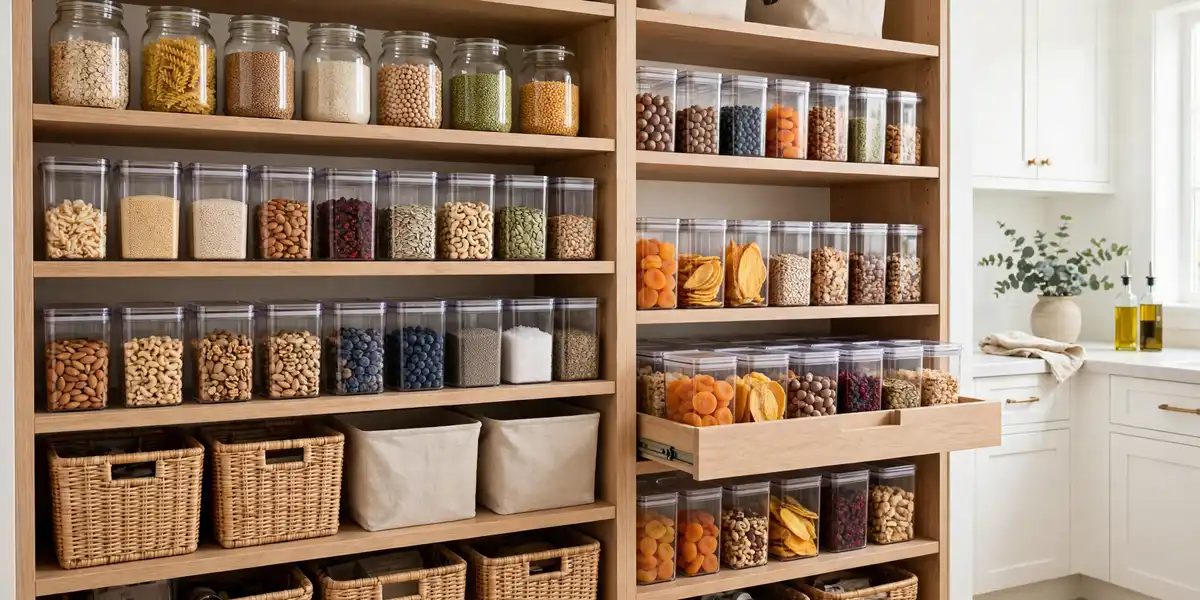
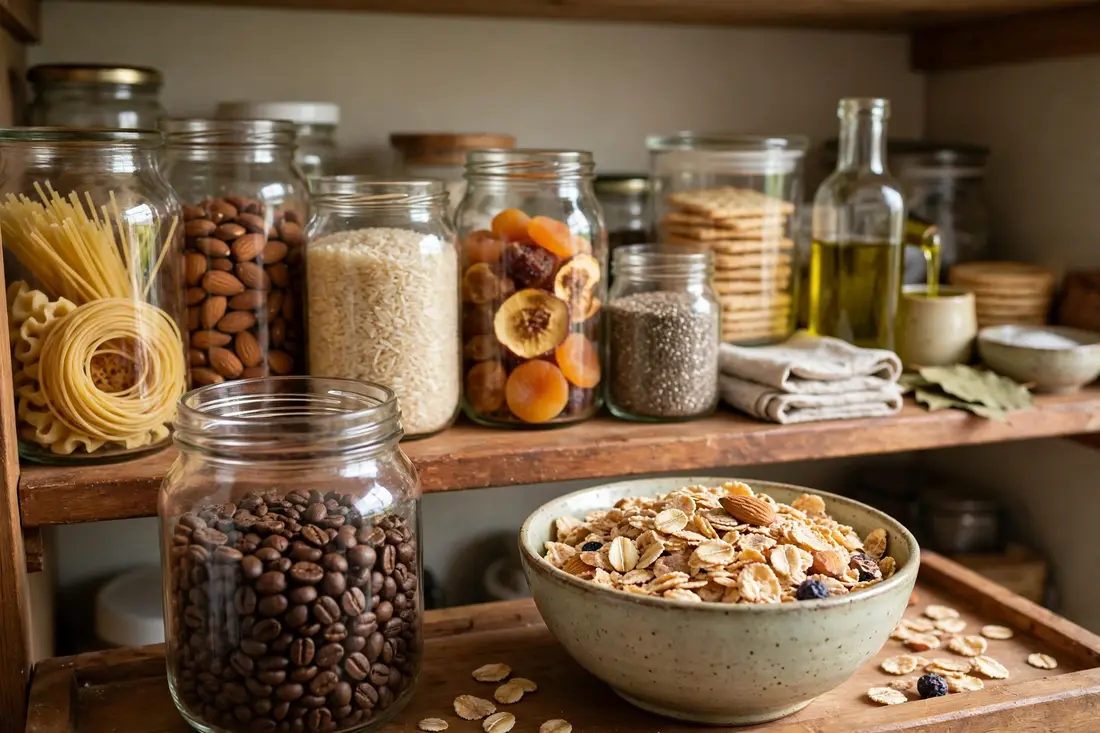
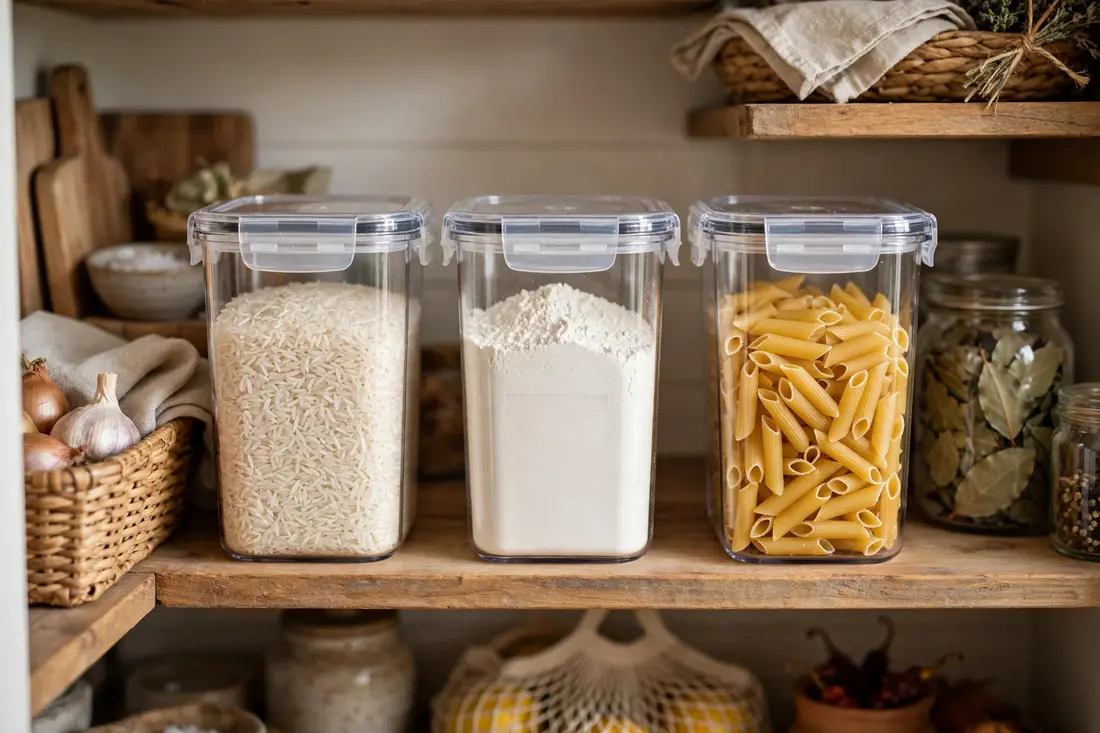
Clear containers earn their keep because you can see the level at a glance, and you stop buying a third bag of rice when two are already open. Pour flour, sugar, rice, pasta, and cereal into airtight containers, and label each one with the contents and the date you filled it. A simple strip of masking tape and a marker works as well as any fancy label maker. Keep the original cooking instructions if you cut them off the box, and tape them to the back of the container. Do not decant everything: snacks, cans, and sauces are fine in their own packaging. Decant the daily staples and leave the rest alone.
Use the FIFO Rule
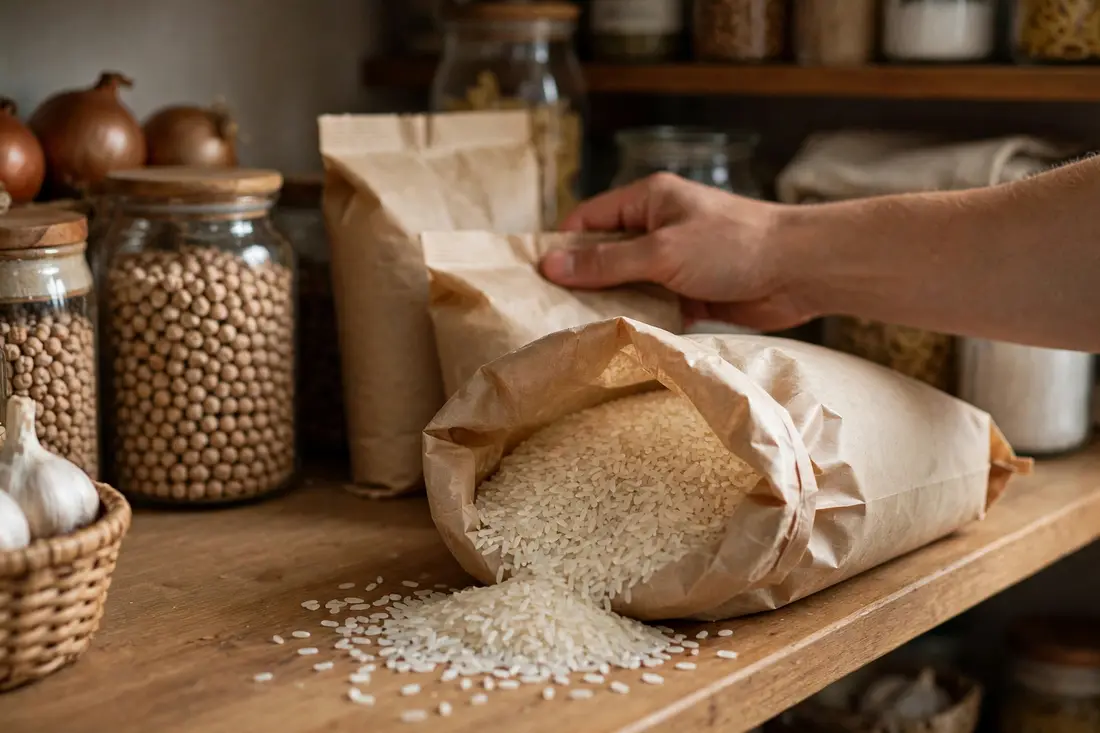
FIFO sounds like accounting talk, but it just means first in, first out: use the oldest food first. When you bring home a new bag of rice, slide it behind the open one, so the open bag gets used up before the new one starts. The same goes for cans: new cans go to the back, older cans come forward. This one habit cuts food waste more than any organizer you can buy, because food stops expiring at the back of the shelf. It takes about ten seconds at shopping time, and it pays off every time you open the pantry and find nothing past its date.
Small Organizers That Earn Their Keep
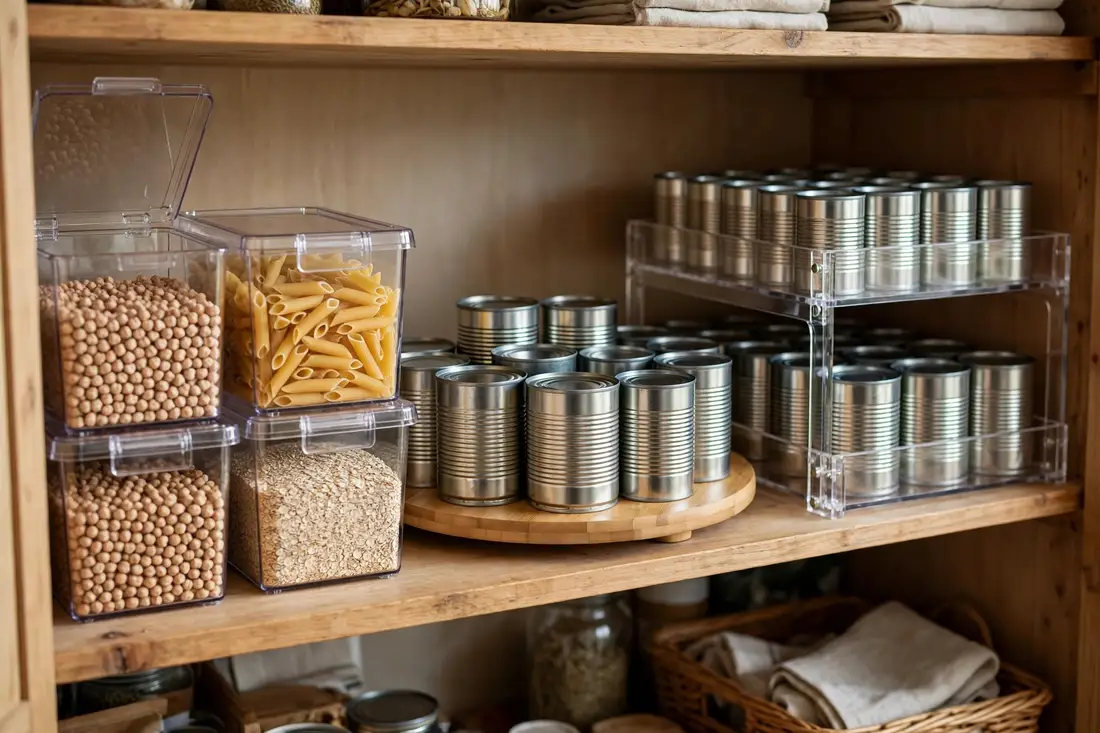
A few cheap organizers do more than a full set of matching jars. Clear bins corral loose packets so nothing slides to the back, and one bin per zone keeps groups together. A turntable, or lazy susan, is the fix for deep shelves, since a spin brings the back row to you instead of making you reach past three jars. Shelf risers add a second level for cans, so you can see two rows instead of one. Small baskets hold spice packets and sauce mixes that otherwise scatter. Budget about $50 to $100 for a starter set, and buy the bins first, since they do the most work.
Keep a Running List
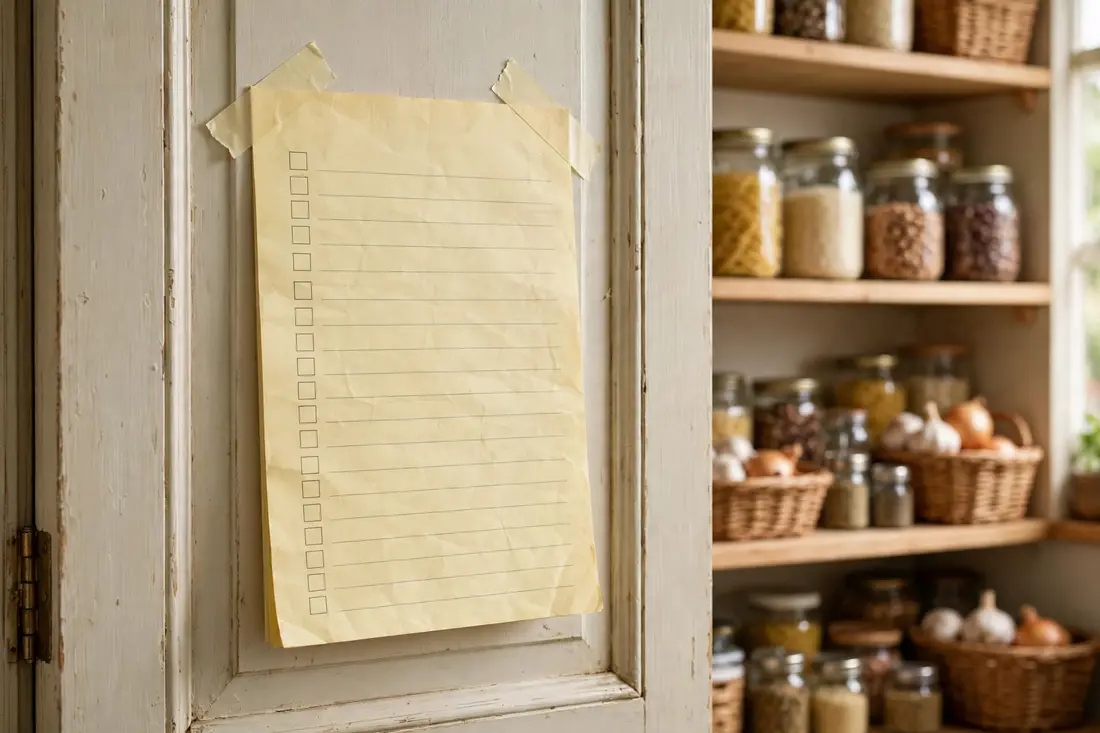
A pantry stays organized only if you know what is in it, and a running list is how you know. Stick a notepad or a small whiteboard on the inside of the pantry door, and write down anything the moment it runs out. When someone finishes the peanut butter, it goes on the list right then, not later when everyone has forgotten. Take a photo of the list before you shop, or keep it in a shared phone note the whole family can add to. This habit ends the duplicate buys and the midnight discovery that you are out of coffee, and it takes about five seconds a day.
The 10-Minute Weekly Reset
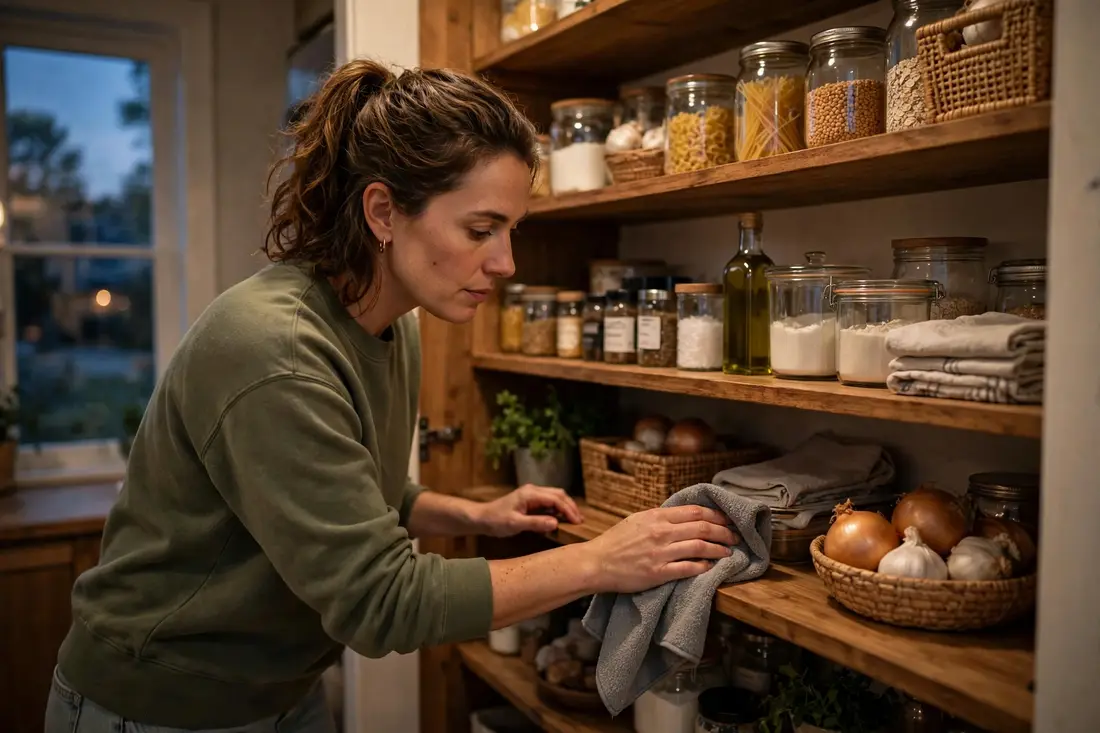
Even a good system drifts, so give the pantry ten minutes once a week. Pull anything that expired, wipe up crumbs and spills, and push items back to their zones. Check the running list and cross off anything you already bought. This is also the moment to spot what is running low before it runs out, like the last of the olive oil or one egg left in the carton. Ten minutes on a Sunday evening is enough, and it keeps the pantry from sliding back to chaos. A system that needs a whole weekend to fix is a system that failed, so the weekly reset is what makes this one stick.
✅ Guide4U Checklist
- Empty the pantry first
- Toss expired, donate extras
- Group by meal or job
- Everyday items at eye level
- Decant staples, label them
- New stock behind old
- Ten-minute reset weekly
Key Takeaways
- Sort by how food gets used, not by what it is.
- Clear containers and labels end duplicate buying.
- A weekly ten-minute reset keeps the system alive.
Frequently Asked Questions
How much does it cost to organize a pantry?
You can do a solid job for $50 to $100, and that covers a set of clear bins, a couple of turntables, labels, and a few shelf risers. Start with the bins, since they do the most work, and add turntables later for deep shelves. Skip the fancy matching canisters until the layout works, because pretty containers cannot fix a bad system.
Should I decant everything into containers?
No, and trying to decant everything is the fastest way to burn out. Decant the foods you use daily and buy in bulk, like flour, rice, pasta, and cereal, because you can see the level at a glance. Keep everything else in its own box or bag, and just face the labels forward. The goal is to see what you have, not to run a photo shoot.
How do I keep a pantry organized with kids in the house?
Give kids one low shelf that is theirs, with snacks they can grab without asking, and keep the rest up high. Use clear bins so they can see what is inside, and put a small step stool nearby so they can reach the middle shelves safely. A simple rule helps too: when a snack bin is empty, it goes on the shopping list, so nothing gets tossed in at random.
What containers work best in a pantry?
Clear plastic bins and glass jars are the workhorses. Clear sides let you see levels at a glance, and glass does not hold smells the way plastic can. For dry goods, pick containers with lids that seal tight, since that keeps flour and rice fresh and keeps pantry moths out. Measure your shelves before you buy anything, and write the numbers down, because guessing leads to a pile of returns.
What did you think of this article? Share your opinion in the comments below — we would love to hear from you.