
How to Keep Cut Flowers Fresh Longer
Quick Answer
Cut an inch off each stem at an angle, put the flowers in a clean vase with lukewarm water and flower food, and change the water every two days. Keep the bouquet cool, out of the sun, and away from ripening fruit, and it should last a week or more.
Why Cut Flowers Fade So Fast
A bouquet is still alive after it is cut. The stems keep drinking, the blooms keep opening, and the whole arrangement slowly runs out of water and food. Three things speed up the decline: bacteria growing in the vase water and clogging the stems, air bubbles blocking the cut ends, and ethylene gas from ripening fruit telling the flowers to age faster. Warm rooms make all three worse. The good news is that every one of these has a simple fix, and none of them costs more than a few dollars. Get the basics right — clean water, a fresh cut, and a cool spot — and a $15 grocery-store bouquet can look good for ten days instead of three.
Start With a Clean Vase
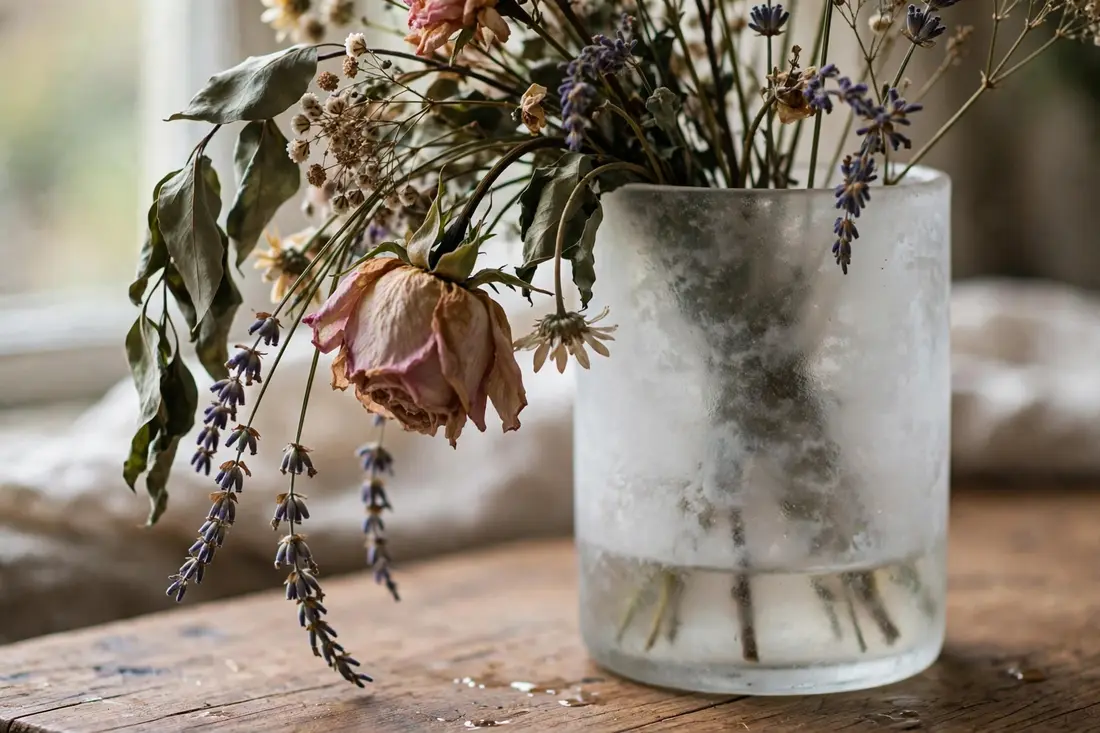
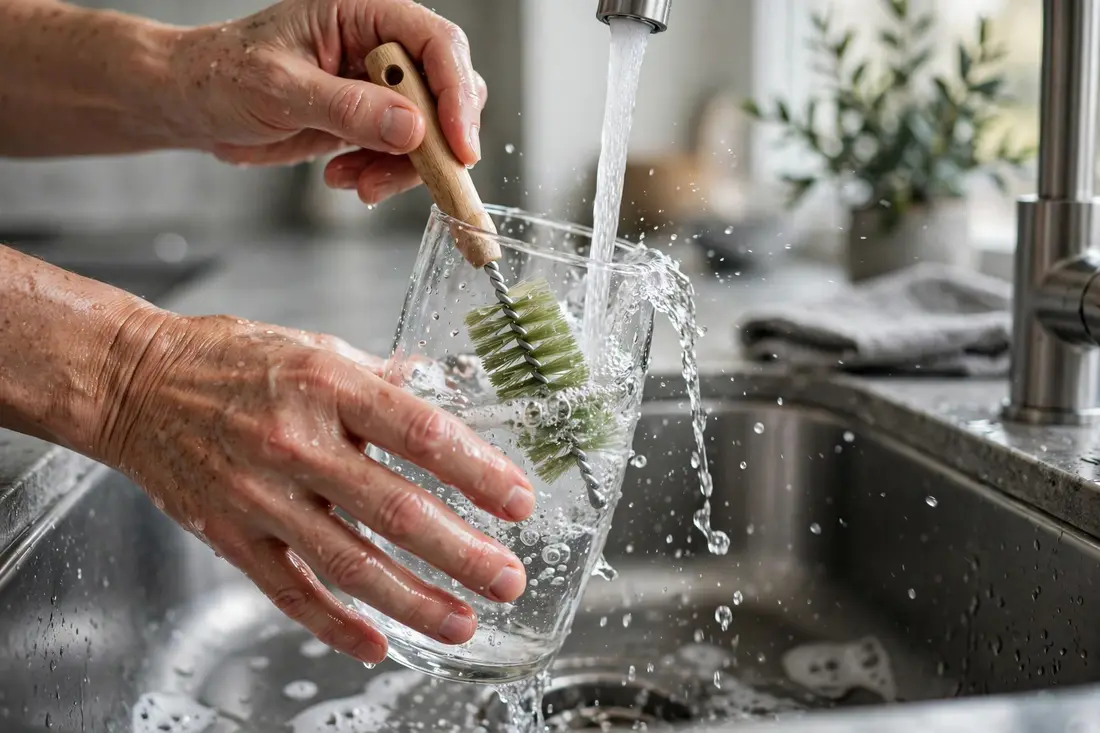
A vase that held last week's flowers is full of bacteria, even if it looks clean. That bacteria is the single biggest reason bouquets die early: it coats the cut stem ends and blocks water from getting up to the blooms. Before you arrange anything, scrub the vase with hot soapy water and a bottle brush, then rinse it well. If the vase has a cloudy film or a faint smell, soak it for ten minutes in a mix of one part white vinegar to three parts water, then rinse again. Skip the dishwasher for hand-painted or thin glass vases. This one step takes three minutes and adds more life to your flowers than any home remedy you will read about later in this guide.
Cut the Stems at an Angle
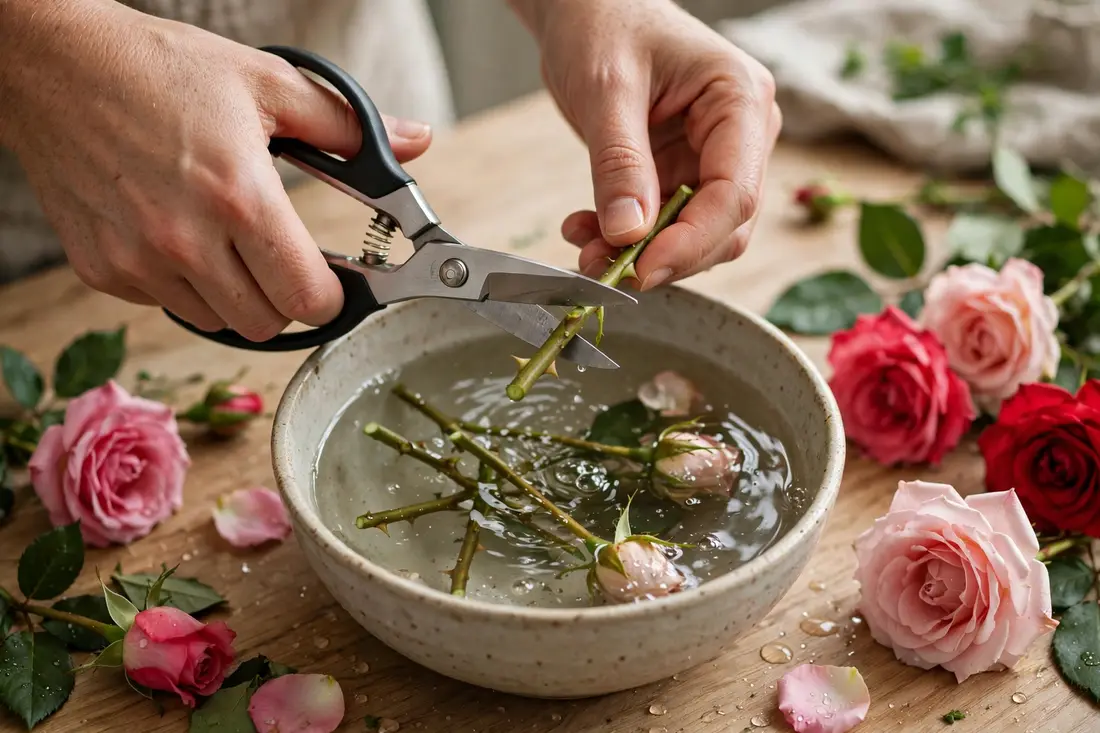
Flower stems seal themselves off quickly once they are cut, so a fresh cut right before arranging makes a real difference. Use sharp scissors or a clean kitchen knife, never a dull blade that crushes the stem, and cut about an inch off the bottom of each stem at a 45-degree angle. The slant gives the stem more surface to drink through. Cut under running water or with the stems held in a bowl of water if you can: this stops air from getting sucked into the stem, which is what causes that sudden droop the morning after. Then place the flowers in water right away. Re-cut the stems every two or three days when you change the water, and always use a sharp blade.
Use Flower Food, or Make Your Own
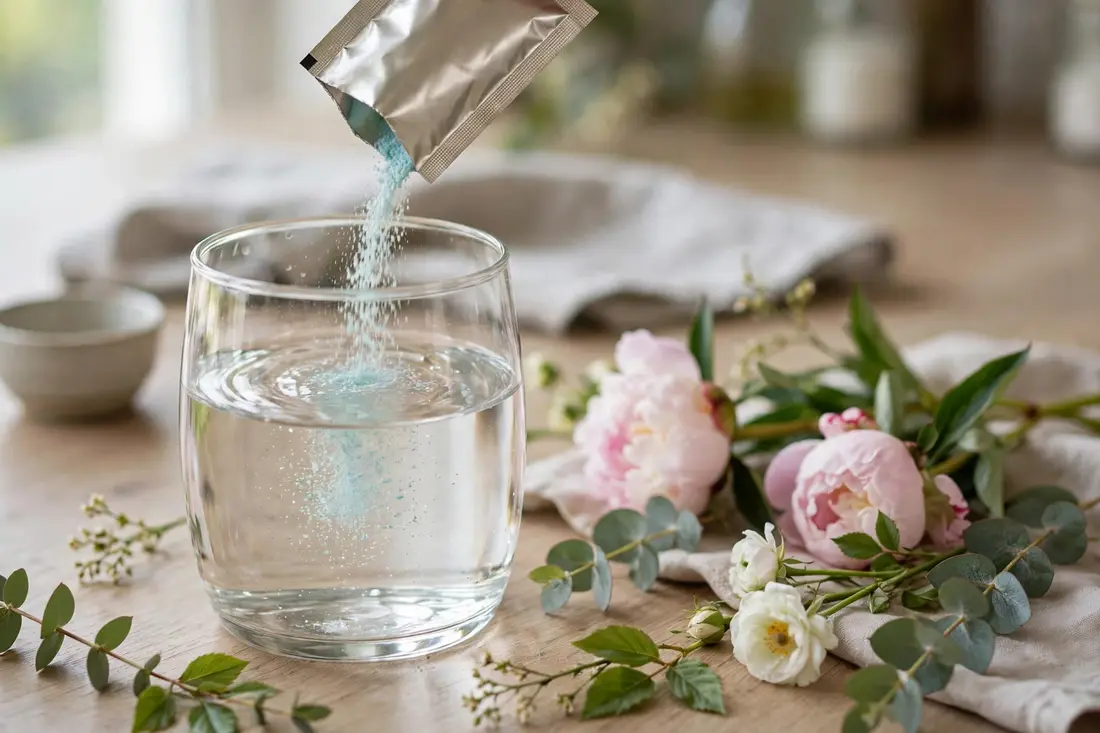
That little packet taped to the bouquet is not a gimmick. Flower food has three jobs: sugar feeds the blooms, an acid lowers the water's pH so the stems drink better, and a mild antibacterial keeps the water clear. Mix one packet per quart of lukewarm water and stir until it dissolves. If you run out of packets, make your own: stir one teaspoon of sugar, one teaspoon of lemon juice, and three or four drops of plain household bleach into a quart of water. The bleach sounds odd, but at that tiny dose it only kills bacteria; it will not hurt the flowers. Replace the food solution every time you change the water, and do not double the dose hoping for better results — too much sugar feeds bacteria instead.
Change the Water Every Two Days
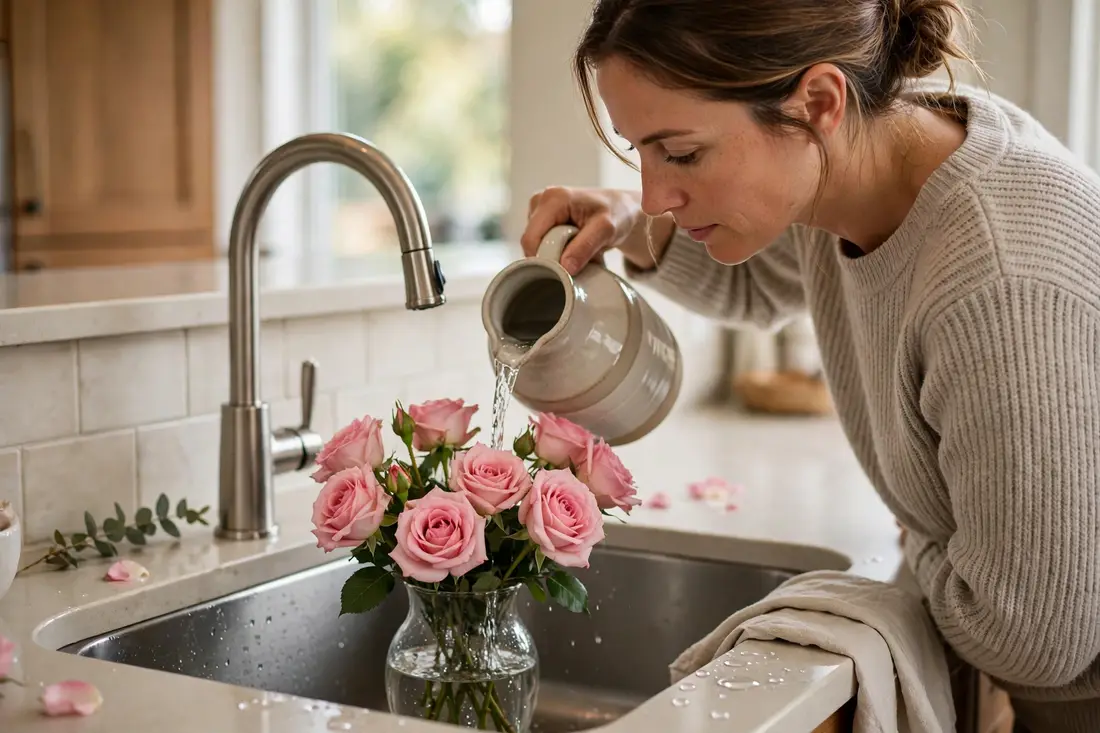
Stale vase water is where bouquets go to die. Bacteria double fast in warm, sugary water, and once the water turns cloudy, the stems are already clogged. Every two days, take the flowers out, dump the old water, and rinse the vase with hot water. Rinse the stem ends under the tap, too, and trim off any slimy bits you feel. Refill with lukewarm water and fresh flower food — cold water can shock the stems, and hot water can cook them. If the water ever smells off or looks milky, change it right away instead of waiting for the two-day mark. This is the highest-return habit in flower care, and it takes less than five minutes.
Keep Them Cool and Out of the Sun
Flowers age fastest in warm, bright rooms. A bouquet sitting in a sunny window or next to a radiator can lose two or three days of life compared with the same flowers in a cool corner. Aim for a room between 65 and 72 degrees, away from direct sun, heating vents, and the top of the TV or fridge, all of which throw off heat. A cool bedroom or a shaded kitchen counter works well. If your house runs warm, move the vase to the coolest room at night, or pop it in the fridge overnight — just make sure the fridge holds no fruit, and that the temperature stays above 35 degrees so the petals do not freeze.
Keep Fruit Away From Your Flowers
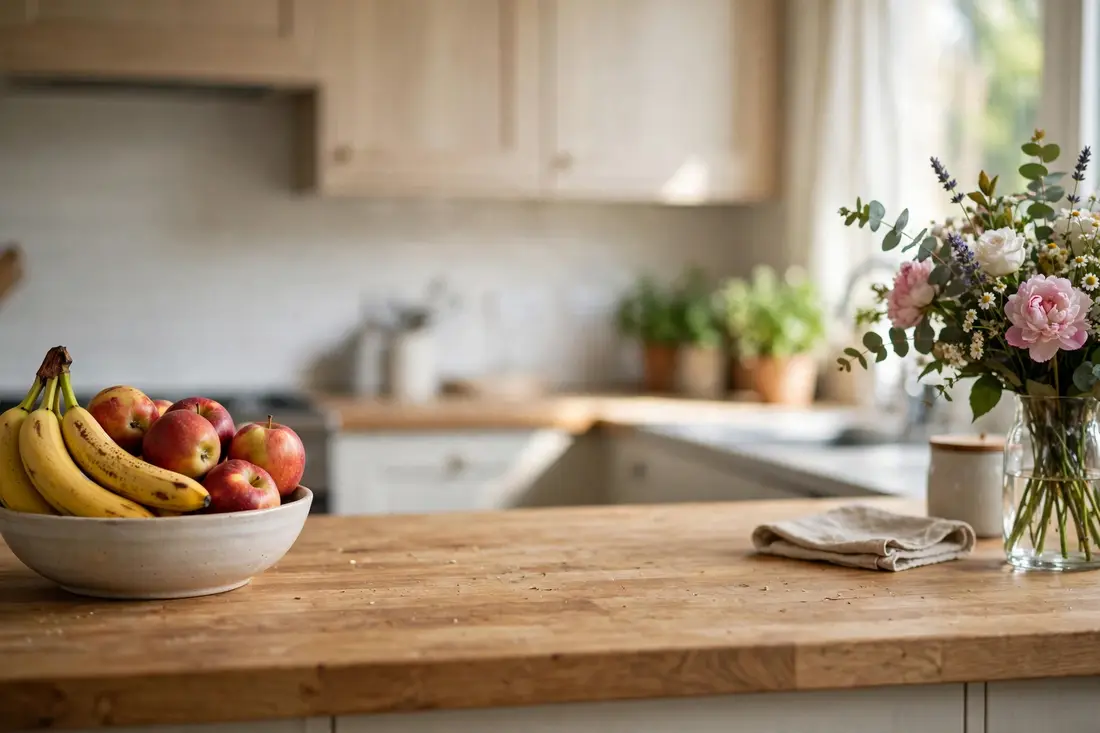
That fruit bowl on the counter is quietly aging your bouquet. Bananas, apples, pears, avocados, and tomatoes all release ethylene gas as they ripen, and ethylene tells cut flowers to open fast, drop petals, and wilt. One banana sitting next to a vase can cut a bouquet's life by days. Keep flowers and fruit on different counters, or better yet in different rooms. The same rule applies inside the fridge: never store a vase next to ripening fruit. Florists keep their coolers fruit-free for exactly this reason. It costs nothing to move the fruit bowl, and it is one of the easiest wins in this whole guide.
Trim and Remove Dying Bits Every Day
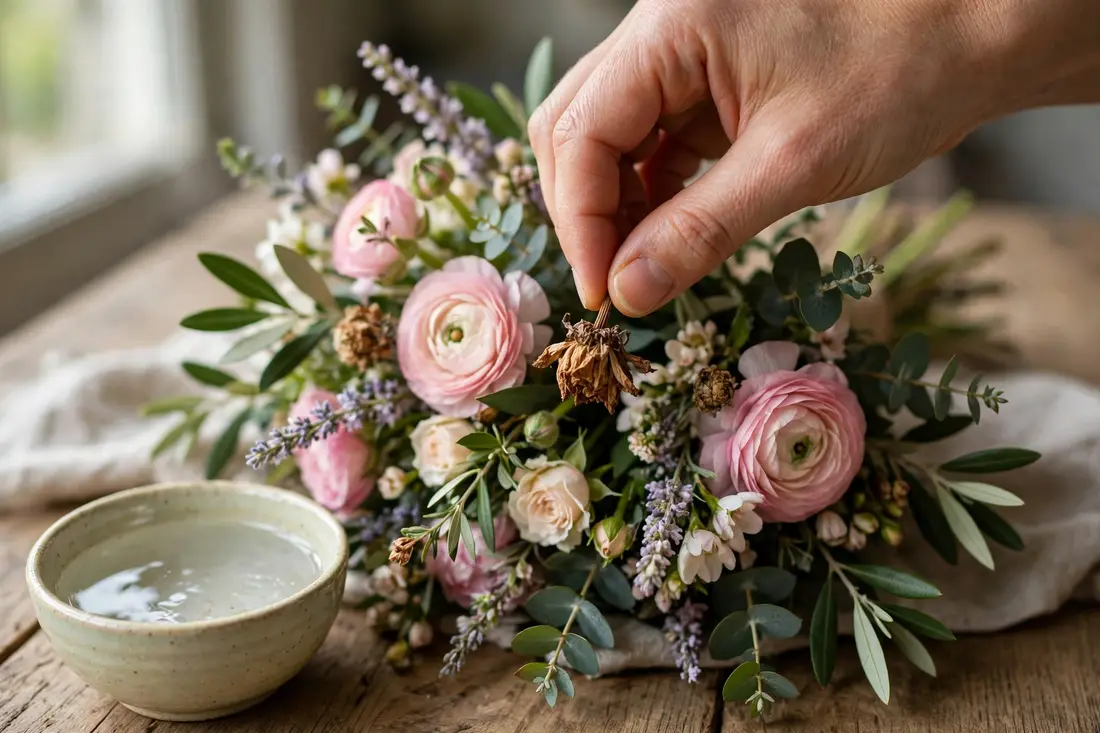
A bouquet does not age evenly. One stem wilts while the rest look fine, and a few leaves below the waterline start to rot. Left alone, the rotting bits feed bacteria that attack the healthy stems. Spend one minute a day on upkeep: pull out any stem that has gone limp or slimy, pinch off spent blooms, and strip away leaves that sit below the waterline — leaves in the water rot fast and cloud the vase. If a bloom is half-open and the rest of the flower is done, cut the head off and float it in a small bowl of water; it can look pretty for another day on its own. This daily tidy-up keeps the water cleaner and the arrangement looking full for longer.
What About Aspirin, Pennies, and Soda?
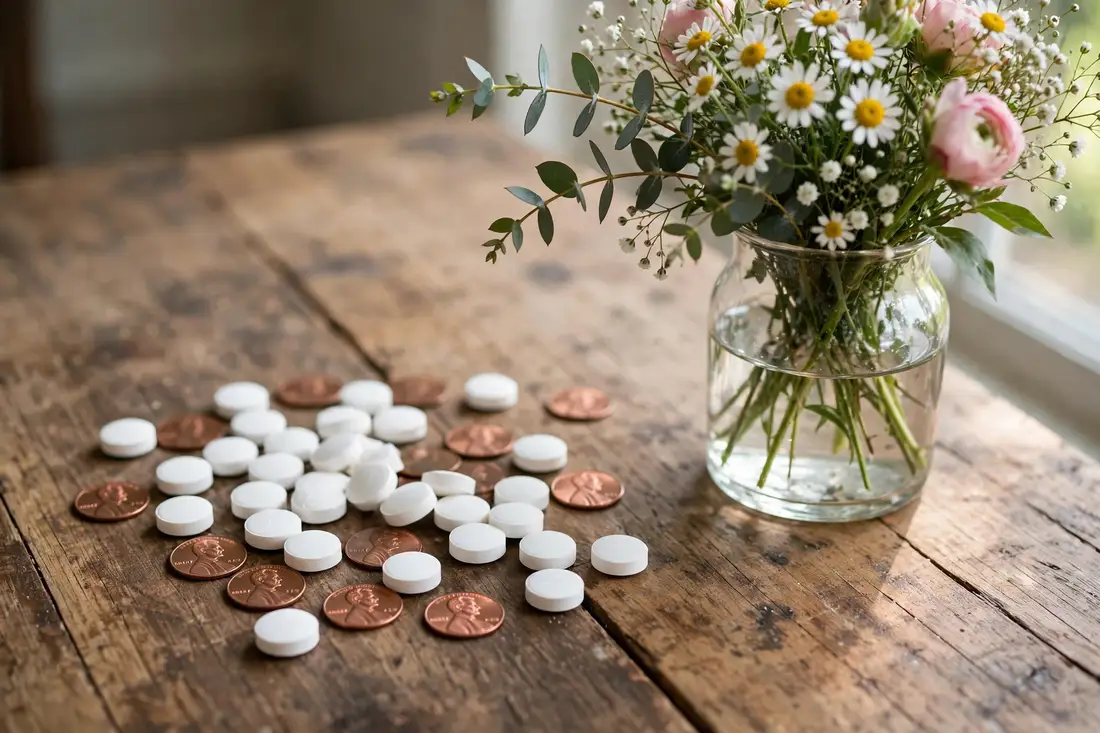
Every flower guide on the internet has a home remedy, and most of them do not hold up. Aspirin is the classic one, but research from Purdue found it does nothing for cut flowers — the acid dose is too small to change the water, and the tablet mostly just dissolves. Copper pennies are another dead end: modern pennies are mostly zinc with a thin copper coat, and the metal does not release enough to kill bacteria. Lemon-lime soda works a little, since it has sugar and citric acid, but it has no antibacterial, so the water still goes cloudy. Flower food, homemade or store-bought, beats all three because it covers feeding, acidity, and bacteria at once. Save the aspirin for headaches.
How Long Each Common Flower Lasts
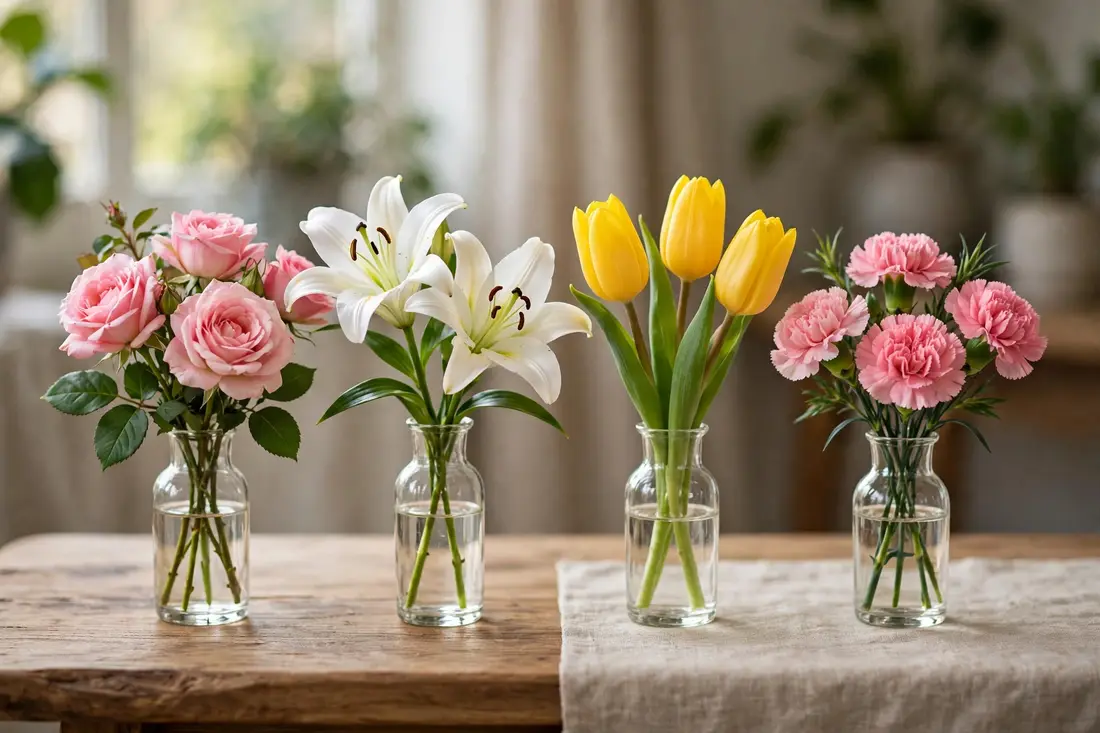
Knowing what to expect helps you buy smarter. Carnations are the marathon runners, often lasting two to three weeks with basic care. Chrysanthemums and alstroemeria usually give you ten to fourteen days. Roses and lilies sit in the middle at seven to ten days, though lilies keep opening new buds for days after the first bloom fades — just pull off the pollen-covered anthers so they do not stain. Tulips and daffodils are shorter-lived at five to seven days, and tulips keep growing in the vase, so leave them a little tall and expect them to bend. Sunflowers last about a week if the water stays clean. Buy flowers with buds still half-closed, and you get the full show instead of the last two days of it.
✅ Guide4U Checklist
- Scrub the vase with hot soapy water first
- Cut stems at an angle under running water
- Mix flower food into lukewarm water
- Change the water every two days
- Keep the vase cool and out of direct sun
- Move fruit bowls away from the bouquet
- Pull dead leaves and blooms daily
Key Takeaways
- Clean water and a fresh cut matter more than any home remedy.
- Flower food feeds blooms and fights bacteria at the same time.
- Cool rooms and fruit-free counters add days to any bouquet.
Frequently Asked Questions
How long do cut flowers usually last?
Most cut flowers last 5 to 14 days, and the type matters more than anything else. Carnations often push past two weeks, roses and lilies last about a week to ten days, and tulips usually give you five to seven. Good care — a clean vase, fresh water every two days, and flower food — can add several days to any of them.
Should I put cut flowers in the fridge overnight?
Yes, if your fridge stays above 35°F and holds no ripening fruit. The cool air slows the aging process, so a bouquet that spends the night in the fridge often looks a day fresher in the morning. Set the vase on a shelf where it will not tip, and keep it away from apples, bananas, and tomatoes stored in the same fridge.
Does sugar water really keep flowers fresh?
Sugar feeds the blooms, but it also feeds the bacteria in the water, so plain sugar water turns cloudy fast and can do more harm than good. The mix that works is sugar plus an acid plus something that kills bacteria: a teaspoon of sugar, a teaspoon of lemon juice, and a few drops of plain bleach per quart of water. A store-bought flower food packet does the same job with less guesswork.
Why do my flowers droop the day after I buy them?
The usual culprit is an air bubble trapped in the stem, which blocks water from reaching the bloom. A warm room, dirty vase water, or stems that were cut days before you bought them can do the same thing. Re-cut an inch off each stem under running water, fill a clean vase with lukewarm water and flower food, and most drooping bouquets perk up within a few hours.
What did you think of this article? Share your opinion in the comments below — we would love to hear from you.