
How to Lower Your Electric Bill at Home

Quick Answer
Start with your bill's kilowatt-hour usage, cut standby power with power strips, and set the thermostat a few degrees smarter. Cold-water laundry, full dishwasher loads, and a 120-degree water heater cover most of the rest.
Read Your Bill Before You Change Anything
The first step is not buying anything, it is reading the bill you already get. Look past the total and find the usage number, usually shown in kilowatt-hours, or kWh, and compare it with the same month last year if your bill shows that history. A bill that jumps in summer or winter usually points to heating or cooling, while a bill that stays high all year points to water heating or appliances. Many utilities also show your daily average use, which makes it easy to see whether a change actually worked. Take a photo of this month's numbers before you start, so in two months you can tell what helped and what was just a mild month.
Hunt Down the Phantom Loads
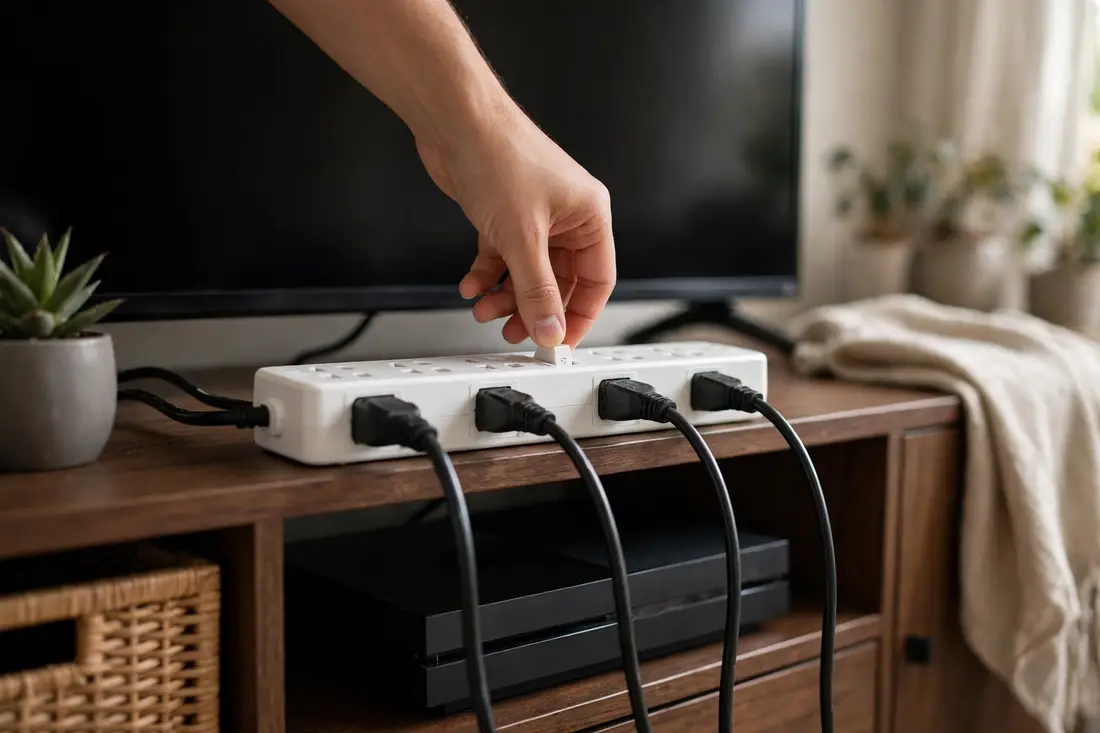
A surprising share of home electricity goes to devices that are not really on. Televisions, game consoles, printers, phone chargers, and cable boxes all draw a small amount of power in standby, waiting for a remote signal, and across a whole house that adds up to a real line on your bill. The fix is simple and free: plug entertainment gear into a power strip and switch the strip off at night, or whenever the gear will sit unused for hours. Chargers can come out of the wall once the device is full. You do not need to unplug the fridge or the router, and you should not switch off anything that needs to stay powered, like a medical device or a security system.
Heating and Cooling Eat the Biggest Share
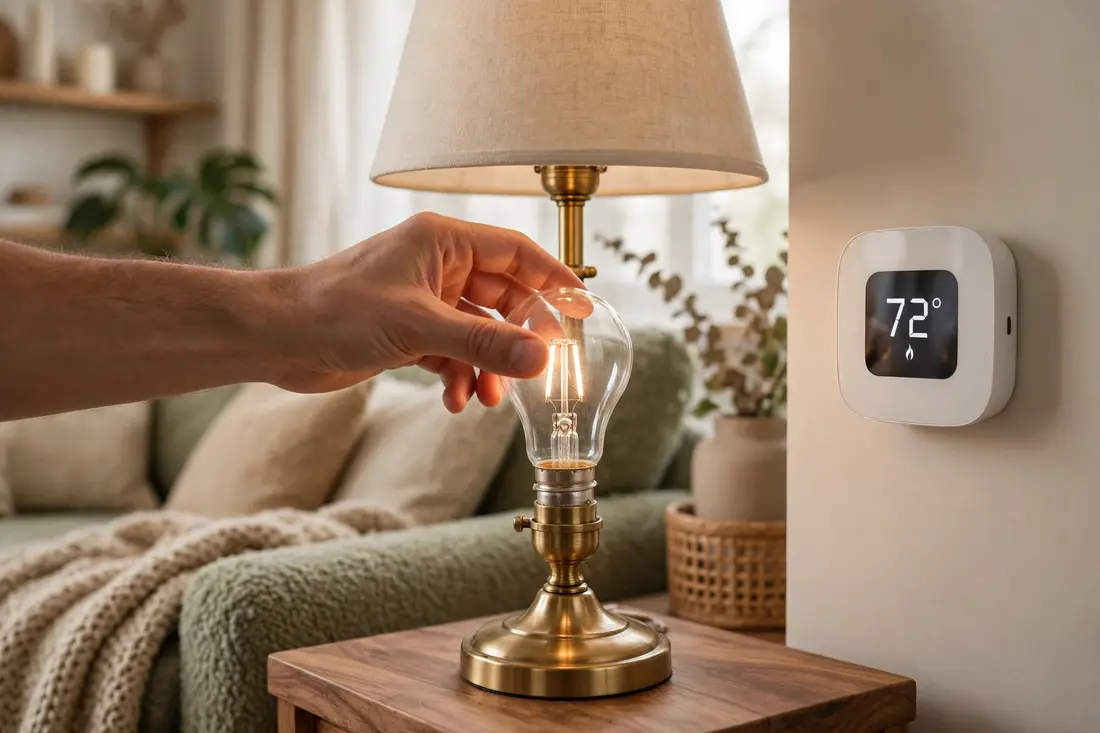
In most US homes, heating and cooling use more electricity than anything else, so a few degrees of thermostat discipline matter more than any gadget. In summer, try 78 degrees Fahrenheit when you are home and a few degrees higher when you are out; in winter, 68 degrees when you are home and lower overnight or while you are away. A programmable thermostat does this automatically, and it pays for itself in a single season for many households. Close curtains on sunny windows in summer to block heat, and open them on sunny winter days to let heat in. Seal obvious drafts around doors and windows with weatherstripping, since conditioned air leaking out is money leaking out.
Swap to LED Bulbs and Stop Leaving Lights On
Lighting is one of the easiest wins in the whole house because the swap is cheap and the savings start at once. An LED bulb uses about a tenth of the power of an old incandescent bulb for the same brightness, and it lasts years instead of months, so replacing the bulbs in the rooms you use most is a fast payback. You do not need to replace every bulb in one weekend: start with the kitchen, living room, and any light left on for hours each day. Then build the habit of switching lights off when you leave a room, and use daylight where you can. A single porch light left on all night, every night, costs more over a year than most people guess.
Wash Smart and Skip the Dryer When You Can
Laundry has two easy savings hiding in it. First, wash in cold water whenever the load allows it: modern detergents clean well in cold water, and heating wash water is the biggest energy cost of a wash cycle. Second, the dryer is one of the hungriest appliances in the house, so line-drying clothes when the weather allows, or even drying them on a rack indoors, cuts a real chunk from the bill. When you do use the dryer, clean the lint filter every single load, since a clogged filter makes the machine run longer and hotter. Wash full loads instead of half loads, and spin heavy items well so they spend less time in the dryer.
Use the Dishwasher the Efficient Way
Running the dishwasher half full twice costs more than running it full once, so wait until it is full before you start it, and scrape plates instead of rinsing them under a running tap. Most modern dishwashers clean well on a normal or eco cycle, and the heavy or sanitize cycles are only needed for truly soiled loads, not everyday plates. If your machine has a heated-dry option, switching it off and letting dishes air-dry inside saves energy on every load with no extra work. Hand-washing a full load under running hot water usually uses more water and more energy than a full dishwasher cycle, so the machine is not the enemy here. The waste comes from running it too often or too hot.
Give Your Fridge and Freezer a Quick Check
Your fridge runs all day, every day, so small problems there cost money around the clock. Keep the temperature at about 37 to 40 degrees Fahrenheit for the fridge and 0 degrees for the freezer, and check with a cheap thermometer if you are unsure, since a fridge set colder than needed wastes power for no benefit. Test the door seal by closing it on a dollar bill: if the bill slides out easily, warm air is leaking in and the compressor is working overtime. Keep the coils at the back or underneath free of dust with a brush or vacuum once or twice a year. Let hot food cool on the counter before it goes in, and do not leave the door standing open while you decide what to eat.
Water Heating Costs More Than Most People Think
Water heating is usually the second or third biggest energy user in a home, and it runs whether you think about it or not. Turning the water heater down to 120 degrees Fahrenheit is enough for most households: hotter water just increases standby losses and the risk of scalds, and it rarely improves a shower. Shorter showers save more than any device, since a ten-minute shower uses a lot of heated water, and a low-flow showerhead cuts that use without making the shower feel weak. Fix dripping hot taps promptly, since a steady drip of hot water is a heater running for nothing. Wash your hands and brush your teeth with cold water when you can, and save the hot tap for jobs that truly need it.
Use Off-Peak Hours When Your Utility Offers Them
Some utilities charge different rates at different times of day, with higher prices during the late afternoon and early evening when demand peaks, and lower prices overnight. If your bill or your utility's website mentions a time-of-use plan, it is worth checking whether shifting flexible jobs to off-peak hours saves you money. Dishwashers, washing machines, dryers, and electric vehicle charging are all easy to move an hour or two. You do not need to change when you cook dinner or watch television. Just move the jobs that do not care what time they run, and let the cheaper hours do the work. Even on a flat-rate plan, spreading big loads through the day avoids stacking everything at once.
- Run the dishwasher after dinner, not at dinnertime
- Do laundry in the evening or early morning
- Charge devices and run the dryer off-peak
- Pre-cool or pre-heat before the peak window
- Check your bill for a time-of-use plan option
Small Upgrades That Pay for Themselves
Once the free habits are in place, a few modest upgrades are worth considering. A smart power strip cuts standby power automatically for entertainment gear. Weatherstripping and door sweeps are cheap, take an afternoon to fit, and stop drafts that force your heating and cooling to work harder. A programmable or smart thermostat is the single best upgrade for most homes, since it handles the temperature schedule without you thinking about it. Low-flow showerheads and faucet aerators cost a few dollars each and cut hot water use at once. Skip expensive gadgets that promise dramatic savings until you have done the basics: no device can out-save a heater running all day in an empty house.
Build a Simple Monthly Routine
Savings fade when nobody watches them, so make the bill a five-minute monthly habit. When each bill arrives, write down the kWh used and the total, and compare it with the same month last year rather than last month, since seasons change everything. Pick one new habit each month instead of trying to change everything at once: phantom loads in month one, laundry in month two, thermostat settings in month three. If a change does not move the numbers after two months, drop it and try another. The goal is not a perfect energy-efficient home. It is a bill that quietly gets smaller while your daily life stays comfortable, and that is a routine worth keeping.
✅ Guide4U Checklist
- Note this month's kWh usage
- Switch off power strips at night
- Set summer 78F, winter 68F
- Wash laundry in cold water
- Run full dishwasher loads only
- Set water heater to 120F
Key Takeaways
- Heating, cooling, and water heating dominate the bill
- Standby power is small per device, real in total
- One habit a month beats a one-week overhaul
Frequently Asked Questions
What uses the most electricity in a typical home?
Heating and cooling usually come first, followed by water heating and then large appliances like the fridge, washer, and dryer. Lighting and electronics matter, but they are smaller than most people expect. That is why thermostat settings and water heating give bigger savings than switching off a single light.
Does unplugging devices really save money?
Yes, but the savings depend on how many devices you have on standby. A single phone charger draws very little, while a full entertainment setup with a TV, console, and cable box can draw a noticeable amount around the clock. A power strip makes the habit easy: switch the whole strip off and you catch every standby load at once.
Will a smart thermostat actually lower my bill?
For most households, yes, because it automates the temperature schedule people forget to follow by hand: warmer in summer when you are out, cooler in winter overnight. The savings come from the schedule, not the gadget itself, so a basic programmable thermostat set correctly works nearly as well as a smart one.
Is it cheaper to wash dishes by hand or use the dishwasher?
A full dishwasher on a normal or eco cycle usually beats hand-washing under running hot water, since the machine uses less water and heats it more efficiently. The key word is full: running the dishwasher half empty wipes out the advantage, so wait for a full load and skip the heated-dry option.
What did you think of this article? Share your opinion in the comments below — we would love to hear from you.