
How to Unclog a Bathtub Drain Without a Plumber

Quick Answer
Pull the stopper and clean off the hair, then fish out the clog with a five-dollar plastic drain claw. If the tub still drains slowly, seal the overflow with a wet rag and plunge it, then flush with baking soda, vinegar, and hot tap water. Never mix chemical cleaners, never plunge after using one, and use hot water instead of boiling water on PVC pipes.
Why Your Tub Drains So Slowly
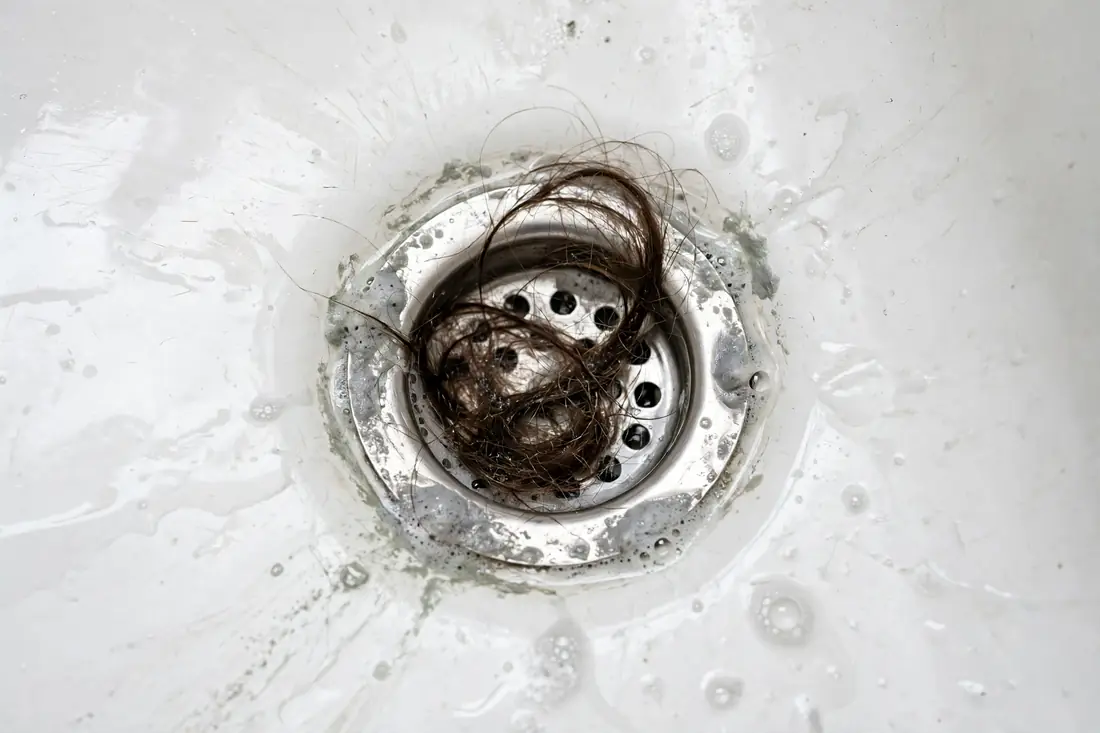
Most slow tub drains come down to two things: hair and soap scum. Every shower sends a few strands down the drain, and they catch on the stopper parts and the rough inside of the pipe. Soap scum, body wash, and conditioner coat those strands like glue, and the mat grows thicker week by week. Before long, water pools around your ankles while you shower. The good news is that this kind of clog sits close to the surface in most homes, usually within the first foot or two of pipe. That puts it well within reach of basic tools, and it means you can fix it yourself in about half an hour without touching anything behind the wall.
Grab These Tools Before You Start
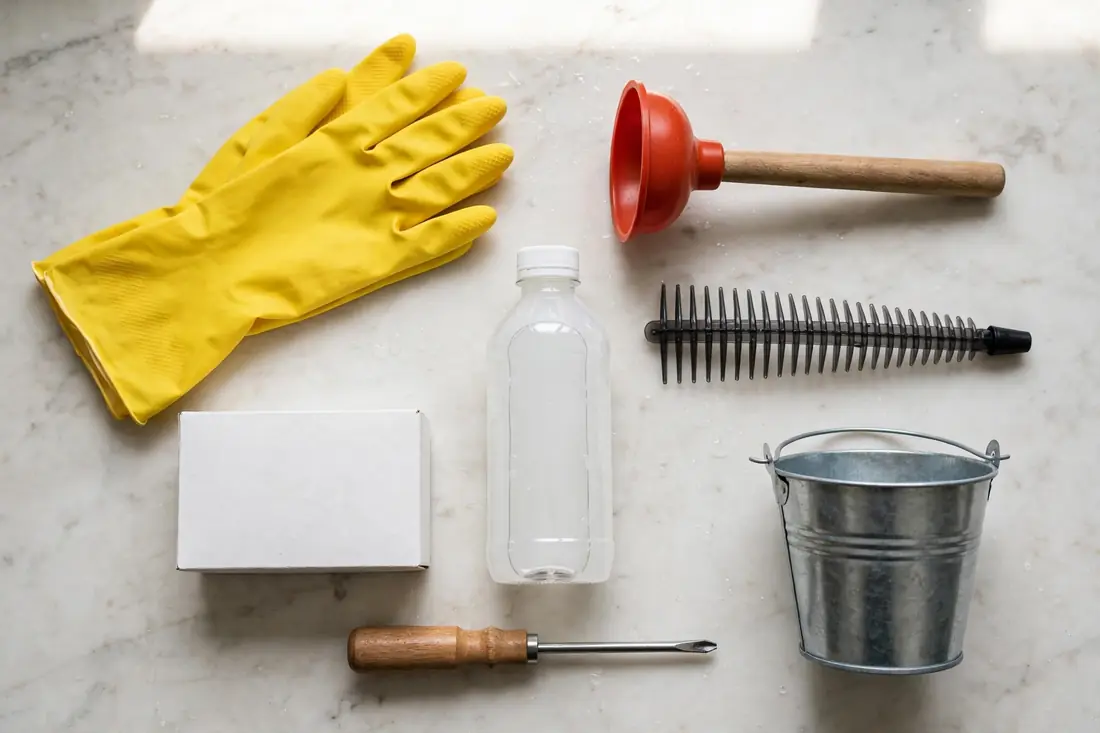
You need very little for this job, and most of it is probably already in your house. A pair of rubber gloves, an old towel, and a bucket cover the messy parts. A screwdriver handles the stopper and the overflow plate. The real hero is a plastic drain claw, sometimes sold as a zip stick or drain stick, which costs about five dollars at any hardware store. Add a cup plunger, the classic red rubber kind, plus baking soda and plain white vinegar. A flashlight helps you see into the drain. Lay the towel beside the tub and keep the bucket close, because the stuff you pull out of a drain is never pretty, and you will want somewhere to drop it fast.
- Rubber gloves and an old towel
- Screwdriver (flathead and Phillips)
- Plastic drain claw, about $5
- Cup plunger, baking soda, white vinegar
- Bucket and a flashlight
Step 1: Take Out the Stopper and Clean It
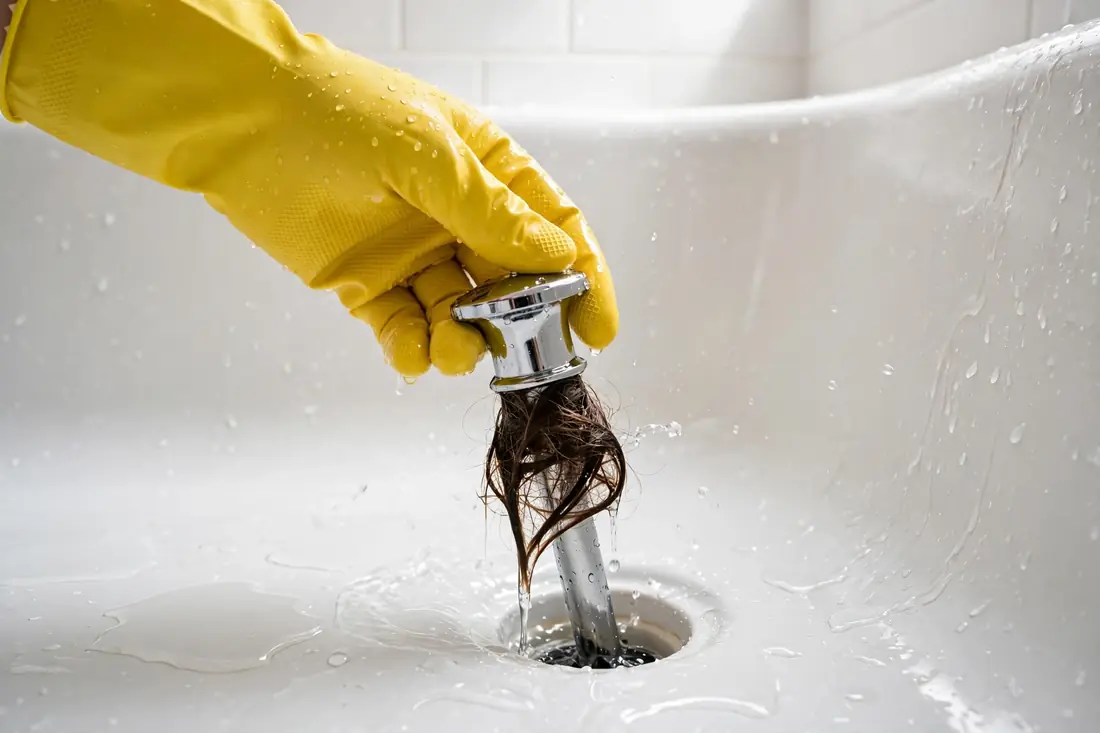
Start with the stopper, because a surprising number of slow drains are fixed right here. Lift-and-turn stoppers unscrew counterclockwise once you lift them to the open position. Push-pull stoppers work the same way: lift, then twist the knob off. Toe-touch stoppers usually unscrew by hand too, though some have a small screw under the cap. Once it is out, you will likely find a wet wad of hair wrapped around the stem and the seal. Pull it off with your gloved hand and drop it in the bucket. Rinse the stopper under hot tap water, scrub off the gray soap film, and set it aside. Run a little water and watch how fast it drains now, because if it flows fine, you are done already.
Step 2: Fish Out the Clog With a Drain Claw
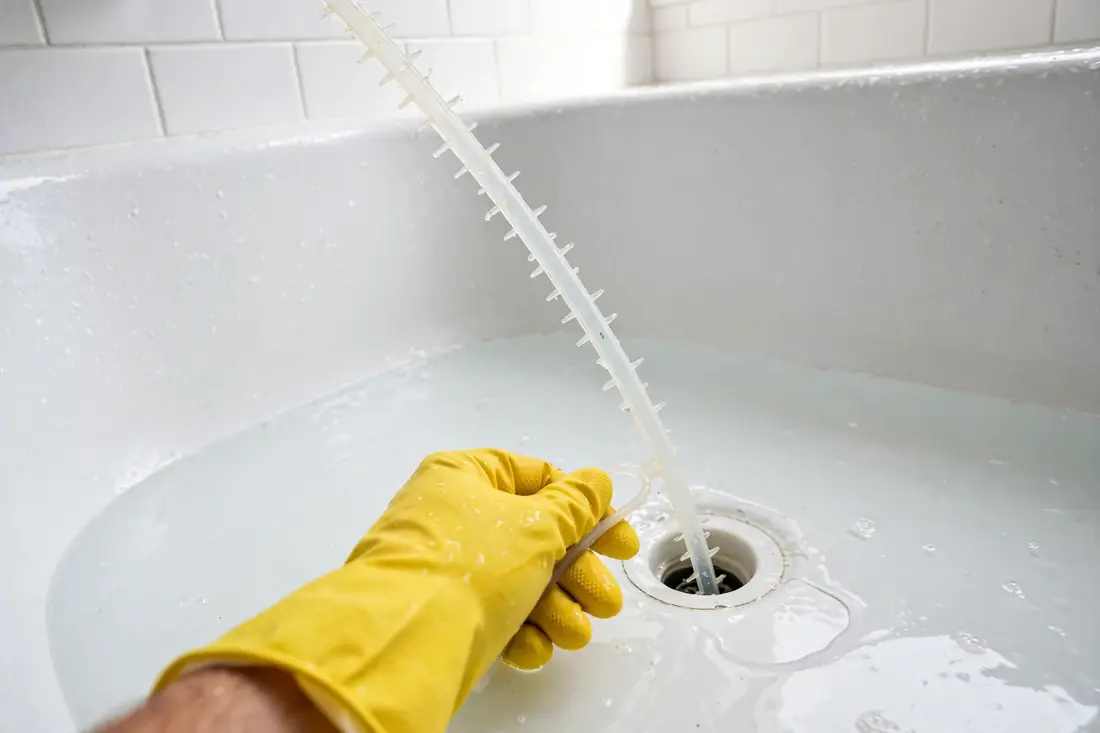
If the tub still drains slowly, the clog is sitting just past the stopper, and a drain claw is the best tool for it. Push the thin barbed strip down the drain slowly until you feel it stop, usually six to twelve inches in. Twist it a quarter turn so the little barbs grab the hair, then pull it straight back out in one steady motion. The first pull often brings up a dark, slimy clump, so have the bucket ready. Push the claw in again from a slightly different angle and repeat until it comes back clean two times in a row. These strips are cheap and meant for one use, so do not rinse and save a used one. Run the water and check the speed before moving on.
Step 3: Plunge It the Right Way
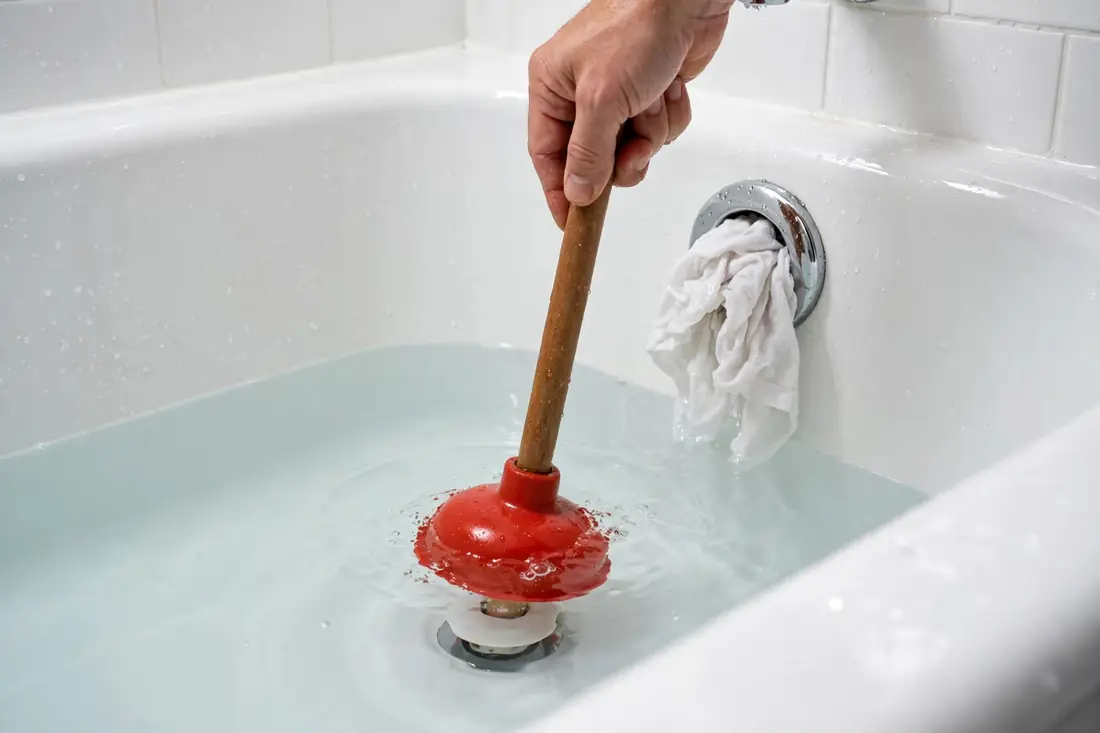
A plunger works on a tub drain only if you seal the overflow first, and this is the step most people skip. The overflow is the round plate on the wall of the tub just below the faucet, and air escapes through it, which kills the pressure of every plunge. Stuff a wet rag tightly behind that plate, or tape a piece of plastic over it, and hold it in place. Then add two or three inches of water to the tub so the cup of the plunger is fully covered. Set the cup flat over the drain and press down firmly to seal it, then pump up and down hard for fifteen to twenty strokes. Lift the plunger sharply on the last stroke. You should hear a gurgle and see the water start to drop.
Step 4: Flush With Baking Soda and Vinegar
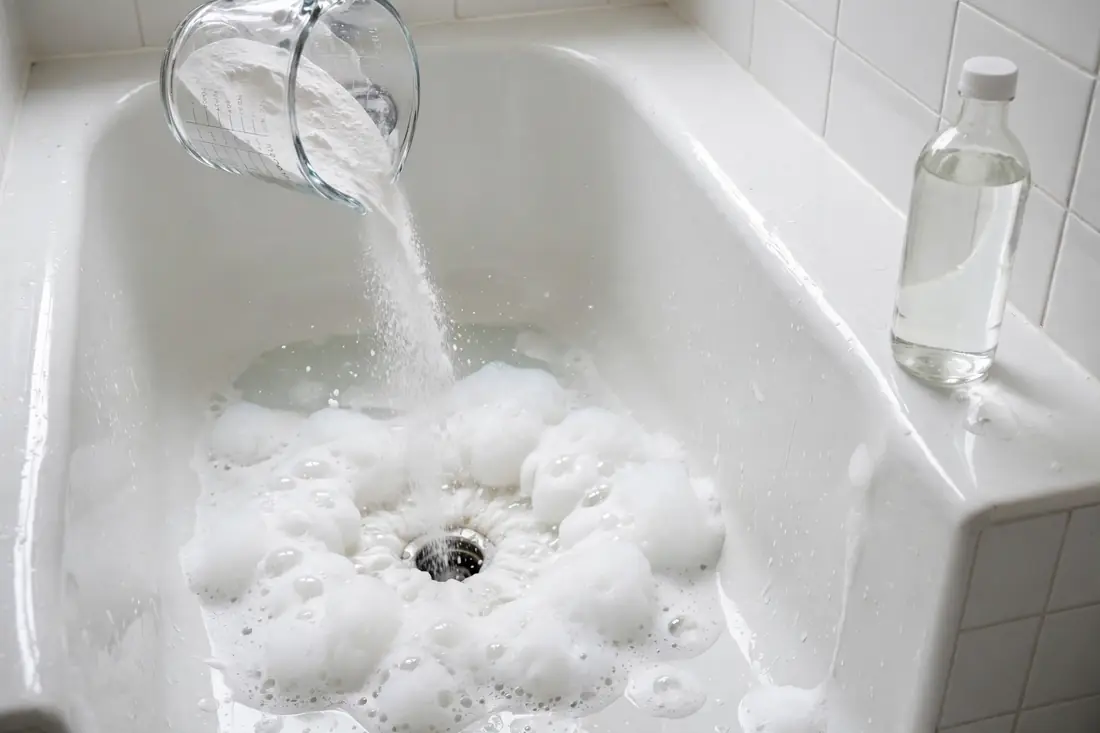
Once the worst of the clog is out, a baking soda and vinegar flush clears the leftover grease and soap film coating the pipe. Pour half a cup of baking soda straight down the drain, then follow it with one cup of plain white vinegar. It will fizz right away, and that fizzing helps lift the grime off the pipe walls. Cover the drain with the stopper or a rag to keep the fizz working down in the pipe instead of bubbling up into the tub. Wait fifteen minutes, then flush with a full kettle of hot tap water, or just run the hot tap for two or three minutes. One honest note: use hot water, not boiling water, if your home has PVC drain pipes, since boiling water can soften plastic joints over time.
- Half a cup of baking soda down the drain
- One cup of white vinegar, then cover the drain
- Wait 15 minutes, then flush with hot tap water
Step 5: Try a Drain Snake for a Deep Clog
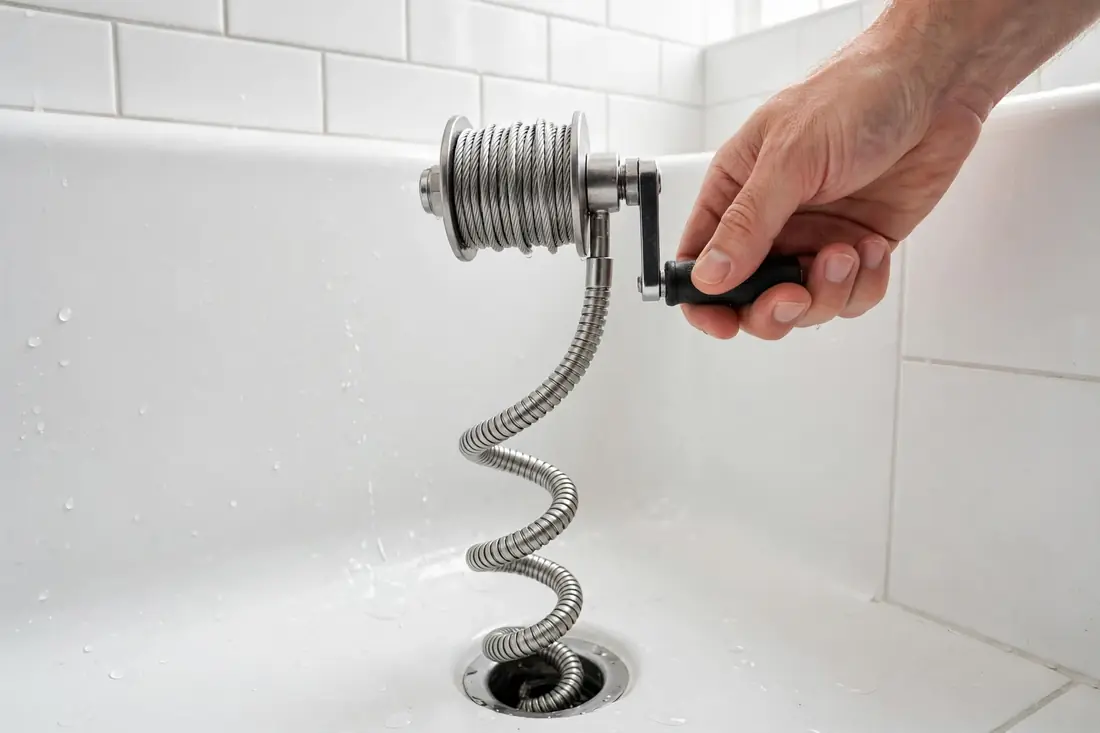
If the drain is still slow, the clog may sit a few feet down the pipe, past the reach of the claw. That is when a hand-crank drain snake earns its keep, and a basic 15-foot model runs about twenty to twenty-five dollars. Feed the coiled end into the drain slowly, turning the crank as you push, until you feel it meet resistance. Keep cranking gently so the tip works into the clog instead of just poking it. Once it bites, pull back slowly while still turning, and the clog should come out in pieces on the coil. Wipe the cable clean with a rag as it comes out, and run hot water for a couple of minutes when you finish. Take your time here: forcing the snake can scratch the pipe or jam the coil.
What Never to Do With a Clogged Drain
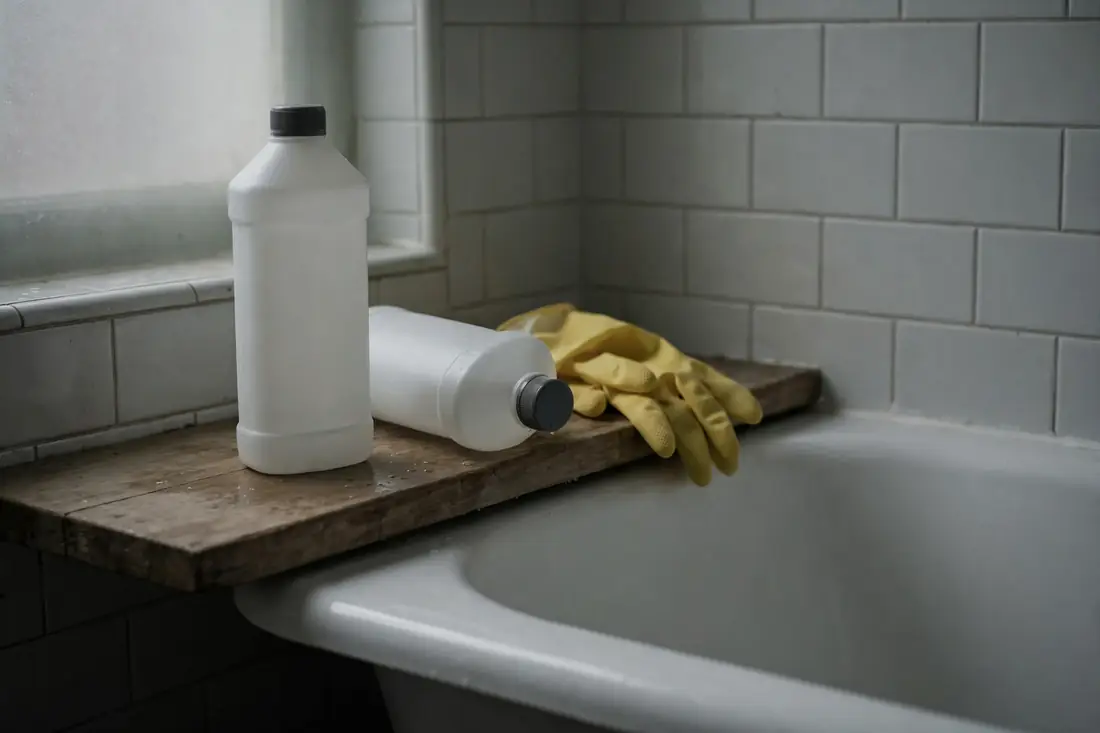
A few common moves make a slow drain worse, so it helps to know them before you reach for a bottle. Never mix chemical drain cleaners, and never pour one cleaner on top of another, because mixing them can create toxic fumes in a small bathroom. Never plunge a drain after you have poured in a chemical cleaner, since plunging can splash that cleaner back onto your skin and eyes. Skip boiling water on PVC pipes, as I mentioned above, and skip the wire coat hanger trick, which scratches the inside of the pipe and gives future hair something to grip. Chemical cleaners also do little against a solid mat of hair, so they often just sit in the pipe and eat at seals and older metal parts while the clog stays put.
- Never mix chemical cleaners of any kind
- Never plunge after pouring in a chemical cleaner
- Never pour boiling water into PVC pipes
- Never use a wire hanger inside the drain
Keep the Drain Clear After the Fix
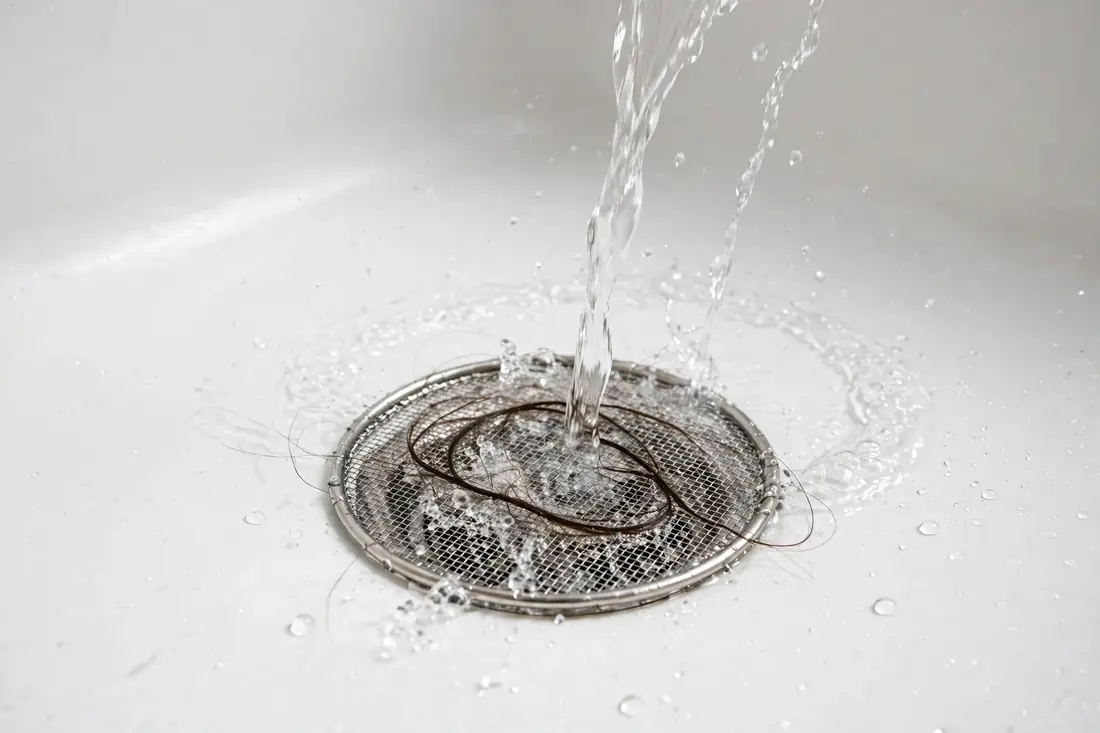
A clear drain stays clear with about two minutes of care a month, and the cheapest trick is a five-dollar mesh hair catcher that sits right in the drain opening. Empty it after every shower, or at least once a week, and most of the hair never reaches the pipe at all. Once a month, pull the stopper, wipe off the film, and flush the drain with hot tap water for a minute. If your household uses a lot of conditioner or bath oils, that monthly flush matters even more, since oils coat the pipe and help new hair stick. These small habits sound boring, but they are the difference between a drain you clean once a year and one you fight every few weeks.
When to Call a Plumber
Most tub clogs give in to the steps above, but some signs mean the trouble sits deeper than a claw or snake can reach. Call a plumber if more than one fixture is draining slowly at the same time, because that points to a problem in a shared line. The same goes for a sewage smell coming from the drain, water backing up into the tub when you run the sink, or a clog that returns within days of a full cleaning. Old cast iron or galvanized pipes, common in homes built before the 1970s, can also narrow with rust inside, and no home tool fixes that. A plumber visit for a simple drain clog usually runs seventy-five to two hundred dollars, which is fair for a problem you have already tried to fix the right way.
- Several fixtures drain slowly at once
- Sewage smell or water backing up elsewhere
- Clog returns days after a full cleaning
- Home built before the 1970s with old pipes

✅ Guide4U Checklist
- Remove the stopper and clean off the hair
- Pull the clog out with a drain claw
- Seal the overflow before you plunge
- Flush with baking soda, vinegar, hot water
- Never mix chemical drain cleaners
- Use a mesh hair catcher every shower
- Call a plumber if several fixtures drain slowly
Key Takeaways
- Most slow tub drains are hair and soap scum you can clear in half an hour.
- The drain claw does the real work; the plunger only helps once the overflow is sealed.
- A five-dollar hair catcher keeps the clog from coming back.
Frequently Asked Questions
Can I use a chemical drain cleaner like Drano on my tub?
You can, but it is rarely the best move. Chemical cleaners do little against a solid mat of hair, and they can damage older pipes and seals. A drain claw or plunger clears the actual clog instead of just sitting on top of it. If you do use one, follow the label, never mix it with another cleaner, and never plunge afterward.
How long does the baking soda and vinegar flush take?
About twenty minutes. The fizzing works for fifteen minutes while the drain is covered, then hot water flushes it through. It clears soap film and light grease, but it will not dissolve a thick hair clog, so use it after the claw or plunger, not instead of them.
Why does my tub drain slowly again a week after I cleared it?
The likely cause is a deeper clog the first fix only partly cleared, or a stopper that was never cleaned. Try the drain claw again and clean the stopper, and add a mesh hair catcher so new hair stops reaching the pipe. If it keeps coming back within days, call a plumber, since the problem may sit further down the line.
Is it safe to plunge a bathtub drain?
Yes, as long as you seal the overflow first and have not poured a chemical cleaner into the drain. The overflow lets air escape and kills the pressure, so stuff a wet rag behind the overflow plate before you start. Use a cup plunger with two or three inches of water in the tub, and stop if the level does not change after a few rounds.
What did you think of this article? Share your opinion in the comments below — we would love to hear from you.