
How to Unclog a Garbage Disposal Without Calling a Plumber
Quick Answer
Turn the power off, press the red reset button on the bottom, and work the flywheel back and forth with a 1/4-inch hex key until it spins freely. Fish out the jam with tongs, plunge the sink if it still drains slowly, and flush with ice and salt. Never use chemical drain cleaners, and never reach in with your hand.
Turn the Power Off Before You Touch Anything
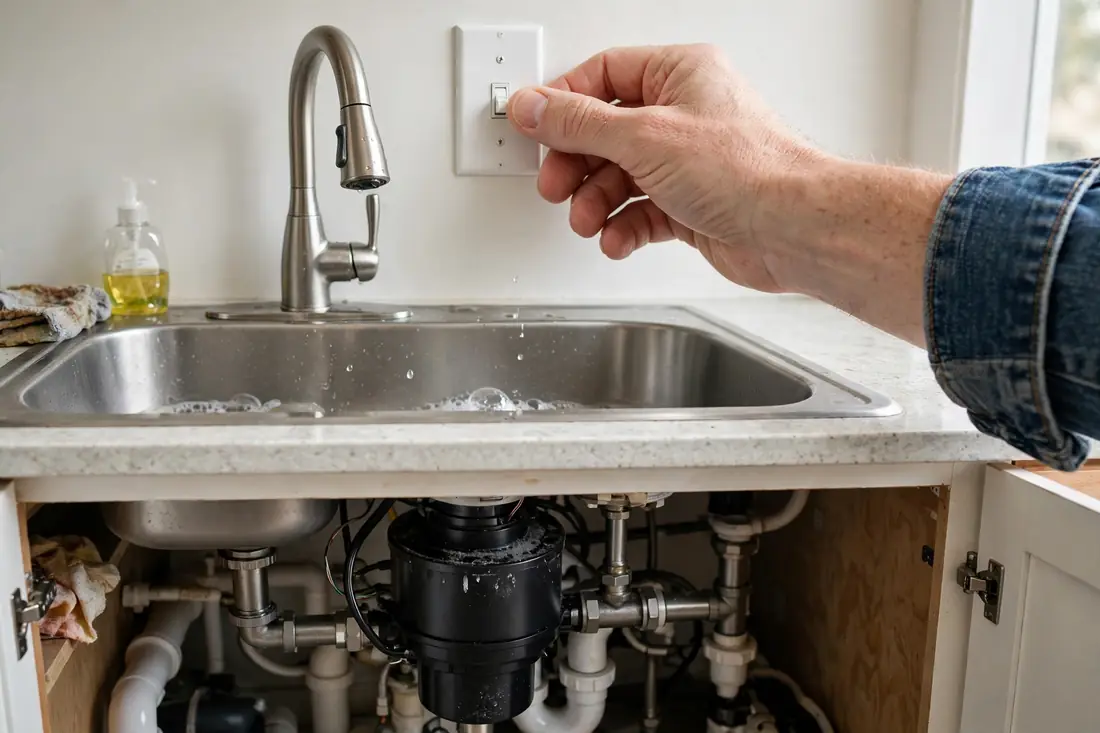
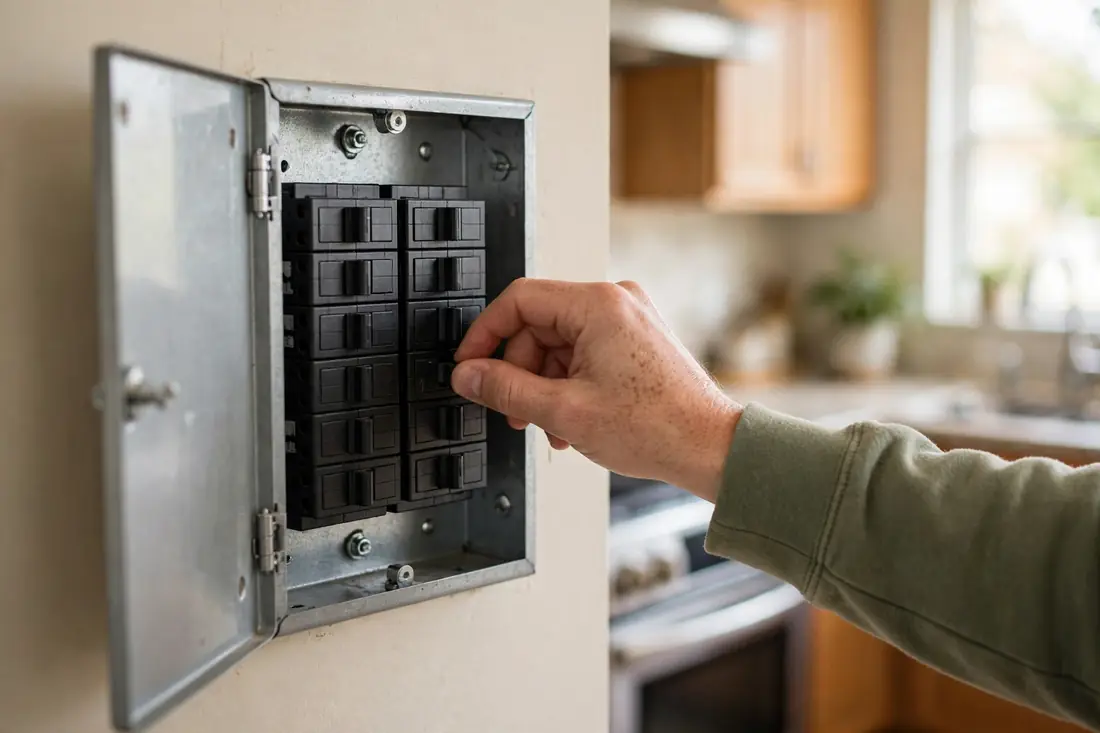
A garbage disposal looks harmless when it is jammed, but it is a motor with sharp blades, and it can start the moment the jam clears. Never reach into one, and never work on one while it still has power. Flip the wall switch off first, then unplug the disposal from the outlet under the sink. If yours is hardwired, flip the breaker for the kitchen circuit and test the switch to make sure the disposal is dead. Tell everyone in the house what you are doing so nobody flips the switch back on while your hands are near the drain. This takes thirty seconds and it is the one step you must never skip. Every year people get hurt because they trusted a wall switch that someone else turned back on.
Work Out What Kind of Clog You Have
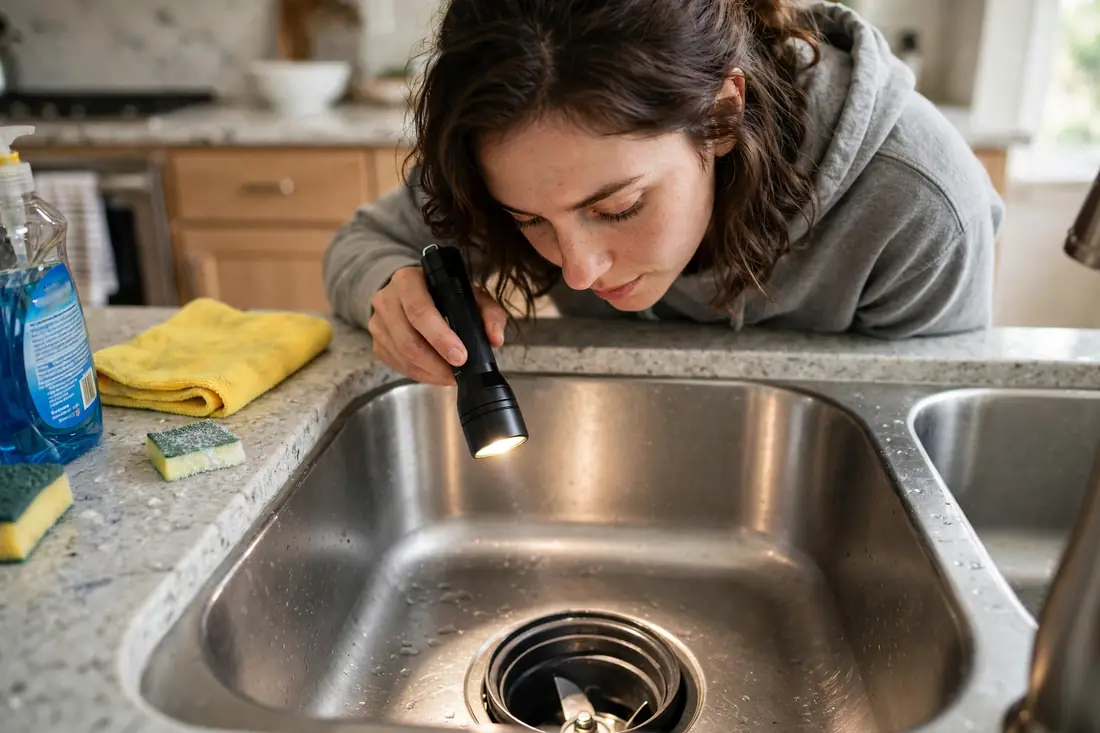
A disposal that hums when you flip the switch is jammed, not broken. The motor is trying to spin and something is stopping it, usually a bone, a bottle cap, or a clump of fibrous food wedged between the flywheel and the grind ring. A disposal that does nothing at all, no hum and no click, has usually tripped its reset button or the breaker, or the motor has burned out. A disposal that runs fine but drains slowly has a clog in the drain pipe past the disposal, not in the disposal itself. Knowing which one you have saves you from fixing the wrong thing. Listen first, then look: shine a flashlight down the drain and see if you can spot the jam before you touch anything.
Press the Reset Button on the Bottom
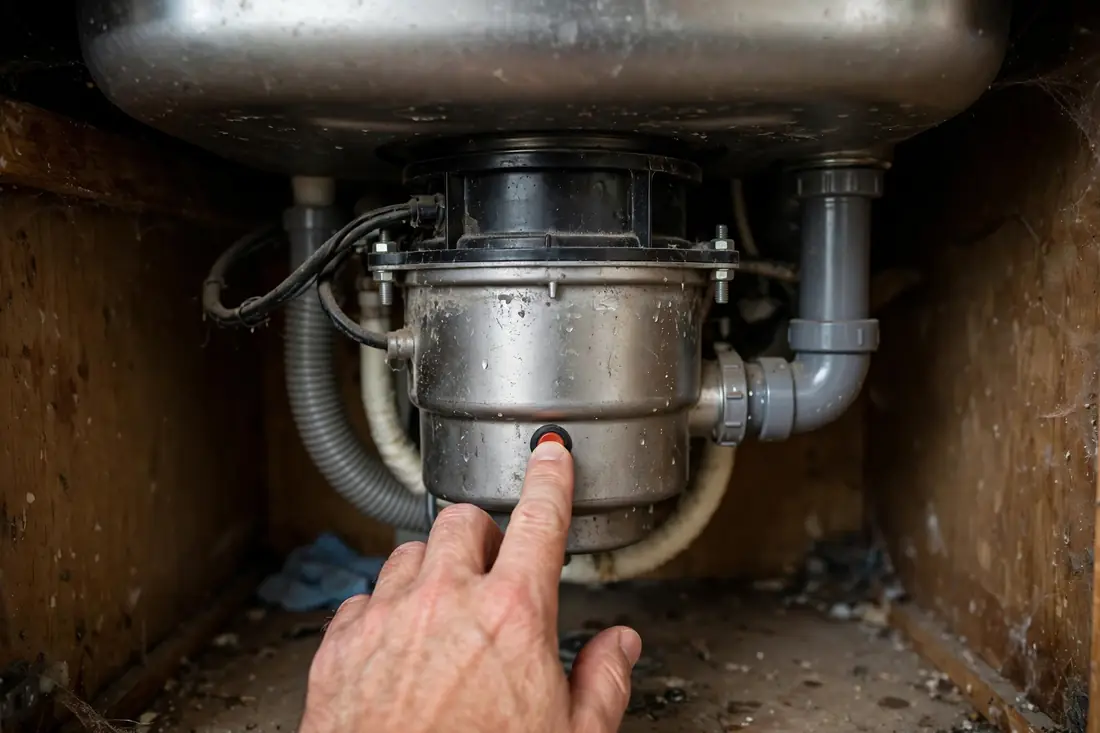
Almost every disposal has a small red reset button on the bottom of the unit, and it pops out when the motor overheats or jams. Reach under the sink, feel for the button, and press it firmly until it clicks back in. Then turn the switch on and see if the disposal runs. If it hums again, the jam is still in there and the button will probably pop out again, so do not keep pressing it and flipping the switch. That just heats the motor. If the button will not stay in at all, unplug the disposal and wait ten minutes for the motor to cool, then try once more. A reset button that keeps tripping on a clear disposal usually means the motor is worn out.
Free the Flywheel With a Hex Key
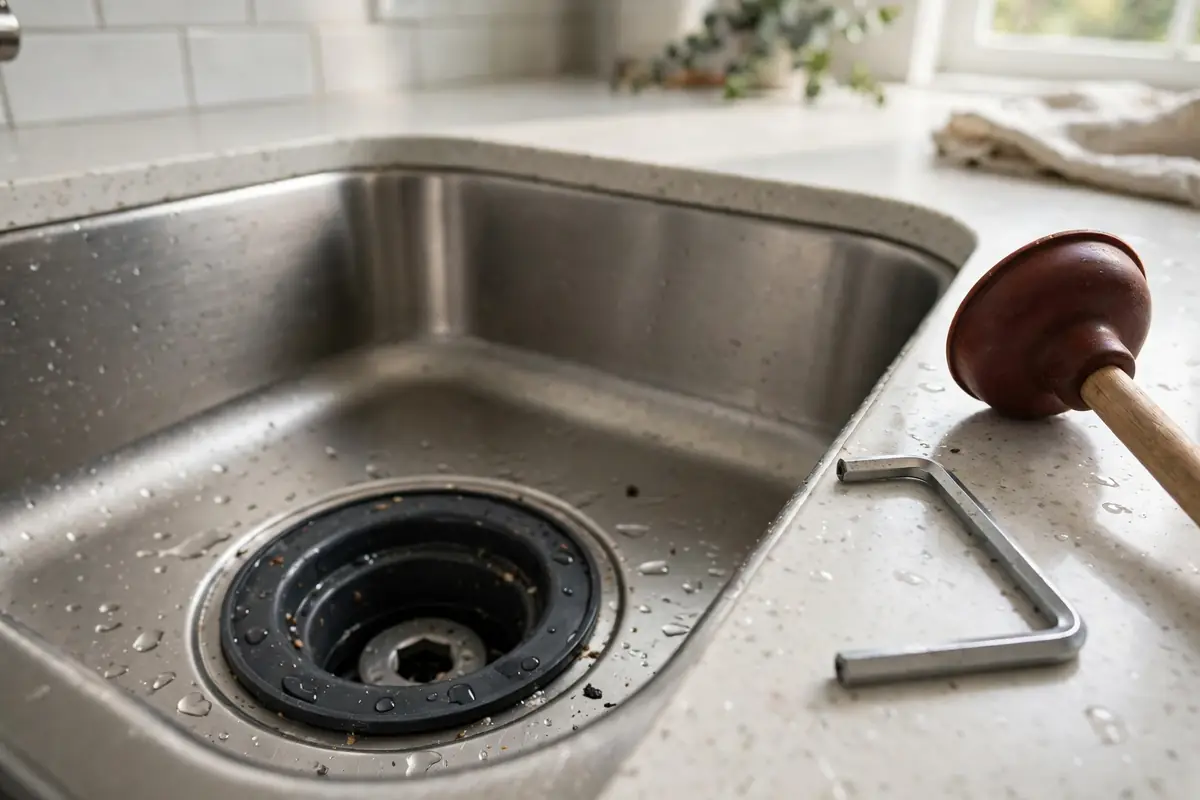
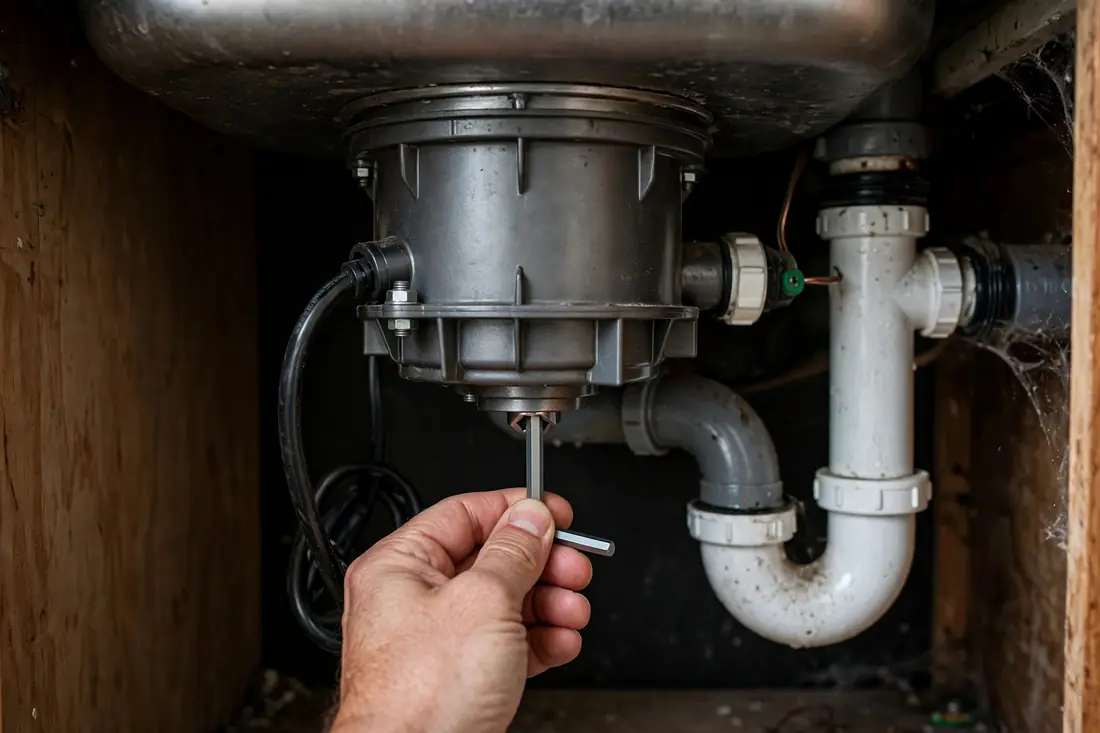
Most disposals come with a small hex key, and if yours is missing, a standard 1/4-inch Allen wrench from any hardware store fits. There is a hex-shaped socket in the center of the bottom of the unit. Push the wrench in and work it back and forth, a quarter turn each way, until the flywheel moves freely. You will feel the jam break loose, sometimes with a small crunch as the stuck food or object gives way. Keep working it until the flywheel spins smoothly in both directions. This is the fix that solves most jams, and it is far safer than reaching in from the top. If the flywheel will not move at all, even with firm pressure, the jam may be a piece of metal or glass, and you will need to fish it out from above.
- 1/4-inch hex key or Allen wrench
- Flashlight
- Long-handled tongs
- Bucket and old towels
Fish Out the Jam With Tongs, Never Your Hand
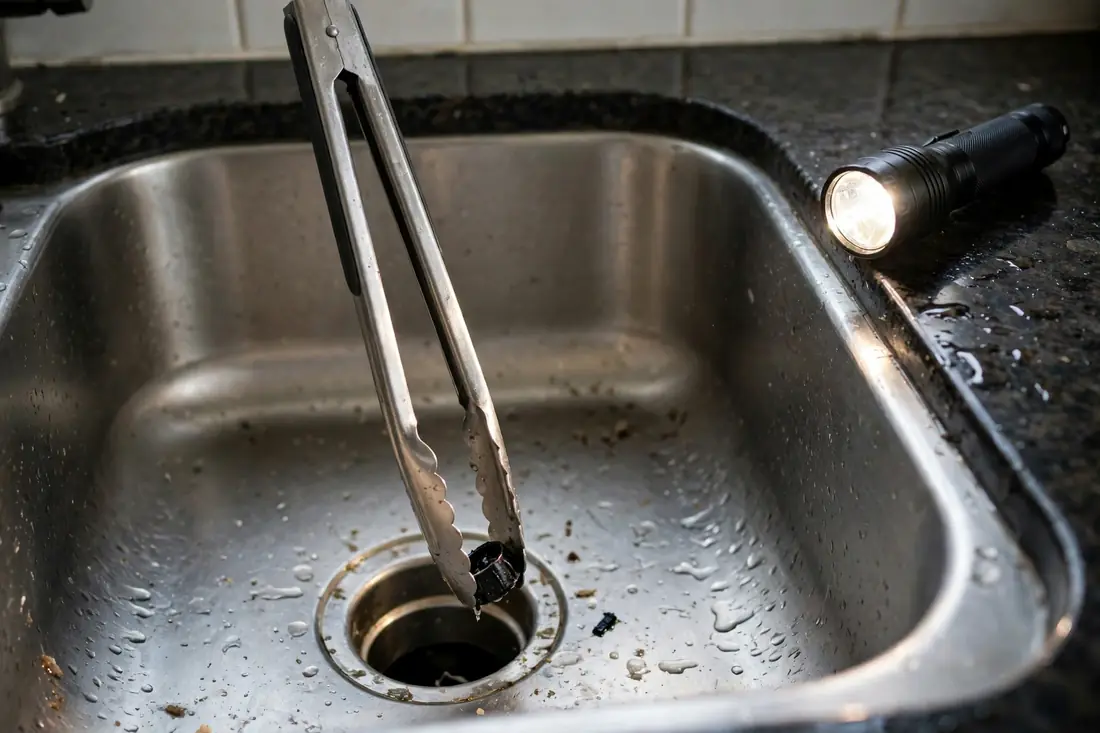
Once the flywheel moves, look down the drain with a flashlight and pull out whatever is stuck with long-handled tongs or needle-nose pliers. The usual suspects are bones, fruit pits, bottle caps, twist ties, and silverware that slipped in by accident. Work slowly and keep your fingers out of the drain entirely, even with the power off. The blades inside are sharp enough to cut you, and a disposal that looks dead can still hold a charge in its capacitor for a while. If you cannot see the object or cannot reach it with tongs, try the hex key again from below to break it loose, then flush the pieces out with cold water. Never pour chemicals down the drain to dissolve a jam.
Plunge the Sink to Clear the Drain
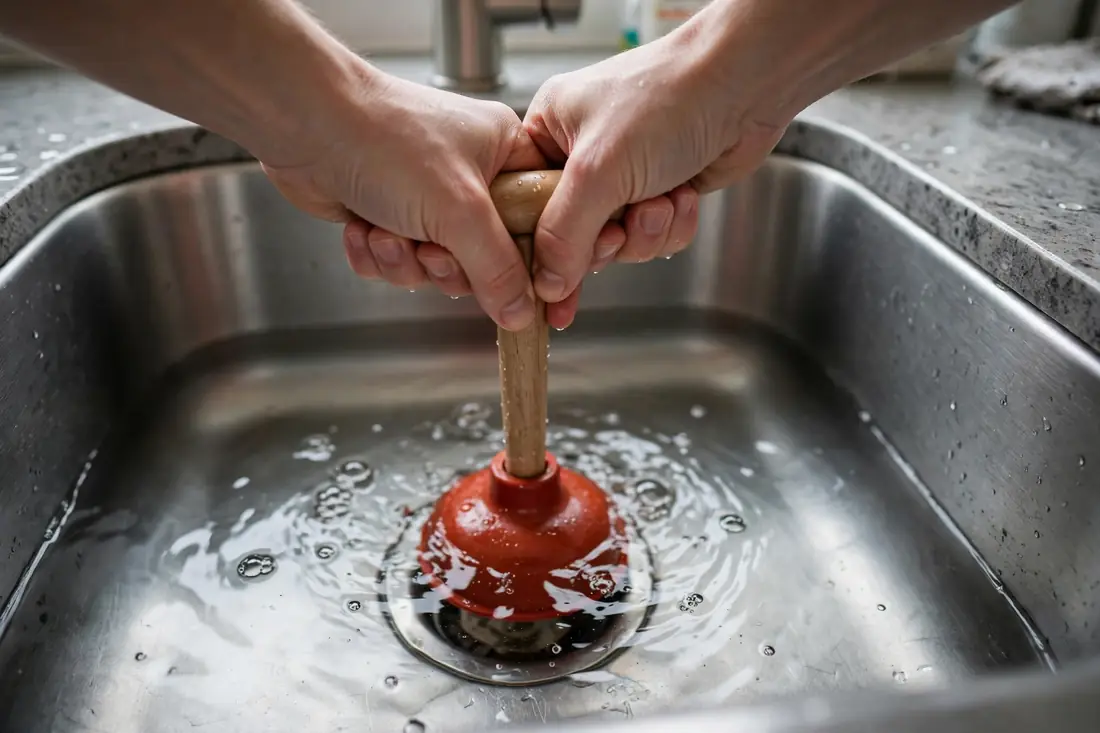
If the disposal spins freely but the sink still drains slowly, the clog is past the disposal in the drain pipe. Put the stopper in the other basin if you have a double sink, or block the overflow, then place a sink plunger over the drain and add enough water to cover the plunger cup. Plunge with short, firm strokes for twenty seconds, then lift the plunger and see if the water drains. Repeat a few times. The pressure pushes the clog through the trap and down the pipe. Use a sink plunger with a flat cup, not a toilet plunger. If plunging does not help after several tries, the clog is deeper in the pipe, and a drain snake or a plumber is the next step.
Flush It Clean With Ice and Salt
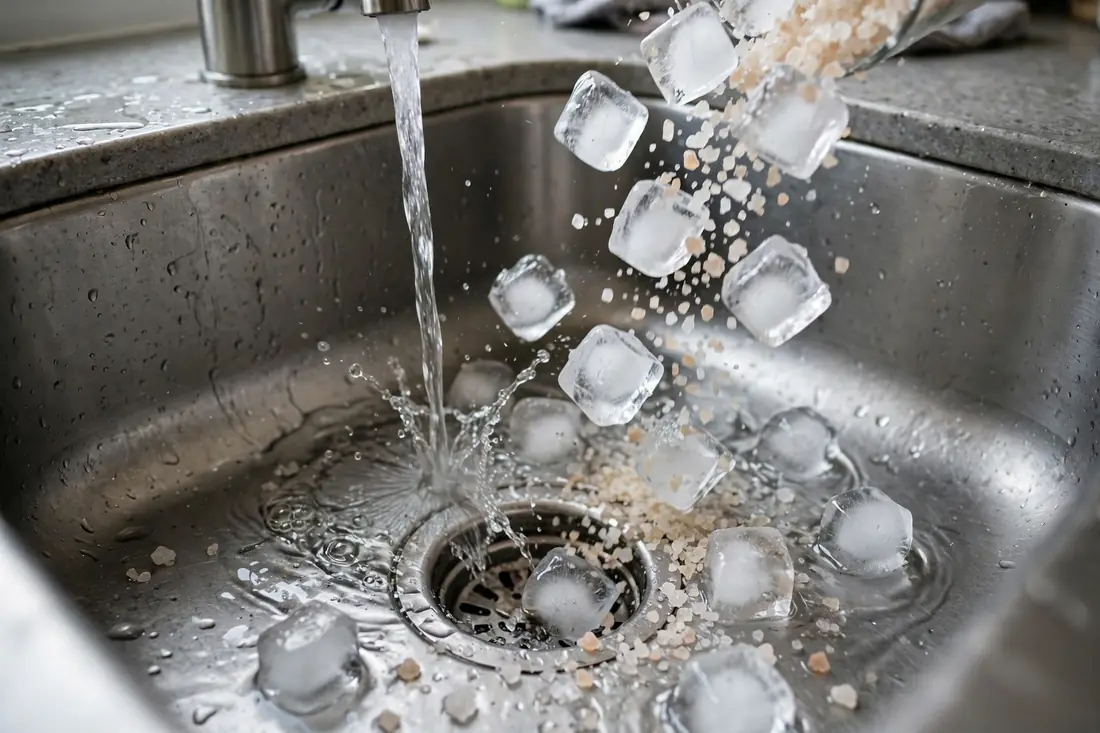
Once the disposal runs again, clean the grind chamber with a tray of ice cubes and a handful of rock salt. Turn on the cold water, flip the switch, and feed the ice in a few cubes at a time. The ice knocks loose the greasy film on the grind ring, and the salt scours it. Let the cold water run for thirty seconds after the ice is gone. This is also a good monthly habit: a tray of ice keeps the disposal smelling fresh and the blades clean. Do not use hot water for this. Cold water keeps grease solid so the disposal can chop it up and flush it away, while hot water lets grease coat the pipes and harden further down the line.
Skip the Chemical Drain Cleaners
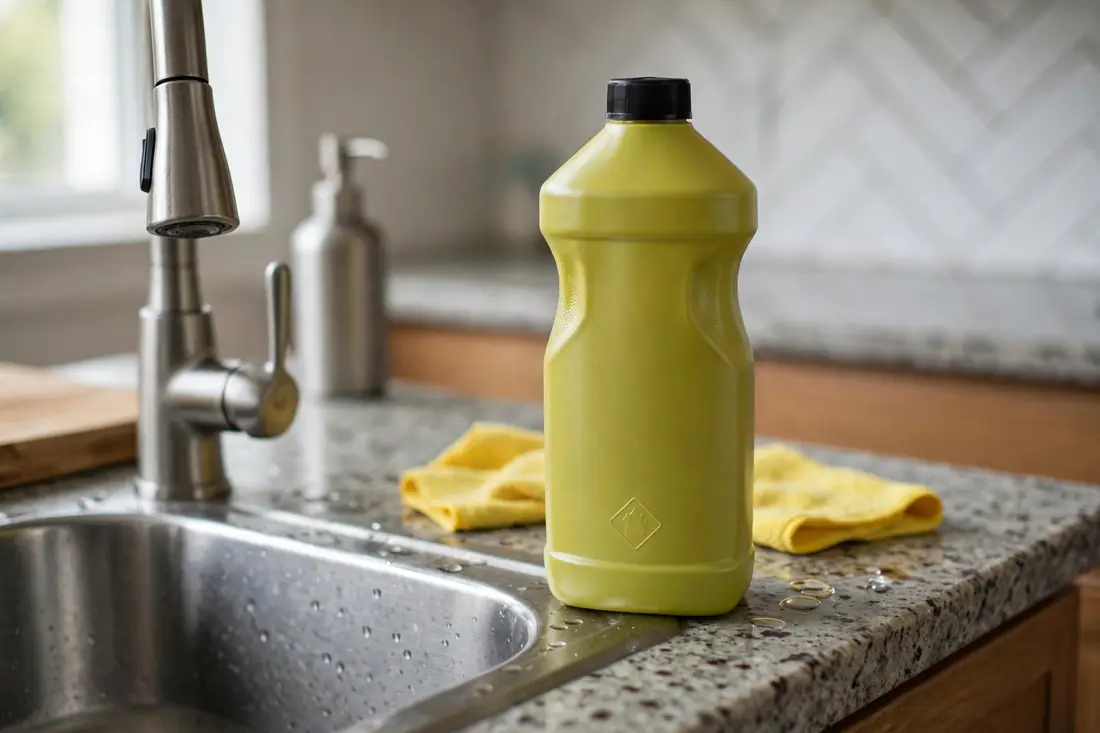
It is tempting to pour a bottle of drain cleaner down a jammed disposal, but it is one of the worst things you can do. Chemical cleaners are made for slow drains, not for a disposal full of standing water and sharp metal. They can eat away at the rubber seals and the plastic parts inside the unit, and they can splash back up into the sink when the disposal finally starts spinning. They also do nothing for a physical jam like a bone or a bottle cap. If the cleaner sits in the disposal and a plumber later has to open it up, the chemicals become a safety hazard for them too. Stick to the mechanical fixes in this guide: hex key, tongs, plunger, and cold water.
When It Hums but Won't Spin, or Says Nothing at All
A disposal that hums is jammed, and the hex key is the fix. A disposal that makes no sound at all needs a different checklist. First, check the reset button, then the breaker, then the outlet: plug a phone charger or a lamp into the same outlet to see if it has power. If the outlet is dead, the problem is the circuit, not the disposal. If the outlet has power, the reset button stays in, and the switch does nothing, the motor or the switch itself has likely failed. Disposals usually last 8 to 12 years. If yours is past that age and the motor smells burned or trips the reset every time you use it, replacement costs less than a repair visit.
Keep It From Clogging Again
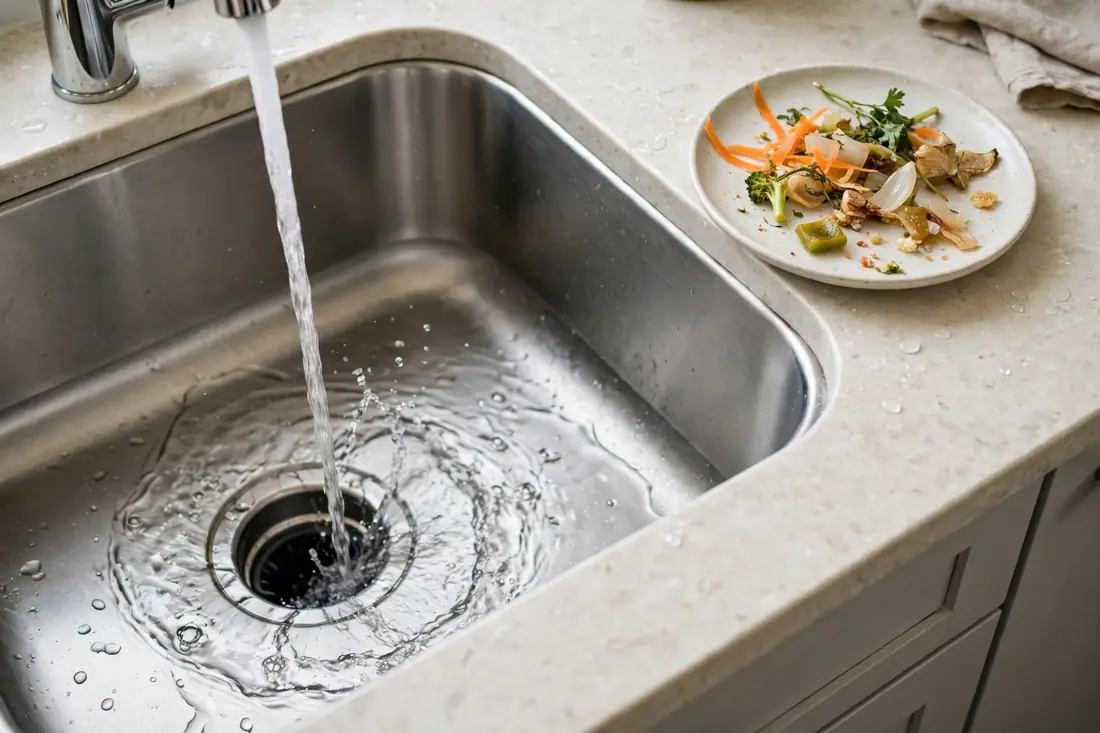
Most clogs come from a few habits that are easy to change. Always run cold water before, during, and after you use the disposal, and keep the water running for twenty seconds after the grinding stops so the waste flushes fully into the pipe. Feed food in small amounts instead of dumping a whole plate at once. Never put grease, oil, coffee grounds, pasta, rice, potato peels, or fibrous foods like celery and onion skins down the disposal. They expand, tangle, or coat the pipes. Run the disposal every few days even when you do not need it, so the parts stay free and the seals do not dry out. A disposal that gets used a little, often, lasts far longer than one that sits unused for weeks.
- Cold water on before you flip the switch
- Small amounts of food at a time
- No grease, pasta, rice, or potato peels
- Run it every few days, even empty
- Ice and salt flush once a month
✅ Guide4U Checklist
- Turn the power off first
- Press the red reset button
- Free the flywheel with a hex key
- Fish out the jam with tongs
- Plunge if the sink drains slowly
- Flush with ice and salt
- Never use chemical drain cleaners
Key Takeaways
- A humming disposal is jammed, not broken
- The hex key fixes most jams in minutes
- Chemical cleaners damage seals and splash back
Frequently Asked Questions
Can I use Drano or another chemical drain cleaner in a garbage disposal?
No. Chemical drain cleaners can damage the rubber seals and plastic parts inside a disposal, and they can splash back when the unit starts spinning. They also cannot dissolve a physical jam like a bone or a bottle cap. Use the hex key, tongs, and plunger instead. If you already poured cleaner in, do not run the disposal until a plumber can clear it safely.
Why does my garbage disposal hum but not grind?
The flywheel is jammed. Something is wedged between the flywheel and the grind ring, usually a bone, a bottle cap, or a clump of fibrous food. Turn the power off, press the reset button, and work the flywheel back and forth with a hex key from the socket on the bottom until it spins freely, then fish out the object with tongs.
How do I know if my garbage disposal is broken or just jammed?
If it hums, it is jammed, and the hex key usually fixes it. If it is silent, check the reset button, the breaker, and the outlet first. If all of those are fine and the switch still does nothing, the motor has likely failed. A burned smell, a reset button that trips every time, or an age past 10 years all point to replacement.
Is it safe to put my hand in a garbage disposal?
No, never. Even with the power off, the blades are sharp, and a disposal can hold a charge in its capacitor for a while after it is unplugged. Always use long-handled tongs or needle-nose pliers to remove anything from the drain. If you cannot reach the jam with tongs, work the flywheel from below with a hex key instead.
What did you think of this article? Share your opinion in the comments below — we would love to hear from you.