
How to Clean Gas Stove Top Burners
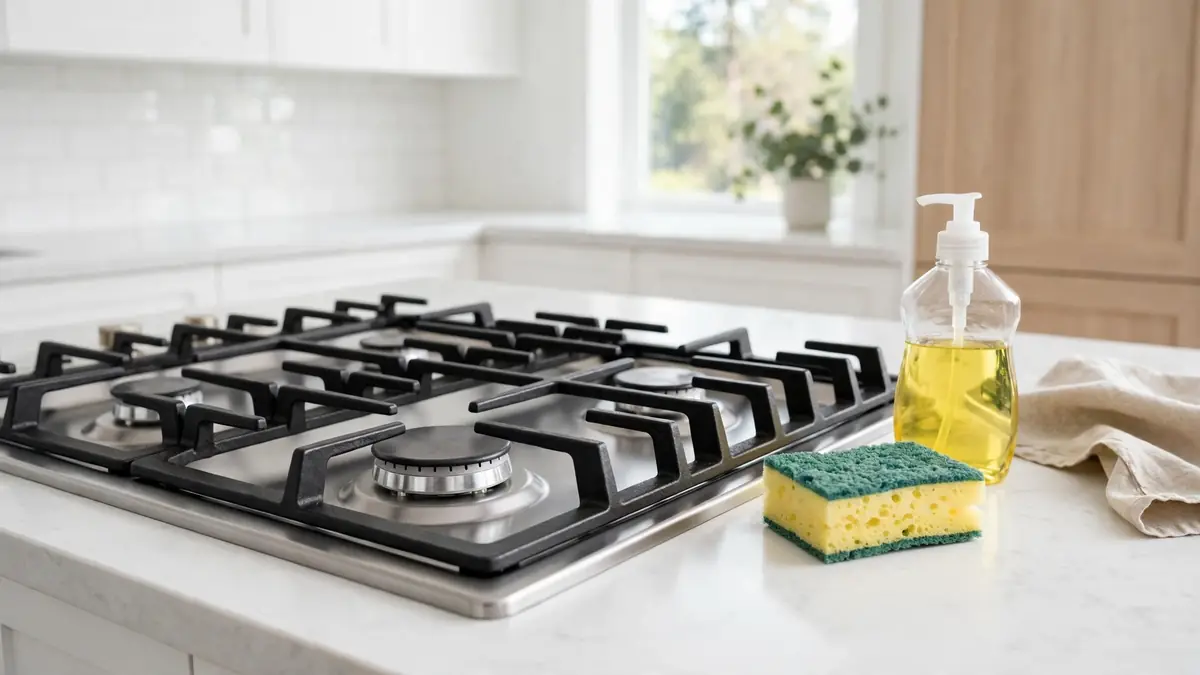
Quick Answer
Let the stove cool, take off the grates, caps, and burner heads, and soak the grates in hot soapy water. Clear blocked burner ports with a pin, scrub the caps with baking soda paste, and dry every part fully before refitting. A healthy flame is steady and blue; a yellow flame after cleaning means calling a technician.
Let Everything Cool First
This sounds obvious, and it is the step most people skip. A gas burner stays hot long after the flame goes out, and the cast iron grates hold heat even longer. Wait at least thirty minutes after cooking, and touch a grate with the back of your hand before you lift it. While you wait, gather what you need: dish soap, baking soda, white vinegar, a sink or basin, a soft brush or old toothbrush, a straight pin or needle, and a few clean towels. Turn the burner knobs to off, and if your stove has a gas shut-off valve and you are going to be working around the burner heads, turn that off too. Cool metal is easier to handle, and it keeps you from burning your hands on a grate you thought was ready.
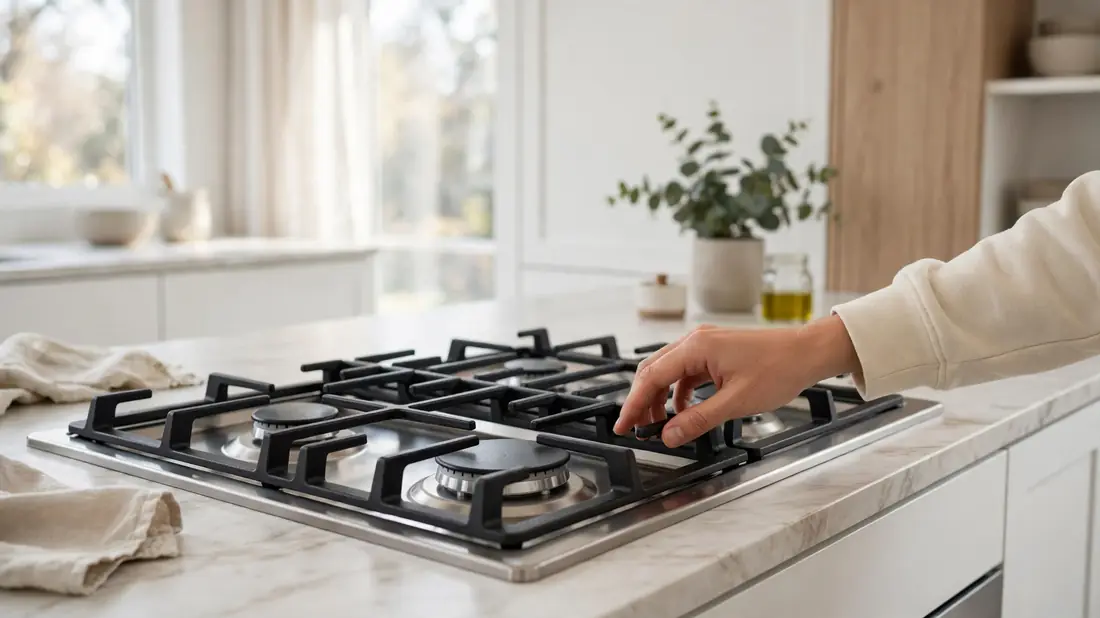
Take the Grates, Caps, and Burner Heads Off
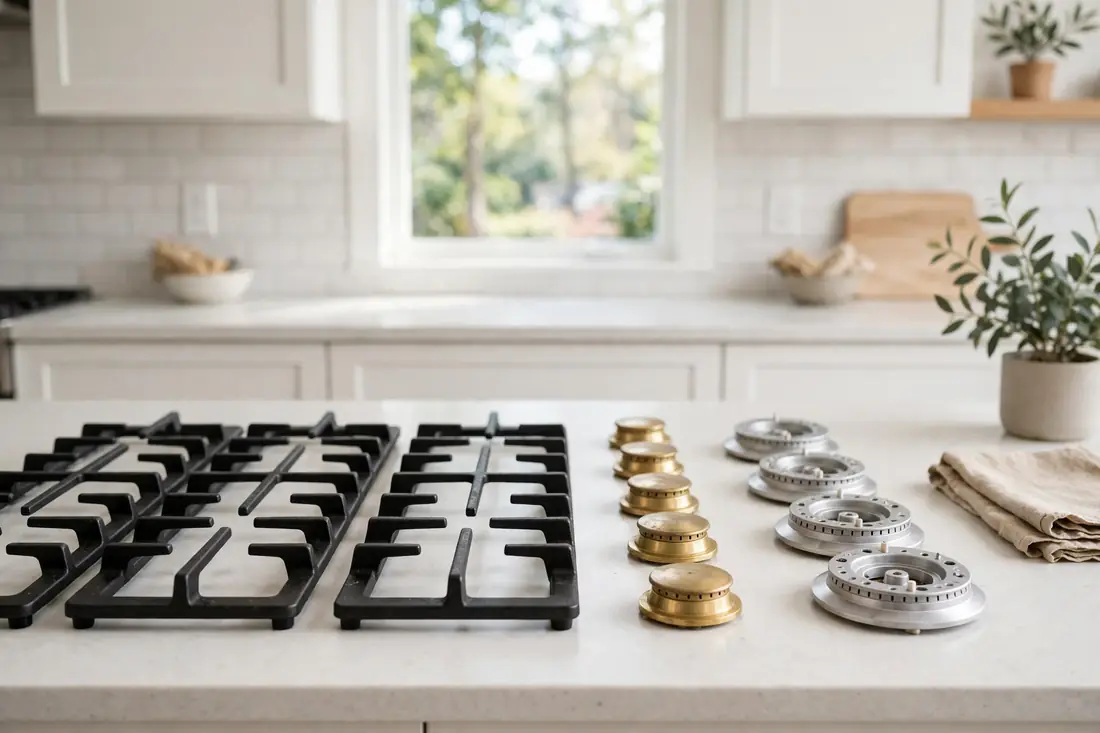
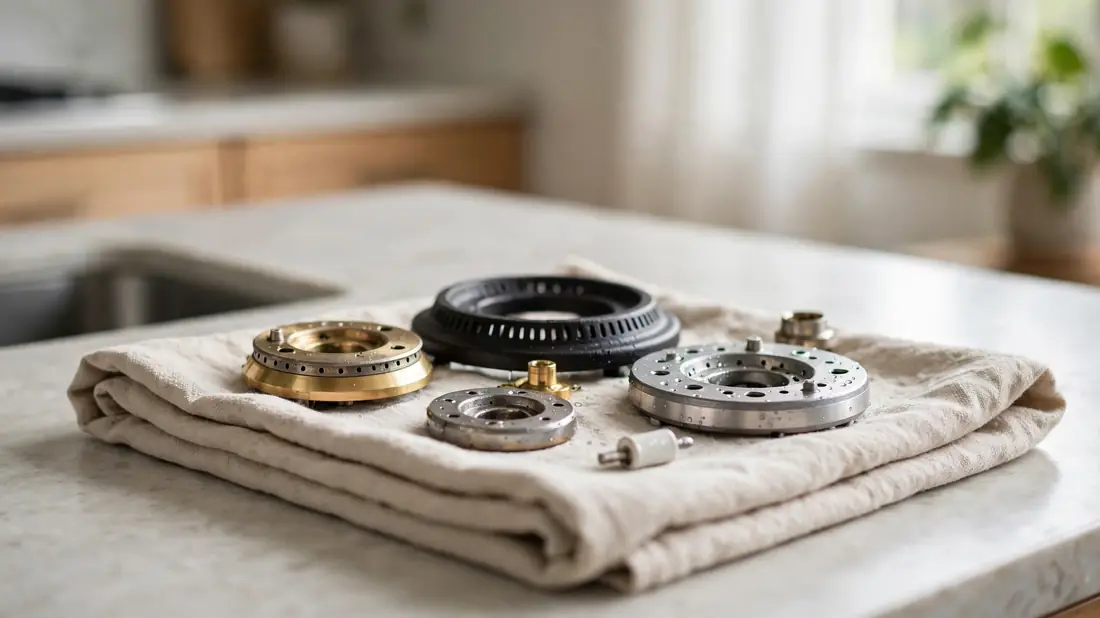
Start by lifting off the grates. Most sit loose on the stove top and lift straight up, though some slide toward you first. Set them in the sink. Next, lift off the burner caps: these are the flat metal discs on top of each burner, and they usually lift off with no tools. Note which cap goes where, since caps are matched to their burner and a wrong cap sits unevenly. Under the cap is the burner head, the ring with the small holes around its edge. Many lift off too, though some are held by a screw. If yours has a screw, undo it and keep it somewhere safe. Take a quick photo of the layout before you start, so putting it all back is simple. Never force a part that will not move; check your manual instead.
Soak the Grates in Hot Soapy Water
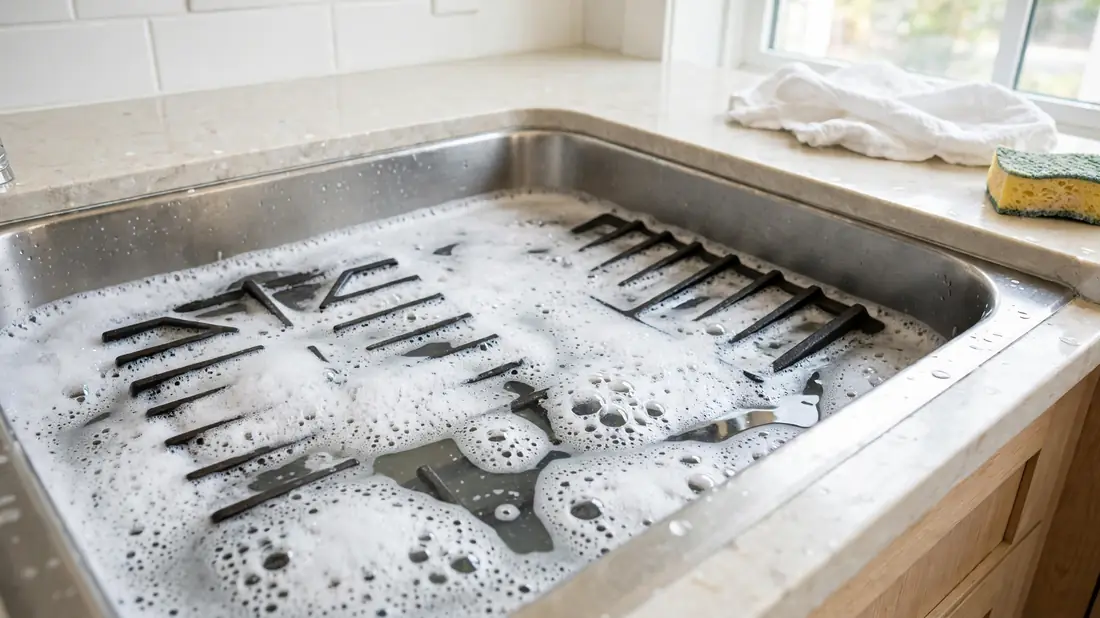
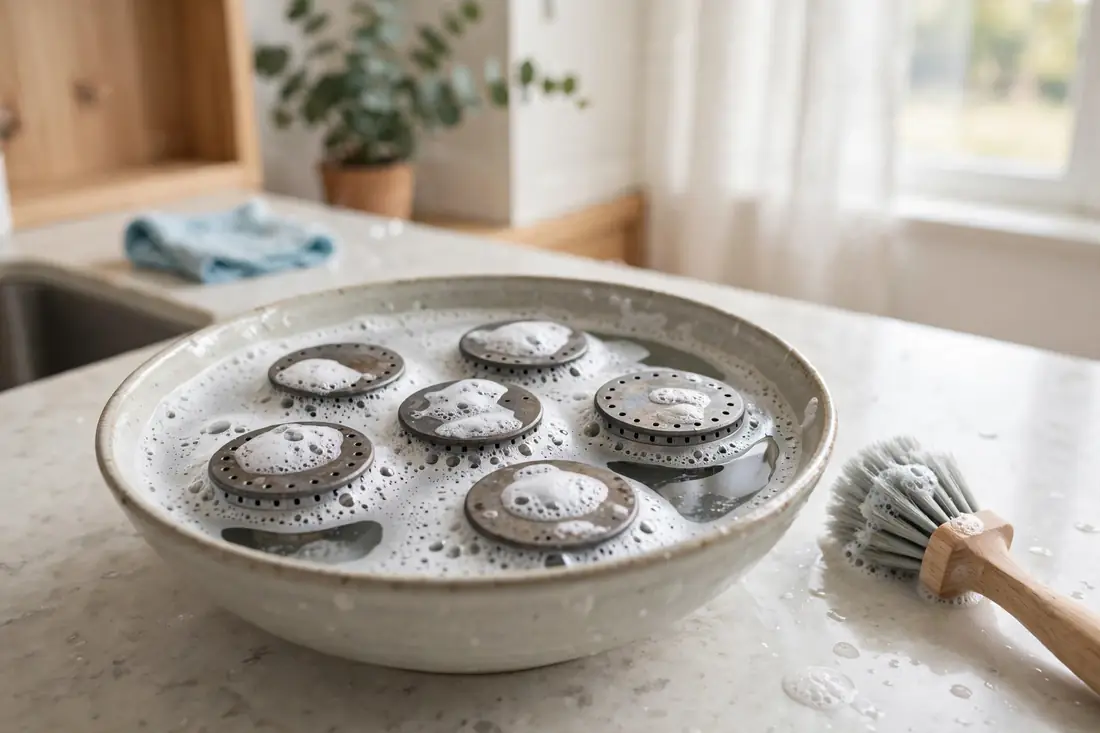
Grates collect the worst of the mess, so give them the longest soak. Fill the sink or a large basin with the hottest tap water you can get and add a generous squirt of dish soap. Slide the grates in and leave them for at least twenty minutes, or up to an hour if the grease is thick and black. The hot water and soap loosen the baked-on fat so you can scrub it off instead of chipping at it. While they soak, do not use the sink for anything else, and keep the water hot by topping it up once if it cools. If a grate does not fit in your sink, use the bathtub with a towel underneath to protect the finish, or a large plastic storage tub on the kitchen floor.
Degrease the Burner Caps
Burner caps are smaller, so they clean faster, but they hold just as much grease. Drop them into a bowl of hot soapy water and let them soak for fifteen minutes. Then scrub each one with a soft brush or an old toothbrush, paying attention to the underside where grease pools and hardens. If a cap is still sticky after scrubbing, make a paste of baking soda and a little water, spread it on, wait ten minutes, and scrub again. The paste lifts grease without scratching the metal. Rinse the caps under hot water and set them on a towel to dry. Never use steel wool or an abrasive pad on caps: the scratches catch grease and make the next cleaning harder, and on some finishes they strip the coating right off.
Clear the Burner Ports With a Pin
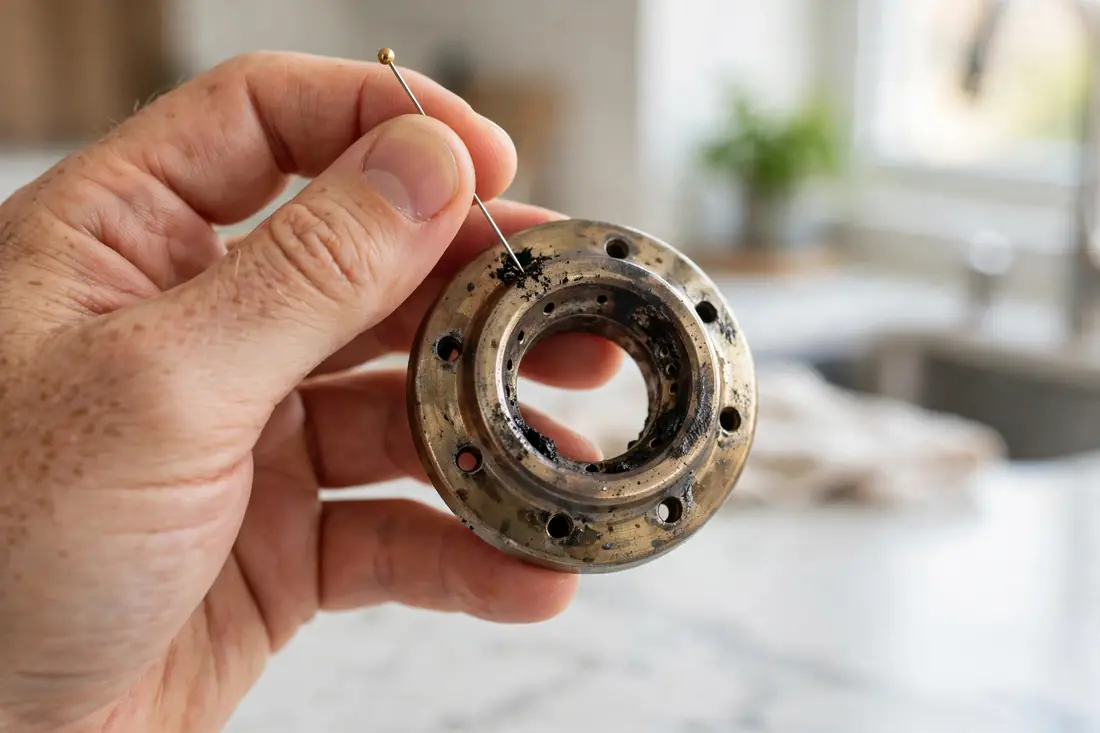
The small holes around the burner head are the ports, and they are the reason a flame goes uneven or a burner will not light. Hold the burner head up to the light and look through the ports. If one is blocked with grease or a crumb, push a straight pin or a needle gently into it and work the debris out, then tap the head upside down on a towel. A wooden toothpick is not a good substitute: it can snap off inside a port and leave you worse off than before. Never use a knife or anything sharp enough to widen the hole, since the port size sets the flame. Once the ports are clear, rinse the head under hot water, brush it gently, and dry it fully. A damp burner head is the most common reason a burner clicks and will not light after cleaning.
Wipe Down the Stove Top Surface
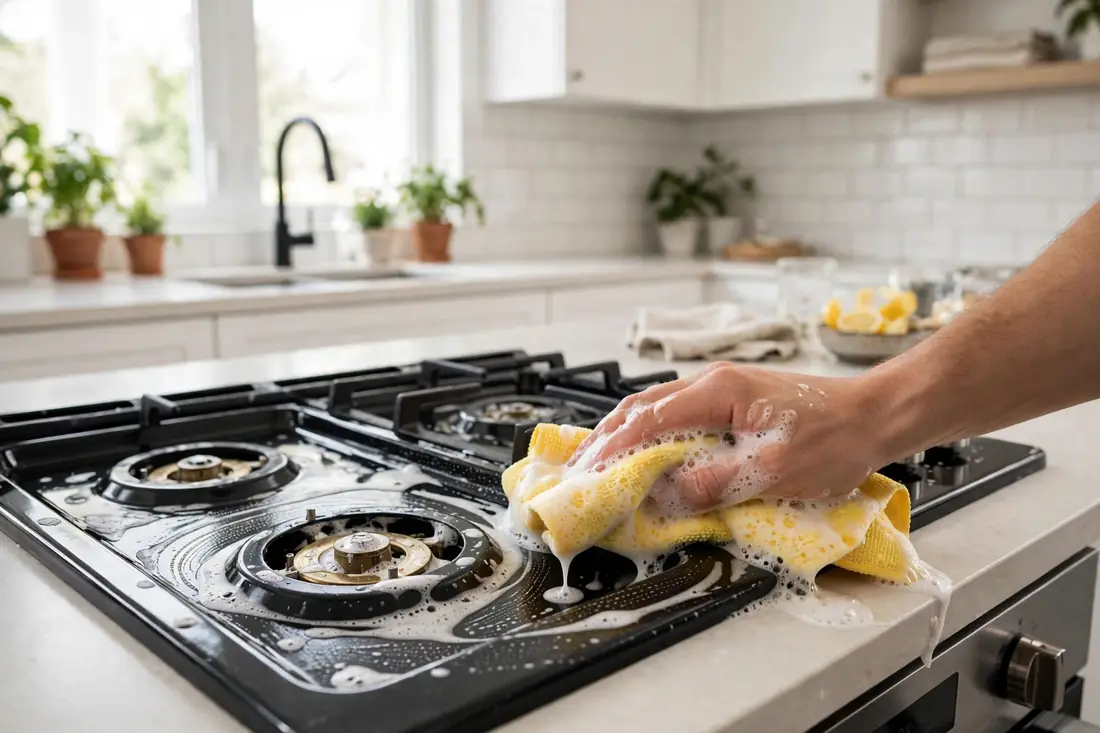
With the parts off, the stove top itself is easy to reach. Wipe up any crumbs and loose grease with a dry paper towel first, so you are not pushing grit around. Then spray the surface with warm soapy water, or wipe it with a cloth wrung out in hot soapy water, and let it sit for a few minutes to soften the film. Wipe in circles, rinse the cloth often, and finish with a clean damp cloth to pick up the soap. For a glass or enamel top, a microfiber cloth leaves the fewest streaks. Keep water out of the burner openings while you wipe, and do not flood the area around the knobs. If your stove top is stainless steel, wipe in the direction of the grain so you do not leave visible scratches.
Deal With Burned-On Spots the Gentle Way
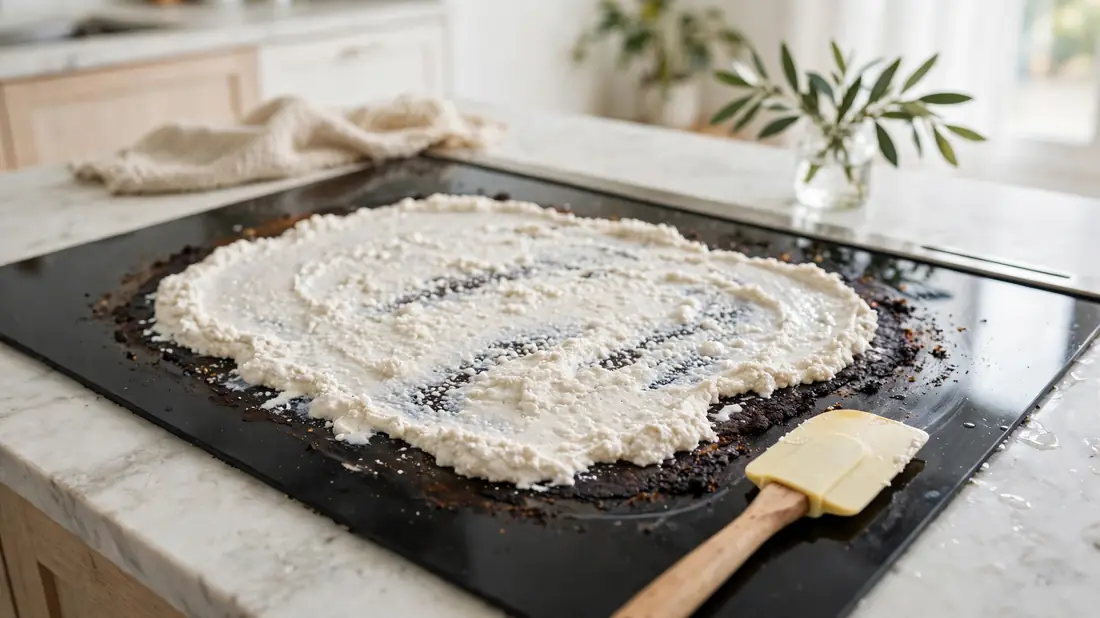
Some spots will not come off with soap alone, and this is where baking soda earns its keep. Mix baking soda with just enough water to make a thick paste, spread it over the burned-on area, and leave it for twenty to thirty minutes. The paste softens the carbonized grease so a soft cloth or a plastic scraper can lift it without scratching the finish. For a really stubborn patch, lay a hot damp towel over the paste for ten minutes first; the steam helps it along. Scrub gently and rinse, then repeat if you need to. Do not reach for oven cleaner or a scouring pad: oven cleaner is too harsh for burner parts and the stove top, and scouring pads scratch enamel, glass, and stainless steel alike.
Dry Everything Before You Put It Back
This step is short, and skipping it causes the most trouble. Water left in a burner port or under a cap makes the burner sputter, click, or refuse to light, and it can rust cast iron grates over time. Dry each part with a clean towel, then leave everything out on the counter for ten minutes to air dry fully. Shake the burner heads gently to get water out of the ports, and run a dry cloth over the underside of each cap. If you are in a hurry, you can set the oven to its lowest temperature and warm the grates in it for five minutes, but let them cool before you handle them. Only when every part is bone dry should you put the stove back together, caps sitting flat and level on their burners.
Test the Flame and Fix an Uneven Burner
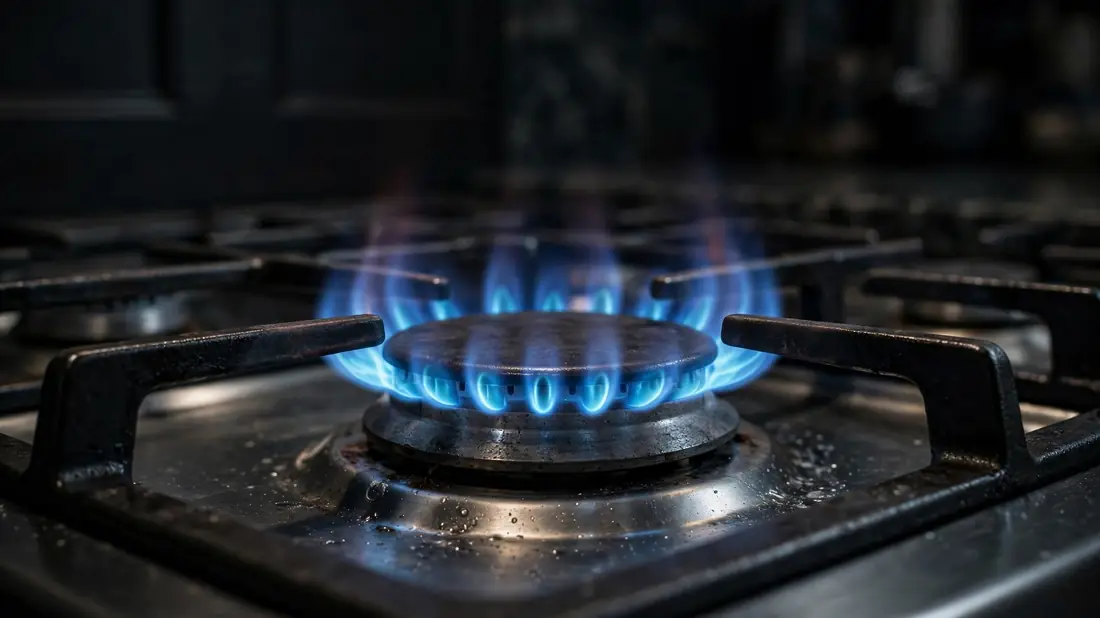
Put the burner heads and caps back in place, making sure each cap sits flat with no wobble, then turn the gas back on and light each burner one at a time. A healthy gas flame is steady and blue, with a small lighter-blue cone at each port. If one burner has a weak or lopsided flame, turn it off, let it cool, and check that its cap is seated properly and its ports are clear; a cap that is even slightly crooked starves half the ports. If the flame is yellow or orange, the burner needs more air or a deeper clean, and if it stays yellow after cleaning, turn the gas off and call a technician. Never adjust the gas or air shutter yourself unless your manual tells you how.
A Simple Weekly Routine That Keeps It Clean
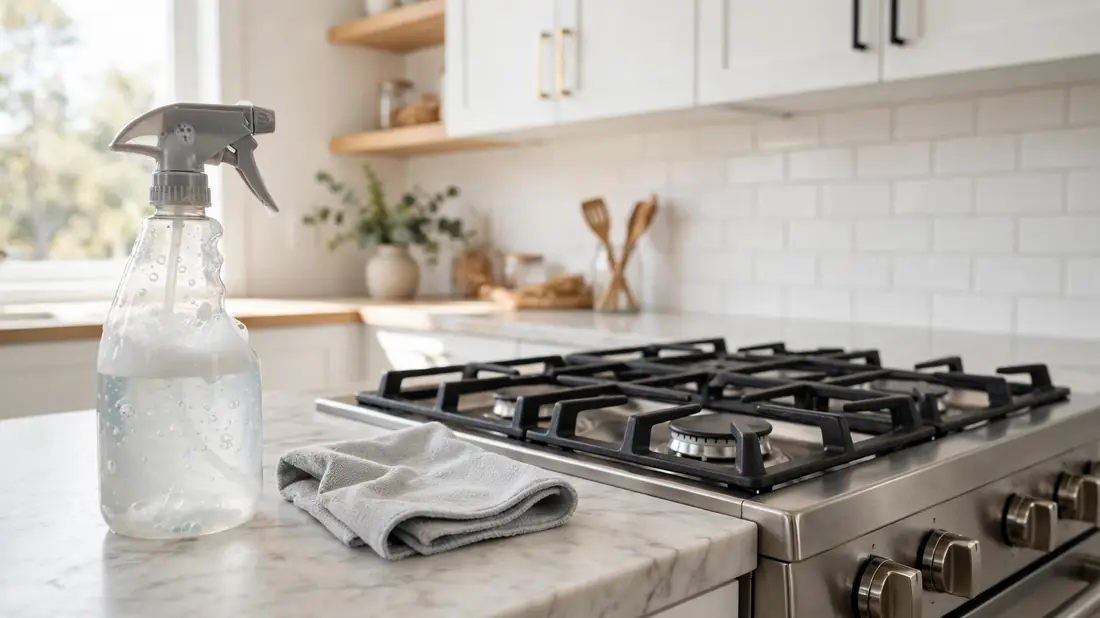
A full deep clean takes about half an hour, but a weekly wipe takes two minutes and keeps the deep clean easy. After the stove cools from dinner, lift the grates and wipe the stove top with a hot soapy cloth, then wipe the caps quickly while they are still warm. Once a week, pull the caps off and give them a proper wash in the sink. Catch spills when they happen: a splash of sauce wiped up right away is nothing, but the same splash baked on over a week of cooking is a project. Keep a small spray bottle of dish soap and water next to the stove so the wipe-down is always within reach. Do that, and the monthly deep clean becomes a quick soak and a rinse instead of a battle.
✅ Guide4U Checklist
- Let the stove cool fully first
- Remove grates, caps, and burner heads
- Soak grates in hot soapy water
- Clear ports with a pin, not a toothpick
- Dry every part before refitting
- Check for a steady blue flame
- Wipe the stove top weekly
Key Takeaways
- Soak first, then scrub: hot water does most of the work.
- A pin clears ports; a toothpick can snap off inside.
- Dry parts fully, or the burner will sputter and refuse to light.
Frequently Asked Questions
Can I put gas stove grates in the dishwasher?
Most manufacturers say no: dishwasher detergent is harsh, and the grates can chip the coating on the racks or come out rusty. Hand washing in hot soapy water is safer and usually faster anyway. Check your manual, since a few heavy cast iron grates are dishwasher-safe, but when in doubt, wash by hand.
Why is my burner flame yellow instead of blue?
A yellow flame usually means the burner is not getting enough air, or a port is partly blocked. Clean the ports and the cap, dry everything fully, and check that the cap sits flat. If the flame stays yellow after a good cleaning, turn the gas off and call a technician, since it can mean a gas or air-mix problem.
Can I use oven cleaner on gas burners?
No. Oven cleaner is made for the inside of an oven, and it is far too harsh for burner parts: it can corrode the metal, leave fumes that burn off the next time you cook, and damage the stove top finish. Stick with dish soap, baking soda, and vinegar.
How often should I clean gas stove burners?
Wipe the stove top after every cooking session and deep clean the grates and caps once a month, or sooner if you cook daily. A quick wipe takes a minute and stops grease from baking on, which is what makes the monthly clean hard.
What did you think of this article? Share your opinion in the comments below — we would love to hear from you.