
How to Make Cold Brew Coffee at Home
Quick Answer
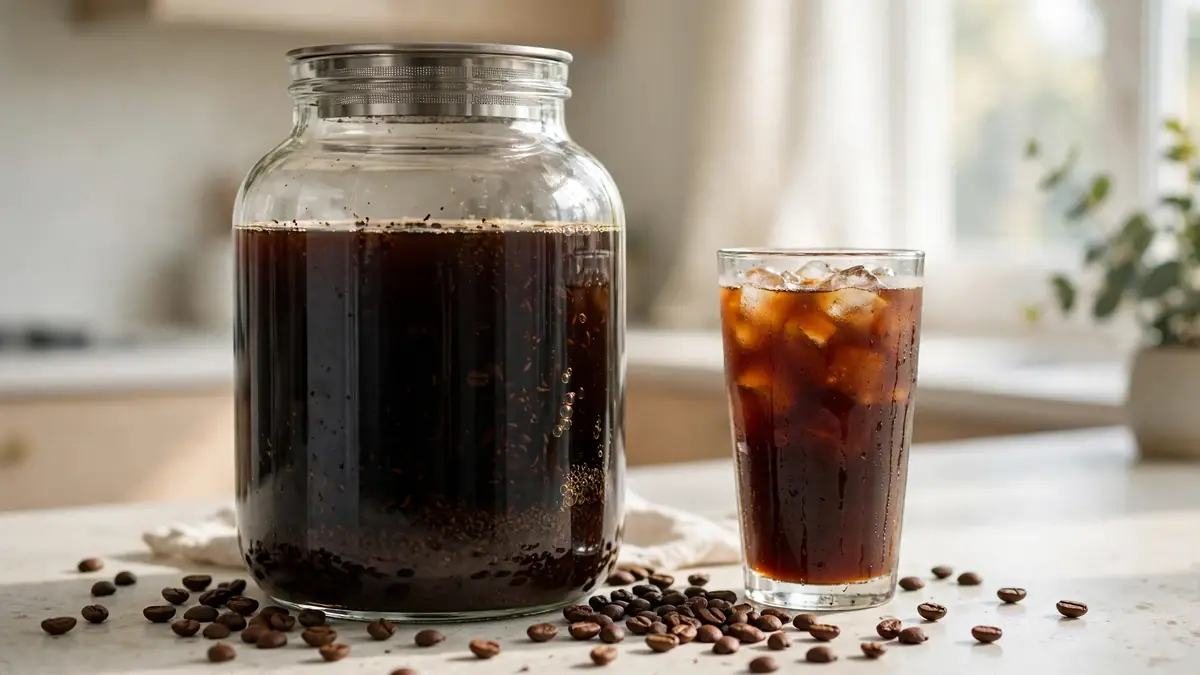
Mix one part coarse-ground coffee with five parts cold water in a jar, stir, cover, and steep 12 to 24 hours at room temperature. Strain twice, first through a fine mesh strainer, then through a paper filter. Store the concentrate in the fridge for up to two weeks and dilute it half and half with water or milk to serve.
What Cold Brew Actually Is
Cold brew is not iced coffee. Iced coffee is hot coffee that has been cooled down, and it keeps the sharp, bitter edge that hot brewing pulls out of the beans. Cold brew is made by steeping coarse coffee grounds in cold or room-temperature water for 12 to 24 hours, and the slow, gentle soak pulls out the smooth, sweet flavors while leaving much of the bitter compounds behind. The result is a strong concentrate that tastes naturally sweet, with low acidity and a chocolatey finish. You dilute it with water or milk when you serve it. It takes patience, but the work itself is about five minutes, and one batch makes enough coffee for a whole week.
What You Need to Start
You do not need a special cold brew maker to start. A large mason jar or a pitcher with a lid works fine, and a kitchen scale helps but is not required. What matters is the coffee and the grind: use whole beans if you can and grind them coarse, about the size of raw sugar, since fine grounds over-extract and make the brew muddy and bitter. You will also need a way to strain it: a fine mesh strainer lined with cheesecloth or a paper coffee filter does the job. A second jar or bottle holds the finished concentrate in the fridge. That is the whole kit. If you fall in love with the routine, a dedicated cold brew pitcher with a built-in filter makes the straining step easier, but it is not needed for your first batch.
- A large jar or pitcher with a lid
- Coarse-ground coffee beans
- Cold filtered water
- A fine strainer and cheesecloth or paper filter
- A second jar or bottle for storage
Picking Beans and the Right Grind
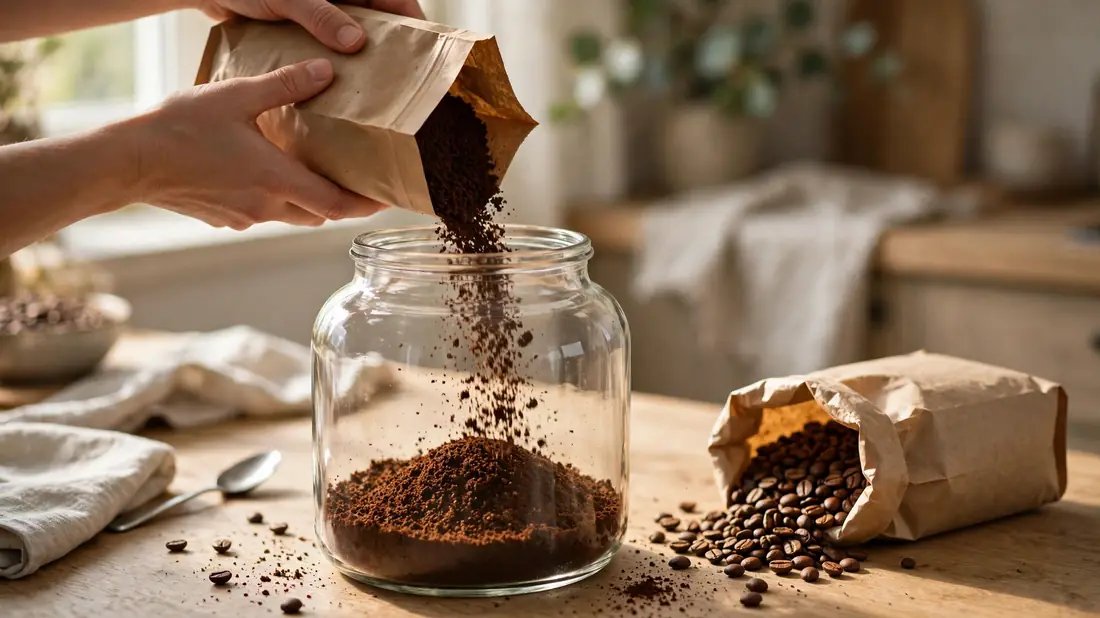
Cold brew is forgiving about beans, which is part of its charm. A medium or dark roast works best for most people, since the slow steep brings out chocolate and caramel notes that suit a cold drink. Light roasts can taste bright and fruity in cold brew, but they need a longer steep and can turn sour if you cut it short. Buy whole beans and grind them fresh if you can; pre-ground coffee works too, as long as it is coarse. The grind matters more than the bean. Too fine, and the coffee over-extracts and tastes harsh, and the grounds clog your filter. Too coarse, and the brew comes out weak and watery. Aim for rough, even pieces about the size of peppercorns, and keep the grind consistent.
The Ratio That Works Every Time
The classic cold brew ratio is one part coffee to five parts water by weight, which makes a strong concentrate you dilute later. In kitchen terms, that is about one cup of coarse grounds, roughly 80 grams, to five cups, about 40 ounces, of cold filtered water. If you do not own a scale, a measuring cup works fine: the ratio is forgiving, and you can adjust your next batch to taste. Want it stronger? Use a little more coffee or steep a little longer. Want it gentler? Add more water when you serve it. The concentrate approach is what makes cold brew so flexible, since one batch can become a strong morning cup or a light afternoon glass just by changing how much water you add.
Brewing It, Step by Step
Start by pouring your coarse grounds into the jar, then add the cold water slowly, pouring in a circle so every ground gets wet. Give it a gentle stir with a long spoon, just enough to break up any dry clumps floating on top. Put the lid on and leave the jar on the counter at room temperature, out of direct sun. Then wait. There is nothing else to do, and that is the beauty of it. Do not shake it, do not open it every hour to check, and do not put it in the fridge yet; room temperature steeps faster and more evenly. Set a timer for 16 hours as a starting point, and adjust from there based on how your first batch tastes.
- Add coarse grounds to the jar
- Pour in cold filtered water
- Stir gently until all grounds are wet
- Cover and leave at room temperature
- Steep for 12 to 24 hours
How Long to Steep
Time is the main dial you have for strength. Twelve hours gives a lighter, brighter cup, while 24 hours gives a deep, heavy one. Most people land between 16 and 18 hours, which is why it is the best place to start. If your first batch tastes weak, steep two hours longer next time. If it tastes bitter or woody, cut two hours off. The roast matters too: dark roasts extract faster, so they need less time, while light roasts need the full 24 hours to open up. Keep a note of your time and ratio on the jar, so each batch gets a little closer to your taste. Once you find your sweet spot, write it down and repeat it exactly.
Straining Without the Mess
Straining is the one step people dread, but it is simple if you do it in two passes. First, pour the brew slowly through a fine mesh strainer into a second jar, which catches the big grounds. Then strain it again through a paper coffee filter or a double layer of cheesecloth, which catches the fine silt. Do not squeeze or press the grounds, since that pushes bitter oils and sludge into the cup. The second strain takes a few minutes because the paper clogs as it works; if it stalls, swap in a fresh filter and keep going. The result should look clear and dark, like cola, with no grit at the bottom. A clean strain is the difference between a smooth cup and a muddy one.

How to Serve It
Cold brew concentrate is strong, so start with equal parts concentrate and cold water over a full glass of ice, then adjust to taste. Milk, oat milk, or cream all work well, and a splash of vanilla or a pinch of salt can round out the flavor. If you like it sweet, stir in simple syrup rather than granulated sugar, since sugar does not dissolve well in cold liquid. For a fancier glass, try it with tonic water and an orange slice, which turns the coffee into something like a spritz. The concentrate is also good hot: just add hot water instead of cold, which gives you a smooth, low-acid hot coffee without brewing a fresh pot. One batch, many drinks.
Storing Cold Brew the Right Way
Once strained, pour the concentrate into a clean jar or bottle with a tight lid and keep it in the fridge. Undiluted concentrate stays fresh for about two weeks, though it tastes best in the first week. Diluted cold brew, mixed with water or milk, should be drunk within two or three days, since milk spoils fast and watered-down coffee loses its edge. Label the jar with the date you made it, and give it a sniff before you pour; if it smells stale or sour, it is time to make a fresh batch. Do not leave the concentrate on the counter after straining, and do not store it in the same jar as the spent grounds. Clean storage is what keeps a week of coffee tasting like day one.
Mistakes That Make It Taste Off
Most cold brew problems come from one of four mistakes, and all of them are easy to fix. The first is grinding too fine, which makes the brew bitter and muddy; go coarser next time. The second is steeping too long, which pulls out woody, stale flavors; cut back to 16 hours. The third is using stale beans, which no amount of steeping can rescue; buy fresh beans and store them in an airtight container away from light. The fourth is skipping the second strain, which leaves silt that keeps extracting in the jar and turns the last glasses bitter. If your batch tastes off, change one thing at a time and keep notes, and within two or three batches you will have a recipe that beats the coffee shop version.
✅ Guide4U Checklist
- Grind beans coarse, like raw sugar
- Use a 1 to 5 coffee to water ratio
- Steep 16 to 18 hours to start
- Strain twice for a clean cup
- Store concentrate in a sealed jar
- Dilute half and half to serve
- Label the jar with the date
Key Takeaways
- Cold brew is smoother and less bitter than iced coffee
- Grind and steep time set the flavor
- One batch makes a week of coffee
Frequently Asked Questions
How much caffeine is in cold brew?
Cold brew concentrate is strong: a 16-ounce glass of diluted cold brew usually holds around 200 milligrams of caffeine, roughly double a regular cup of hot coffee. The exact amount depends on your ratio, your beans, and how long you steeped. If you are sensitive to caffeine, dilute it more, use a smaller glass, or try a half-caff blend of regular and decaf beans.
Can I make cold brew with regular ground coffee?
You can, but coarse grounds work much better. Regular pre-ground coffee is usually ground for drip machines, which is too fine for cold brew: it over-extracts, tastes bitter, and clogs the filter when you strain. If pre-ground is all you have, shorten the steep to about 12 hours and strain it twice. For the best result, buy whole beans and grind them coarse.
Why does my cold brew taste sour?
Sour usually means the coffee was under-extracted: the steep was too short, the grind was too coarse, or the beans were a light roast that needed more time. Try steeping two to four hours longer next time, or grind a little finer. If the sour taste comes with a stale smell, the beans may be old. Fresh beans, a medium roast, and a 16 to 18 hour steep fix most sour batches.
How long does cold brew last in the fridge?
Undiluted concentrate lasts about two weeks in a sealed jar in the fridge, though it tastes best in the first week. Once you dilute it with water, drink it within two or three days. Cold brew mixed with milk should be finished the same day. Label your jar with the date, and toss any batch that smells stale or sour.
What did you think of this article? Share your opinion in the comments below — we would love to hear from you.