
How to Survive a Food Crisis
Quick Answer
Store water first: one gallon per person per day for at least three days. Then build a two-week pantry of foods your family already eats, like rice, pasta, canned beans, and peanut butter. Rotate the stock, eat the oldest first, and use food banks or SNAP if money runs short.
What a Food Crisis Actually Looks Like
A food crisis rarely arrives the way movies show it. There is no single morning when every shelf in America goes bare at once. What usually happens is smaller and messier: a storm knocks out deliveries for a few days, a recall pulls a product off the shelves, or prices climb week after week until the weekly shop costs a third more than it did last spring. People still eat. They just eat differently for a while, leaning on what is already in the cupboard and skipping the things that got too expensive. The families who come through those stretches best are not the ones with a bunker. They are the ones who had two weeks of ordinary food put aside and a rough idea of how to use it. That is what this guide is about: calm, practical steps you can take now, while the shops are full.
Start With What You Already Own
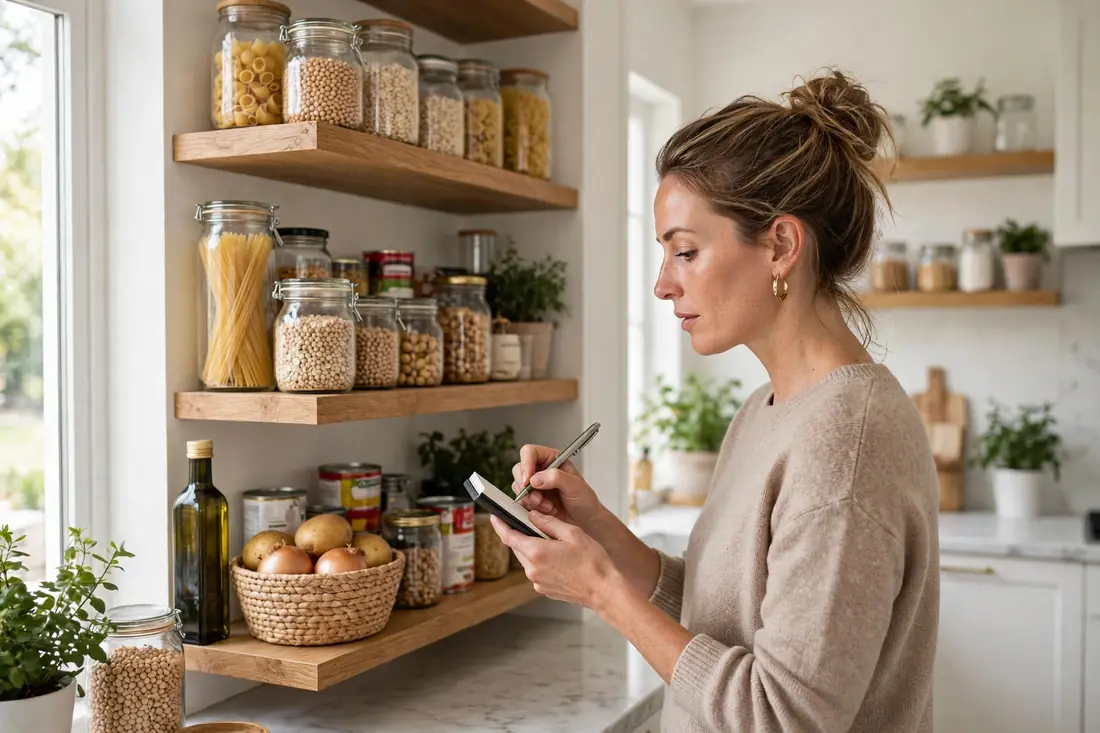
Before you buy a single extra can, open every cupboard, drawer, and freezer shelf and take stock. Most kitchens hold far more food than the people living there realize: half a bag of rice, three cans of beans, a jar of pasta sauce bought on sale months ago, a bag of frozen vegetables pushed to the back. Write it all down on one sheet of paper, with rough amounts, and tape it inside a cupboard door. This list does two jobs. It shows you what you already have, so you do not buy duplicates, and it shows you the gaps: maybe you have plenty of pasta but no protein, or plenty of snacks but nothing for breakfast. A food crisis plan built on food you already own costs nothing to start, and it is the only honest starting point.
Water Comes Before Food
If you remember one thing from this guide, make it this: store water first. Ready.gov recommends one gallon of water per person per day, for drinking and basic washing, and at least a three-day supply for every person in the house. That is three gallons per person just to get started, and more is better if you have the space. Buy a few cases of bottled water or fill clean, food-grade containers with tap water and label them with the date. Store them somewhere cool and dark, and swap them out every six months. You can go weeks on a thin pantry, but you cannot go more than a few days without water. If a crisis ever interrupts your tap water, those jugs are worth more than anything else in the house.
The Two-Week Pantry: What to Stock
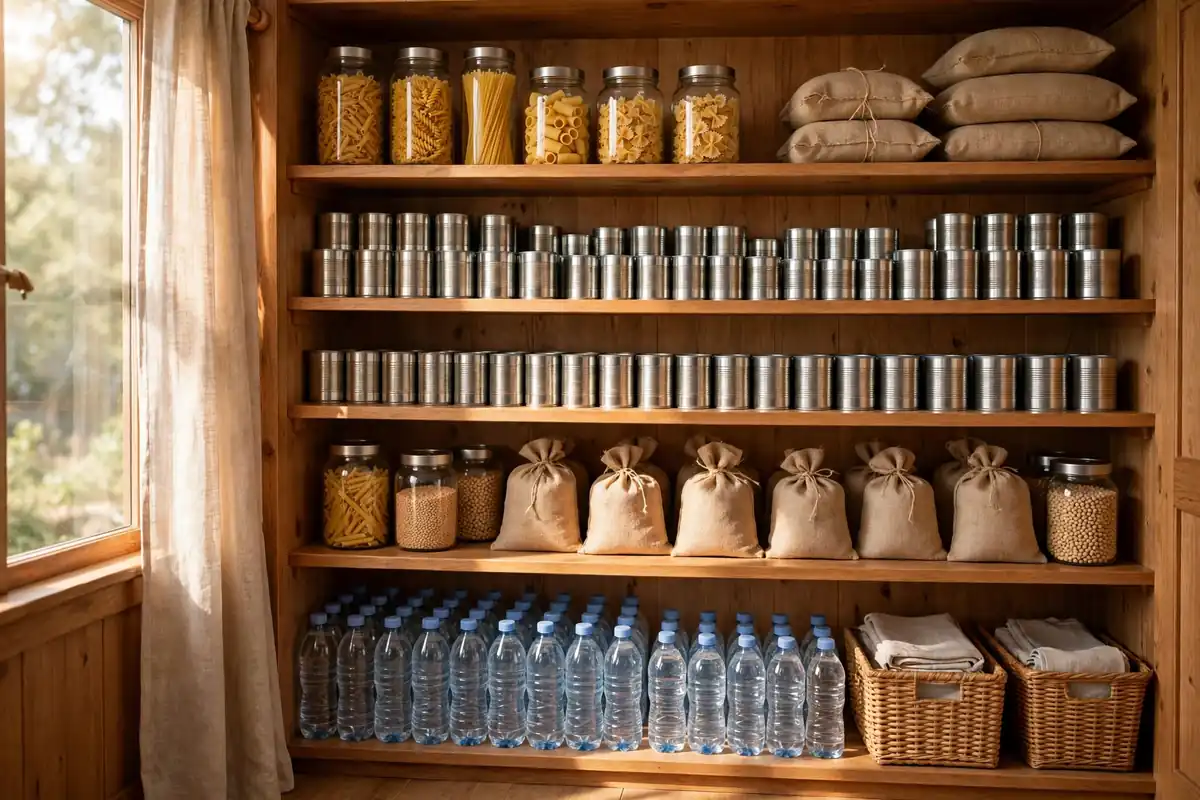
A two-week pantry is not a doomsday stockpile. It is two normal weeks of food for your household, bought a little at a time and made of things you actually eat. Start with the cheap, long-lasting staples: rice, pasta, oats, flour, dried beans, and lentils. Add canned goods your family already likes: beans, tuna, tomatoes, corn, and soup. Peanut butter is one of the best emergency foods there is, since it keeps for months, needs no cooking, and packs a lot of energy into a small jar. Round it out with cooking oil, salt, sugar, spices, and shelf-stable milk. Then add a few comfort foods, coffee or tea, because morale matters when days get hard. Buy what your family eats in a normal week, just more of it.
- Rice, pasta, oats, and flour
- Canned beans, tuna, and vegetables
- Peanut butter and shelf-stable milk
- Cooking oil, salt, sugar, and spices
- Coffee, tea, and a few comfort foods
Store It Right So It Keeps
Food you store badly is food you throw away, so the cupboard matters as much as the shopping list. Keep your pantry cool, dry, and dark: a closet away from the stove and the sun beats a hot garage every time. The USDA suggests storing canned goods between 50 and 70 degrees Fahrenheit, and keeping them off concrete floors where damp can creep in. Rotate what you store by eating the oldest items first and replacing them on your normal shopping trips. Write the purchase date on each can with a marker, and keep a simple rule: first in, first out. Check cans every few months and throw out any that are swollen, rusted, or leaking. Good storage turns a two-week pantry into a habit that quietly protects you all year.
Stretch Meals Without Going Hungry
When supplies get tight, the trick is not eating less. It is making the same food go further. Beans and lentils are the workhorses here: a pound of dried beans costs very little and feeds a family for two meals once it is cooked. Mix a smaller amount of meat into rice, pasta, or soup instead of serving it as the main event, and let vegetables and grains do the heavy lifting. Oats make a filling breakfast for pennies, and eggs stretch a dinner when they are scrambled with potatoes or folded into fried rice. Save every scrap that can become stock: vegetable peels, chicken bones, and herb stems simmered in water turn into soup base. None of this is hardship food. It is the way most of the world has always cooked, and it tastes fine.
Shopping Smart When Prices Jump
Price spikes are often the first sign of a food crisis, and they punish the shoppers who buy without a plan. The defense is simple and boring: shop with a list, compare unit prices, and buy the store brand when the ingredients match. Frozen vegetables are usually cheaper than fresh when prices climb, and they keep for months without losing much nutrition. Buy staples in larger bags when the unit price is lower, but only if you will actually use them before they go stale. Skip the panic buy. Grabbing twenty cans of one thing in a single trip clears shelves for your neighbors and leaves you with food your family may not even eat. A little extra each week, bought calmly over a month, builds the same pantry without the rush.
Freezing and Preserving the Basics
Your freezer is the easiest way to stretch a food supply, and it costs nothing extra to use well. Bread freezes beautifully when sliced first, and meat bought on sale can be split into meal-size portions and frozen the same day. Cook big batches of beans, rice, or soup and freeze them in flat bags that stack neatly and thaw fast. Label everything with the contents and the date, because a mystery bag from six months ago is food you will throw away. If your power goes out, a full freezer keeps food safe for about two days if you keep the door shut, while a half-full one lasts about a day. Dried goods need no power at all, which is why rice and beans belong at the heart of every emergency pantry.
Where to Get Help If Money Runs Short
A food crisis hits hardest when money is already tight, and there is no shame in using the help that exists for exactly this reason. Food banks and pantries operate in nearly every county in the United States, and the Feeding America website can point you to the nearest one. Many run drive-through distributions, so you do not even need to get out of the car. If your income drops, check whether you qualify for SNAP, the federal food assistance program, through your state agency; school meal programs and community fridges are other options. Churches, mosques, and neighborhood groups often run small food shares too. Ask early, before the cupboard is bare, because these programs work best when you use them as a bridge, not a last resort.
A Simple Plan Your Whole Household Can Follow
A plan only works if everyone in the house knows it, so keep it short enough to fit on one page. Write down where the water is stored, where the pantry list lives, and how many days of food you have on hand. Agree on a meeting place and an out-of-town contact, since local phone lines can jam when a storm or outage hits a whole area. Show everyone where the manual can opener is, because an electric one is useless in a power cut, and make sure at least one person knows how to cook rice and beans from scratch. Talk it through once over dinner, then leave the paper on the fridge. The families who cope best in a food crisis are rarely the best stocked. They are the ones who talked it through while things were calm.
- Store water: one gallon per person per day
- Keep two weeks of food you actually eat
- Rotate stock: oldest first, replace as you go
- Know your nearest food bank and pantry
- Agree on a family meeting point and contact
✅ Guide4U Checklist
- Store one gallon of water per person daily
- Stock two weeks of food you eat
- Rotate stock and eat oldest first
- Keep a manual can opener handy
- Know your nearest food bank
- Agree on a family meeting point
- Restock gradually after shortages end
Key Takeaways
- Water matters more than food in the first days
- A calm two-week pantry beats a panicked stockpile
- Help exists: food banks and SNAP are there to use
Frequently Asked Questions
How much food should I store for an emergency?
Ready.gov suggests at least a three-day supply of non-perishable food for every person in your household, and a two-week supply is a sensible goal if you have the space. Focus on foods your family already eats: rice, pasta, canned beans and vegetables, peanut butter, and shelf-stable milk. Store one gallon of water per person per day as well, since water matters more than food in the first days of any disruption.
What if I cannot afford to stock up all at once?
You do not need to. Add one or two extra items to your normal weekly shop: an extra bag of rice this week, a few extra cans next week. Within a month you will have a solid buffer without ever feeling the cost in one trip. Food banks, SNAP, and community pantries can also help while you build it up, and they exist for exactly this situation.
Is canned food safe after its best-by date?
Usually yes, if the can is in good shape. The USDA notes that the date on a can is about quality, not safety, and canned food can stay safe for years when stored in a cool, dry place. Low-acid foods like beans and tuna keep longer than high-acid foods like tomatoes. Never eat from a can that is swollen, rusted, dented along the seam, or leaking, and throw it out.
Where can I get help with food in my area?
Start with Feeding America at feedingamerica.org, which lists food banks and pantries by zip code. Your state agency can tell you whether you qualify for SNAP, and many schools run free meal programs for children. Local churches, mosques, and neighborhood groups often run food shares too. Call 211 in the United States to reach a free helpline that can point you to food help nearby.
What did you think of this article? Share your opinion in the comments below — we would love to hear from you.