
How to Unclog a Toilet Without a Plunger: 6 Methods That Actually Work
Quick Answer
Stop flushing, bail the water down, then work in order: dish soap and hot water, baking soda and vinegar, a squeezed plastic bottle, a bagged toilet brush, and finally a toilet auger. Never use boiling water or chemical cleaners, and call a plumber if other drains are slow too.
First, Stop Flushing and Protect the Floor
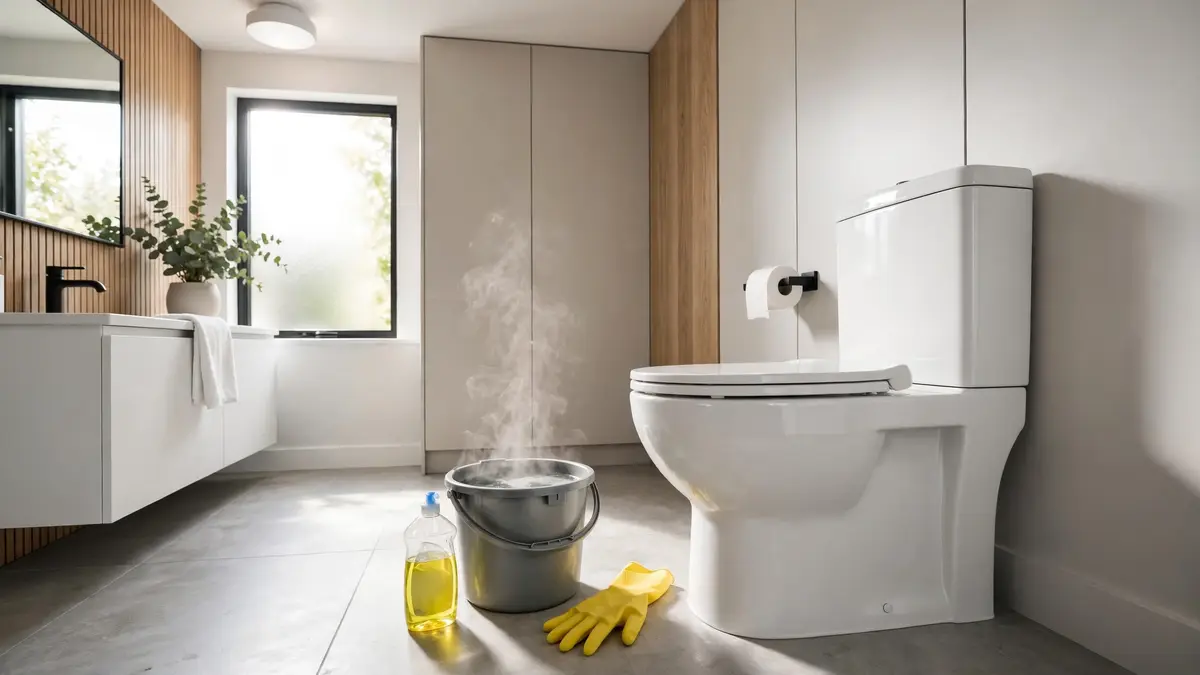
The moment a toilet will not drain, stop flushing. Every extra flush raises the water level toward the rim and turns a small clog into a flooded bathroom. If water is already near the rim, put on rubber gloves and bail some of it into a bucket with an old container, so you have room to work. Lay old towels around the base to catch splashes, and keep the bathroom ventilated. This step takes two minutes and saves you from the most common unclogging disaster, which is not the clog itself but the water that ends up on the floor while you fight it.
Method 1: Dish Soap and Hot Water
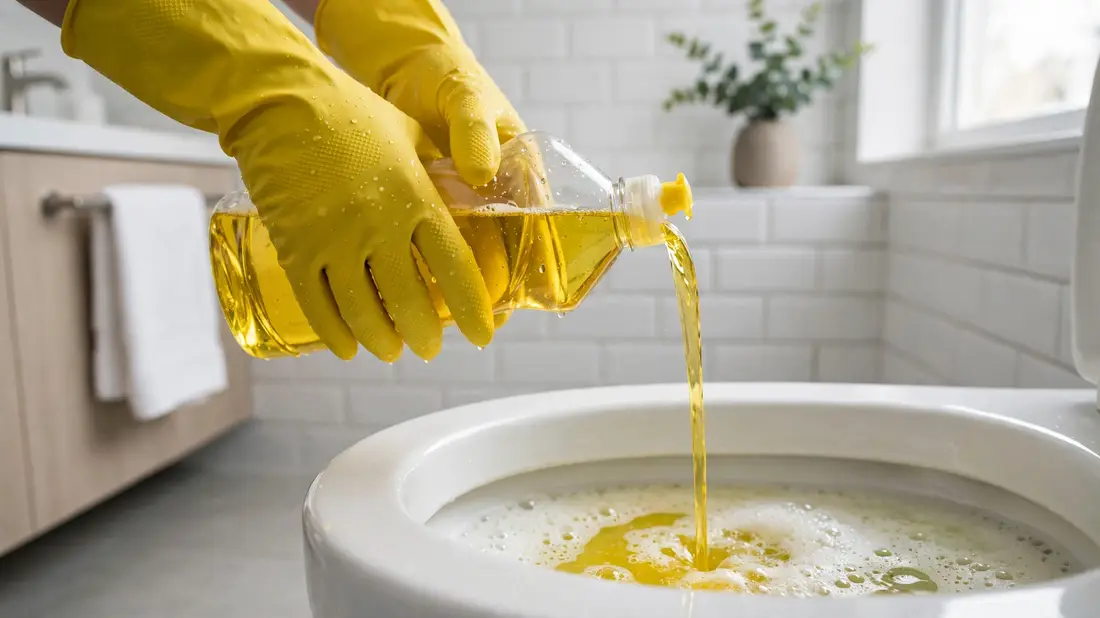
Start with the gentlest method, because most clogs are soft paper and clear with patience. Squirt about half a cup of liquid dish soap into the bowl and let it sit for 10 to 15 minutes, so the soap sinks and coats the clog and the pipe walls. Then pour in a bucket of hot tap water from waist height, which adds force without the cracking risk of boiling water. Wait a few minutes and watch the water level. If it starts to drop, the clog is moving, and a careful test flush should confirm it. If nothing changes after 15 minutes, move on to the next method instead of repeating this one endlessly.
Method 2: Baking Soda and Vinegar
Baking soda and vinegar is the classic home remedy, and it works best as a follow-up rather than a first try. Bail the bowl down to about half full, pour in one cup of baking soda, then slowly add two cups of white vinegar and let the mixture fizz for about 30 minutes. The fizzing action can loosen a soft clog, and a bucket of hot tap water afterward helps push it through. Do not expect a dramatic explosion, since the real work is the soak time, not the bubbles. If the water level still does not move after this step, the clog is probably firmer than paper, and you need a mechanical method next.
- Bail the bowl down to about half full first
- Pour in 1 cup of baking soda, then 2 cups of white vinegar
- Let it fizz for 30 minutes without flushing
- Follow with hot tap water and watch the level
Method 3: The Plastic Bottle Trick
A large plastic bottle can act like a plunger by forcing water down the drain, and it costs nothing. Remove as much water from the bowl as you can, fill a large bottle completely with warm water, and put on rubber gloves and eye protection, because this step can splash. Cover the bottle opening with your thumb, push the bottle mouth deep into the drain opening at the bottom of the bowl, then remove your thumb and squeeze hard so the water shoots down the pipe. Repeat a few times if needed. This method works surprisingly well on paper clogs, and it is far less messy than it sounds once the water level is low enough to start.
Method 4: A Wire Hanger Drain Snake
When water pressure alone will not shift the clog, a simple wire tool can break it up by hand. Untwist a wire coat hanger into one straight length, then bend a small hook into one end and wrap the other end in a cloth so it cannot scratch the porcelain. Feed the wire gently into the drain and twist it while pushing, so it pokes and breaks the clog apart rather than ramming it deeper. Work slowly and never force it, because a scratched toilet bowl stains permanently and a snapped wire becomes a second problem. Pull the wire out, flush carefully once, and repeat only if the water is clearly draining better than before.
Method 5: A Toilet Brush in a Bag
A toilet brush wrapped in a plastic bag makes a workable emergency plunger when nothing else is at hand. Cover the brush head fully in a sturdy bag, push it into the drain opening, and pump it with short, controlled strokes, just as you would with a real plunger. The bag seals against the drain and pushes water through the clog, while keeping the brush itself clean. Keep your strokes short to limit splashing, and wear gloves and eye protection. This method looks odd, but it uses the same principle as a plunger, and it has saved many bathrooms from an emergency hardware store run.
- Wrap the brush head fully in a sturdy plastic bag
- Pump it in the drain opening like a plunger
- Keep strokes short and controlled to limit splashing
- Remove the bag, wash the brush, and test flush once
Method 6: A Drain Snake or Toilet Auger
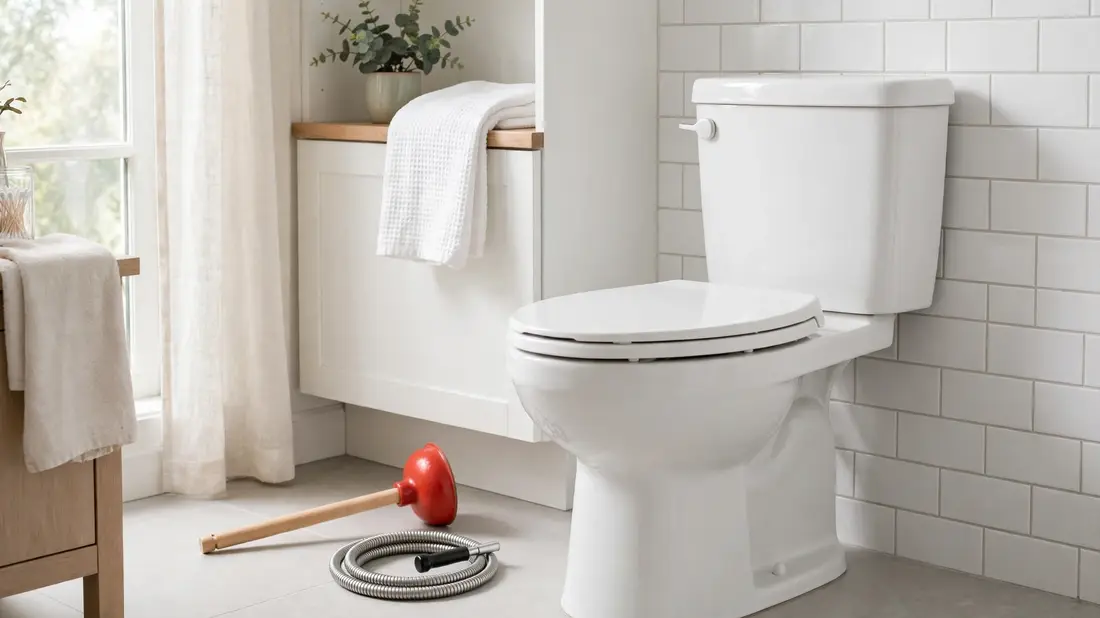
If the household tricks fail, a toilet auger is the right tool, and it costs about the same as a plumber's call-out fee at a hardware store. Feed the auger's cable into the drain slowly, crank the handle to extend it through the bend, and twist gently when you feel resistance, so the cable breaks up or hooks the clog. Retract the cable slowly and wipe it down as it comes out. An auger reaches further than a hanger and is designed not to scratch porcelain, which makes it the safest mechanical option. If the auger meets solid resistance that will not budge, or pulls back material that looks like a toy or a hard object, stop and call a plumber rather than forcing it.
What to Skip: Hacks That Cause Damage
Some popular hacks cause more harm than the clog. Never pour boiling water into a toilet, since the heat can crack porcelain and flood the bathroom with a broken fixture. Avoid chemical drain cleaners, which can splash back, damage older pipes and septic systems, and make a plumber's later work dangerous. Do not use a regular wire brush or a metal rod without protection, because scratches in porcelain stain and weaken the bowl. And do not keep flushing to force the clog through, since each flush only raises the water and the pressure on your floor. Gentle methods in order beat aggressive ones every time, and the patience they take is cheaper than any repair.
When the Problem Is Past the Toilet
Some clogs are not yours to fix, and knowing the signs saves you hours. If other drains in the house are also slow or gurgling, if water backs up into the shower or tub when you flush, or if the toilet clogs again days after clearing, the blockage is likely in the main drain or sewer line. Tree roots, collapsed pipes and deep grease buildup all live in that territory, and they need professional equipment. The same applies if you suspect a hard object, like a toy or a phone, is stuck in the trap. Call a licensed plumber, describe what you tried, and do not pour more chemicals down in the meantime.
Keep It From Clogging Again
Most repeat clogs come from what goes into the toilet, so the prevention list is short and simple. Flush only the three Ps: pee, poo and toilet paper, and never flush wet wipes, even ones labeled flushable, since they do not break down like paper. Use a reasonable amount of paper per flush, and teach kids the same rule early, because toys and whole rolls of paper cause most family bathroom emergencies. Keep a plunger in each bathroom from now on, so the next clog meets the right tool instead of a panic search. A two-dollar habit change beats every unclogging method in this guide.
✅ Guide4U Checklist
- Stop flushing and bail water down first
- Try dish soap, wait, then hot water
- Use baking soda and vinegar next
- Try a bottle, brush or auger in order
- Call a plumber for main-line signs
Key Takeaways
- Most clogs are soft paper and clear with patience
- Work gentlest to strongest, never force anything
- Other slow drains mean the blockage is past the toilet
Frequently Asked Questions
Can I use boiling water to unclog a toilet?
Never use boiling water in a toilet. Boiling water can crack porcelain, and a cracked toilet is a far bigger job than a clog. Use hot tap water or water heated to a comfortable bath temperature, and pour it from waist height so the force helps push the clog through.
How long should I try before calling a plumber?
Try for about 30 to 45 minutes across the gentler methods before you escalate. If dish soap, hot water, baking soda and a bottle or snake have all failed, or if other drains in the house are also slow, the blockage is likely past the toilet, and that is a plumber's job.
Are chemical drain cleaners safe for toilets?
Chemical drain cleaners are risky in toilets. They can splash back onto skin and eyes, damage older pipes and septic systems, and make a later plumber's job dangerous. The household methods in this guide are safer and usually work just as well on soft paper clogs.
Why does my toilet keep clogging?
Most toilet clogs are soft paper sitting in the bend, and they clear with patience rather than force. The mistake is flushing again and again, which only raises the water level. Stop flushing, lower the water if it is near the rim, and work through the methods in order.
What did you think of this article? Share your opinion in the comments below — we would love to hear from you.