
How to Clean a Cast Iron Skillet and Remove Rust
Quick Answer
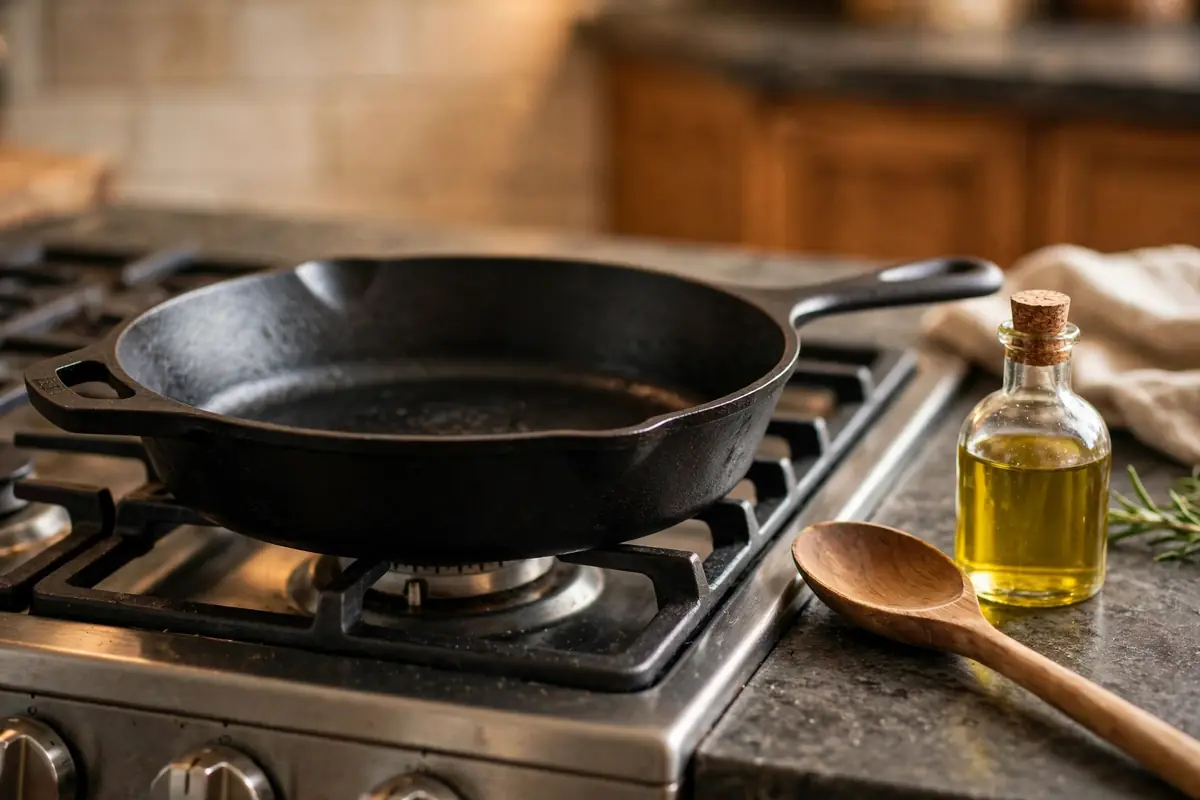
Wash with hot water and a stiff brush, never soak it, and dry it on the stove until all the water steams off. Rub in a paper-thin coat of oil after every wash. For rust, scrub light spots with coarse salt and oil, soak heavy rust in half vinegar and half water for one to three hours, then re-season at 450 to 500F.
Why Cast Iron Needs a Different Wash
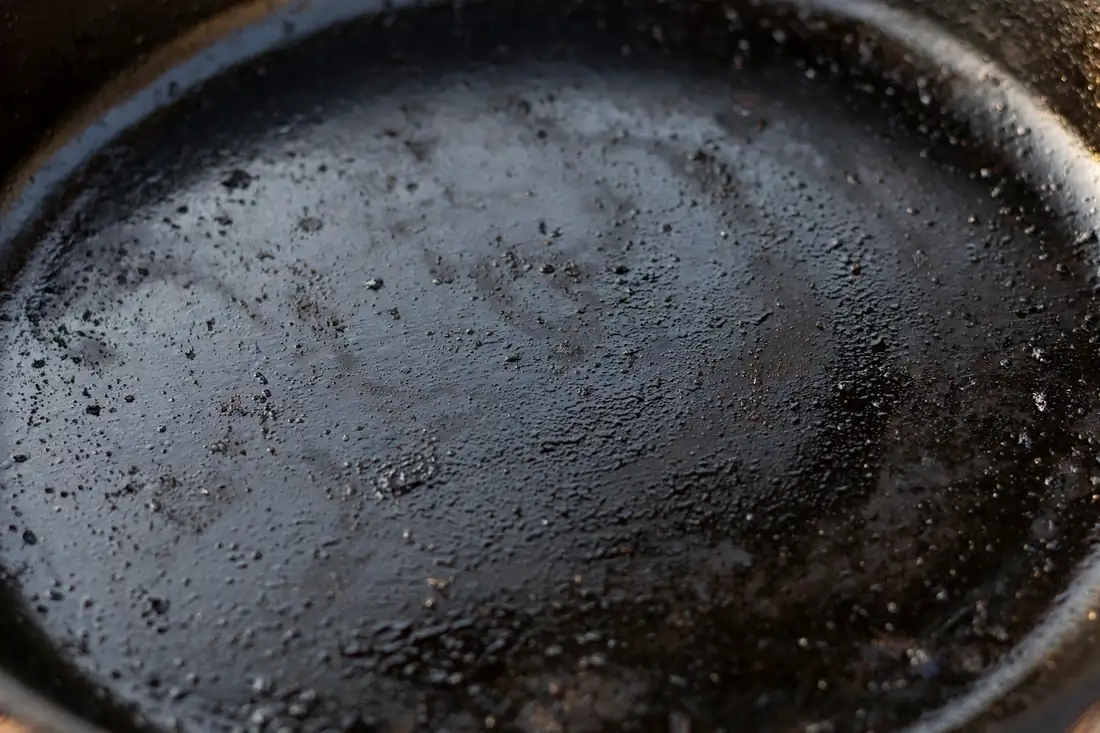
Cast iron is not like a nonstick pan, and the way you wash it has to match how it works. The cooking surface is not a coating painted on at the factory. It is a thin layer of oil that has been heated until it bonds to the iron, and that layer is what keeps food from sticking and rust from forming. Scrub it with the wrong tools or leave it wet, and you strip that layer away. Then the pan rusts, food sticks, and you are back to square one. The good news is that the right routine is simple and takes about five minutes. Hot water, a stiff brush, fast drying, and a thin coat of oil are almost the whole job. Once you know why each step matters, the routine sticks, and a cast iron skillet can outlast every other pan in your kitchen by decades.
The Everyday Wash: Hot Water and a Stiff Brush
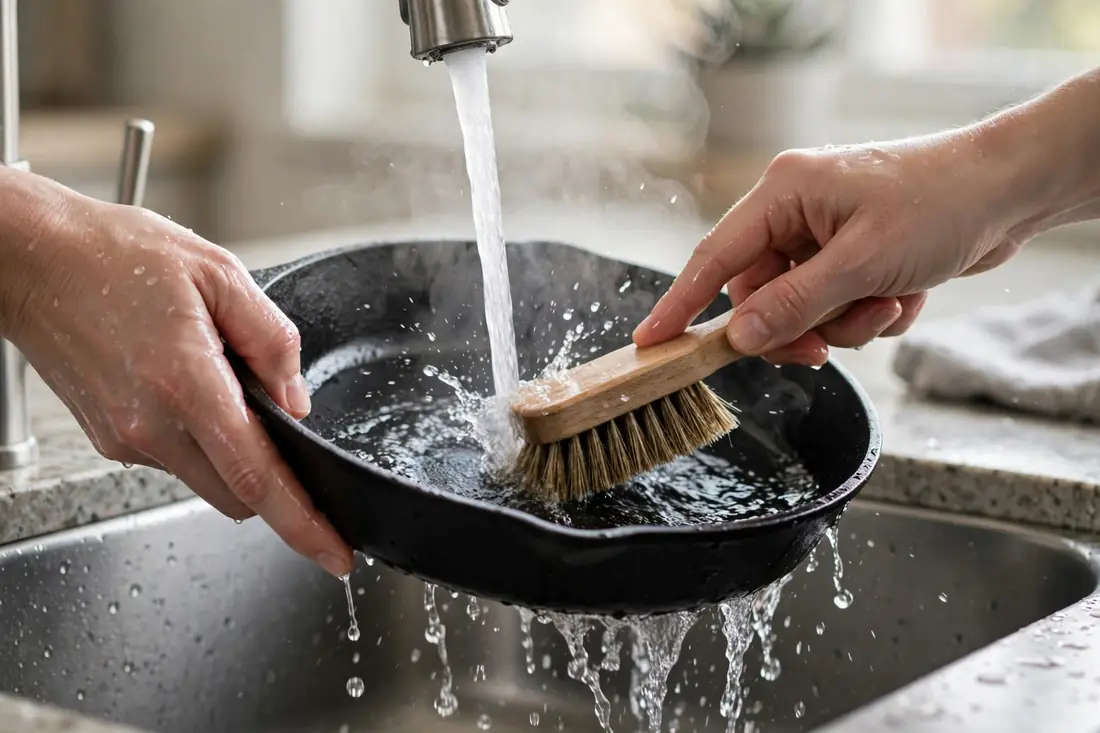
Wash your skillet while it is still warm, not hot, and start with the simplest tools: hot running water and a stiff brush or a non-metal scrub pad. Hold the pan under the tap and scrub in circles until the food comes off. A chain mail scrubber, which looks like a small square of linked metal rings, works well on stuck bits and will not hurt the seasoning. For most meals this is all you need, and the whole wash takes a minute or two. Avoid steel wool and harsh scouring pads for everyday cleaning. They are too rough and will wear the seasoning down a little more each time you use them. If the pan only held vegetables or eggs, you can often wipe it out with a paper towel and skip the water entirely.
Stuck-On Food: Simmer It Loose
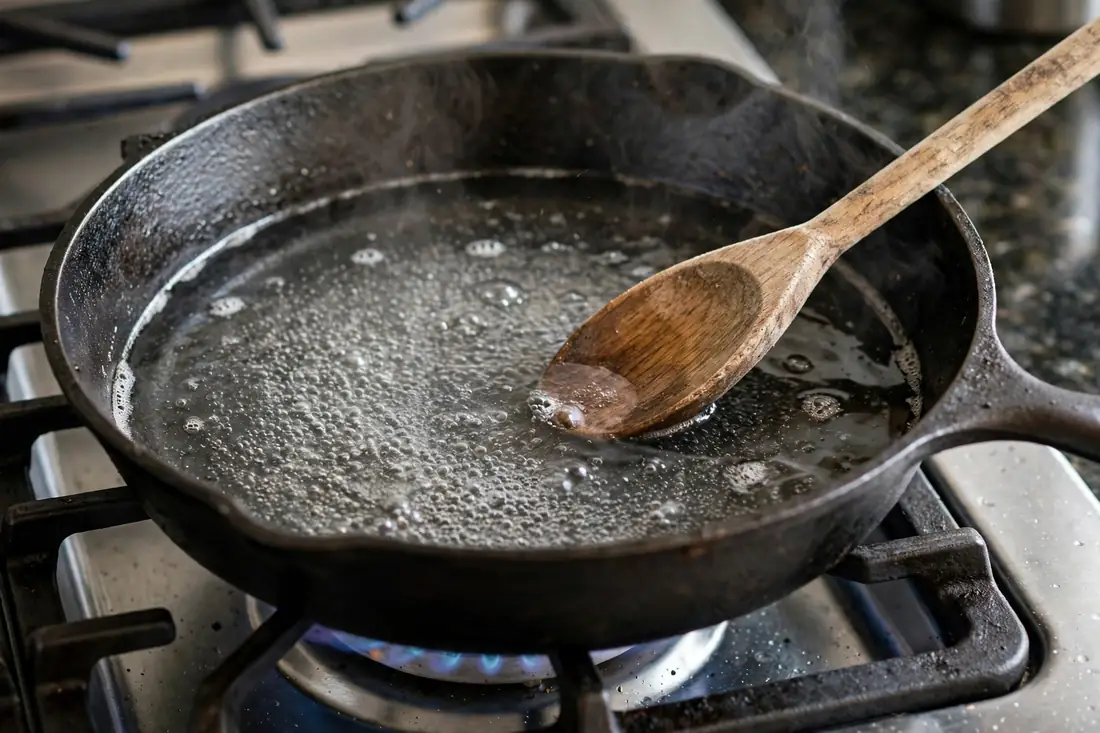
When food is really stuck, do not reach for a metal scraper and do not leave the pan to soak in the sink. Pour about an inch of water into the skillet, put it back on the stove over medium heat, and let it simmer for three to five minutes. The hot water loosens the stuck food from the surface, and you can scrape it free with a wooden spoon or a flat wooden spatula. Pour the water out, give the pan a quick brush under hot water, and it should look clean. This trick works on burnt cheese, stuck eggs, and the crusty bits left after searing meat. It is gentler than scrubbing hard, and it keeps the seasoning intact, which is the whole point of owning cast iron in the first place.
Dry It Like You Mean It
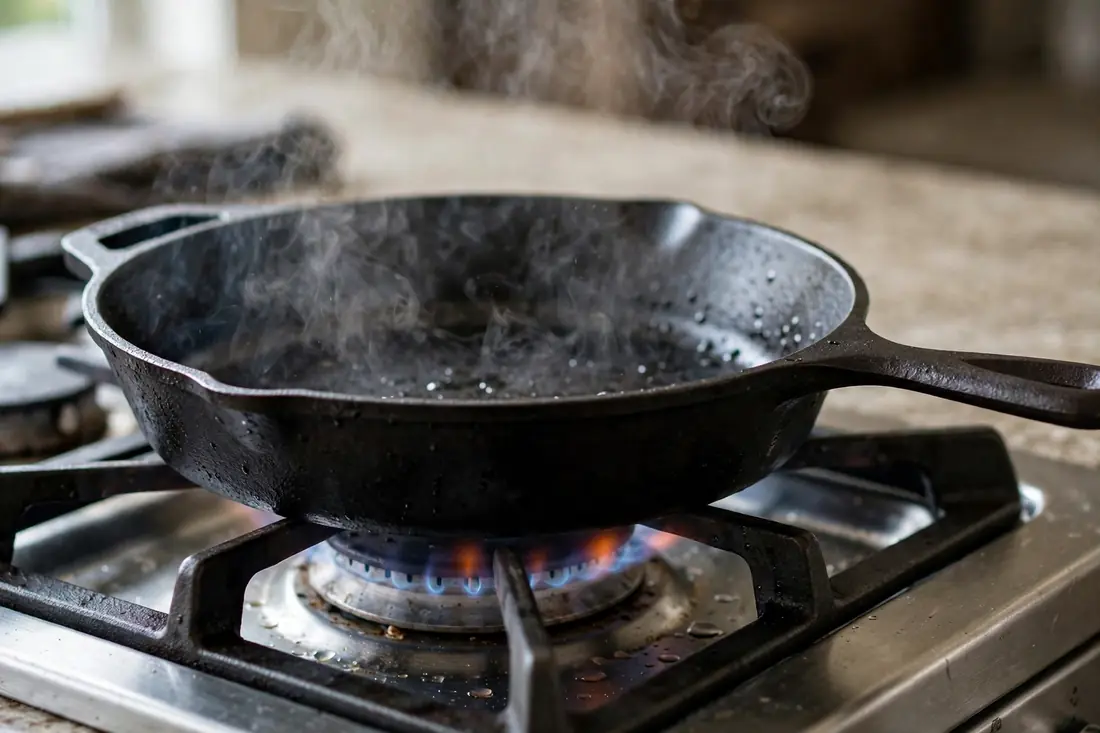
Water is the enemy of cast iron, and drying is the step most people rush. A skillet left to air dry on the rack will start to rust before your eyes, sometimes within an hour, because bare iron and water react fast. Towel-dry the pan first, then put it on the stove over low to medium heat for two or three minutes until every drop of water has evaporated. You will see the last of the moisture steam off, and the pan will look dry all over. Let it cool for a minute before the next step. This stovetop drying takes almost no effort and it is the single best habit for keeping a cast iron skillet rust-free for years.
The Thin Coat of Oil After Every Wash
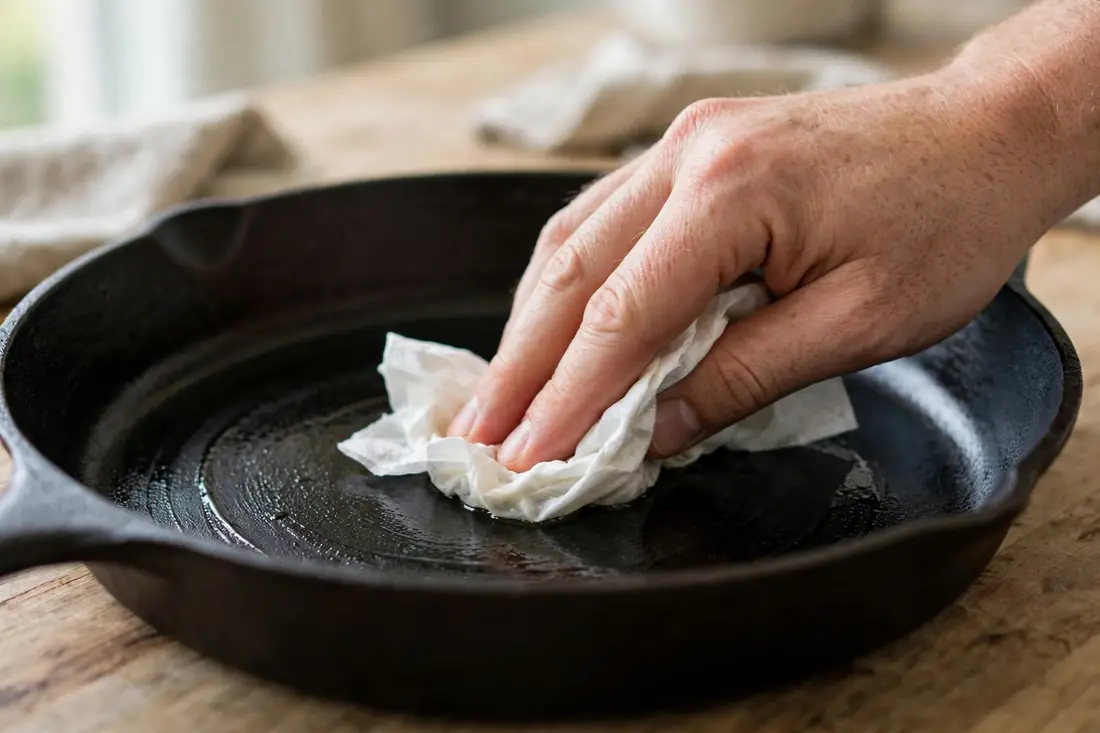
While the pan is still warm from drying, rub in a very thin coat of oil. Pour a few drops of a neutral oil, like canola, grapeseed, or vegetable oil, onto a paper towel and wipe the whole inside surface, including the sides. Then take a clean paper towel and wipe it all off again, as if you made a mistake putting it on. The pan should look dry, not shiny or sticky. That is the right amount. Too much oil is the most common beginner mistake: it turns gummy and sticky when it cools, and it attracts dust. This thin coat replaces the tiny bit of seasoning that each wash removes, so the pan gets better with use instead of worse.
What About Soap? The Honest Answer
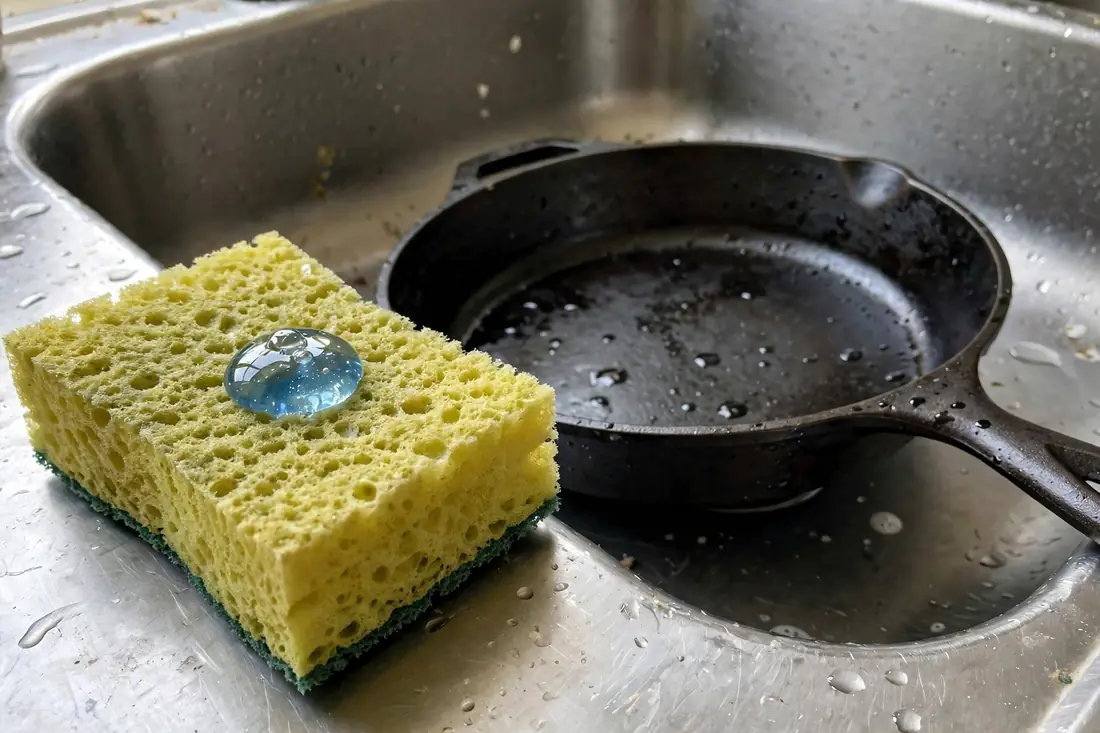
For years, cooks were told never to let soap touch cast iron, and the rule made sense when soap was made with lye, which really does strip seasoning. Modern dish soap is different, and Lodge, the biggest cast iron maker in the US, says a small amount of mild dish soap is fine. If you wash a greasy pan with a drop of soap, rinse it well, dry it on the stove, and oil it lightly, nothing bad happens. What you should never do is soak the pan in soapy water, run it through the dishwasher, or use a harsh detergent meant for ovens. Soap is a tool, not a crime, but it is optional. Hot water and a brush handle most washes on their own, and many cooks still skip soap entirely out of habit.
Removing Light Rust With Salt and Oil
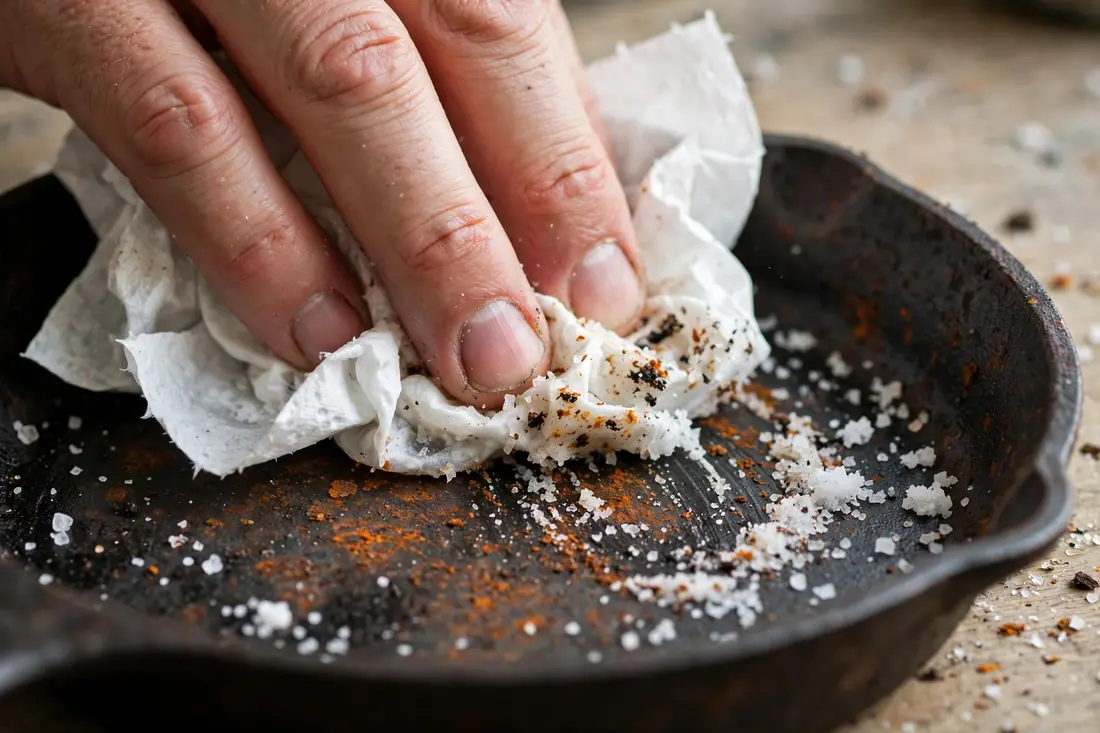
A little surface rust looks worse than it is, and you can usually fix it in ten minutes. Pour a generous handful of coarse kosher salt into the dry skillet, add a spoonful of oil, and scrub the rusty spots with a folded paper towel or a soft cloth. The salt acts as a gentle abrasive and the oil helps lift the rust off the iron. Keep scrubbing until the rust is gone and the surface looks dark again, then wipe out the dirty salt and oil, wash the pan with hot water, dry it on the stove, and give it a thin coat of oil. If the rust comes back quickly, the seasoning in that spot was thin, and a full re-season, covered below, will fix it for good.
Heavy Rust: The Vinegar Soak
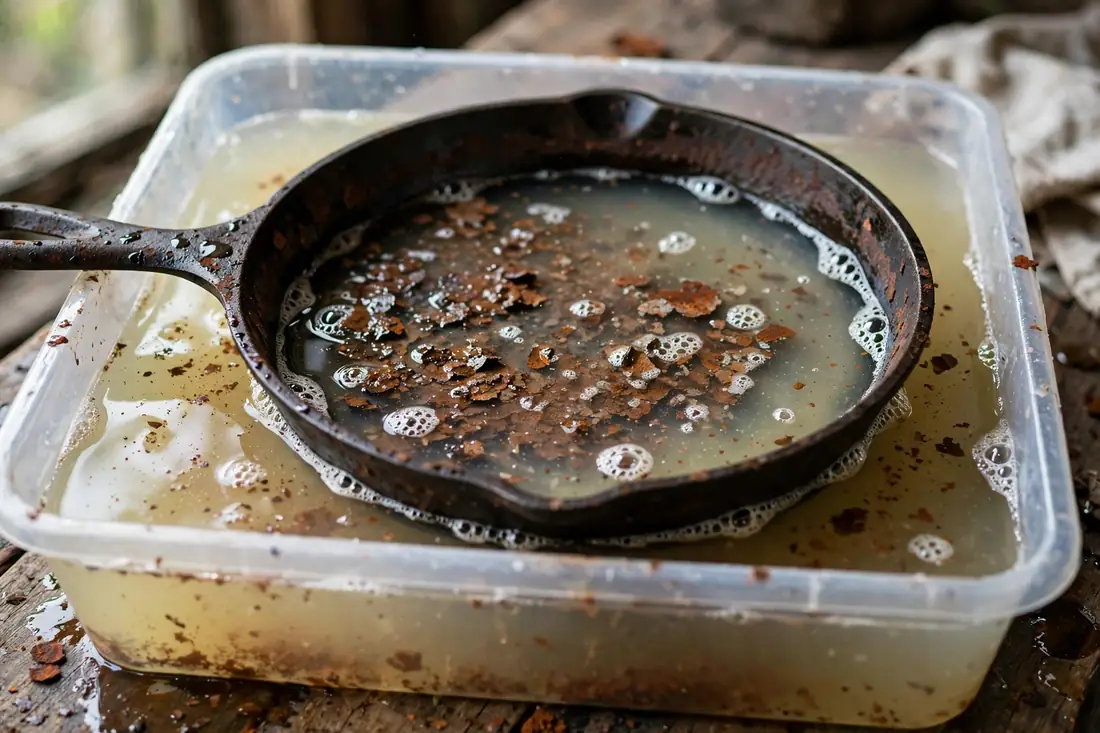
A pan that sat in a damp garage or was left soaking in a sink can rust all over, and salt alone will not save it. For heavy rust, mix equal parts white vinegar and water in a basin or a large pot, and submerge the rusty pan for one to three hours. Check it every half hour. The vinegar dissolves the rust, but it also eats bare iron if you leave the pan in too long, so never soak it overnight. Once the rust has loosened, scrub the whole pan with a stiff brush under running water until the surface is clean and grey. Rinse it well, dry it on the stove right away, and move straight to re-seasoning while the iron is bare, because it will start to rust again within the hour.
Re-Seasoning From Scratch
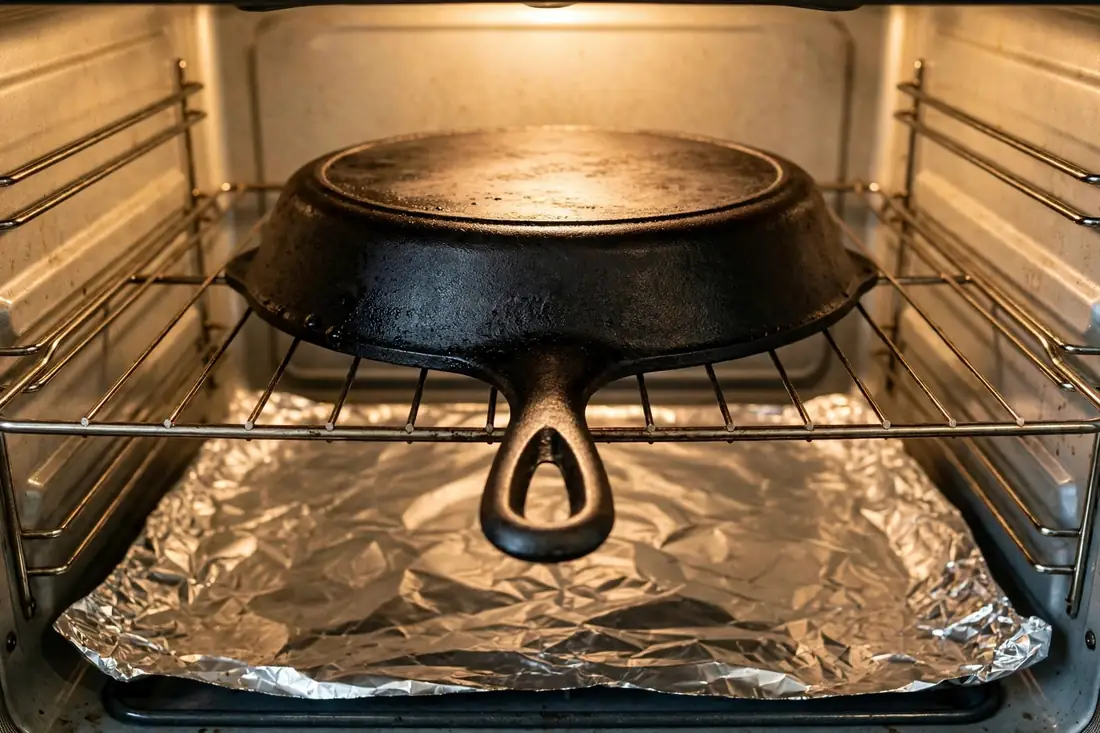
Seasoning is just oil baked onto iron until it hardens into a slick layer, and you can redo it any time the pan looks dull or food starts sticking. Start with a clean, dry pan. Rub a thin layer of an oil with a high smoke point, like canola, grapeseed, or flaxseed oil, over the inside, the outside, and the handle. Then wipe nearly all of it off with a clean towel until the pan looks dry. This is the step people get wrong: a pan that goes into the oven shiny with oil comes out sticky. Put the pan upside down on the middle rack of a 450 to 500 degree oven, with foil on the rack below to catch drips, and bake it for one hour. Let it cool in the oven, then repeat the oil and bake once or twice more for a strong coat.
- Scrub the pan clean and dry it on the stove
- Rub a thin layer of high smoke point oil over the whole pan
- Wipe off almost all the oil with a clean towel
- Bake upside down at 450 to 500F for one hour
- Let it cool in the oven, then repeat once or twice
Storage and Habits That Keep It Rust-Free
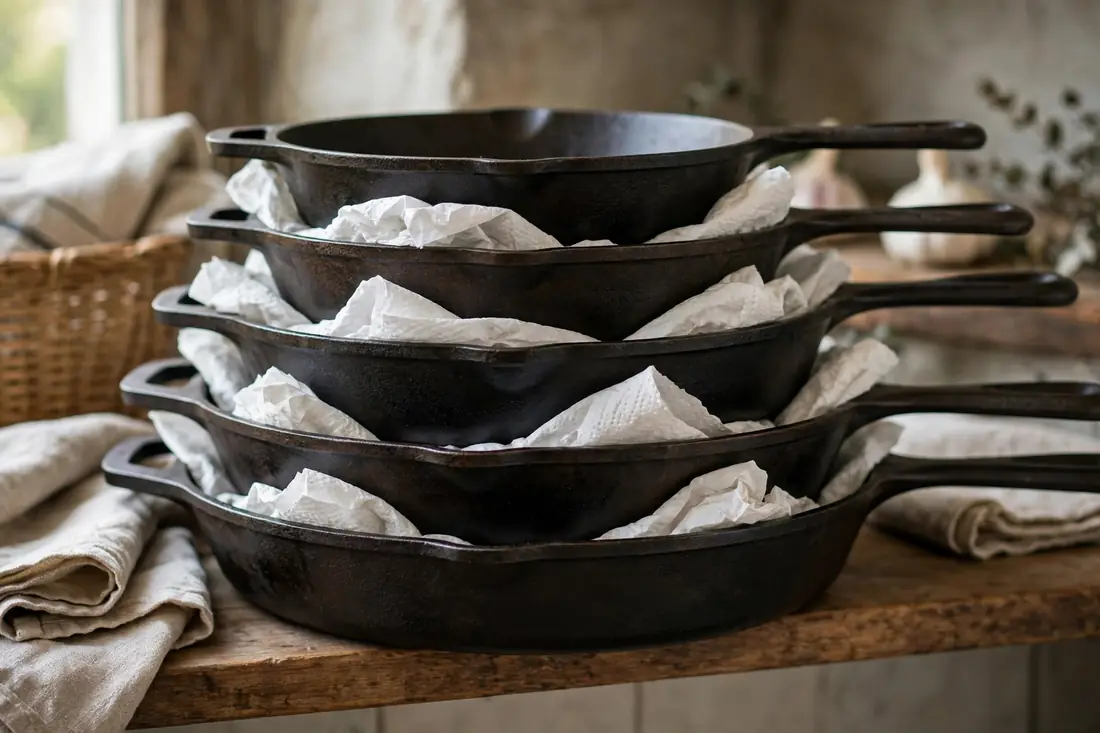
A cast iron skillet stays in good shape when it is used often and stored dry. Cook with it at least a few times a week, because regular cooking and oiling build the seasoning layer thicker over time. Store it in a dry place, and if you stack pans, put a folded paper towel between them so the seasoning does not scratch and air can circulate. Never put it in the dishwasher, never leave it soaking in the sink, and never put it away wet. If you live somewhere humid, the thin oil coat after each wash matters even more. A skillet cared for this way does not just survive, it improves. The pan your grandmother cooked with and the one you buy today work the same way, and yours can last just as long.
✅ Guide4U Checklist
- Wash with hot water and a brush
- Simmer stuck food loose
- Dry on the stove every time
- Rub in a paper-thin coat of oil
- Never soak or use the dishwasher
- Scrub light rust with salt and oil
- Re-season at 450 to 500F
Key Takeaways
- Drying on the stove stops rust before it starts
- Too much oil makes a sticky pan, not a better one
- A well-kept skillet improves with every use
Frequently Asked Questions
Can I use dish soap on a cast iron skillet?
Yes. A small amount of mild dish soap is fine, and Lodge says so. Rinse the pan well, dry it on the stove until all the water has evaporated, and rub in a thin coat of oil afterward. Do not soak the pan in soapy water and never put it in the dishwasher, because long exposure to water and detergent strips the seasoning.
Can I put a cast iron skillet in the dishwasher?
No. A dishwasher soaks the pan in hot water and harsh detergent for a long cycle, which strips the seasoning and leaves the bare iron to rust. Wash it by hand with hot water and a brush, dry it on the stove, and oil it lightly. The whole routine takes about five minutes.
Why is my cast iron skillet sticky after seasoning?
Too much oil went into the oven. Seasoning works only when the oil layer is paper-thin, so most of it must be wiped off before baking. To fix a sticky pan, scrub it clean with hot water, dry it on the stove, and re-season with a much thinner coat of oil, wiping until the pan looks dry before it goes in the oven.
How often should I re-season my cast iron skillet?
There is no fixed schedule. Re-season when food starts sticking, the surface looks dull and grey, or after you have removed rust. The thin oil coat you rub in after every wash maintains the seasoning day to day, so a well-used pan may only need a full re-season once or twice a year.
What did you think of this article? Share your opinion in the comments below — we would love to hear from you.