
How to Clean a Leather Couch

Quick Answer
Clean a leather couch with a barely damp cloth and a little mild soap, working one cushion at a time and drying each section right away. Test any cleaner on a hidden spot first, and condition the leather every 6 to 12 months to keep it soft.
Know Your Leather Before You Touch It
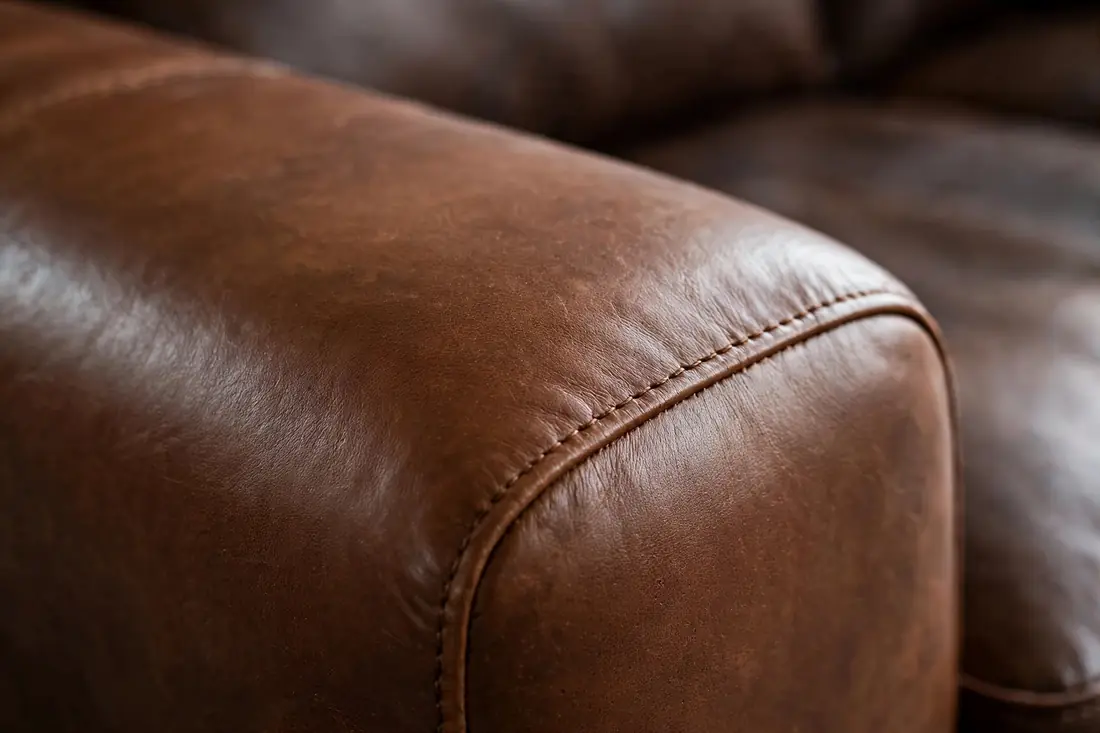
Most leather couches fall into one of three groups, and the cleaning method changes with each one. Pigmented leather, the kind on most family-room sofas, has a thin protective coating that shrugs off spills and handles a damp cloth well. Aniline leather is dyed all the way through with no coating, so it feels soft and warm but soaks up water and stains fast. Suede and nubuck look like leather but act like fabric, and water leaves marks on them. Before you clean anything, find the care tag under a cushion or on the frame and read what the maker says. Some makers, like La-Z-Boy, say a mild soap solution is fine, while others, like Ashley, warn against soap on certain finishes. A quick test helps too: put one drop of water on a hidden spot. If it beads up, you have protected leather. If it darkens and soaks in, treat the couch gently and skip the water.
What You Will Need
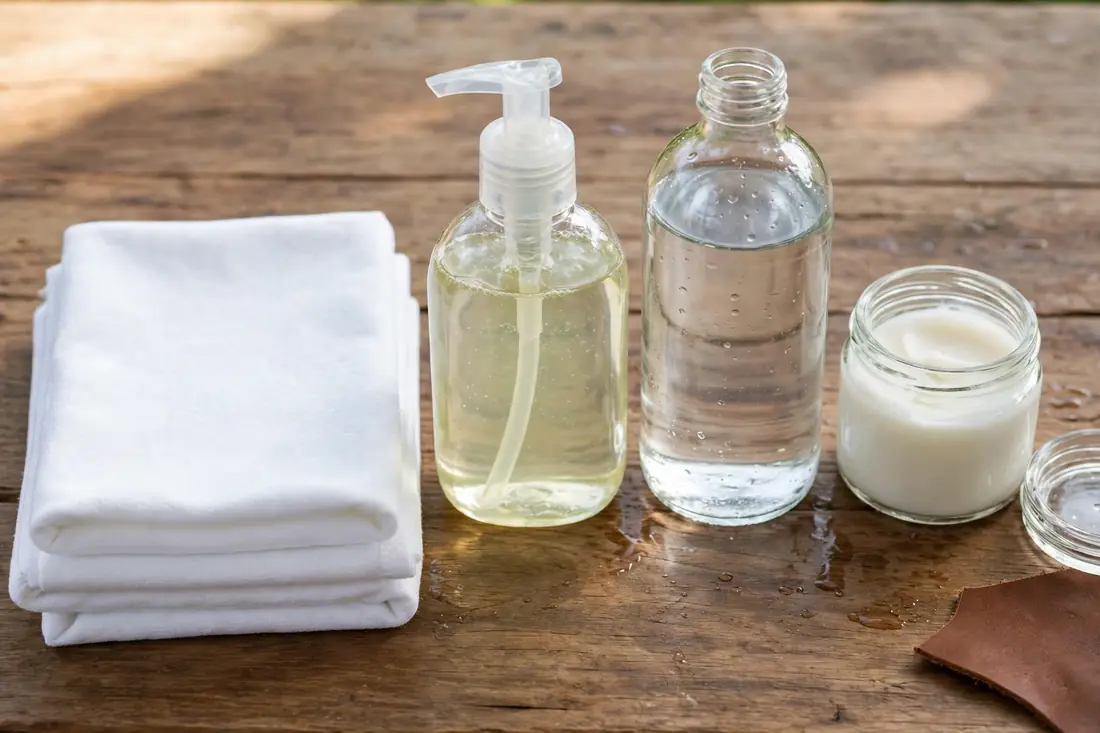
You do not need a shelf of specialty products to clean a leather couch, and most of what works is already in your home. White cloths matter because colored rags can transfer dye onto light leather when they get damp. Distilled water beats tap water because it leaves no mineral spots behind when it dries. If you buy a leather cleaner, pick one made for your leather type and read the label before you open it. Skip anything that promises a shine in one spray, since those products often leave a sticky film that attracts dust. Lay everything out before you start so you are not hunting for a cloth with wet hands halfway through.
- Soft white cloths (two or three)
- Vacuum with a brush attachment
- Mild liquid soap or a leather cleaner
- Distilled water in a bowl
- Leather conditioner
- Soft-bristle brush or old toothbrush
Start With a Dry Pass
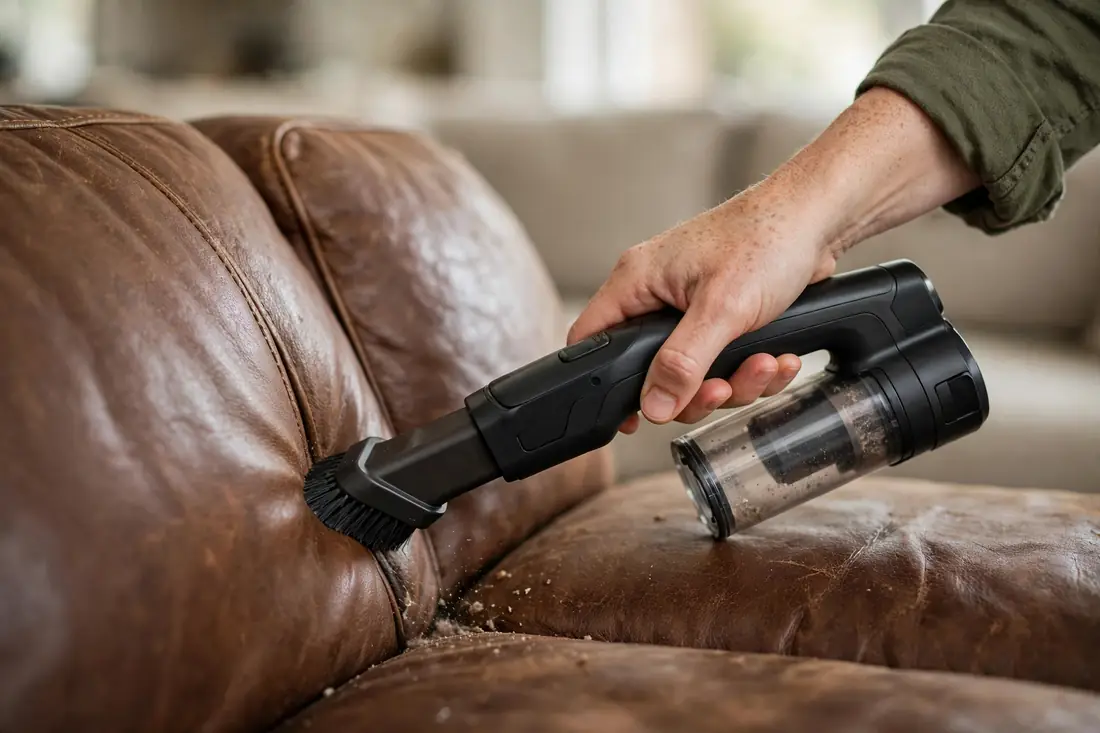
Loose dirt does more damage than most people think. Every time someone sits down, grit trapped in the seams grinds against the finish like sandpaper, and that slow wear is what turns a smooth seat into a scuffed one. Pull the cushions off and vacuum the whole couch with a brush attachment, working into the creases where crumbs and pet hair collect. Run the brush lightly over the arms and back too, since dust settles there first. Use a dry cloth to wipe the frame and legs. This dry pass takes about ten minutes, and it keeps you from rubbing dirt into the leather once the cloth gets damp.
Test Your Cleaner in a Hidden Spot
Even a gentle cleaner can surprise you, so never put it straight on the seat cushion. Pick a spot no one sees, like the back of the couch or under a cushion flap, and dab on a little of your mix. Wait at least ten minutes and check for any change in color, shine, or texture. If the leather looks the same, you are clear to go ahead. If it darkens, feels sticky, or loses its sheen, stop and try plain distilled water instead. This one test takes almost no time, and it is the difference between a clean couch and a bleach-like patch you have to live with.
Clean in Small Sections
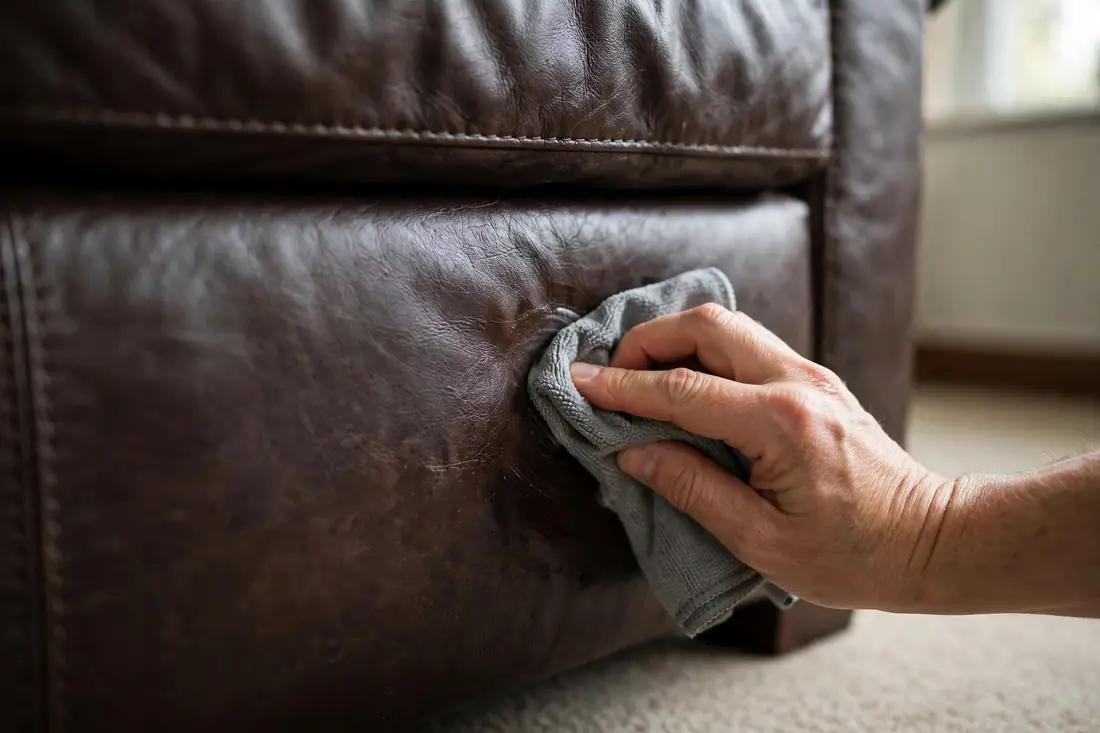
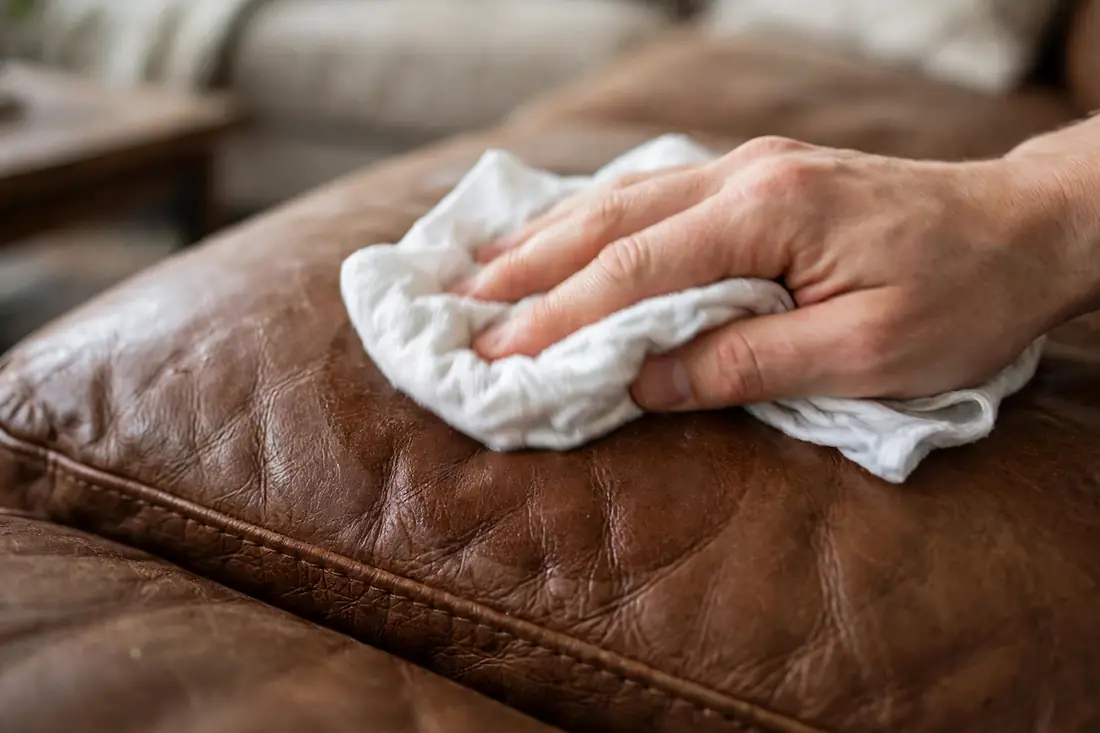
Work one cushion at a time so the leather never stays wet for long. Dip a soft cloth in your soap solution, wring it out until it is barely damp, and wipe in gentle circles. Rinse the cloth often and wring it again, because a dirty cloth just moves grime around. For seams and tufting, use a soft-bristle brush or an old toothbrush to lift dirt out of the grooves. Once a section is clean, go over it with a second cloth dampened in plain distilled water to pick up any soap left behind. Dry each section with a clean towel right away, since water left sitting on leather can leave rings.
Tackling Stains: Ink, Grease, and Food
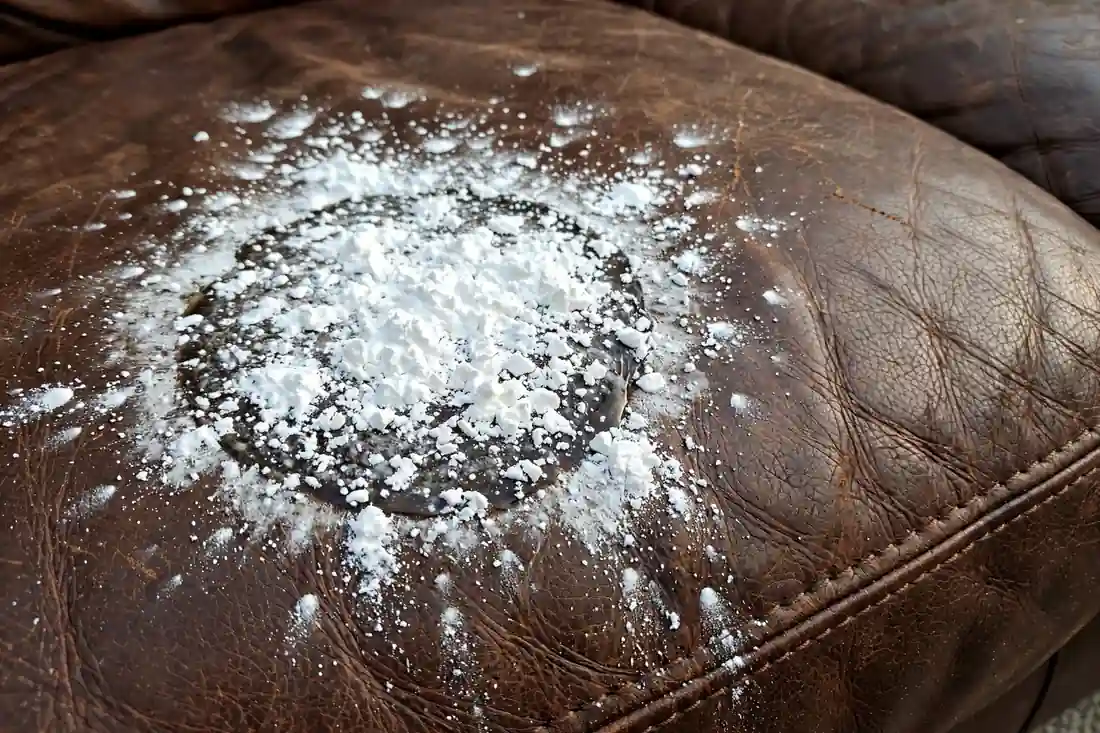
Fresh stains are easier than old ones, so deal with spills the day they happen. For grease, blot the spot with a dry cloth, then dust it with cornstarch or baking soda and leave it for a few hours so the powder pulls the oil out. Brush the powder off and wipe the area clean. For food, scrape off what you can with a spoon, then clean the spot with your soap solution. Ink is the tricky one: on pigmented leather, a cotton swab with rubbing alcohol can lift it, but test first and work gently. For aniline leather or suede, do not experiment. Call a professional, because the wrong cleaner sets the stain for good.
Condition the Leather After Cleaning
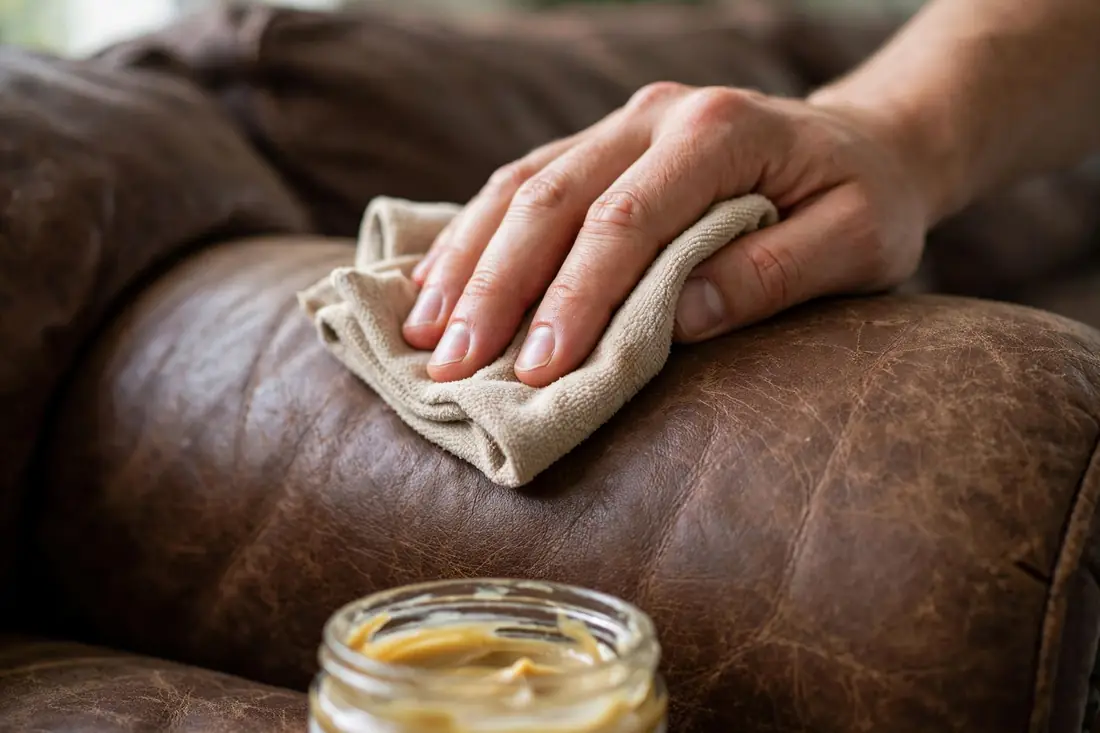
Cleaning strips a little of the natural oil out of leather, and conditioner puts it back. Without it, the surface slowly dries, stiffens, and cracks, usually at the arms and seat edges where people sit most. After the couch is fully dry, rub a thin coat of conditioner in with a soft cloth, working in small circles. A little goes a long way, and a thick coat just sits on top and feels greasy. Let it soak in for an hour or two, then buff off any extra with a clean cloth. Most homes only need this every 6 to 12 months, and twice a year is a good rhythm to remember.
What Never to Use on Leather
Some cleaners do more harm than the dirt they remove, so keep them far from the couch. Bleach and ammonia strip color and weaken the surface, and all-purpose sprays often contain solvents that eat through the protective coating on pigmented leather. Acetone and nail polish remover will dissolve the finish outright. Baby wipes and makeup wipes look gentle, but most contain alcohol and fragrance that dry leather out over time. Magic Erasers are abrasive, and they will scuff the finish even if the stain comes off. When in doubt, use less: plain distilled water and a soft cloth are safer than any mystery spray.

How Often to Clean and Condition
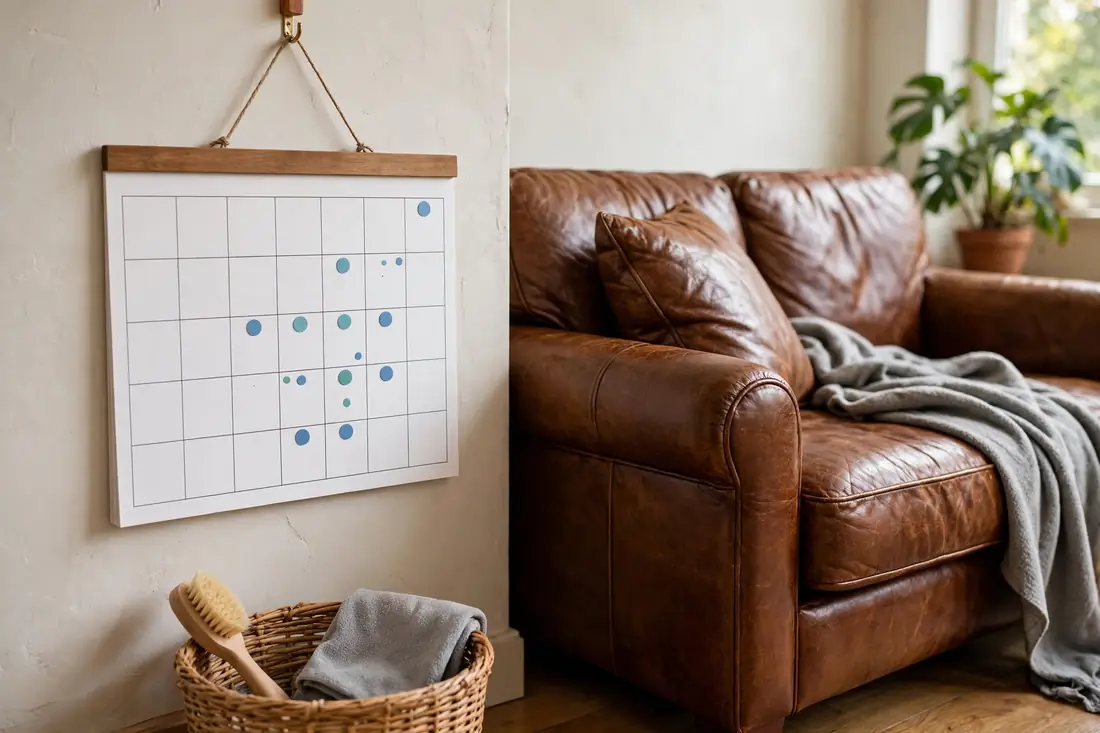
A little routine beats a big rescue clean once a year. Dust the couch with a dry cloth every week, which takes about two minutes and keeps grit from grinding into the finish. Wipe it down with a damp cloth once a month, and give it a full clean with soap solution every three to six months, depending on how much use it gets. A couch in a house with kids and pets needs the full clean closer to every three months. Condition twice a year, in spring and fall, so the leather stays supple through the dry months. Mark it on your calendar next to another twice-yearly job, like flipping the mattress.
When to Call a Professional
Some leather problems are past the home-fix stage, and trying anyway usually makes them worse. Deep cracks, peeling finish, and large patches of dye loss need a leather repair specialist, not a bottle from the store. Pet urine that has soaked through the cushion is another one, since the smell and the salts live deep in the padding. Suede and nubuck couches should go to a pro for anything beyond a light brush, because water leaves permanent marks on them. A good specialist can re-dye worn arms, patch small tears, and deep-clean without damaging the finish. Get a quote first, and ask what products they use.
✅ Guide4U Checklist
- Find your leather type first
- Test every cleaner hidden
- Vacuum before wiping damp
- Clean small sections, dry fast
- Condition twice a year
- Never bleach or ammonia
Key Takeaways
- Know the leather type before any water touches it.
- Test cleaners on a hidden spot, every time.
- Condition twice a year to stop cracks before they start.
Frequently Asked Questions
Can I clean a leather couch with vinegar?
Plain water and a little mild soap are safer. Vinegar is acidic, and it can dry out the finish and leave dull patches, especially on aniline leather. Some makers warn against it outright. If you still want to try it, mix one part vinegar with four parts water, test it on a hidden spot first, and stop if the color changes at all.
How do I get ink off a leather couch?
On pigmented leather, dab a cotton swab dipped in rubbing alcohol on the mark, working from the outside in, then wipe with a damp cloth. Test the alcohol on a hidden spot first, because it can lift dye on some finishes. For ink on aniline leather or suede, skip home fixes and call a leather professional, since the wrong cleaner can set the stain for good.
Are baby wipes safe for a leather couch?
Most baby wipes are a bad pick for leather. They often contain alcohol and fragrance, and both dry out the surface over time. A soft cloth dampened with distilled water does the same job without the risk. Save the wipes for hands and hard surfaces, and keep them away from the couch.
How often should I condition my leather couch?
Every 6 to 12 months is right for most homes. If your couch sits in a sunny room or you live in a dry climate, lean toward every 6 months, since heat and dry air pull oils out of the leather faster. Over-conditioning is also a mistake, so a thin coat twice a year beats a heavy coat every month.
What did you think of this article? Share your opinion in the comments below — we would love to hear from you.