
How to Get Rid of Squirrels in the Attic
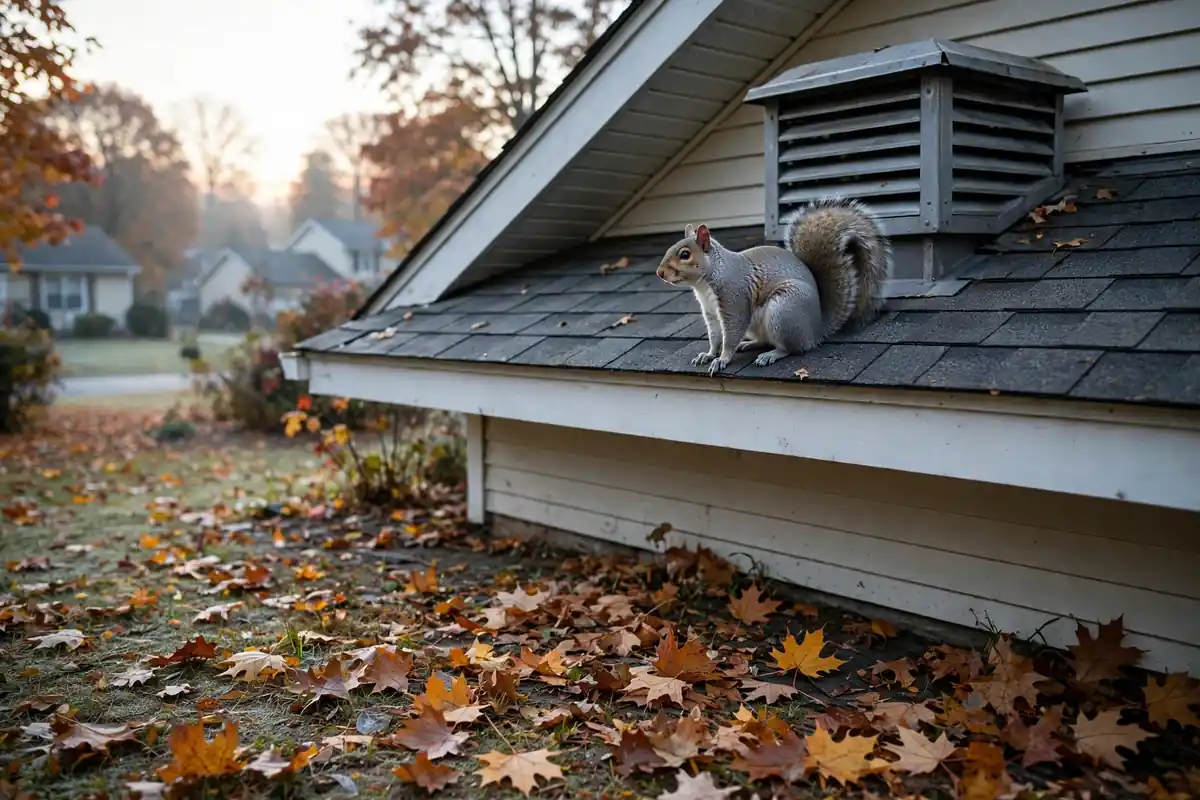
Quick Answer
Find every hole squirrels use, seal all but one with steel mesh, and fit a one-way exclusion door over the last exit so they can leave but not return. Leave the door in place for 7 to 14 days, then seal the final hole. Trim branches 8 to 10 feet from the roof, move bird feeders away from the house, and never use poison or seal squirrels inside.
How to Tell Squirrels Moved Into Your Attic
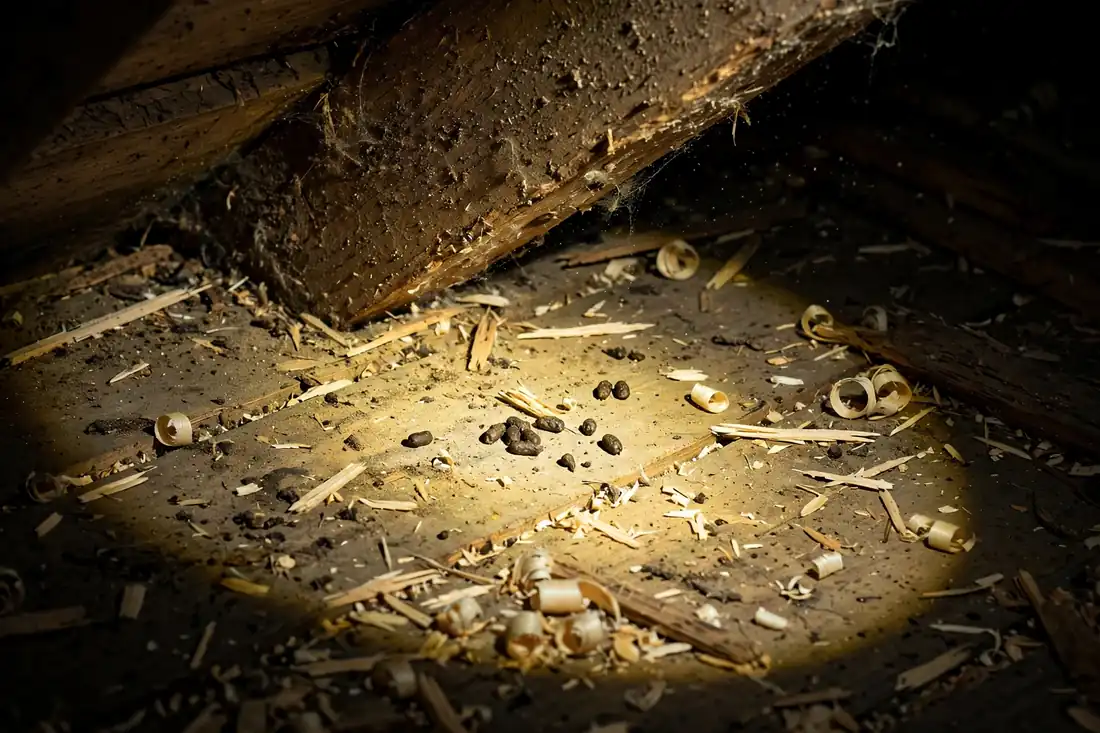
Squirrels are noisy tenants, and the first sign is usually sound. Listen for scampering, rolling, or thumping in the ceiling at dawn and dusk, when squirrels are most active, and for chewing or scratching at night. Then look for the physical clues: small round droppings near the attic hatch, shredded insulation or leaves piled into a nest, and gnaw marks on wood beams or wires. You may also notice a musty smell, or see a squirrel slipping in and out of a gap under the roofline. One squirrel is rarely alone for long, since a female may raise a litter up there, so act as soon as you are sure. The longer they stay, the more they chew, and chewed wires are a real fire risk.
- Scampering or rolling sounds at dawn and dusk
- Small round droppings near the attic hatch
- Shredded insulation or leaves piled into a nest
- Gnaw marks on wood beams or wires
Find Every Way They Get In
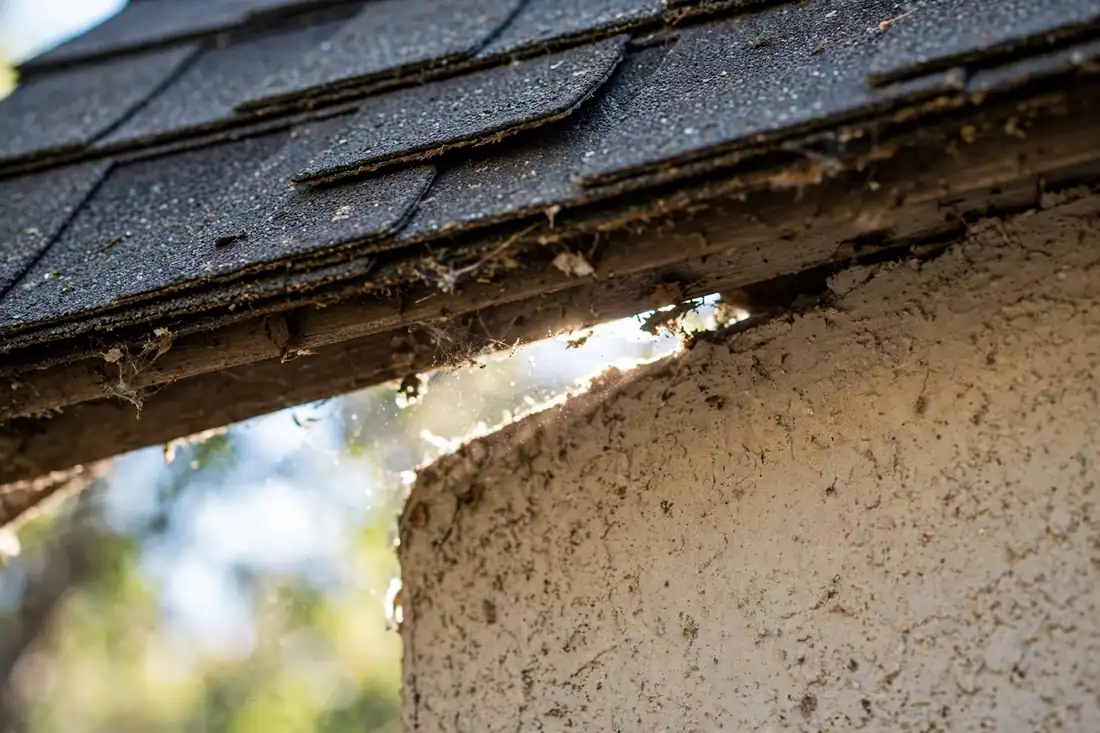
Before you close anything up, find every hole a squirrel could use, because a squirrel can squeeze through a gap as small as 1.5 inches wide. Walk around the outside of your house at dusk, when squirrels head home, and watch where they go in. Look along the roofline, the soffits under the eaves, the gable vents, the chimney flashing, and any place where the roof meets a wall. From inside the attic, look for daylight leaking through cracks, and check for rub marks or dark stains around holes, which show where fur has brushed past again and again. Mark every opening you find with tape or chalk, since you will need the full list before you start sealing.
Seal Every Hole Except One
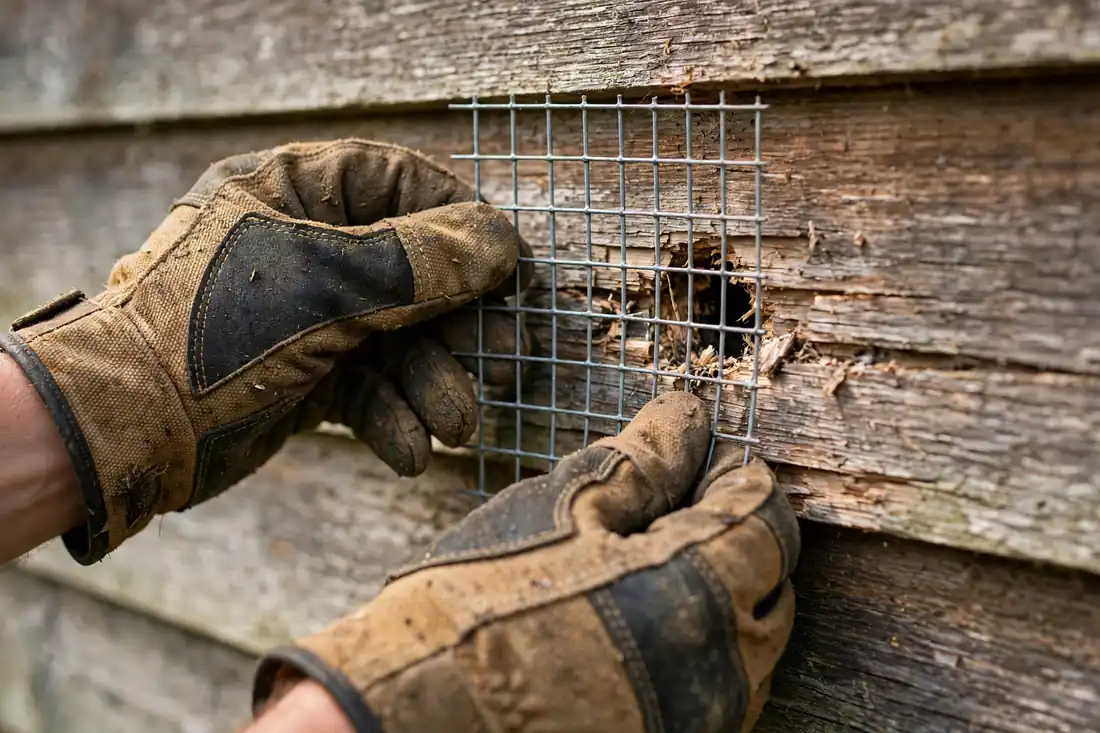
The trick is to close every entry point but one, and that last one gets the exclusion door. Use steel hardware cloth or sheet metal for the patches, since squirrels chew straight through foam, wood filler, and plastic. Cut the mesh a few inches wider than the hole, screw it down tight, and seal the edges with caulk so there is no gap to work at. Cover vents with mesh too, but keep the airflow open, and check the chimney cap, since an open chimney is a wide front door. Do not seal the final exit yet. If you close every hole at once with squirrels still inside, they will chew a new way out, often through your ceiling, or die trapped inside, which is a far worse problem.
- Use steel hardware cloth or sheet metal
- Cut the mesh wider than the hole and screw it tight
- Cover vents with mesh but keep airflow open
- Check the chimney cap before you start
Install a One-Way Exclusion Door
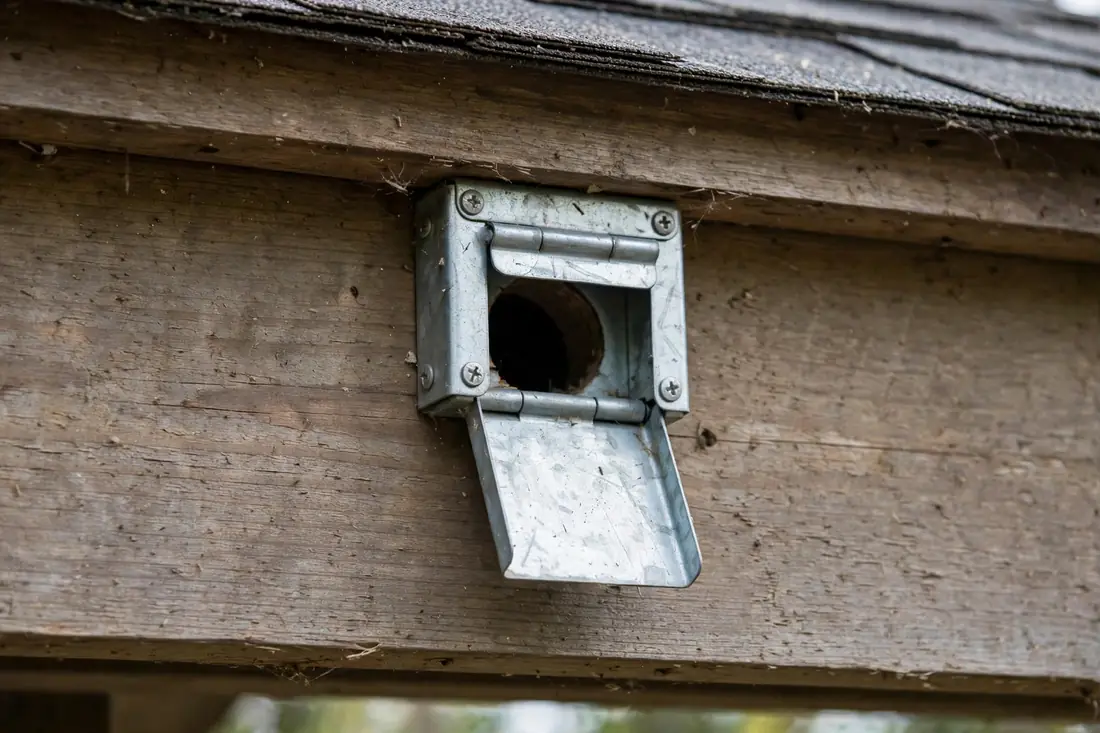
A one-way exclusion door is a simple device that lets squirrels leave the attic but stops them from coming back in. You can buy one at a hardware store for $15 to $30, or make one from hardware cloth bent into a short tunnel with a flap that swings out only. Mount it over the main entry hole, the one you left open, and leave it in place for 7 to 14 days. Squirrels leave to feed every day, and once they are out, the flap drops shut behind them. Check the attic for sounds each evening, and sprinkle a little flour near the door to see if anything still passes through. When the attic has been quiet for several days, take the door off and seal that last hole for good.
Take Away What Brings Them Back
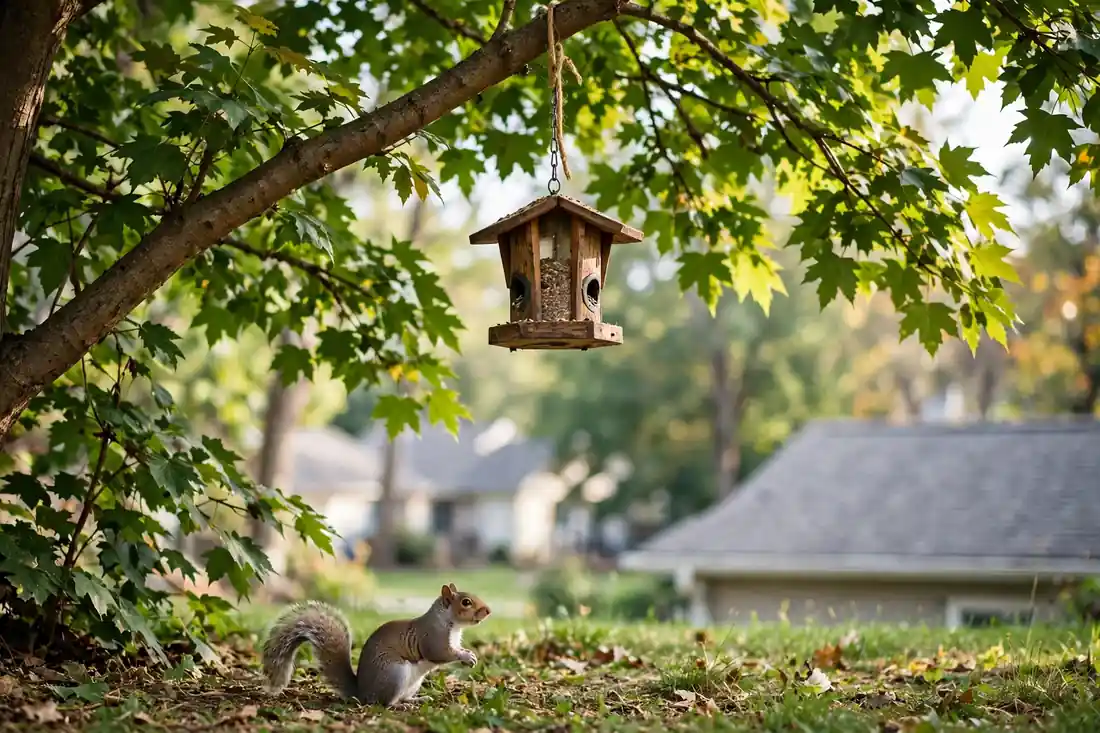
Squirrels come for food and shelter, so the attic is only half the job. Move bird feeders at least 15 to 20 feet from the house, or switch to a squirrel-proof feeder, since spilled seed is a daily invitation. Bring pet food inside, keep trash cans sealed with tight lids, and pick up fallen fruit from the yard. Store birdseed and pet food in metal bins with lids, not bags, since squirrels chew through plastic in minutes. If you feed birds in winter, sweep up the seed on the ground each evening. A yard with nothing easy to eat is a yard squirrels pass through, not one they settle in.
- Move bird feeders 15 to 20 feet from the house
- Bring pet food inside and seal trash cans
- Pick up fallen fruit from the yard
- Store seed in metal bins, not plastic bags
Trim the Trees and Clear the Roofline
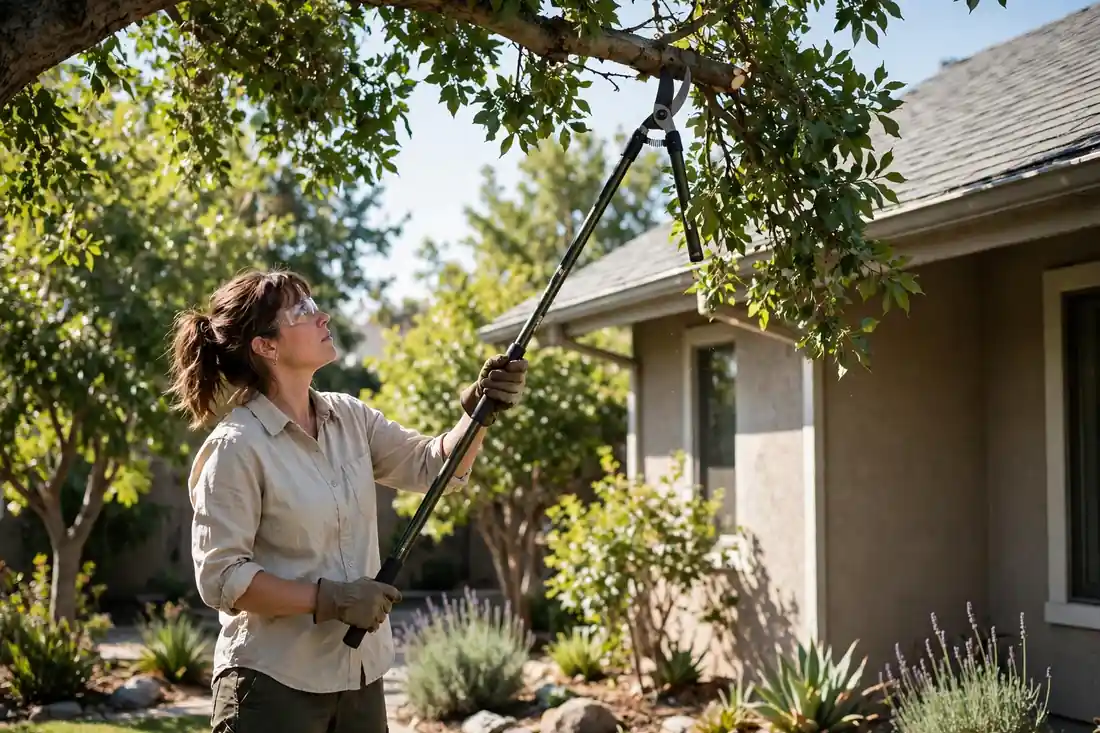
Trees are highways for squirrels, and a branch hanging over your roof is a direct route into the attic. Trim back any branch that comes within 8 to 10 feet of the roof, the walls, or the chimney, and do the same for shrubs and vines that touch the house. Late fall or winter is the best time to trim, when the branches are bare and you can see the shape of the tree. Use a pole saw for small branches, and hire a tree service for anything thick or high, since working near a roof on a ladder is risky. Never trim branches near power lines yourself; call your utility company, which will usually clear them for free. Keep the roofline clear, and squirrels lose their easiest way in.
What Not to Do
A few common ideas for getting rid of squirrels cause more harm than good, so skip them. Poison is illegal in many states and cities, and it can kill pets, owls, and other wildlife that eat a poisoned squirrel, besides leaving a rotting animal inside your walls. Mothballs do not drive squirrels away, and their fumes are toxic to breathe in an enclosed attic. Never seal every hole while squirrels are still inside, since they will chew through drywall or die trapped in the walls. And do not set a trap without checking your local rules first, since many places limit trapping, require a permit, or forbid moving a caught squirrel to another area. Humane exclusion is the method that works, and it is the one wildlife agencies recommend.
If There Are Babies in the Nest
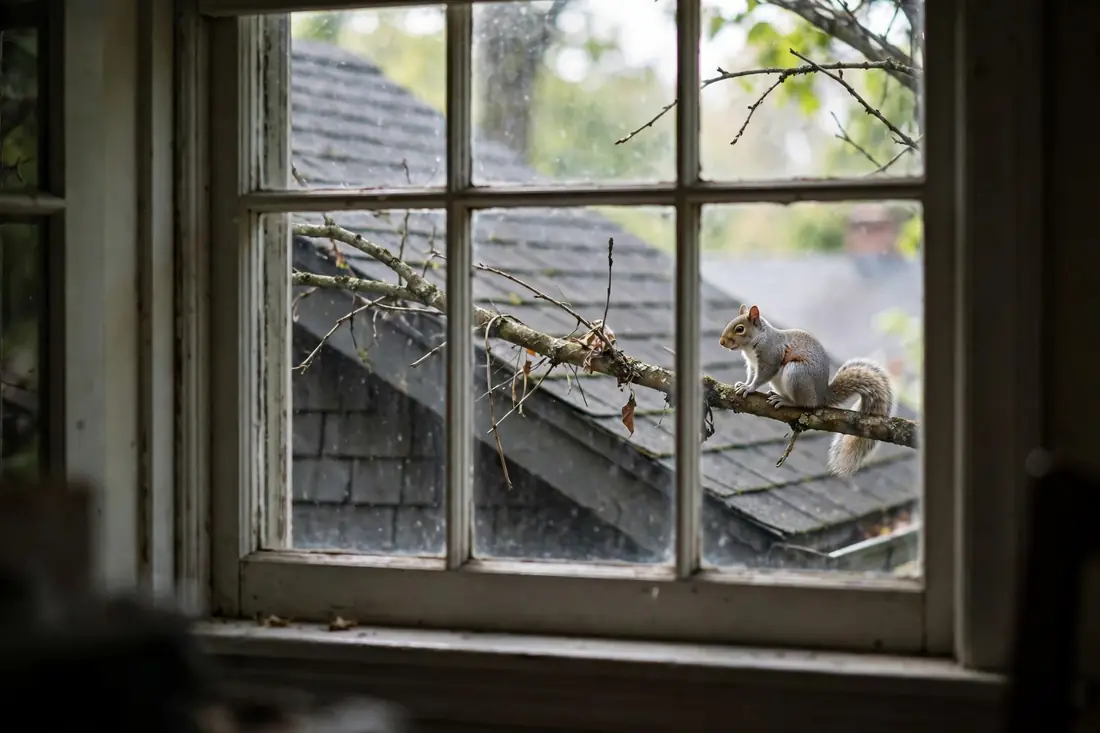
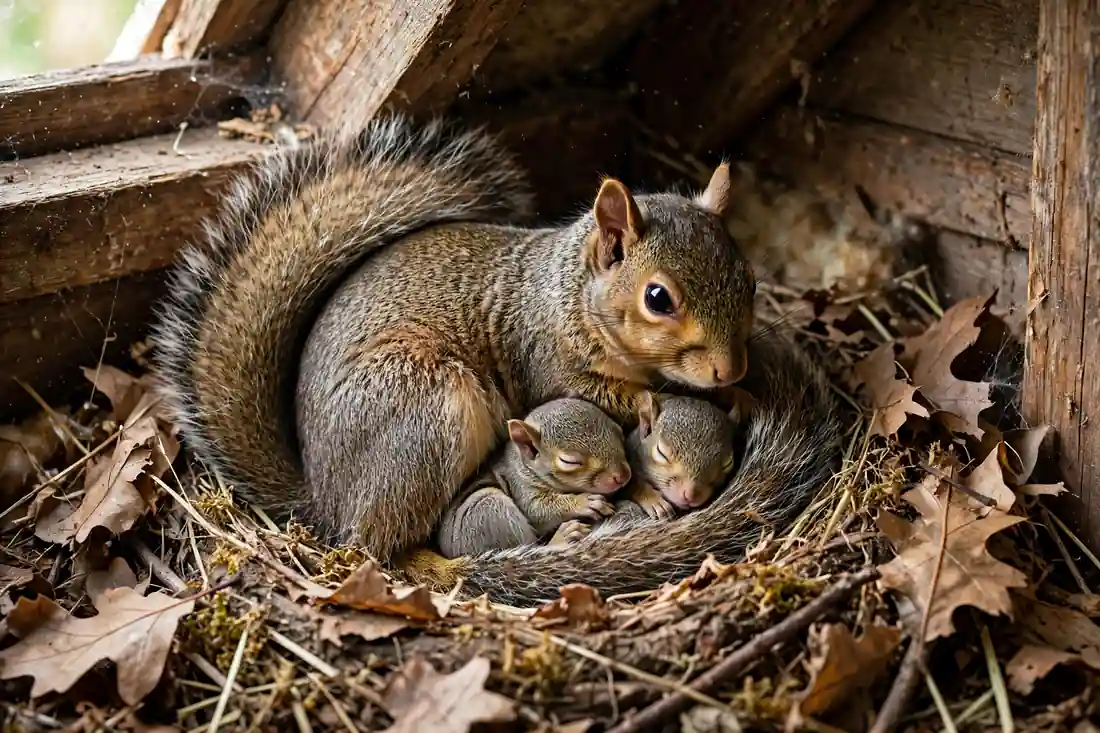
If you find baby squirrels in the attic, usually in spring or late summer, slow down and change the plan. A mother squirrel will move her babies herself if she has a clear exit, so leave the exclusion door in place and give her a few days. Do not handle the babies with bare hands, and do not separate them from the mother, since orphaned squirrels rarely survive without expert care. If the mother seems gone, or the babies are cold and crying, call a local wildlife rehabilitator, who can raise them and release them properly. In most areas, it is illegal to keep wild squirrels as pets. Patience here pays off: once the family moves out together, you can seal the attic for good.
Clean Up and Fix the Damage
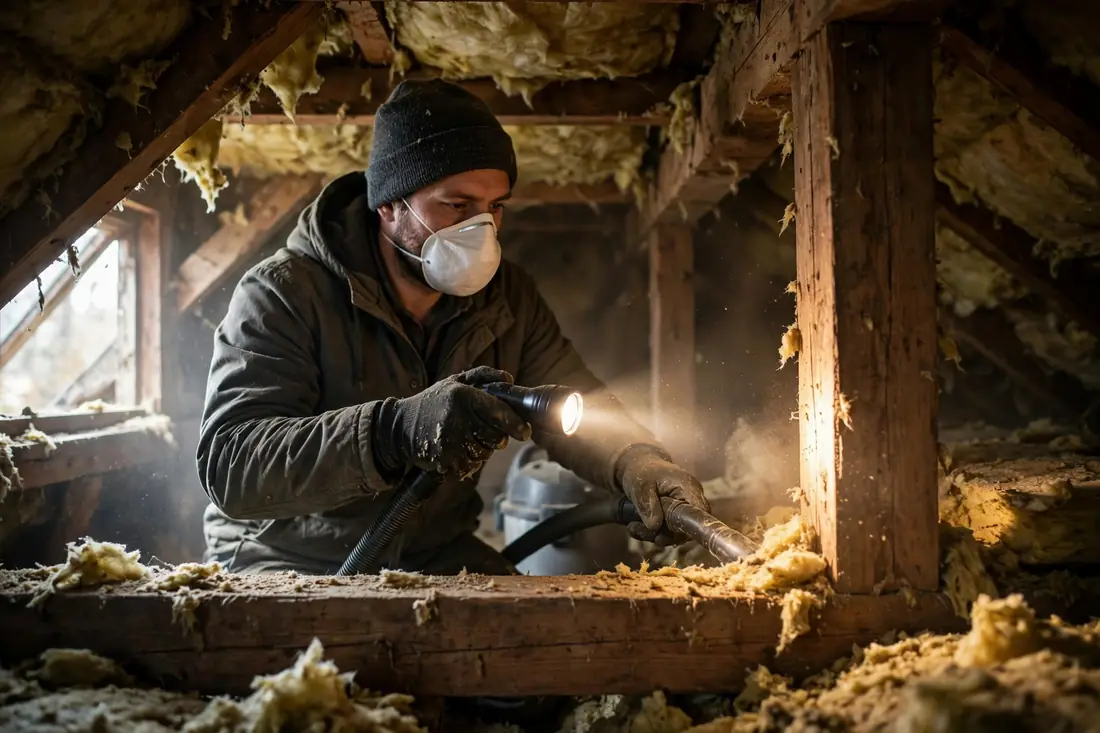
Once the squirrels are out, clean up before you seal the last hole, since droppings and urine can carry germs. Wear gloves and a dust mask, wet the droppings down with a spray bottle so they do not turn to dust, and scoop them into a sealed bag. Never sweep a dry attic floor, since that throws dust into the air you breathe. Wipe hard surfaces with a disinfectant, and replace any insulation that is soaked or badly soiled. Check the wiring carefully, and call an electrician if you find chewed insulation on any cable, since bare wires are a fire risk. Then seal the final hole, and your attic is yours again.
- Wear gloves and a dust mask before you start
- Wet droppings down, never sweep them dry
- Replace insulation that is soaked or badly soiled
- Call an electrician for any chewed wiring
When to Call a Professional
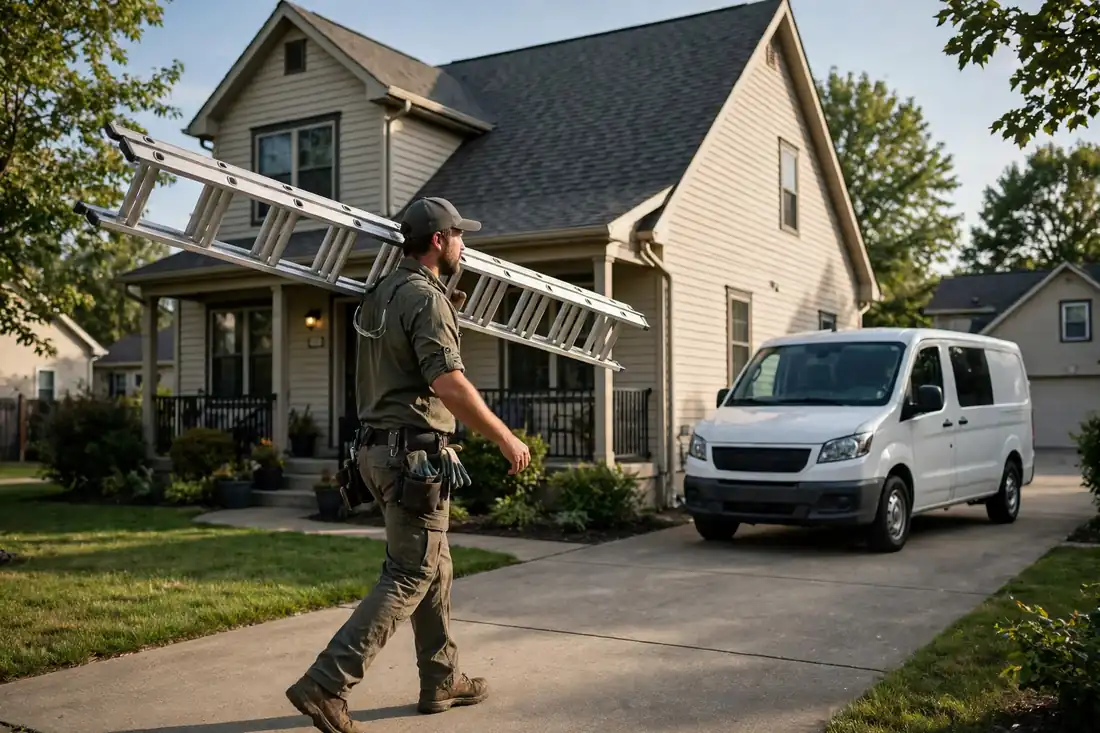
Some squirrel jobs are too big or too risky to do yourself, and that is when a wildlife removal professional earns their fee. Call one if the attic is hard to reach, if you suspect babies you cannot see, if squirrels keep coming back after your first try, or if you find chewed wiring. A professional inspection, exclusion, and sealing usually costs $190 to $650, depending on the size of the job and your area, and most include a warranty on the sealed entry points. Ask whether they use humane exclusion, whether cleanup is included, and how long the warranty lasts. Check that they are licensed in your state, since wildlife rules vary, and get the quote in writing before they start.
✅ Guide4U Checklist
- Listen for scampering at dawn and dusk
- Find every gap, even 1.5 inches wide
- Seal all holes but one with steel mesh
- Fit a one-way door over the last exit
- Wait 7 to 14 days for silence
- Trim branches 8 to 10 feet from roof
- Move bird feeders 15 to 20 feet away
Key Takeaways
- Seal everything but one exit, then use a one-way door.
- Steel mesh beats foam — squirrels chew through foam fast.
- Never trap or poison without checking local rules first.
Frequently Asked Questions
What time of year do squirrels nest in attics?
Squirrels usually have litters in spring, around February to April, and again in late summer, around August to September. They also move into attics in fall, when they look for a warm, dry place to spend the winter. If you hear activity in spring or late summer, babies are likely, so use a one-way exclusion door and give the mother time to move them out instead of sealing the attic right away.
Can squirrels chew through a roof?
Yes. A squirrel's teeth never stop growing, so it gnaws constantly, and it can chew through wood, asphalt shingles, plastic vents, and even soft metals like aluminum flashing. It only needs a gap about 1.5 inches wide to start, and it will widen a small hole quickly. That is why steel hardware cloth and sheet metal are the only reliable patch materials, and why foam or wood filler alone will not keep them out.
Is it legal to trap squirrels?
It depends on where you live. Many states and cities require a permit to trap squirrels, limit how far you can move one, or ban relocation entirely, since a moved squirrel often dies in unfamiliar territory. Some areas only allow licensed wildlife operators to trap at all. Check your state wildlife agency or local animal control before you set any trap, and use humane exclusion instead, which is legal almost everywhere and works better.
How long does it take to get squirrels out of an attic?
With a one-way exclusion door, most squirrels leave within a few days, and the attic is usually quiet within 7 to 14 days. If there are babies, it can take longer, since the mother moves them one at a time. After a week of silence, seal the last hole and watch for new activity for another week. If squirrels are still coming and going after two weeks, you may have missed an entry point, and a professional inspection is the next step.
What did you think of this article? Share your opinion in the comments below — we would love to hear from you.