
How to Keep Spiders Out of Your House Naturally
Quick Answer
Seal the gaps spiders use to get in, especially around windows, doors, and pipes, then cut off their food by dealing with other bugs. Spray peppermint oil or vinegar along baseboards and windowsills once a week, and clear clutter from closets and garages. Most spiders leave on their own once the entry points and the food are gone.
Why Spiders Come Inside in the First Place
Most spiders do not move into your house because they like your decor. They come in for the same three reasons every creature does: food, shelter, and a mate. In fall, when nights turn cold, they head indoors looking for warmth, which is why you see more of them in September and October than any other time of year. Your home is full of what they want: quiet corners, dark closets, and a steady supply of small bugs to eat. Spiders follow the insects, so a house with gnats near the windows is a house with spiders near the windows. The good news is that none of this means your home is dirty. Even spotless houses get spiders. It just means a few entry points and a little clutter are giving them an easy life.
Seal the Gaps They Use to Get In
A spider can squeeze through a gap as thin as a credit card, so sealing is the single most effective thing you can do. Walk around the outside of your house and look at the places where different materials meet: where the siding meets the foundation, around window frames, and where pipes and wires pass through the wall. Fill small cracks with caulk and stuff larger gaps with copper mesh before you seal them, since mice chew through foam but leave copper alone. Inside, check the weather stripping on your doors and the screens on your windows. A torn screen is an open door for spiders and the bugs they hunt. Do this once in late summer and you will see fewer spiders all fall.
Cut Off Their Food Supply
No spiders stick around a house with nothing to eat. The fastest way to make your home less inviting is to deal with the other bugs first. Keep kitchen counters wiped down and store food in sealed containers, since crumbs and open pet food draw ants, roaches, and pantry moths, and spiders follow the buffet. Fix dripping taps and dry out damp spots, because moisture draws silverfish and drain flies. Turn off porch lights you do not need, or switch them to yellow bug lights, since white light pulls moths and beetles to your doors all night. Fewer insects near your doors means fewer spiders waiting beside them. It is a chain, and breaking the first link does most of the work.
Peppermint Oil: The Repellent That Actually Helps
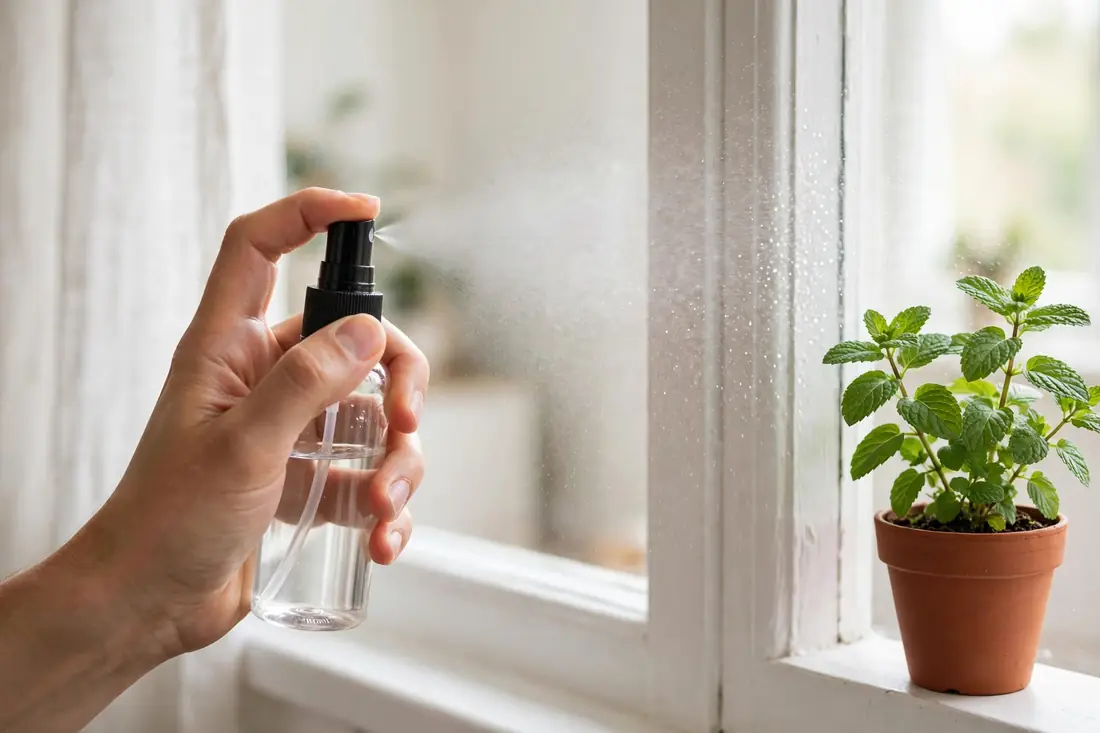
Peppermint oil is the natural spider repellent with the most fans, and for good reason: spiders smell and taste through their legs, and strong peppermint bothers them enough to make them turn away. Mix about 15 to 20 drops of peppermint essential oil into a spray bottle of water with a teaspoon of dish soap, which helps the oil mix instead of floating on top. Shake it well and spray it along baseboards, window frames, door frames, and the corners of rooms where you have seen webs. Reapply once a week and after you mop, since the scent fades. It will not build a wall no spider can cross, but combined with sealing it keeps most of them out, and your house smells fresh.
Vinegar Spray for Corners and Windowsills
White vinegar is the cheap backup to peppermint oil, and most people already have it in the kitchen. The strong smell drives spiders off, and vinegar also wipes away the scent trails other insects leave behind, which makes the area less interesting to everything that crawls. Mix equal parts white vinegar and water in a spray bottle and use it on windowsills, door thresholds, and the corners of garages and basements. Do not spray it on natural stone counters or marble, since acid can dull the surface, and keep it away from houseplants. Like peppermint, it needs a fresh coat every week or so. It costs almost nothing, and for corners you rarely visit it is the easiest option.
Clear the Hiding Spots Inside
Spiders love clutter because it gives them quiet, undisturbed places to hide and build webs. The garage, the basement, and the back of the closet are their favorite rooms, and the reason is simple: nobody disturbs them there for weeks at a time. Go through those spots once and be honest about what is actually being stored. Cardboard boxes are the worst, since spiders hide in the flaps and the boxes attract other insects too, so switch to sealed plastic bins where you can. Keep stored items a few inches off the floor and a few inches away from the wall. Vacuum the corners and ceilings once a month to knock down webs before they fill with eggs. A room that gets disturbed often is a room spiders avoid.
- Boxes and bags stacked on the floor
- Piles of clothes on chairs or the floor
- Cluttered closets and storage corners
- Firewood stored against the house
Fix the Outside of the House Too
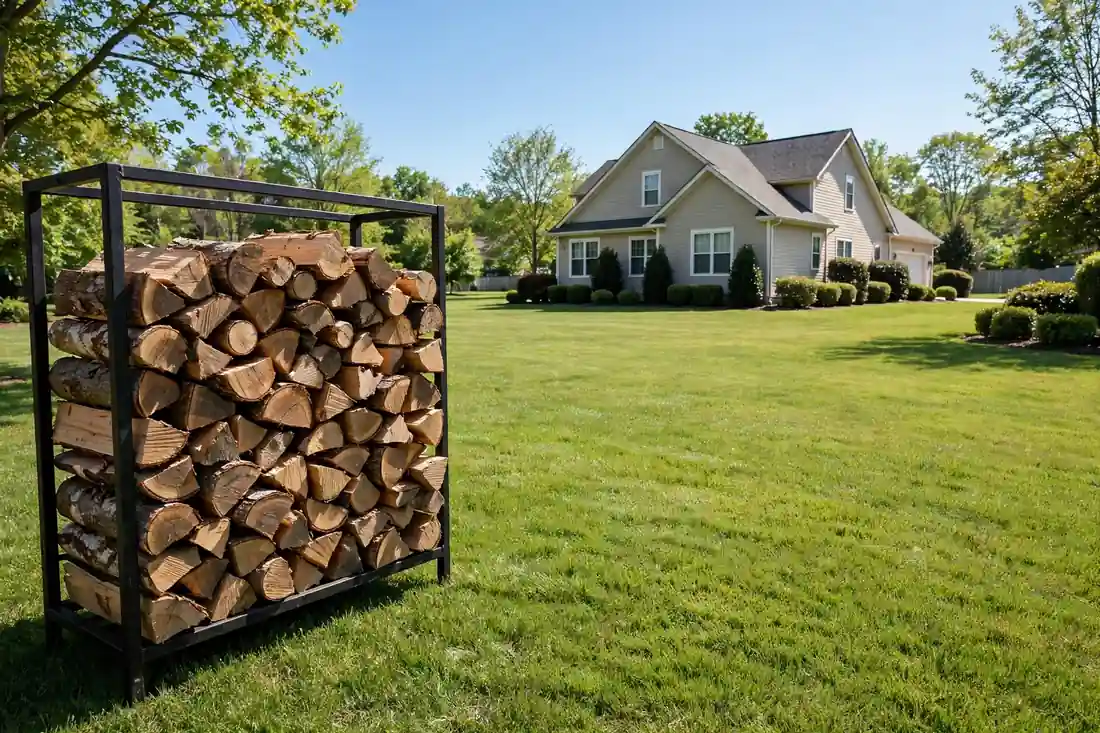
What happens outside your walls decides a lot about what happens inside them. Spiders live in woodpiles, leaf litter, and dense shrubs pressed against the house, and from there it is a short walk to your door. Move firewood at least 20 feet from the house and keep it off the ground on a rack. Trim back bushes and tree branches so they do not touch the siding or the roof, since branches are spider highways straight to your windows. Clear leaves and mulch away from the foundation, and keep outdoor lights off the wall where possible, or switch to motion-sensor lights so they are not on all night. A tidy yard is not just about looks. It pushes the whole spider neighborhood farther from your doors.
What to Do With a Spider You Find Inside
When you find one inside, you do not need to panic or reach for a spray can. Most house spiders are harmless and would rather run than bite, and the ones you see in the open are usually males wandering around looking for a mate. The simplest move is a glass and a stiff piece of paper: trap the spider under the glass, slide the paper underneath, and carry it outside, at least a few feet from the house. If you would rather not handle it, a vacuum with a hose attachment does the job in seconds. Either way, take a second to look at where you found it. Spiders cluster near their food and their entry points, so the spot where you found one is a clue about which gap or cluttered corner to fix next.
When Spiders Keep Coming Back
If you have sealed the gaps, cleared the clutter, and used repellents for a month and spiders still show up every week, something is feeding them that you have not found yet. Check the damp places first: a slow leak under a sink, a musty basement corner, or a bathroom with poor ventilation can breed drain flies and silverfish, which keep spiders well fed. Check the attic and the garage for wasp nests and old boxes, and look for gaps around the dryer vent and the AC lines, which are easy to miss. If the problem is heavy and you cannot find the source, a pest control visit for an inspection is a reasonable next step. A good inspector finds the entry point and the food source, which is more useful than another round of spraying.
A Simple Monthly Routine That Keeps Them Out
Keeping spiders out is not a one-time job, but it does not have to be a big one either. Set aside twenty minutes once a month and run through a short routine. Vacuum the corners and ceilings to knock down any webs before they fill with eggs, and vacuum behind furniture that rarely moves. Refresh your peppermint or vinegar spray along the baseboards and windowsills. Walk the doors and check that the sweeps and screens are still tight, since weather stripping wears out over a season. Pick one cluttered storage spot and clear it. That is the whole routine, and it is enough. Spiders are creatures of habit, and a house that gets disturbed on a regular schedule is a house they quietly move on from.
- Vacuum corners, ceilings, and behind furniture
- Refresh peppermint or vinegar spray
- Check door sweeps and window screens
- Clear clutter from one storage spot
✅ Guide4U Checklist
- Caulk cracks around windows and pipes
- Fix torn screens and door sweeps
- Wipe counters and seal food
- Spray peppermint along baseboards weekly
- Clear clutter from closets and garage
- Move firewood away from the house
- Vacuum corners and ceilings monthly
Key Takeaways
- Sealing gaps beats any spray
- Spiders follow other bugs, so fix those first
- A monthly 20-minute routine keeps them out
Frequently Asked Questions
Does peppermint oil really keep spiders away?
It helps, but it is not a magic shield. Spiders sense chemicals through their legs, and strong peppermint is unpleasant enough to make most of them turn away from a sprayed surface. It works best as part of a wider plan: seal the gaps, cut off their food, and spray the entry points once a week. On its own, without sealing, spiders will simply walk around the sprayed spots.
Why are there so many spiders in my house in the fall?
Fall is mating season for many common house spiders, and the males wander around looking for a mate, which is why you see them out in the open instead of hidden in corners. At the same time, cooling nights push spiders indoors looking for warmth and shelter. Sealing gaps in late summer, before the fall rush, is the best way to cut the numbers down.
Are house spiders dangerous?
Most spiders you find in a US home are harmless. Common house spiders, cellar spiders, and wolf spiders may bite only if trapped against skin, and the bite is usually no worse than a bee sting. The two spiders to take seriously are the black widow and the brown recluse, which are uncommon indoors in most areas. If you are unsure what you found, take a photo from a safe distance and compare it with your local extension service guide.
Do ultrasonic spider repellents work?
There is no solid evidence that ultrasonic plug-in devices repel spiders. Studies and consumer tests have repeatedly found that spiders ignore them, and the Federal Trade Commission has warned some makers about their claims. Your money is better spent on caulk, weather stripping, and a bottle of peppermint oil. Those three things have a visible effect you can actually check.
What did you think of this article? Share your opinion in the comments below — we would love to hear from you.