
How to Prepare Your Home for a Power Outage

Quick Answer
Pack one labeled kit with flashlights, batteries, a radio, water, and a first-aid kit, and keep it where everyone can find it in the dark. Never run a generator indoors or in a garage, keep fridge doors shut, and leave one lamp on so you know when power returns.
Why a little prep beats a scramble
Most power outages are short and boring, and that is exactly why people never prepare for them. Then one summer storm or winter ice event knocks out power for a day, and suddenly the house is dark, the phones are dying, and nobody can find a flashlight that works. A prepared home is not a bunker. It is a house where the flashlights have batteries, the pantry holds a few extra cans, and everyone knows where the kit lives. That level of readiness takes one afternoon and a small shopping trip, and it turns an outage from a scramble into a minor inconvenience. The goal is not to survive the end of the world. It is to keep your family safe, fed, and reasonably comfortable until the grid comes back.
Build one kit that lives in one spot
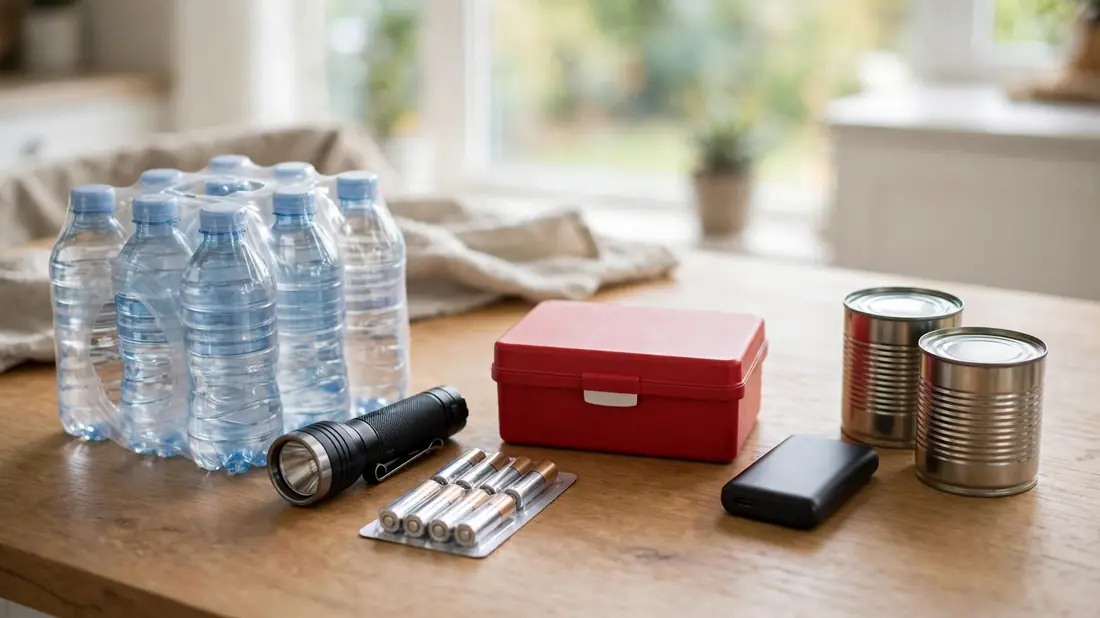
The single best thing you can do is put your outage supplies in one box, in one place, and tell everyone in the house where it is. A kit scattered across three closets is not a kit when the lights are out. Pick a sturdy bin, label it, and keep it somewhere you can reach in the dark, like a hall closet or the pantry floor. Inside, pack the basics: flashlights, batteries, a radio, a first-aid kit, water, and some cash. Check the bin twice a year, when you change your clocks, and replace dead batteries and expired items. That ten-minute check is the difference between a kit and a box of old junk. If you have kids, let them help pack it. They will remember where it is, and they will be calmer during a real outage.
- Flashlights and a headlamp, plus spare batteries in a sealed bag.
- A battery-powered or hand-crank radio for weather and outage updates.
- A first-aid kit, any daily medication, and a printed list of prescriptions.
- Cash in small bills, since card readers and ATMs stop working too.
Light the house without open flames
Candles feel cozy, but they are the leading cause of outage-related house fires, and a dark house full of tired people is exactly when a candle gets knocked over. Battery flashlights and lanterns are safer, brighter, and cheaper over time, and a headlamp keeps your hands free for cooking or reading. Keep one flashlight in each bedroom and one in the kit, and store batteries separately so they do not drain or leak inside the device. Solar garden lights, brought inside at night, make surprisingly good hallway lights, and glow sticks keep kids happy and visible. If you do use candles, keep them in sturdy holders, never leave them burning in an empty room, and blow them out before bed. Light should solve a problem, not start one.
Food and water: the simple version
You do not need a month of supplies. Three days of food and water covers the vast majority of outages, and it fits in a corner of the pantry. Buy foods your family will actually eat cold or with minimal cooking: canned soup, beans, peanut butter, crackers, dried fruit, and granola bars. A manual can opener is the most forgotten item on this list, so tape one to the bin if you have to. Store water in clean, food-grade containers, and rotate it every six months. If an outage is forecast, fill the bathtub for flushing toilets and washing, and freeze a few bottles of water ahead of time. Those frozen bottles double as ice packs for the cooler and as extra drinking water once they melt.
- One gallon of water per person per day, for at least three days.
- Canned soup, beans, tuna, peanut butter, crackers, and dried fruit.
- A manual can opener, because an electric one is useless without power.
- Paper plates and cups, so you save dishwater for drinking.
Keep the fridge and freezer working for you
Your fridge is a better cooler than you think, as long as you leave it alone. A closed fridge keeps food safe for about four hours, and a full freezer holds for up to two days, but every time you open the door you trade cold air for warm room air. Before a forecast outage, turn the fridge and freezer to their coldest settings, and move perishables you plan to eat into a cooler with ice. If the outage drags past four hours, cook what you can on a camp stove outside, and eat the most perishable food first. When power returns, check anything that smells off or sat warm too long, and throw it out without guilt. A thermometer in the fridge takes the guesswork out of this: if it reads above 40 degrees for more than two hours, the food goes.
Generator safety: the rule that saves lives
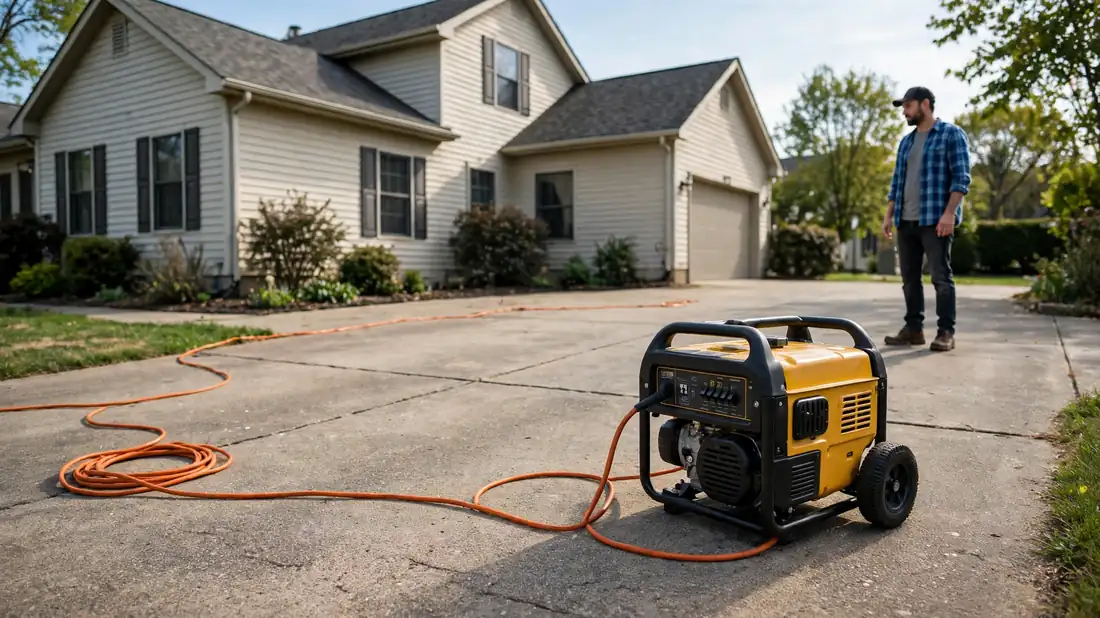
If you own a generator, this section matters more than the rest of the guide combined. Generators produce carbon monoxide, a colorless, odorless gas that kills quietly, and every year people die from running one in a garage, on a porch, or too close to a window. The rule is simple: outside only, at least 20 feet from the house, with the exhaust pointed away from doors and windows. Never run one in a garage, even with the door open, and never bring a portable generator indoors to store it while it is still hot. Install battery-powered carbon monoxide detectors on each floor, and test them monthly. Keep fuel in approved containers outside, away from the generator itself. A generator is a wonderful tool, but only when it stays outside, far from the people it is meant to help.
Phones, power banks, and staying informed
Your phone is your radio, your flashlight, your map, and your way to call for help, so protecting its battery is a real priority. Keep a power bank charged in the kit, and charge it on the same schedule as your smoke alarm checks. During an outage, put phones on low-power mode, dim the screen, and close apps that drain battery in the background. A battery-powered or hand-crank radio is worth owning, because cell networks can go down or get overloaded during a big storm, and local radio keeps broadcasting outage updates and shelter locations. Sign up for your utility's outage alerts by text before you need them, and save your utility's outage number in your phone. Information is its own kind of supply, and it runs out when your battery does.
Staying warm in winter, cool in summer
Temperature is the part of an outage that turns uncomfortable into dangerous, especially for older adults, babies, and anyone with a health condition. In winter, close off one room, hang blankets over doors and windows, and dress in layers. Never heat your home with a gas oven, a grill, or a generator indoors, since carbon monoxide is the real danger, not the cold. In summer, move to the lowest, shadiest room, drink water on a schedule rather than waiting for thirst, and use battery fans and damp towels to cool down. Know the warning signs of heat exhaustion and hypothermia, and check on neighbors who live alone. A house can get cold or hot surprisingly fast, and the fix is usually simple: one warm room, or one cool room, and people together in it.
Medical needs, kids, and pets come first
If anyone in your home uses powered medical equipment, plan for outages with your doctor, not during one. Ask about battery backups, how long a device runs without power, and whether your utility offers a medical priority list for restoration. Keep a printed list of prescriptions and dosages in the kit, since a dead phone means no access to your pharmacy app. For kids, pack a few comfort items and a simple game in the kit: boredom is the real enemy during a long dark evening. For pets, store extra food, water, and any medication, and keep carriers where you can find them in the dark. If you must evacuate, take pets with you. Shelters vary in what they accept, so check your local options before storm season, not while you are packing.
The night the power goes out: your first moves
When the lights go out, start with three checks. First, look outside: if the whole street is dark, it is a grid problem, and your utility already knows or soon will. If only your house is dark, check your breaker panel for a tripped breaker before calling anyone. Second, report the outage to your utility, either through its app or by phone, and then stop checking the app every five minutes, since that just drains your battery. Third, set up your one lit room, get the kit out, and settle in. Unplug expensive electronics to guard against the surge when power returns, and leave one lamp switched on as your signal. Most outages end within a few hours. A calm first hour, with light, water, and a plan, makes the rest of the wait easy.
- Check whether the whole street is dark, or just your house.
- Flip one lamp on, so you know the moment power returns.
- Unplug expensive electronics, or leave them on a surge protector.
- Call or text your utility to report the outage, then save phone battery.
✅ Guide4U Checklist
- Pack one labeled kit in one reachable spot
- Store one gallon of water per person per day
- Keep flashlights in every bedroom
- Never run a generator indoors or in a garage
- Install carbon monoxide detectors on each floor
- Unplug expensive electronics during outages
- Check the kit twice a year
Key Takeaways
- One kit in one spot beats supplies scattered across closets.
- Generators belong outside, at least 20 feet from the house.
- A calm first hour makes the rest of the outage easy.
Frequently Asked Questions
How long does food last in the fridge during an outage?
A closed fridge keeps food safe for about four hours, and a full freezer holds for about 48 hours, or 24 hours if it is half full. Keep the doors shut as much as possible. Anything that sat above 40 degrees Fahrenheit for more than two hours should be thrown out. When in doubt, throw it out. A ruined dinner costs far less than a ruined weekend.
Can I run a generator in the garage with the door open?
No, never, not even with the door open and a fan running. A garage fills with carbon monoxide fast, and the gas drifts into the house through doors, vents, and gaps you cannot see. Generators belong outside, at least 20 feet from the house, with the exhaust pointing away from windows and doors. Put a battery-powered carbon monoxide detector in your home, test it monthly, and replace its batteries when you change your smoke alarm batteries.
How much water should I store for an outage?
Plan on one gallon per person per day, for at least three days, covering both drinking and basic hygiene. That means a family of four needs about twelve gallons. Store-bought jugs are easiest, but you can also fill clean food-grade containers ahead of storm season. Rotate the supply every six months, and keep a few extra gallons for pets.
Should I unplug electronics during a power outage?
Yes, unplug expensive electronics, especially TVs, computers, and game consoles, or protect them with a surge protector. Power often returns in a surge, and that surge is what fries electronics, not the outage itself. Leave one lamp switched on so you know the moment power returns, and plug things back in gradually rather than all at once. A whole-home surge protector installed at your breaker panel is worth considering if your area loses power often.
What did you think of this article? Share your opinion in the comments below — we would love to hear from you.