
How to Remove Smoke Smell From a Car for Good
Quick Answer
Vacuum and shampoo the seats and carpets, wipe the headliner gently, clean every hard surface with a vinegar solution, and replace the cabin air filter. Clean the vents, leave baking soda on the fabric overnight, then vacuum it up. Air fresheners only mask the smell — cleaning removes it.
Why Smoke Smell Sticks Around So Long
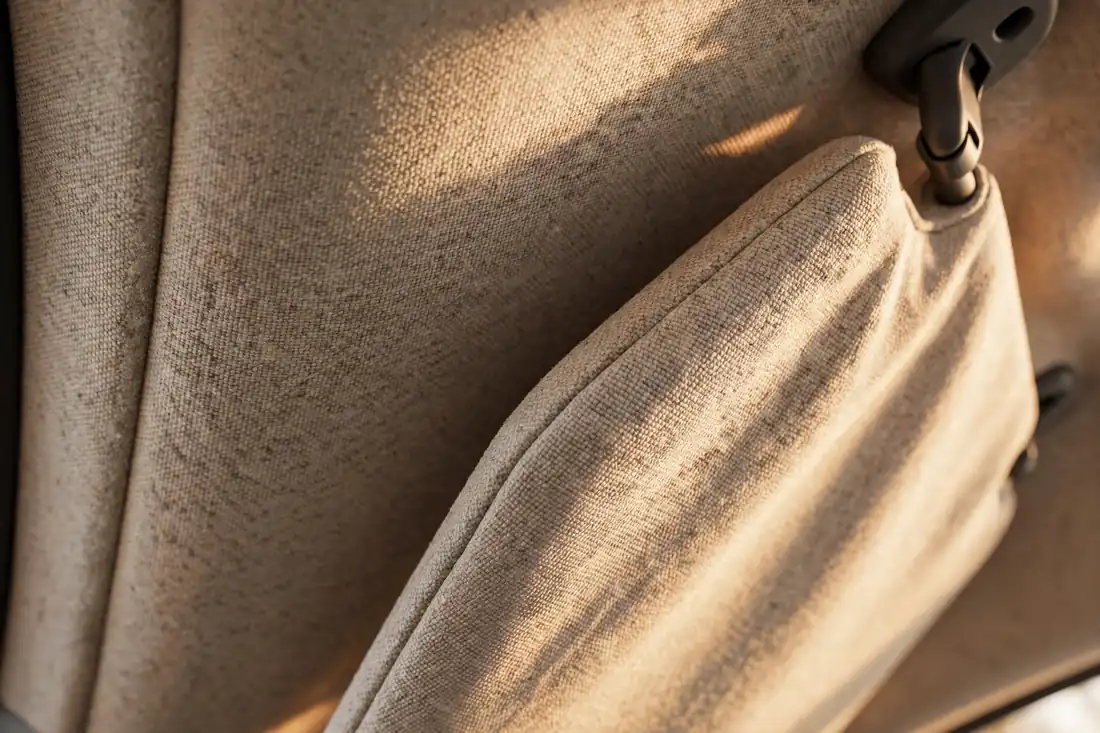
Cigarette smoke is not just a smell in the air. It is a mix of tiny tar and nicotine particles that settle on every surface in a car and soak into soft materials. The headliner is the worst offender: it is a big sponge of fabric glued to the roof, and it holds smoke like nothing else. Seats, carpets, door panels, and the rubber seals around the doors all absorb it too. Then the ventilation system picks the particles up and blows them back through the cabin every time you run the air. That is why a car can smell clean for an hour after an air freshener, then smell like an ashtray again the next morning. You have to clean the surfaces, not cover the smell.
Clear Out Everything That Holds Smoke
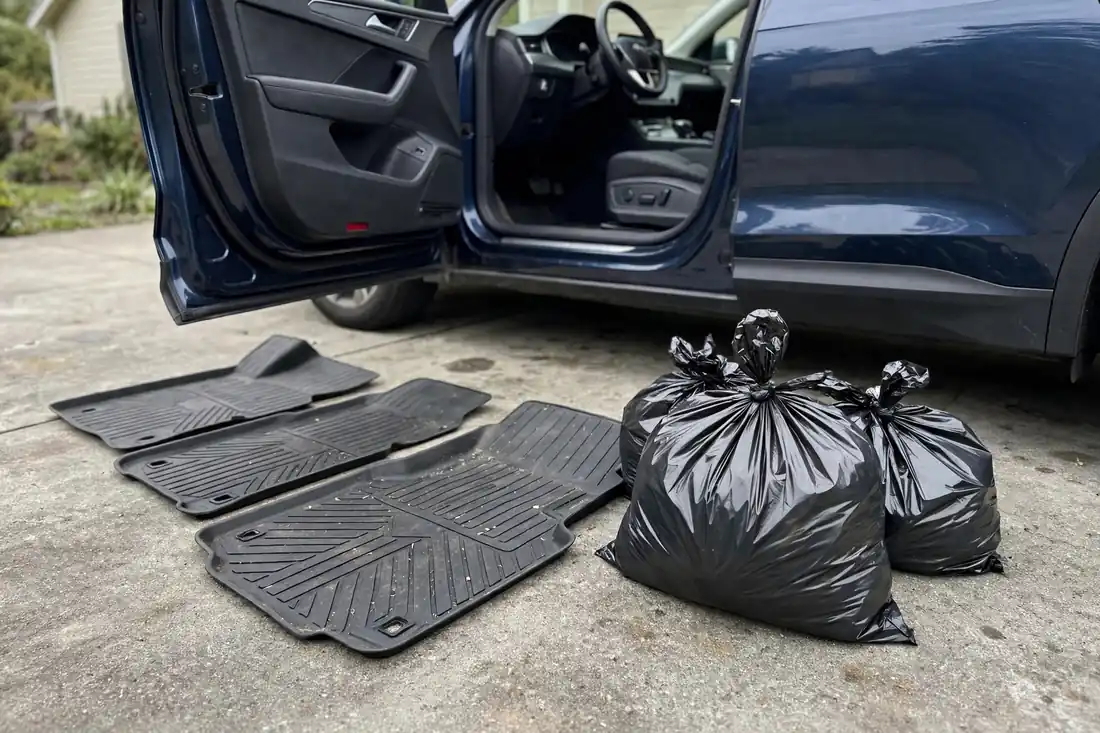
Start by taking everything out of the car that can hold smoke: floor mats, seat covers, trash, old receipts, the contents of the glove box and door pockets, and anything in the trunk. Empty and wash the ashtray, even if it looks clean, and check the cupholders and the gaps between the seats for cigarette butts and ash. If the mats are fabric, wash them separately or leave them out in the sun for a day. Sunlight and fresh air do real work on smoke smell, and they cost nothing. Do not put anything back until the car itself is clean, or you will just carry the smell back inside.
Vacuum Every Inch, Twice
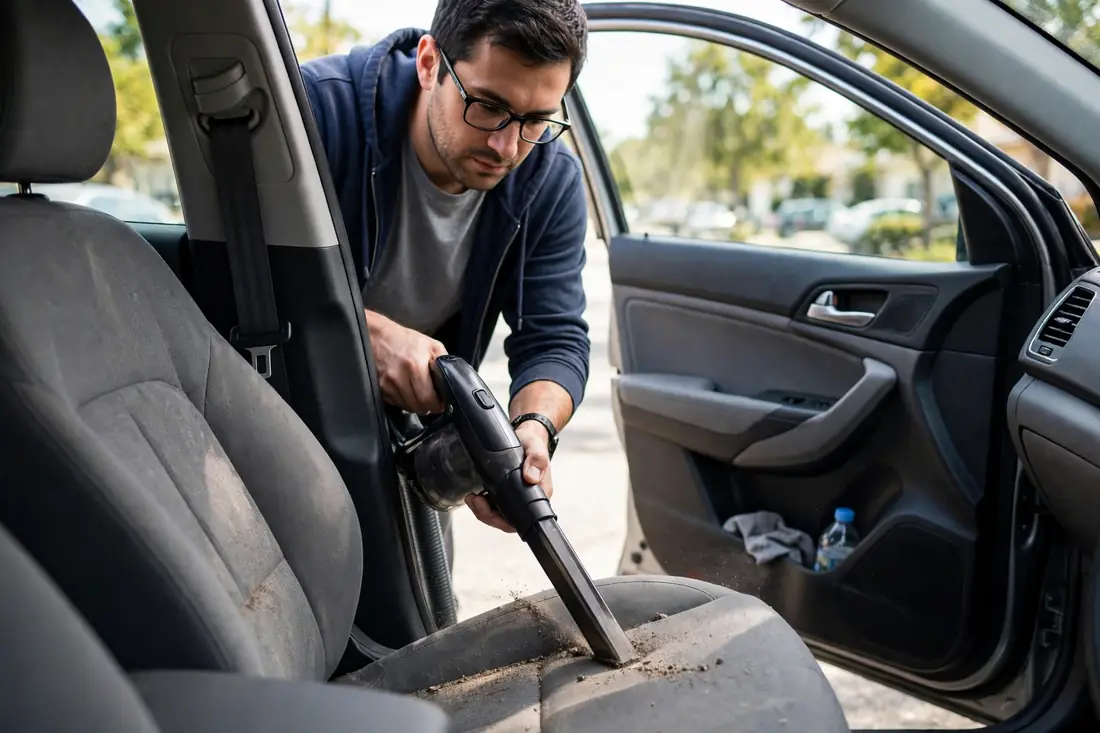
Vacuum the whole interior with a crevice tool, and take your time. Get under the seats, between the seat cushions, along the seat tracks, and into the pockets on the back of the front seats. Vacuum the headliner gently with a brush attachment, using light pressure so you do not loosen the fabric from the roof. Ash and tar dust hide in seams and stitching, and a quick pass over the middle of the seats misses most of it. Empty the vacuum or change the bag when you finish, so the dust does not blow back out next time. A second slow pass after the shampoo step catches what the first one loosened.
Shampoo the Seats and Carpets
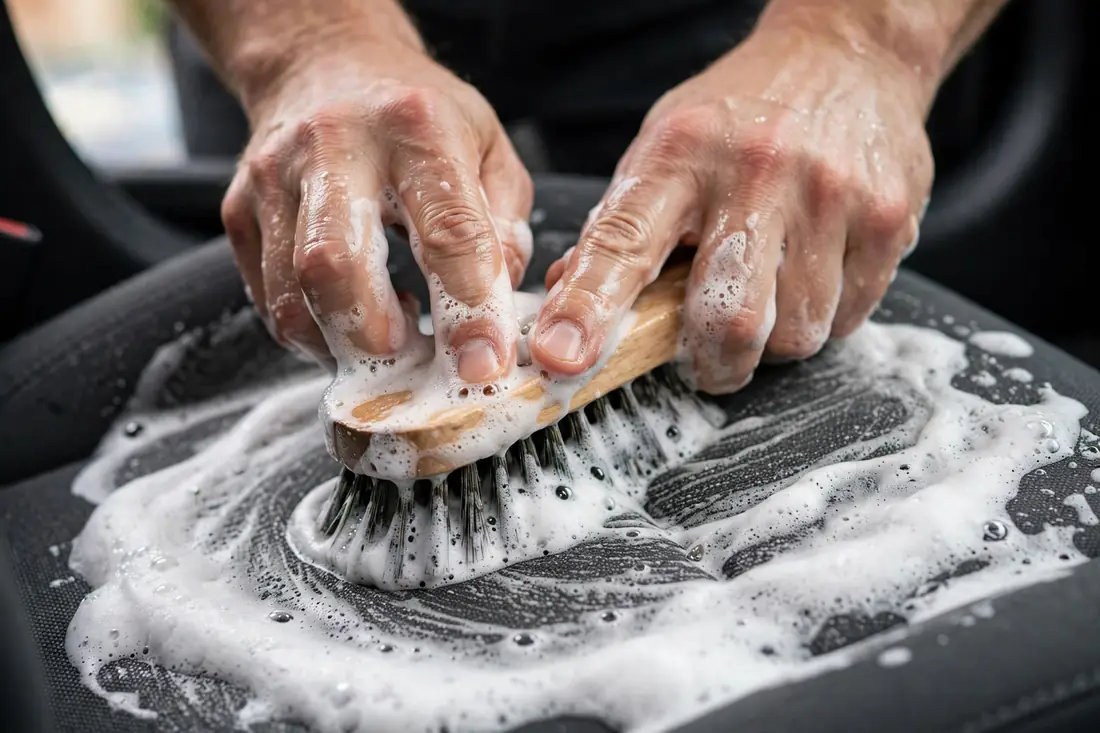
Smoke lives in fabric, so the seats and carpets need a real wash, not a wipe. Use an upholstery cleaner or a carpet shampoo made for cars, and test it on a hidden spot first to make sure it does not stain or fade the fabric. Work in small sections, scrub with a soft brush, and blot the foam up with clean towels instead of letting it soak in. A wet-and-dry vacuum or a carpet extractor makes this much easier and pulls the dirty water out as you go. If you do not have one, many auto parts stores rent them for a day. Let the car dry with the doors open. Damp fabric that stays closed up will grow mildew, and then you have two smells to fight.
Clean the Headliner With a Light Touch
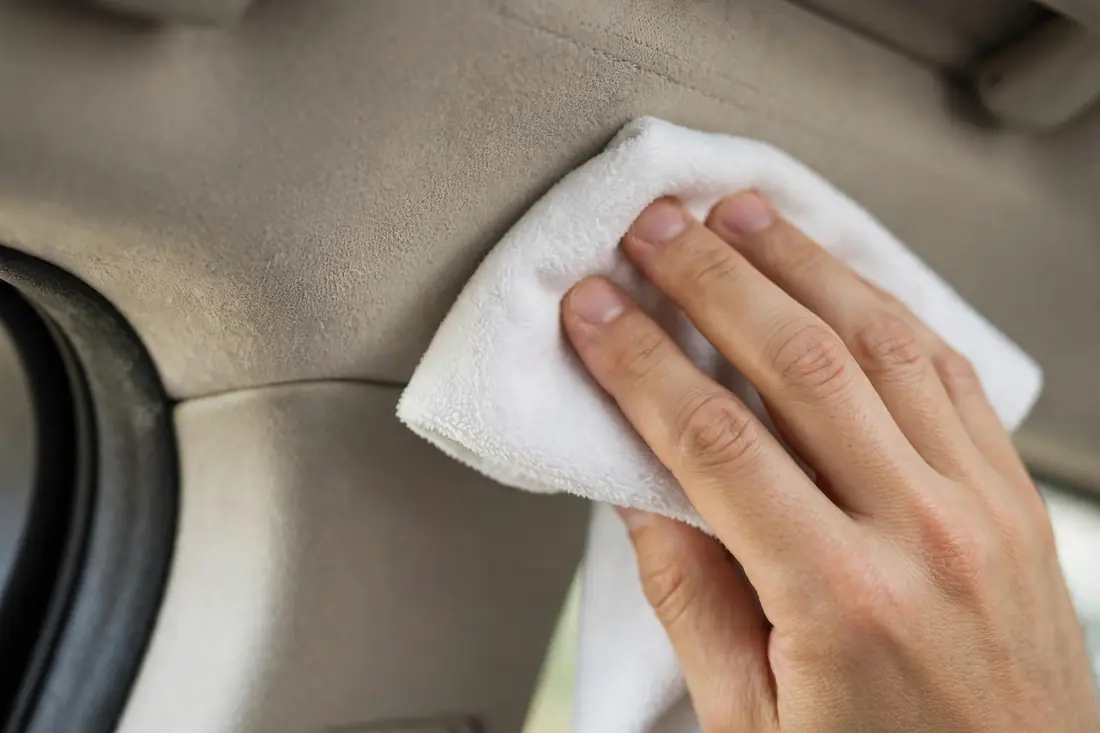
The headliner holds more smoke than any other part of the car, and it is also the easiest part to ruin. It is thin fabric glued to a foam backing, and if it gets too wet the glue lets go and the fabric sags. Spray a little upholstery cleaner onto a clean microfiber cloth, not directly onto the headliner, and wipe in gentle straight lines. Work in small patches and blot with a dry cloth right away. Never scrub in circles and never soak a spot. If a section already sags, leave it alone and let a detailer handle it. A sagging headliner is a repair job, and making it worse costs far more than the cleaning saved.
Wipe Down Every Hard Surface
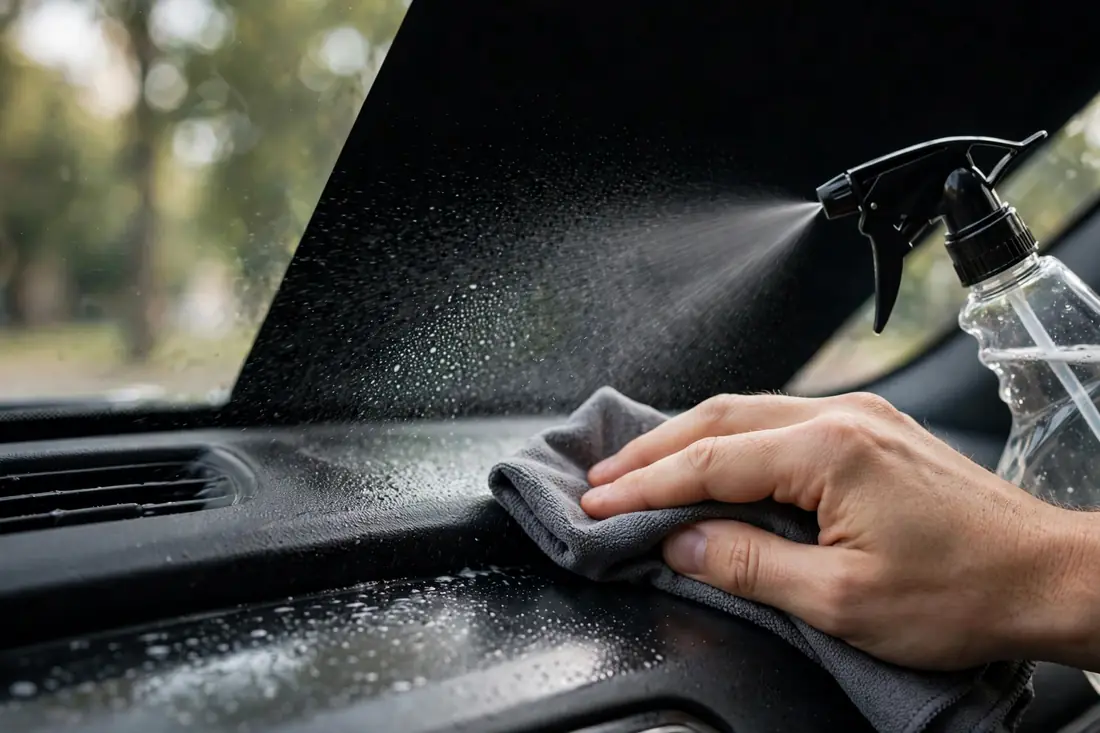
Tar leaves a thin yellow film on hard surfaces, and you can see it on the inside of the windows if you look at an angle. Mix equal parts white vinegar and water in a spray bottle, spray it on a cloth, and wipe the dashboard, door panels, steering wheel, center console, and window glass. The vinegar smell fades as it dries, and it cuts through the tar film better than most sprays. Do not spray cleaner directly onto the dashboard or the infotainment screen. For leather seats, use a leather cleaner and conditioner instead of vinegar, which can dry the leather out. Finish with the windows: clean glass makes the whole car feel fresher.
Replace the Cabin Air Filter
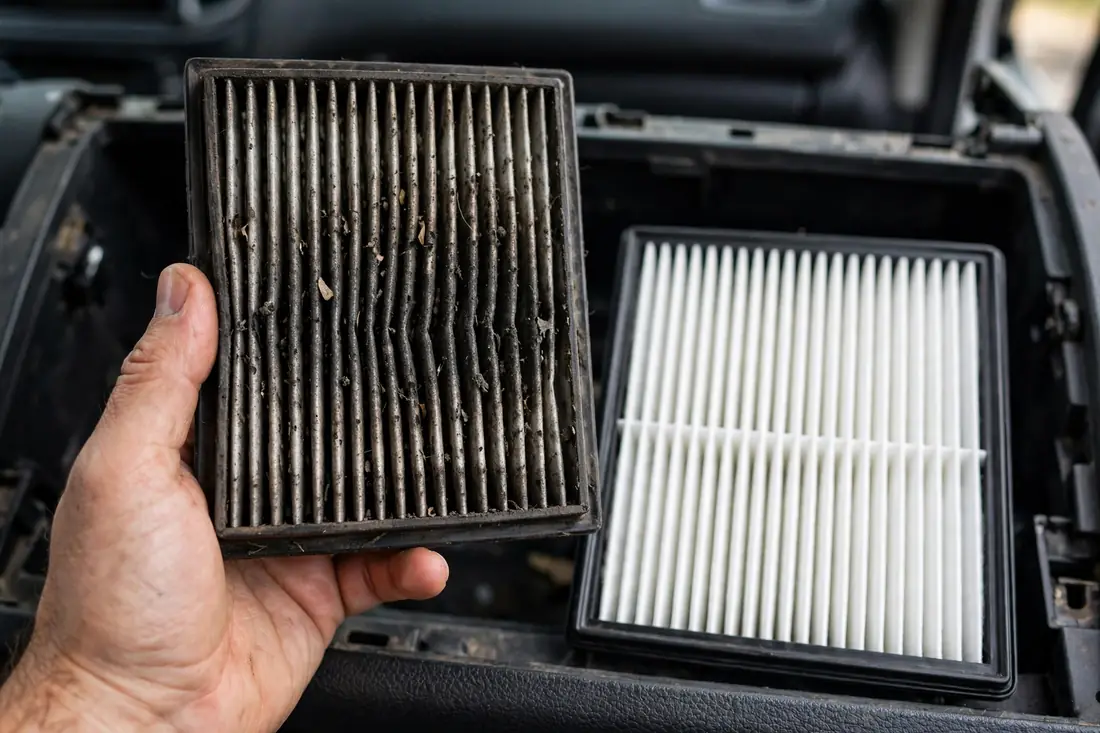
This is the step most people skip, and it is the one that makes the biggest difference. The cabin air filter sits behind the glove box in most cars, and it has been breathing in smoke for as long as the car has. A filter full of tar keeps blowing smoke smell through the vents no matter how clean the seats are. The part usually costs $15 to $30 at an auto parts store, and swapping it takes ten minutes: open the glove box, unclip the filter door, slide the old filter out, and slide the new one in with the airflow arrow pointing the right way. Check your manual for the exact spot. Some cars hide it under the hood or behind the center console.
Clean the Vents and Run the Air
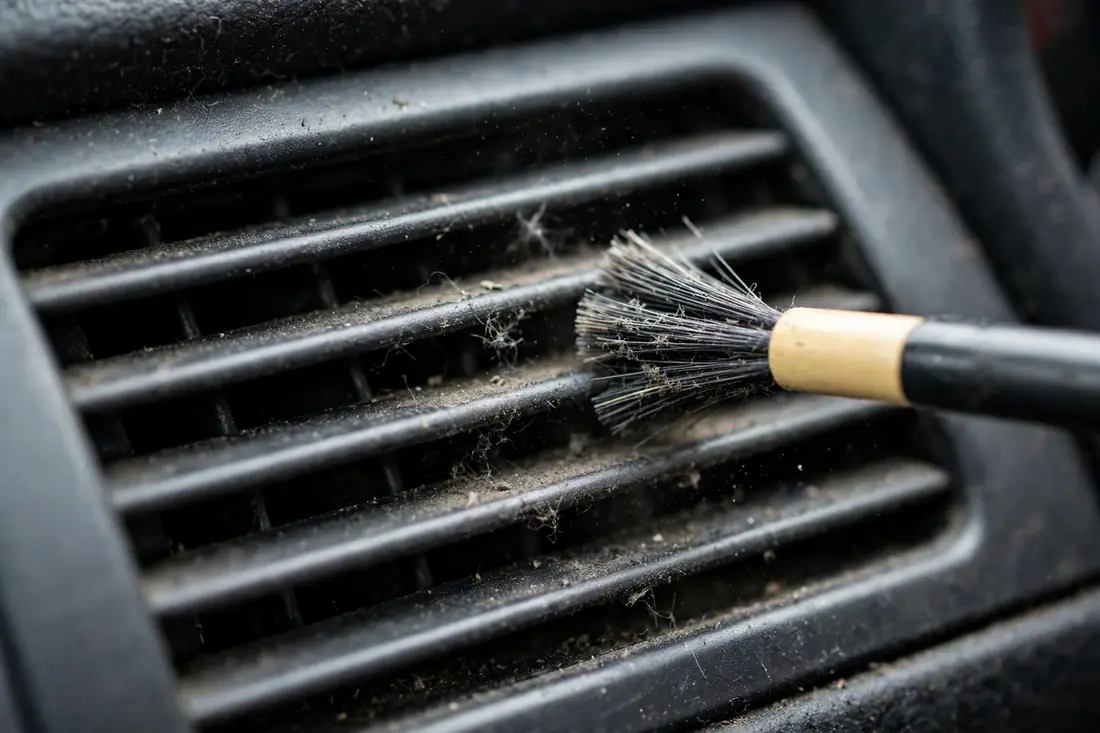
With the filter out, clean inside the vents before you put the new one in. Blow compressed air into each vent to push out dust and ash, then wipe the vent slats with a damp cloth wrapped around a thin brush or a butter knife. There are also vent and duct cleaners made for cars: spray one into the intake vent at the base of the windshield with the air on full, windows closed, and let it circulate for ten minutes. Or use the car's own recirculation mode with an odor eliminator sprayed into the cabin. Do this with the car empty and the doors shut, then air the car out for at least thirty minutes before you drive it.
The Baking Soda Overnight Trick
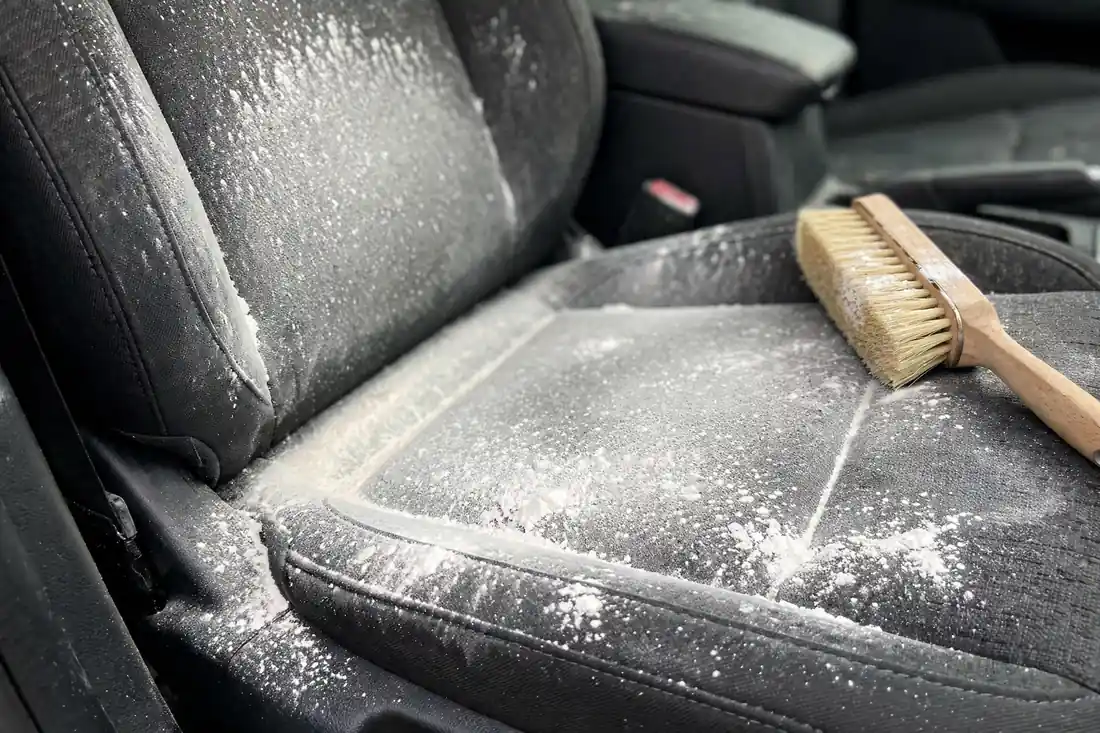
Baking soda absorbs odors instead of covering them, and it is cheap enough to use generously. Sprinkle it over the seats, carpets, and floor mats, work it into the fabric with a soft brush, and leave it overnight with the windows closed. In the morning, vacuum it all up slowly, going over each area twice. You will see the powder come up grey, and that grey is smoke residue it pulled out of the fabric. Repeat on the worst areas if the smell is still strong. Baking soda also works in the trunk and on the spare tire cover. It will not fix a headliner or a dirty filter on its own, but after the shampoo and the filter swap, it is the best finishing step.
Ozone, Odor Bombs, and When to Call a Pro
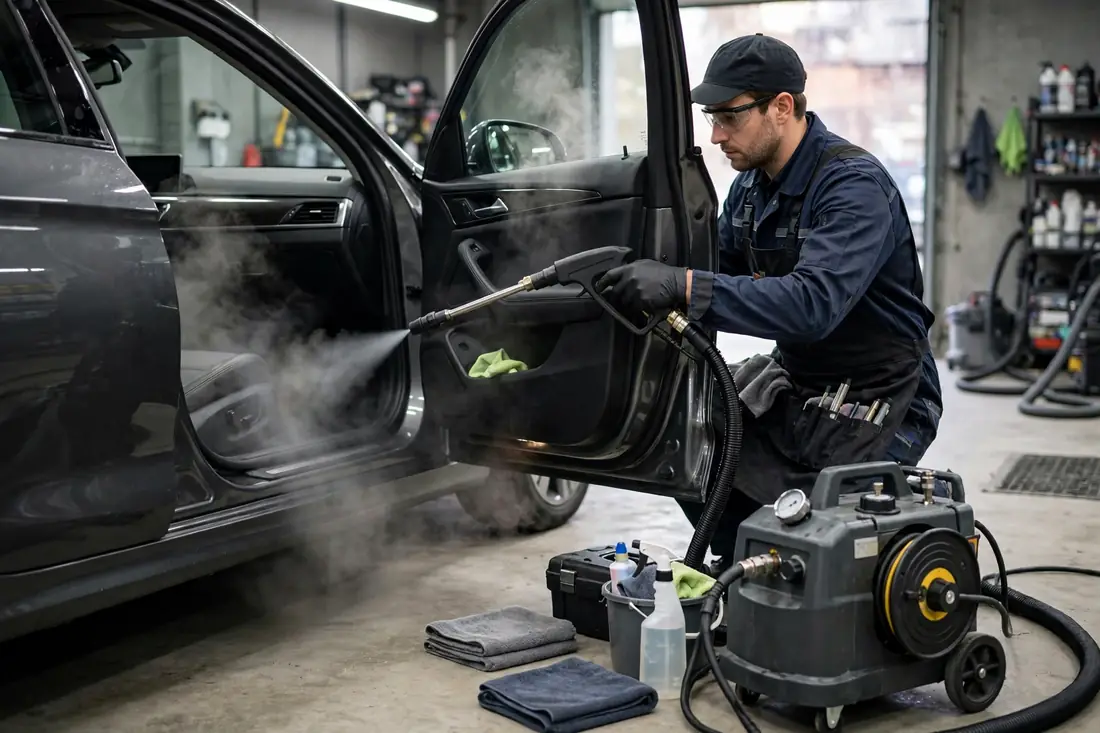
If the smell survives all of the above, a professional detailer is the next step, and it usually costs $150 to $300 for a full interior detail with steam cleaning and an ozone treatment. Ozone generators do break down smoke molecules, but they are not a DIY tool: ozone is a lung irritant, and the car must be empty, sealed, and aired out properly afterward. Never run one with people or pets inside, and never sleep in a car that was just treated. Odor bombs and foggers are a lighter version of the same idea and are safer for home use. Be honest with yourself about the car: a car smoked in daily for years may need two details and a new headliner before the smell is truly gone.
✅ Guide4U Checklist
- Clear out mats and trash
- Vacuum every inch twice
- Shampoo seats and carpets
- Wipe the headliner gently
- Replace the cabin air filter
- Clean the vents and run the air
- Baking soda overnight, then vacuum
Key Takeaways
- The headliner holds the most smoke
- A dirty cabin filter keeps blowing the smell back
- Ozone is a pro-only tool, not a DIY fix
Frequently Asked Questions
How long does it take to get smoke smell out of a car?
For a car smoked in a few times, a full clean usually takes a day of work and a few days of airing out. For a car smoked in daily for years, expect a week or more, with the shampoo and baking soda steps repeated twice. The smell fades a little each time you clean. If it is still strong after two full rounds, a professional detail with an ozone treatment is the next step.
Will an air freshener cover cigarette smoke smell?
For an hour, maybe. Air fresheners and sprays mask the smell without removing the tar and nicotine that cause it, so the smoke smell comes back as soon as the freshener fades. The only fix is to clean the surfaces that hold the particles: fabric, headliner, vents, and the cabin air filter. Use a freshener only after the cleaning is done, as a finishing touch.
Can I use an ozone generator in my car myself?
It is not a good idea. Ozone is a lung irritant, and a generator must run in a sealed, empty car, followed by a long airing out before anyone gets in. If the timing is wrong, you can damage the interior or breathe in ozone. Let a professional detailer handle ozone. For home use, stick to vent cleaners, odor bombs, and the cleaning steps in this guide.
Does smoke smell lower a car's resale value?
Yes, often by hundreds of dollars. Dealers and buyers notice smoke smell right away, and many will walk away or offer less because they know how much work it takes to remove. A clean, smoke-free interior is one of the cheapest ways to protect your car's value. If you are selling, do the full clean before you list the car, and be honest about its history.
What did you think of this article? Share your opinion in the comments below — we would love to hear from you.