
How to Stop Condensation on Windows Inside

Quick Answer
Stop condensation by keeping indoor humidity between 30 and 50 percent, venting the bathroom and kitchen at the source, and airing the house out for a few minutes each day. Wipe windows dry each morning, move furniture and curtains so warm air reaches the glass, and seal drafts around the frames. Fog trapped between two panes means the window seal has failed and the glass unit needs replacing.
Why Your Windows Fog Up on the Inside
Condensation shows up when warm, moist air inside your home meets a cold window. The glass cools the air touching it, and once that air cools past its dew point, the water vapor in it turns into tiny droplets on the pane. You see it most on cold winter mornings, when the gap between inside and outside temperatures is widest, and on single-pane windows, which run much colder than double-pane glass. Bathrooms and kitchens fog up first, since showers and cooking add a lot of moisture to the air. A little fog on a freezing morning is normal. But if your windows stay wet for hours, drip onto the sill, or fog up every day, your home is holding more moisture than it should, and the fix starts with finding where that moisture comes from.

Check Your Indoor Humidity First
Before you change anything, find out how damp your air actually is. A small hygrometer costs about $10 to $15 at a hardware store, and you can set it on a shelf near a window that fogs up. Check it morning and evening for a few days. In winter, aim for 30 to 50 percent relative humidity, and drop toward the lower end, around 30 to 35 percent, when it is very cold outside, below 20 degrees Fahrenheit. If your readings sit above 50 percent, you have too much moisture in the air, and that is almost certainly why your windows are wet. If the reading is already in range and the windows still fog, the problem is more likely cold glass or poor air flow, which the next sections cover.
- Buy a hygrometer for about $10 to $15
- Set it near the window that fogs worst
- Check it morning and evening for a few days
- Aim for 30 to 50 percent in winter

Vent Moisture Out at the Source
Most of the moisture in a home comes from a few daily routines, and catching it at the source is the cheapest fix there is. Run the bathroom fan during every shower and leave it on for 20 to 30 minutes after, so the steam leaves the house instead of settling on the nearest cold window. In the kitchen, switch on the range hood every time you boil water or cook, and check that it vents outside rather than just recirculating air through a filter. Never vent a clothes dryer indoors, and if you dry laundry on a rack inside, crack a window nearby or run a fan, since a full load can release a surprising amount of water into the air. These small habits cut the moisture load fast, and many homes see less fog within a week of starting them.

Open a Window a Crack Every Day
It sounds backwards to open a window in winter, but a few minutes of fresh air is one of the best ways to dry out a home. Cold outdoor air holds very little moisture, so when it comes inside and warms up, it soaks up the damp air and carries it back out. Open two windows on opposite sides of the house for 5 to 10 minutes, once in the morning and once in the evening if you can, to get a cross-breeze. If you have trickle vents on your windows, leave them open a crack all winter. You will lose a little heat, but far less than you might think, and the payoff is drier air, clearer windows, and a home that feels fresher.

Run a Dehumidifier Where It Counts
If venting and airing out are not enough, a dehumidifier does the heavy lifting. Put it in the room that fogs worst, often a bedroom or a basement, and run it until the room holds steady in that 30 to 50 percent range. Empty the tank every day, or connect a drain hose if your model allows it, so it never shuts off with a full tank. A dehumidifier also takes the edge off that clammy feeling in a damp room, and it can help laundry dry faster. Choose a size that fits the room, since a tiny unit in a big damp basement will run all day and barely move the needle. In a very cold basement, check that the model is rated for low temperatures, or the coils can freeze up.
- Place it in the room that fogs worst
- Empty the tank daily or fit a drain hose
- Choose a size that fits the room
- Check it is rated for cold basements

Let the Air Move Around Your Windows
Still air makes condensation worse, because the air right against the glass keeps getting colder while the rest of the room stays warm. Keep furniture, especially sofas and beds, a few inches away from outside walls and windows, so warm air can reach the glass. Open blinds and curtains during the day, and avoid heavy drapes that hang tight against the pane and trap a pocket of cold air behind them. Make sure heat vents near windows are not blocked by furniture or rugs. Even a small ceiling fan on its lowest setting, running in reverse in winter, helps push warm air down and around the room. Good air flow will not fix a moisture problem on its own, but it makes every other fix work better.

Warm the Glass a Little
Warmer glass fogs less, so anything that keeps the pane closer to room temperature helps. Keep the heat on at a low, steady setting through cold snaps instead of letting the house cool down overnight and reheating it in the morning, since cold glass plus a burst of warm, moist air is exactly when fog appears. At night, close thermal curtains or blinds to add a layer of insulation over the glass, then open them in the morning so sunlight can warm the pane. A window insulation film kit, the kind you shrink tight with a hair dryer, adds a cheap extra layer on old single-pane windows. Storm windows do the same job better, and they are worth fitting if your windows are old and drafty.

Find the Hidden Moisture Sources
Sometimes the moisture comes from a place you would not think to look. A slow leak under a sink or behind a washing machine can add water to the air for weeks before you notice it. Drying laundry indoors, running an unvented gas heater, and keeping a large collection of houseplants all add moisture too. New houses can stay damp for a year or two while building materials dry out. Walk through your home once and look for the signs: water stains under sinks, peeling paint near windows, a musty smell in a closet, or damp patches on walls. Fix the leak, move the drying rack near an open window, and group plants in one room you can vent well, and the fog will usually ease.
- Check under sinks and behind the washer for leaks
- Move the drying rack near an open window
- Group houseplants in one room you can vent
- Watch for damp patches and musty smells

Seal the Drafts and Gaps
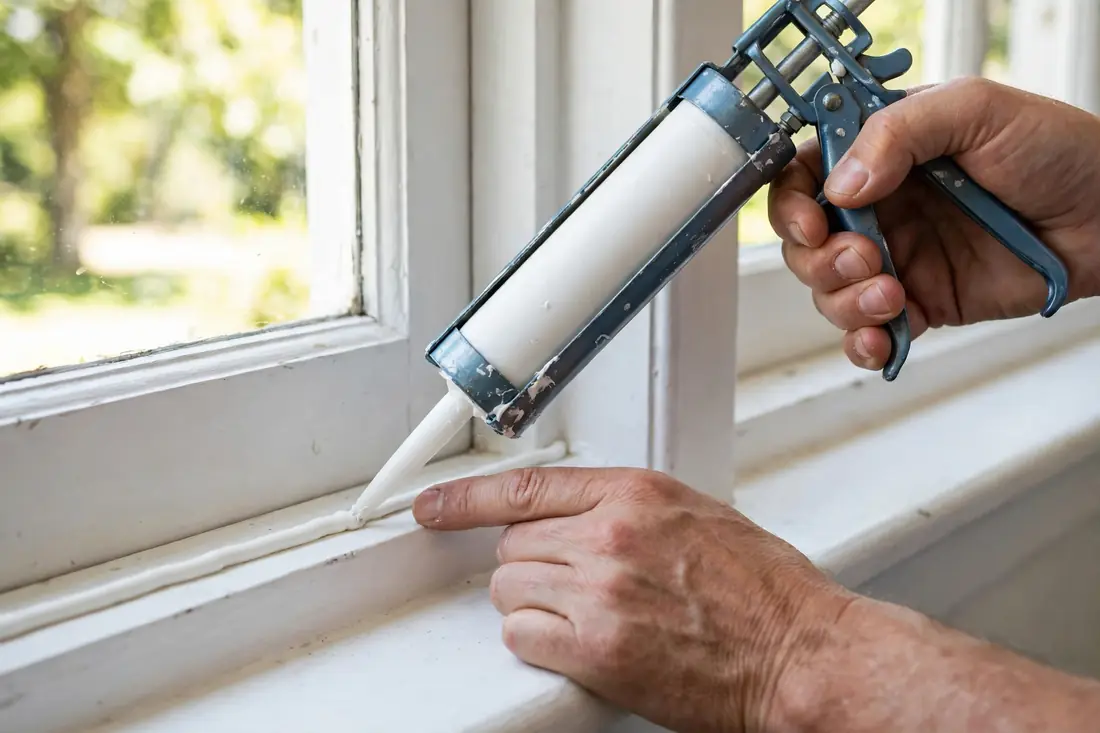
Cold air leaking in around a window makes the glass colder, and cold glass fogs first. Run your hand around each window frame on a windy day and feel for drafts. Where you find one, press in a bead of caulk on the outside frame, or stick foam weatherstripping around the sash so it closes tight. Check that the window locks pull the sash snugly shut, since a loose lock leaves a gap you cannot see. If the rubber seals on double-pane windows look cracked or shrunken, replace them. These are small jobs, and a tube of caulk plus a roll of weatherstripping costs less than $20, but sealing the drafts raises the glass temperature and cuts the fog noticeably.
- Feel for drafts around each frame on a windy day
- Caulk the outside frame where you find a gap
- Stick foam weatherstripping around the sash
- Check the locks pull the sash shut tight
When Condensation Means a Bigger Problem
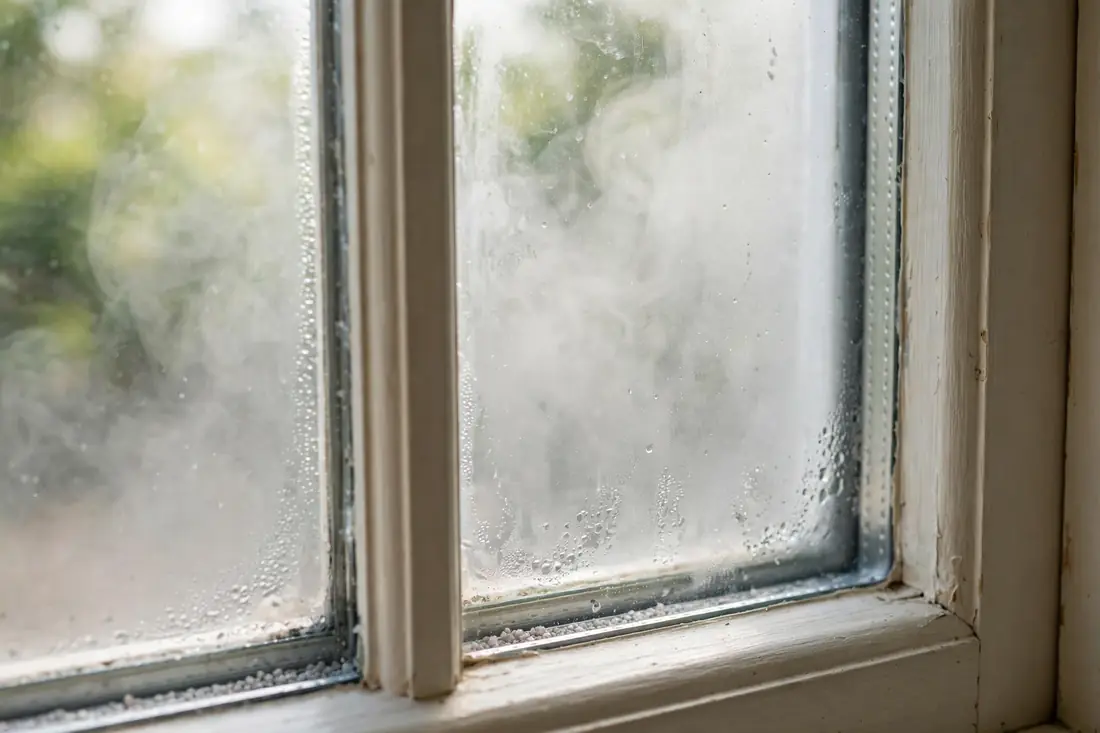
Most window condensation is a moisture problem you can fix yourself, but a few signs mean something bigger is going on. If you see fog trapped between the two panes of a double-pane window, the seal has failed, and the glass unit itself needs replacing, since no amount of wiping will clear it. Black spots or mold growing on the frame or sill mean water has been sitting there too long, and you should clean it with a mold-safe cleaner, dry the area, and find the moisture source fast. If one room stays damp no matter what you try, or you see water stains on walls or ceilings, call a professional to check for leaks or poor insulation. Until then, wipe the windows dry each morning with a cloth, so standing water does not damage the frames.
✅ Guide4U Checklist
- Keep humidity between 30 and 50 percent
- Run the bathroom fan 20 minutes after showers
- Use the range hood every time you cook
- Air the house out 5 to 10 minutes daily
- Wipe windows dry each morning
- Move curtains and furniture away from glass
- Seal drafts with caulk and weatherstripping
Key Takeaways
- Condensation is moisture plus cold glass — fix the moisture first.
- A $10 hygrometer tells you whether the air is too damp.
- Wipe windows daily until the humidity is under control.
Frequently Asked Questions
Is condensation on windows normal?
A little fog on a cold morning is normal, especially on single-pane windows or in a bathroom after a shower. It becomes a problem when windows stay wet for hours, water pools on the sill, or you see mold on the frames. That kind of steady condensation means your home holds too much moisture, or the glass is far colder than the room, and it is worth fixing before it damages paint, wood, or plaster.
What humidity level stops condensation on windows?
Aim for 30 to 50 percent relative humidity indoors during winter. When it is very cold outside, below 20 degrees Fahrenheit, drop toward 30 to 35 percent, since colder glass fogs at lower humidity. A cheap hygrometer tells you where you stand. If your readings are above 50 percent, bring the moisture down with venting, airing out, or a dehumidifier before you spend money on new windows.
Will a dehumidifier stop window condensation?
Yes, if excess moisture is the cause. A dehumidifier pulls water out of the air and holds the room in that 30 to 50 percent range, which is usually enough to keep the glass clear. Put it in the room that fogs worst, empty the tank daily or hook up a drain hose, and give it a few days to dry the room out. It will not help much if the real problem is a failed window seal or a leak, so check those too.
Should I wipe condensation off my windows?
Yes, wipe it off every morning with a dry cloth, a towel, or a small squeegee. Standing water soaks into wooden frames, peels paint, and feeds mold on the sill. Wiping is a stopgap, not a cure, so use it alongside the real fixes: lower the humidity, vent the bathroom and kitchen, and let air move around the glass. If you have to wipe every single day all winter, your home is telling you the moisture level needs attention.
What did you think of this article? Share your opinion in the comments below — we would love to hear from you.