
How to Survive a Flood: Before, During, and After
Quick Answer
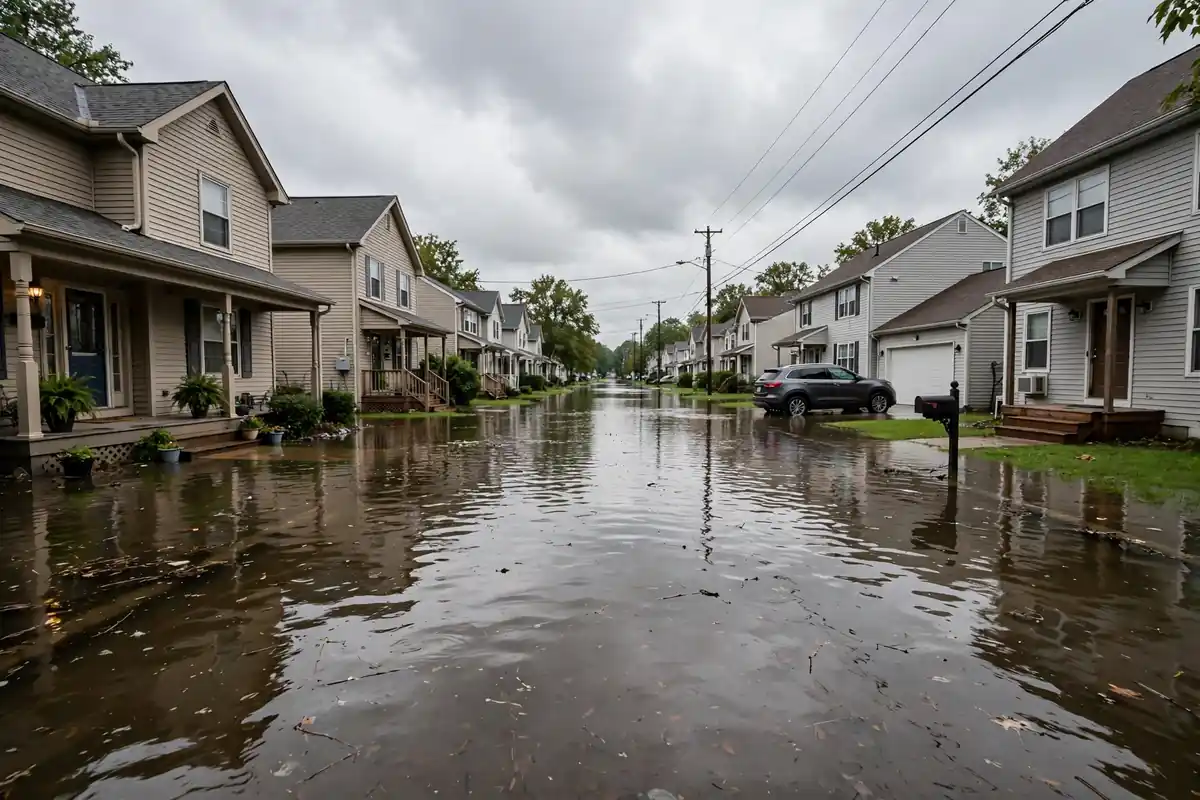
Know your flood risk now, while the weather is dry, and learn the difference between a flood watch and a flood warning. Pack a go bag, agree on a family meeting point, and when the water rises, get to high ground fast. Never drive through floodwater: six inches can knock you down and twelve inches can float a car.
Know Your Flood Risk Before the Water Comes
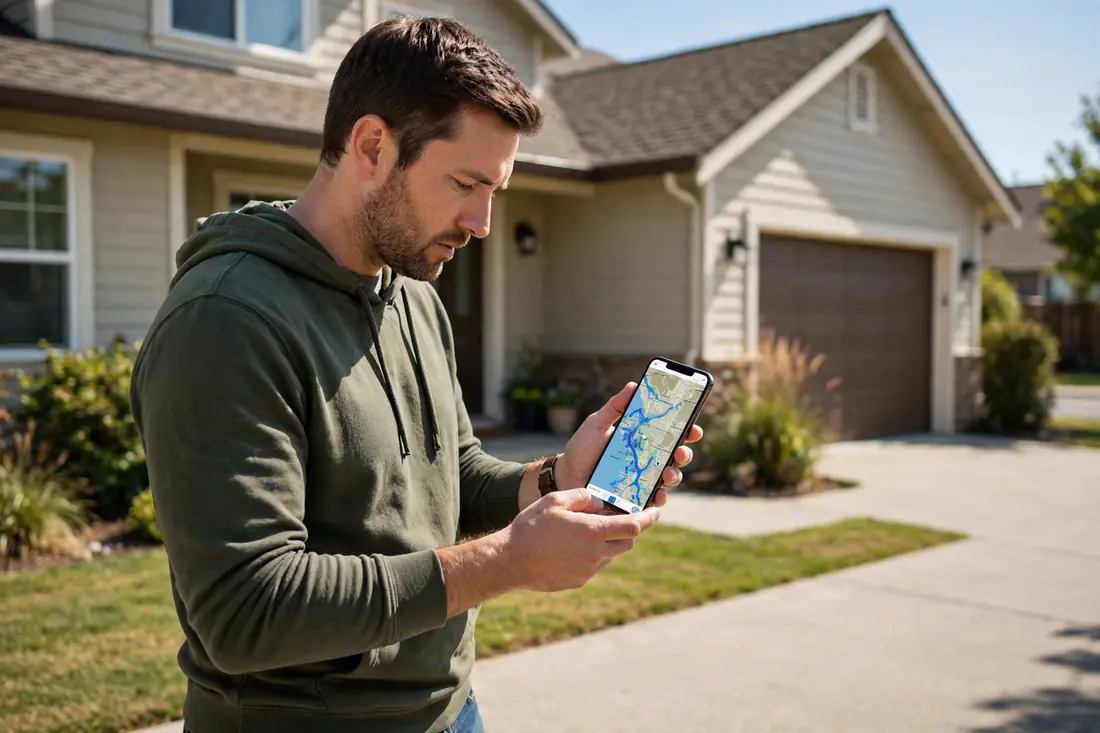
Most people find out their home can flood only when the water is already at the door, and that is too late to plan. Check your flood risk now, while the weather is dry: the Federal Emergency Management Agency offers free flood maps online, and your local emergency office can tell you whether your street has flooded before. Renters should ask too, since a ground-floor apartment floods just as fast as a house. Learn the roads out of your neighborhood that stay dry, and find out where your town opens shelters during a flood. Knowing your risk takes an hour on a calm day, and it changes every choice you make later. A family that knows its risk is a family that leaves early instead of waiting to see what happens.
Watch vs. Warning: What the Words Mean
Flood alerts use two words that sound alike but mean very different things, and mixing them up is dangerous. A flood watch means flooding is possible in your area, so you should get ready: check your go bag, charge your phone, and keep an eye on the weather. A flood warning means flooding is happening or will happen very soon, so you should act right away, move to higher ground, and never wait to see how bad it gets. Flash flood warnings are the most urgent of all, since the water can arrive in minutes after heavy rain upstream. Sign up for your county emergency alerts on your phone so the warning finds you even at night. When a warning sounds, treat it as the real thing, because by the time you can see the water, your options are already shrinking.
Build a Go Bag Before You Need It
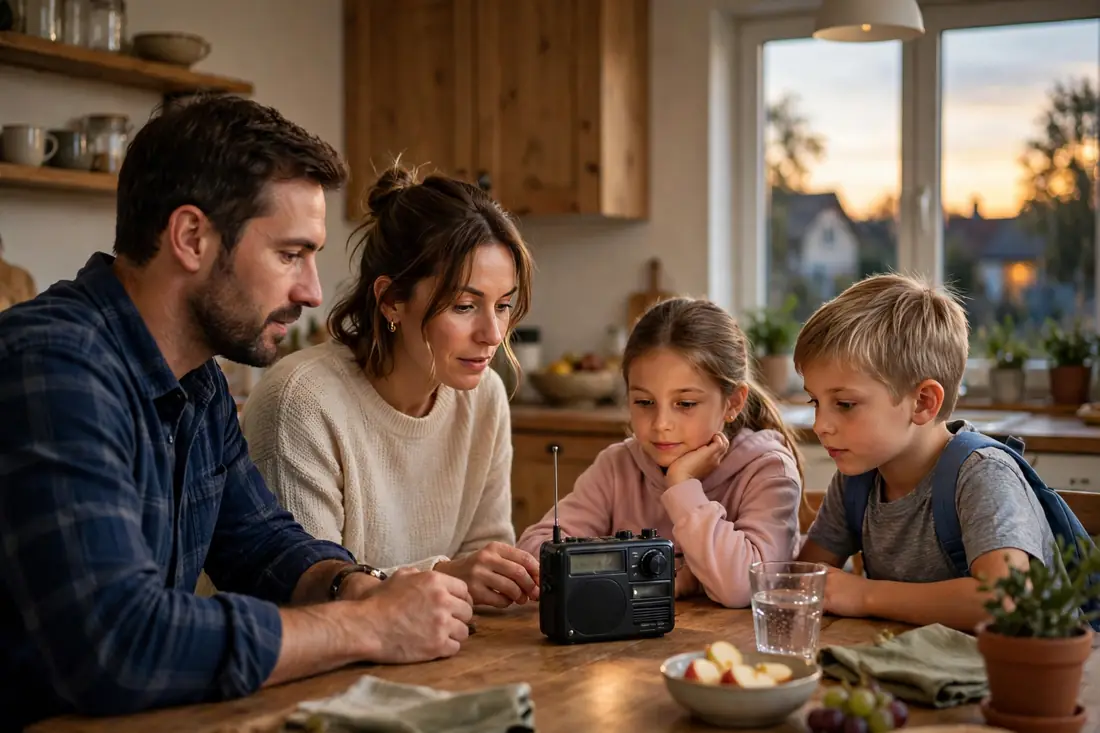
A go bag is a bag you can grab in two minutes and leave with, and it is the single most useful thing you can prepare. Pack water and snacks for three days, any medications you take, a first-aid kit, a phone charger, a flashlight with spare batteries, and copies of your IDs, insurance papers, and prescriptions in a waterproof pouch. Add a change of clothes, a warm layer, and cash in small bills, since card readers fail when the power is out. Keep the bag by the door you would leave through, not buried in a closet. Check it twice a year, swap out expired food and dead batteries, and update the papers when they change. The bag does not need to be fancy. It just needs to be ready before the rain starts.
- Water and snacks for three days
- Medications and first-aid kit
- Phone charger and flashlight
- Copies of IDs and insurance papers
- Change of clothes and warm layers
Make a Family Plan and a Meeting Point
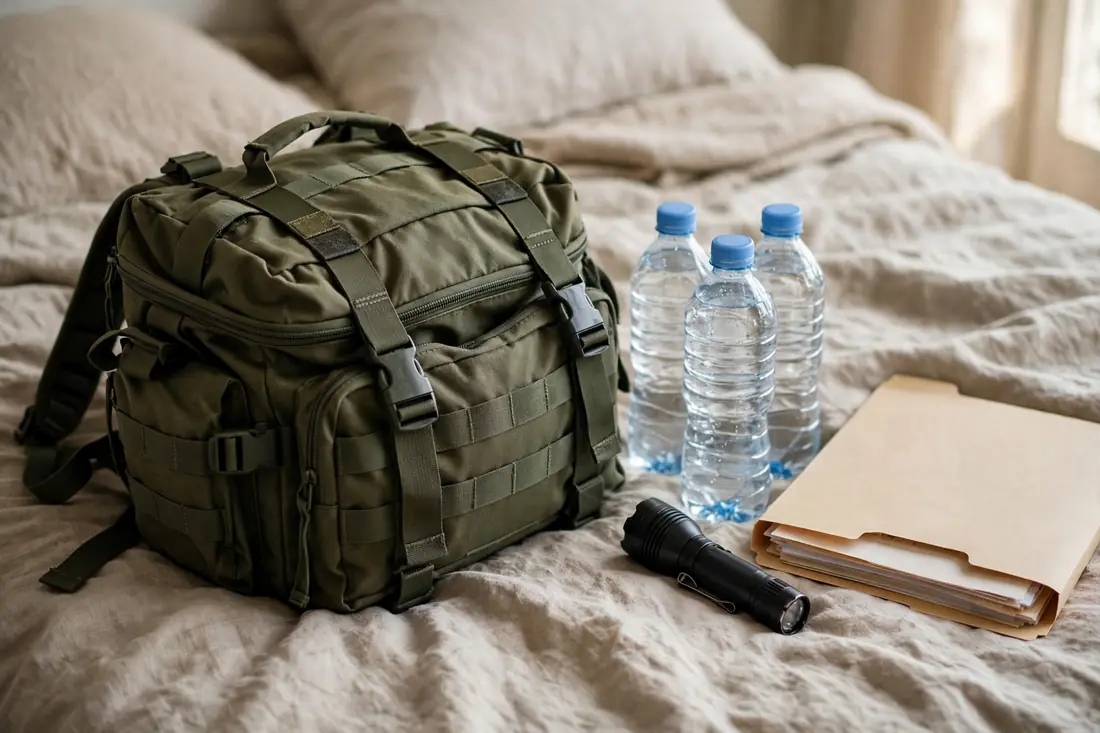
A flood can split a family across town in minutes: one parent at work, one child at school, another at practice. Sit down together and agree on a plan while the weather is calm. Pick two meeting points, one near home and one farther away on high ground, and make sure everyone, including the kids, can find them. Choose one out-of-town relative as the family contact, since local phone lines jam during a disaster while long-distance calls often still work. Teach children to call that person and to say where they are. Agree on who picks up the kids from school if you cannot get there. Write the plan down, put a copy in every go bag, and practice it once a year. A plan you have practiced is a plan you can follow when the water is rising and nobody is thinking clearly.

Protect Your Home While You Still Can
When a flood watch is issued, you still have time to protect your home, so use it well. Move valuables, photos, and electronics to the highest floor, and raise furniture onto blocks or tables if you have time. Shut off the electricity at the main breaker only if you can do so from a dry place, and never touch electrical panels while standing in water. Turn off the gas if your local guidance tells you to, and close the water main to keep floodwater out of your pipes. Put sandbags or plastic sheeting at doorways if your town provides them, and clear leaves from gutters and drains so rainwater can flow away. These steps will not stop a deep flood, but they can save your belongings and cut the damage. Do them early, while you still have dry ground to stand on.

If the Water Is Rising, Get to High Ground
When the water starts rising, your only job is to get to higher ground fast. Move to the highest floor of your home, or climb to the roof only if the water is already inside and still rising. Take your go bag, your phone, and drinking water, and stay there until help arrives or the water stops rising. Do not go into the attic unless you have an axe or a way to break through the roof, since an attic without an exit can trap you as the water rises. If you are outside, move to the highest ground you can see and stay away from underpasses, drainage ditches, and low roads, which fill first. Call 911 when you are safe and can describe your location. Never wait to see whether the water will stop; floods rise faster than most people expect, and the time to move is now.
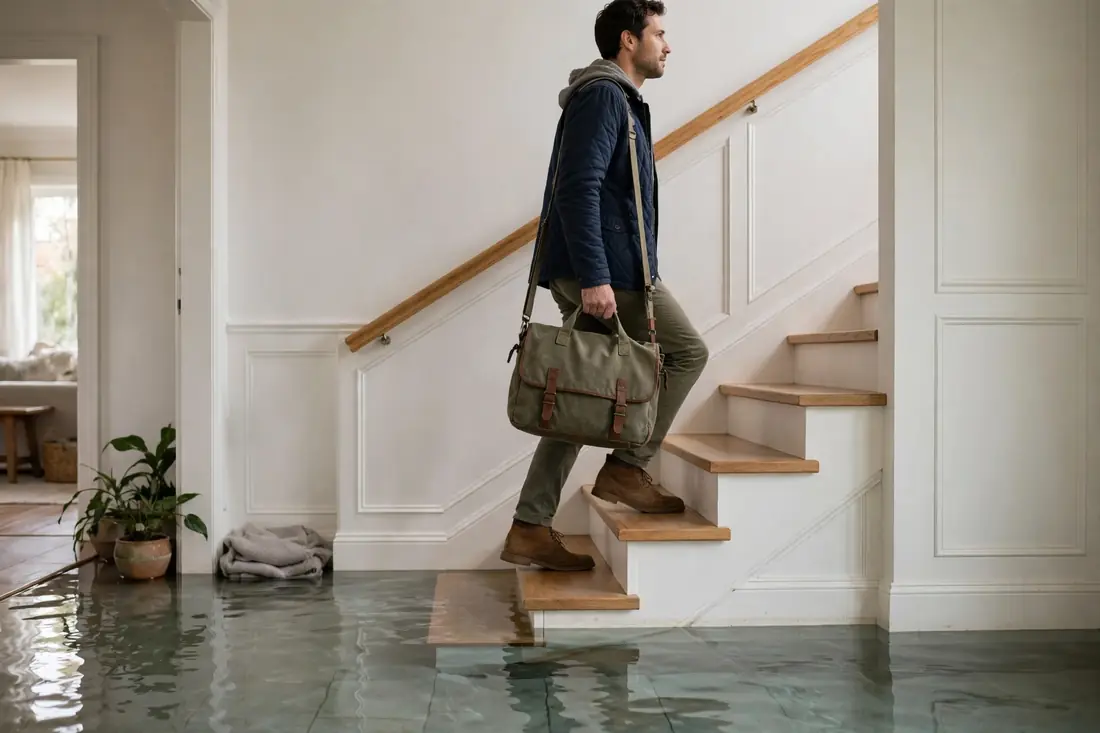
Never Drive Through Floodwater
Most flood deaths in the United States happen in cars, and the reason is simple: drivers think the water is shallow, and it is not. Just six inches of fast-moving water can knock an adult off their feet, and twelve inches can float most cars. Two feet of water can carry away almost any vehicle, including trucks and SUVs. Floodwater hides the road, so you cannot see whether the pavement has washed away beneath it, and the current is far stronger than it looks. Turn around, do not drown: that is the official advice from the National Weather Service, and it is worth memorizing. If your car stalls in floodwater, leave it and move to high ground at once, since the water can rise around a stalled car in minutes. No appointment is worth a life.
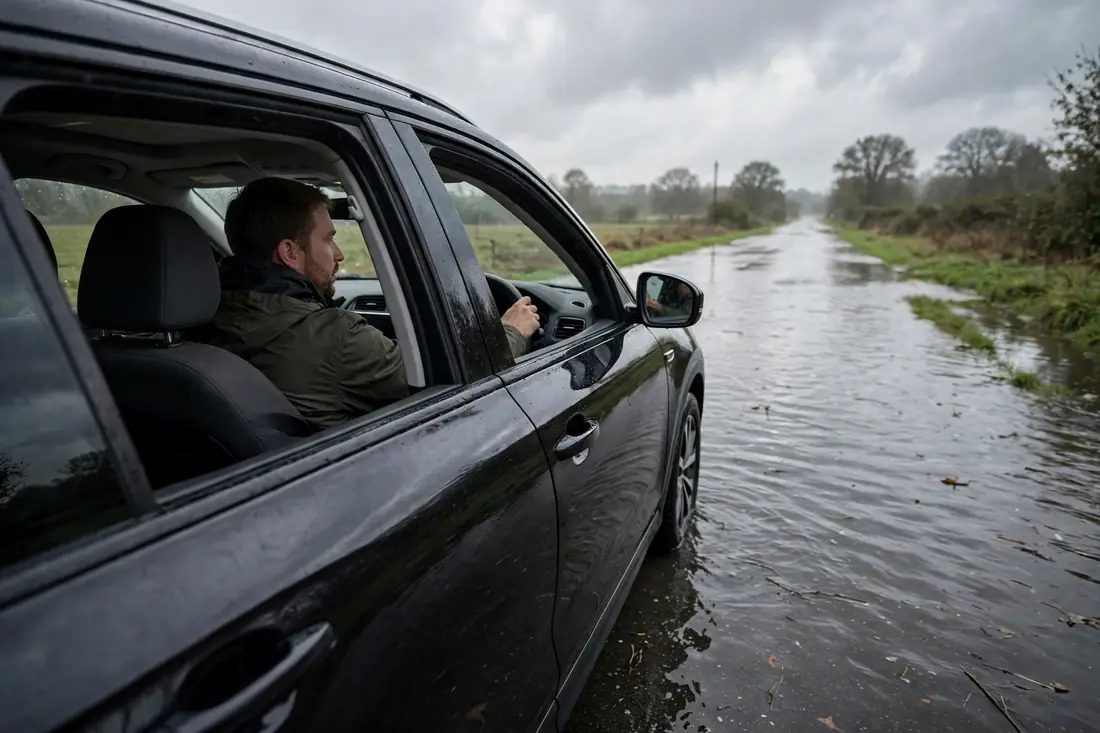
If You Are Caught Outside or on Foot
If you are caught on foot in rising water, do not try to walk through it. Floodwater can hide open manholes, sharp debris, and live power lines, and the current can pull you down in water that looks calm. Move to the highest ground you can reach, stay away from storm drains and underpasses, and hold onto something solid if you must cross a shallow stretch. Never let children play in or near floodwater, and keep pets on a leash or carry them, since they panic and bolt. If you are swept off your feet, float on your back with your feet pointing downstream to push off obstacles. Call for help as soon as you are safe, and tell rescuers where you are. The water will go down. Your job is to stay out of it until it does.
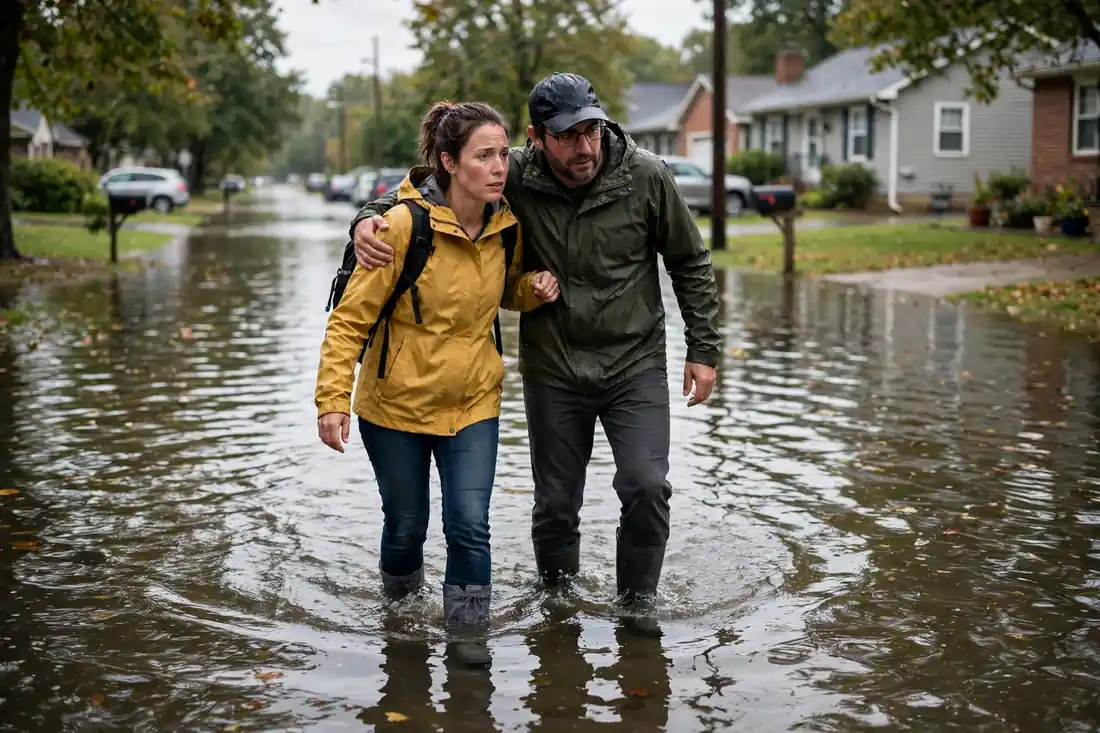
After the Water Goes Down: Coming Home Safely
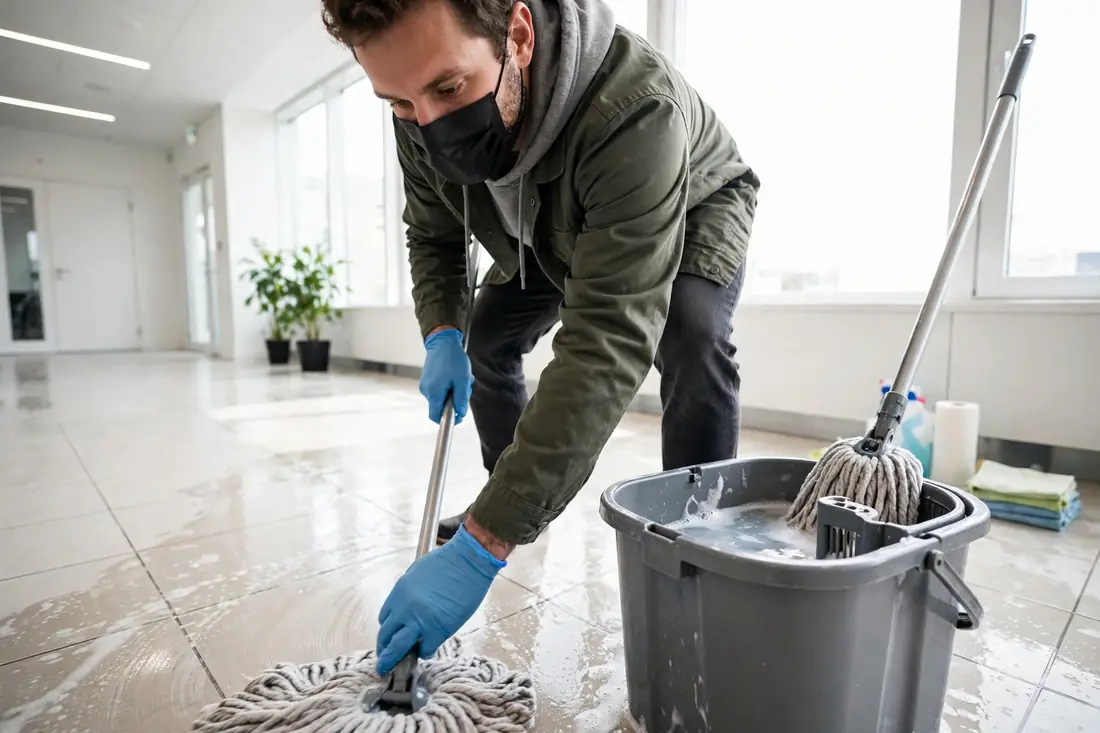
Coming home after a flood is emotional, and it is also the most dangerous part for many families. Wait for your local officials to say it is safe to return, since roads may be washed out and power lines may be down. Wear rubber boots, gloves, and a mask before you walk in, and do not touch electrical equipment or turn the power back on until an electrician has checked it. Floodwater carries sewage, chemicals, and bacteria, so keep children and pets out of the house until it is cleaned. Throw out food, medicine, and anything porous that touched floodwater, including mattresses and stuffed toys. Take photos of the damage for your insurance claim before you start cleaning. Take it slowly, ask for help, and do not rush back into a house that is not yet safe.
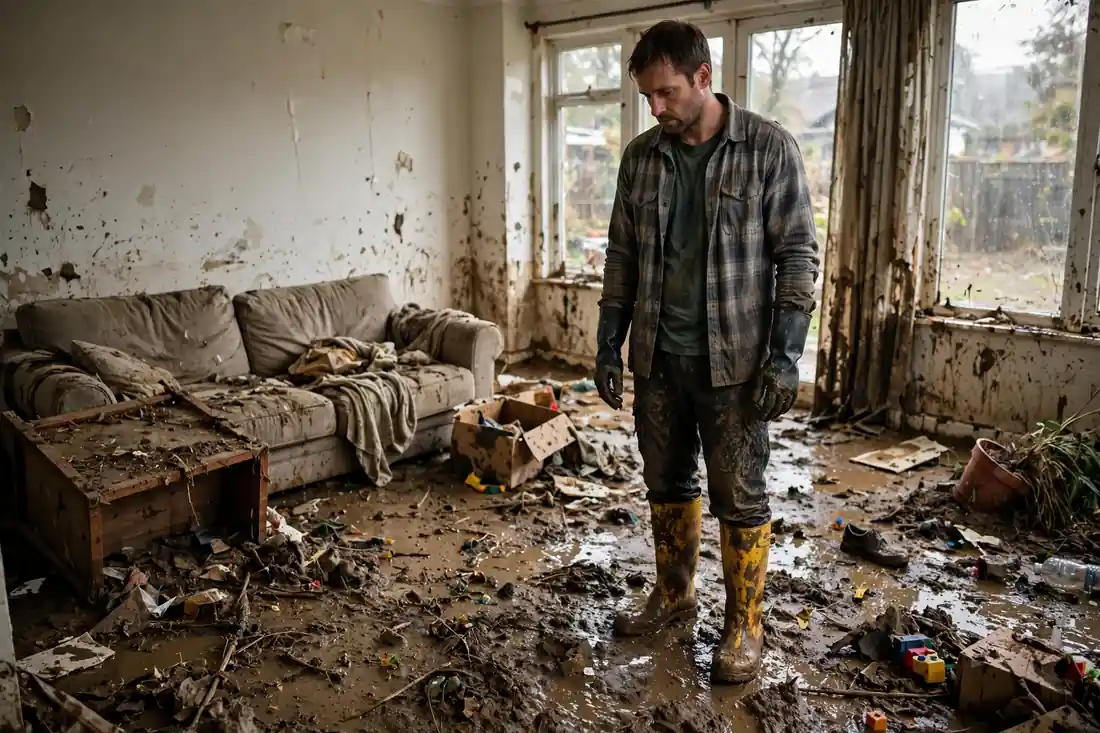
Cleaning Up Without Getting Sick
Flood cleanup is hard physical work in dirty conditions, so protect yourself while you do it. Wear gloves, boots, eye protection, and a mask, wash your hands often, and keep any cuts covered, since floodwater carries germs that enter through broken skin. Shovel out the mud, then wash hard surfaces with hot water and soap, and disinfect them with a mix of one cup of household bleach in five gallons of water, following the label and keeping the room ventilated. Dry the house out fast: open windows and doors, run fans and dehumidifiers, and remove wet drywall, carpet, and insulation, since mold can start growing within 24 to 48 hours. Take breaks, drink water, and rest, since exhaustion leads to injuries. If you feel ill, develop a fever, or have a wound that turns red and swollen, see a doctor promptly.
✅ Guide4U Checklist
- Check your flood risk on FEMA maps
- Sign up for county emergency alerts
- Pack a go bag and keep it by the door
- Agree on a family meeting point
- Move valuables to the highest floor
- Never drive through floodwater
- Wait for the all-clear before returning home
Key Takeaways
- A flood watch means get ready, a warning means act now
- Turn around, do not drown: never drive through floodwater
- Prepare on a calm day, not when the rain starts
Frequently Asked Questions
How deep does floodwater need to be to float a car?
Twelve inches of moving water can float most cars, and two feet can carry away trucks and SUVs. Even six inches of fast water can knock an adult off their feet. Floodwater hides the road, so you cannot tell how deep it is. Never drive through flooded roads: turn around and find another route.
Is floodwater safe to touch?
No. Floodwater is usually mixed with sewage, chemicals, and bacteria, and it can hide sharp debris and live power lines. Avoid touching it when you can, and if you do, wash with soap and clean water right away. Keep children and pets out of floodwater entirely. After a flood, wear boots, gloves, and a mask during cleanup, and see a doctor if you develop a fever or a wound that turns red and swollen.
Does homeowners insurance cover flood damage?
In most cases, no. Standard homeowners and renters insurance in the United States does not cover flood damage; that needs a separate flood insurance policy, usually through the National Flood Insurance Program or a private insurer. There is often a 30-day waiting period before a new flood policy takes effect, so you cannot buy it when a storm is already coming. Check your policy now, while the weather is dry, and ask your insurer what is covered.
What should I do if I am trapped by floodwater?
Get to the highest place you can reach and call 911 with your exact location. If you are in a house, move to the highest floor, or to the roof if the water is still rising inside. Do not go into an attic without a way to break through the roof. If you are in a car, leave it and move to high ground. Stay put, stay visible, and wait for rescuers.
What did you think of this article? Share your opinion in the comments below — we would love to hear from you.