
How to Survive an Earthquake
Quick Answer
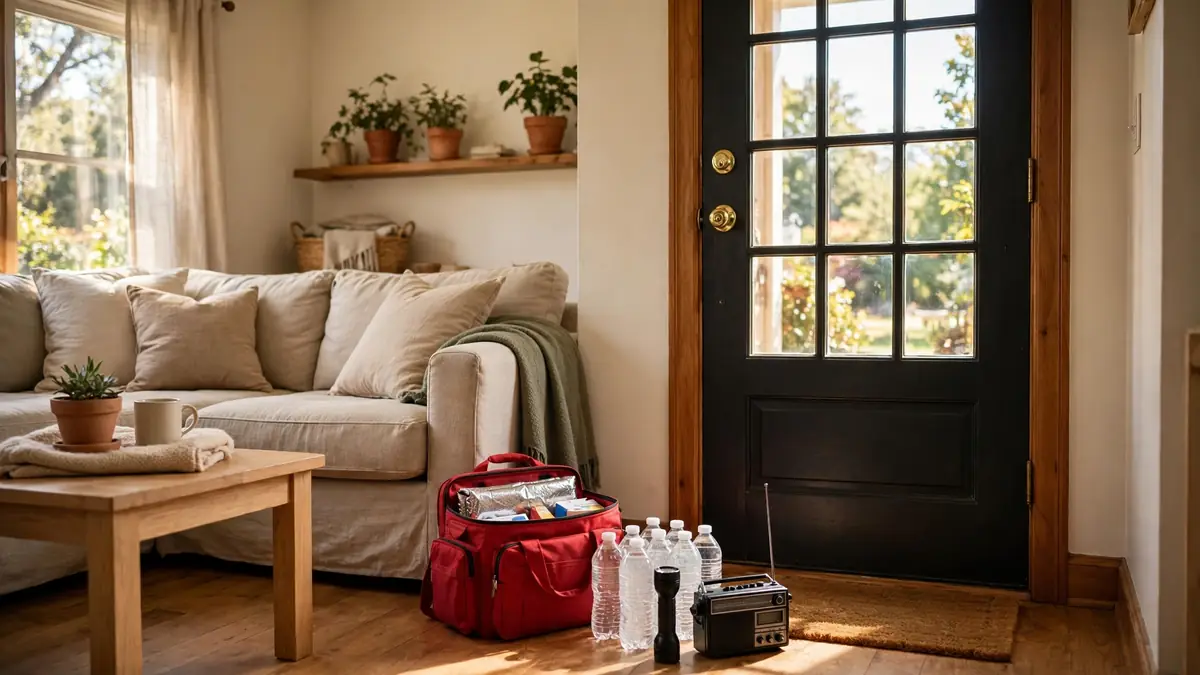
When the ground shakes, drop to your hands and knees, cover your head and neck under a sturdy table, and hold on until the shaking stops. Stay where you are: do not run outside or stand in a doorway. Once the shaking stops, check for injuries, watch for gas leaks, and expect aftershocks. Follow official instructions from ready.gov or local authorities.
What an Earthquake Actually Does
An earthquake is the ground shaking because rock deep below the surface suddenly slips, and the shaking can last from a few seconds to a minute or more. The ground itself rarely opens up the way movies show. Most injuries come from things falling: bookshelves, televisions, light fixtures, and chunks of plaster. That is why the advice is so simple and so consistent. You are not trying to outrun the quake. You are trying to protect your head and neck from falling objects and to stay put until the shaking stops. Everything here follows guidance from ready.gov, the American Red Cross, and the CDC. If local officials give different instructions for your area, theirs come first.
Drop, Cover, and Hold On
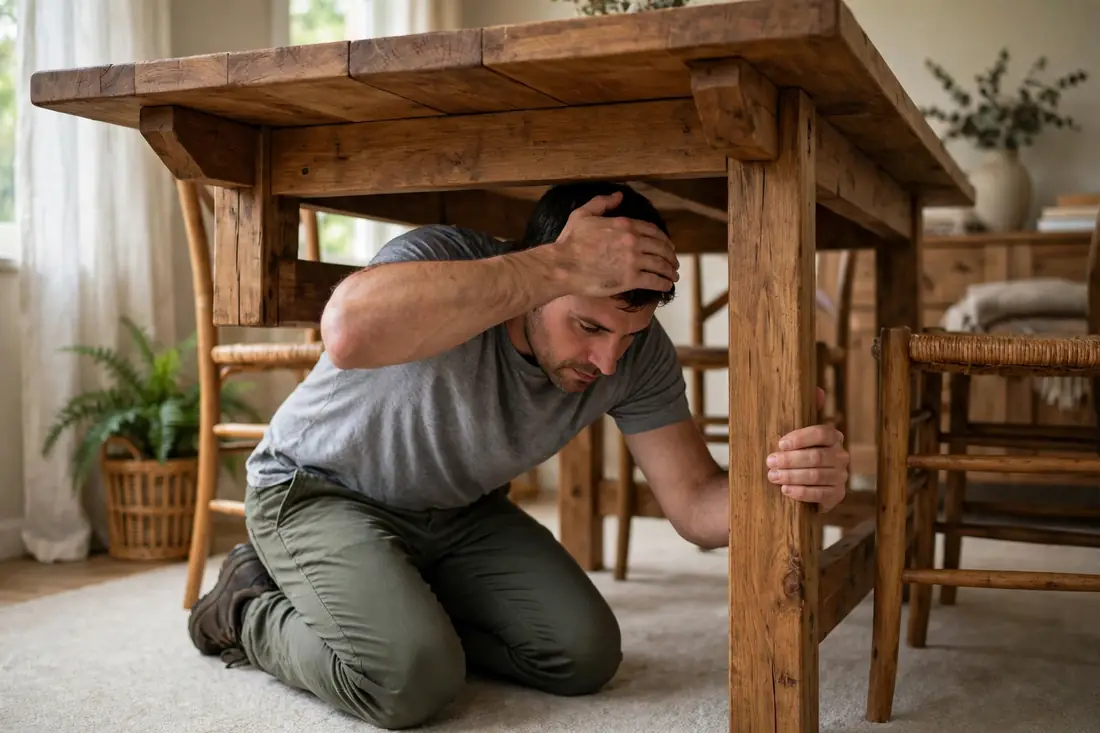
This is the one move to learn by heart, and it works almost anywhere indoors. Drop to your hands and knees so the shaking cannot knock you over. Cover your head and neck with your arms, and get under a sturdy table if one is within reach. Hold on to a table leg so the furniture stays over you while the floor moves. If there is no table nearby, crouch against an interior wall away from windows and heavy furniture, and cover your head and neck. Stay there until the shaking stops completely. It sounds too simple to matter, but every major US emergency agency gives this advice, because it protects you from the falling objects that cause most injuries. Practice it once with your family so nobody has to think about it when it counts.
If You Are in Bed When It Hits
If an earthquake wakes you up at night, stay in bed. It feels wrong, but getting up in the dark while the floor is moving is how people get hurt on broken glass and fallen objects. Roll onto your stomach, pull a pillow over your head and neck, and hold the bed frame. Wait for the shaking to stop before standing up. Once it stops, put on shoes before you walk anywhere, because broken glass and scattered objects are common after a strong quake. Keep a flashlight and sturdy shoes next to the bed so you are not feeling around in the dark. If a heavy object like a bookshelf stands next to the bed, move it now, while things are calm, instead of trusting luck later.
If You Are in a Car
If you are driving when the shaking starts, pull over as soon as you safely can and stop. Pick a clear spot away from overpasses, bridges, power lines, and buildings, then set the parking brake and stay inside the car with your seatbelt on. A car is a fairly safe place during a quake because it can absorb the shaking, and it shields you from falling debris. Do not stop under a bridge or overpass, and do not drive across a bridge while the ground is still moving. Once the shaking stops, drive on slowly and watch for cracks in the road, fallen power lines, and damaged bridges. If a power line has fallen on your car, stay inside and call for help instead of stepping out.
If You Are Outside or in a Crowd
Outside, the best move is to get into the open and stay there. Move away from buildings, streetlights, power lines, and trees, since glass, bricks, and signs can fall from facades after the shaking stops. Drop to the ground and cover your head and neck until it is over. If you are in a crowded place like a stadium or a mall, do not run for the exits. Running crowds cause more injuries than the shaking does, and exits jam fast. Crouch down, cover your head, and wait. Once the shaking stops, leave calmly by the stairs, never the elevator, and head for an open area. If you are near the coast and the shaking is strong and long, move to high ground right away, since a tsunami can follow.
If You Are in a High-Rise or a Store
In a tall building, stay where you are. The swaying you feel is the building doing its job, and modern high-rises in earthquake zones are designed to flex. Drop, cover, and hold on under a desk, away from windows and tall shelves. Do not use the elevator during or after the shaking, since power can fail and leave you stuck. In a store, crouch under a sturdy display table or in an aisle away from tall shelves, and cover your head. Merchandise falls off shelves in a quake, and a falling can or bottle can hurt. Wait for the shaking to stop, then walk out calmly and stay out until someone in charge says the building is safe. Do not re-enter a damaged building to fetch belongings.
The Moment the Shaking Stops
The first minute after the shaking stops matters a lot. Check yourself for injuries first, then check the people around you. If someone is bleeding, press a clean cloth on the wound and call for help. Sniff the air for gas: if you smell gas or hear a hissing sound, open windows, leave the building, and call the gas company or emergency services from outside. Never light a match or flip a light switch if you suspect a gas leak. Put out small fires with an extinguisher if you can do so safely. Check for damage like cracked walls or a leaning chimney, and do not go back inside a building that looks badly damaged. Keep a battery radio or your phone nearby for official updates.
Expect Aftershocks and Treat Them Seriously
Aftershocks are smaller quakes that follow the main one, and they can go on for days or even weeks. Some are strong enough to knock down buildings that were already weakened, so do not assume the danger is over when the first shaking stops. Every time you feel an aftershock, do the same thing again: drop, cover, and hold on. If you are outside a damaged building, stay outside. Keep your shoes on, since broken glass and debris cover the ground, and keep your kit close. Children often find aftershocks scarier than the main quake, so talk calmly, explain what is happening in simple words, and let them stay near you. The shaking will fade with time, but staying alert for a few days is the smart move.
Build a Kit Before You Need One
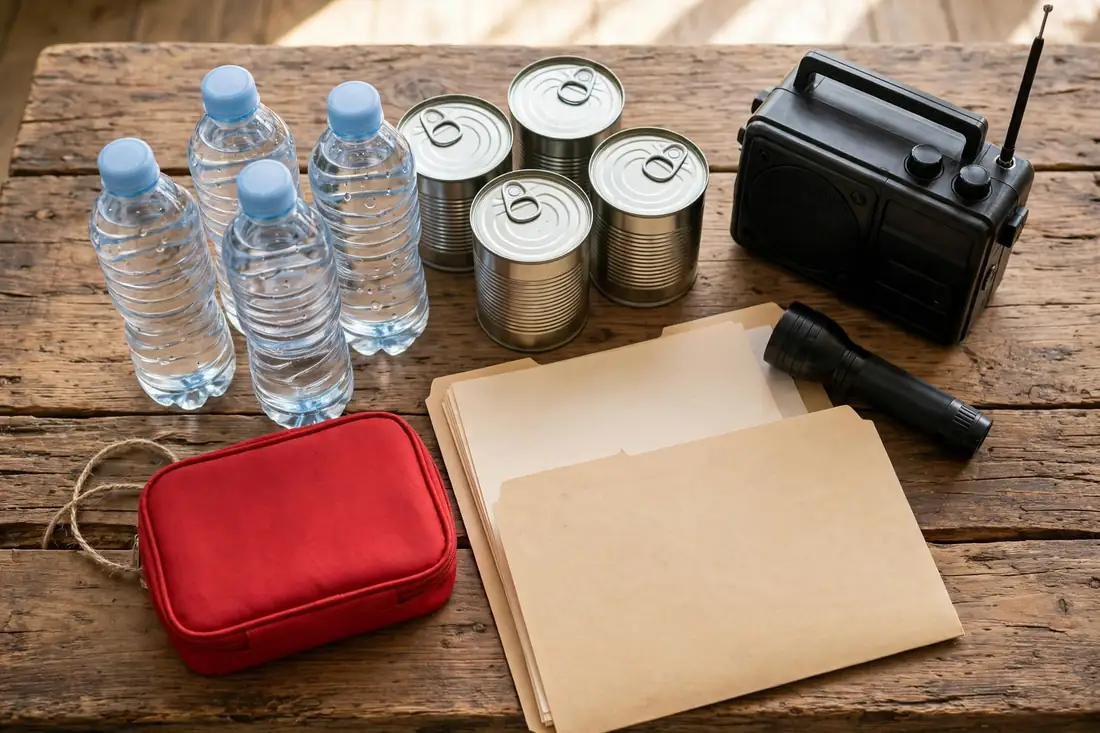
The best time to prepare for an earthquake is right now, while the ground is still. A basic kit fits in one bag per person, and ready.gov suggests enough supplies for at least three days. Start with water: one gallon per person per day for drinking and basic washing. Add canned food, energy bars, and a manual can opener, plus any medicines your family needs for a week. A flashlight with extra batteries, a battery-powered radio, and a phone charger belong in every kit, along with a first aid kit, a whistle, and copies of your ID and insurance papers. Keep some cash in small bills, since card machines stop working in a power cut. Store the kit where you can grab it fast, and check it twice a year.
- One gallon of water per person per day
- Three days of ready-to-eat food
- Flashlight, extra batteries, phone charger
- First aid kit and a week of medicines
- Copies of IDs and insurance papers
- Cash in small bills and coins
Make a Family Plan While Things Are Calm
A plan takes ten minutes to make and saves real panic later. Pick two meeting places: one right outside your home, like a big tree or a neighbor's driveway, and one outside your neighborhood in case you cannot get home. Choose one out-of-town contact everyone can call or text, since local phone lines jam after a quake while long-distance calls often get through. Make sure every family member knows the plan, and practice it once. Show everyone where the gas shutoff valve is and how to turn off the water and electricity if needed. Keep a paper copy of phone numbers in your kit, because a dead phone is useless. The families that come through earthquakes best are rarely the luckiest. They are the ones that talked it through beforehand.
If You Are Trapped Under Debris
Being trapped is frightening, but staying calm and saving your energy gives rescuers the best chance to find you. Do not light a match or a lighter, since gas may be leaking nearby. Cover your mouth with a cloth or your shirt to keep dust out of your lungs. Instead of shouting, tap on a pipe or a wall in a steady rhythm, or blow a whistle if you have one. Shout only as a last resort, when you hear rescuers nearby. Move as little as possible if you are hurt, and try to stay warm. Rescue teams listen for tapping and look for movement, so a regular, steady sound is far more useful than a single loud cry. Help can take time, so conserve your strength and keep breathing slowly.
✅ Guide4U Checklist
- Drop, cover, and hold on
- Stay away from windows and shelves
- Do not use elevators after shaking
- Check for gas smells and damage
- Expect aftershocks and stay alert
- Keep shoes and flashlight by the bed
- Follow official instructions and updates
Key Takeaways
- Drop, cover, and hold on beats running
- Most injuries come from falling objects
- A kit and a plan beat panic
Frequently Asked Questions
Should I stand in a doorway during an earthquake?
No. That advice comes from old houses with strong wooden door frames, and it does not apply to most modern homes. A doorway does not protect you from falling objects, and the swinging door can hurt you. Drop, cover, and hold on under a sturdy table instead, as ready.gov and the Red Cross recommend.
How long does an earthquake usually last?
Most earthquakes last less than a minute, with the strong shaking often only 10 to 30 seconds. That can feel much longer when you are living through it. Aftershocks can follow for days or weeks. They are usually shorter and weaker, though a large one can still cause damage. Stay alert and repeat drop, cover, and hold on whenever you feel shaking.
Is it safe to go outside right after the shaking stops?
If your building looks damaged, get out and move to an open area away from buildings, power lines, and trees. If it looks fine, you can stay inside, but check for gas smells, fires, and broken glass first. Either way, do not use elevators, stay away from damaged structures, and be ready for aftershocks. Follow instructions from local officials over the radio or phone alerts.
What should I put in an earthquake emergency kit?
Start with water, one gallon per person per day for at least three days, plus canned food, a manual can opener, and a week of any medicines you need. Add a flashlight with extra batteries, a battery-powered radio, a phone charger, a first aid kit, and copies of your ID and insurance papers in a sealed bag. Keep some cash in small bills nearby. Store it where you can grab it fast.
What did you think of this article? Share your opinion in the comments below — we would love to hear from you.